
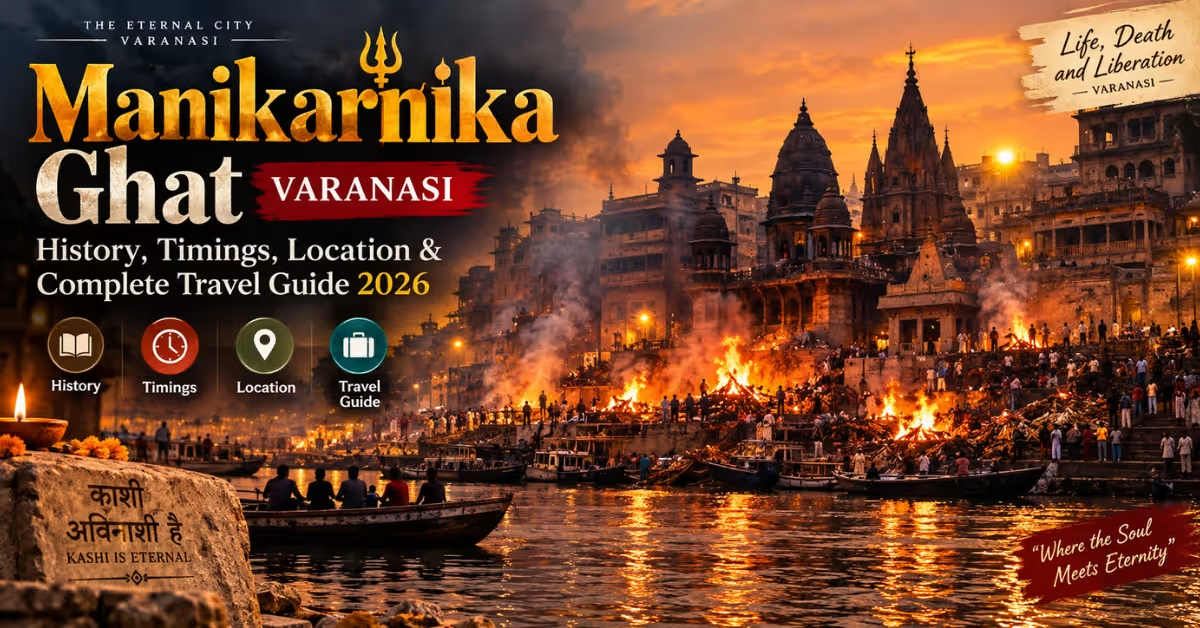
Manikarnika Ghat is Varanasi’s most sacred cremation ground – open 24 hours, free entry, pyres burning continuously for centuries. Known as Maha Smashaan (the great cremation ground), it is believed that dying here grants moksha (liberation). Best way to visit: from a boat – never walk up to the active pyres. Photography is strictly prohibited. Decline any demand for “cremation wood donations” – this is a scam. Experience My India includes Manikarnika boat-viewing in all Varanasi tours. WhatsApp +91-7302265809. See our Ayodhya Varanasi Tour Package or message WhatsApp +91 7302265809.
Manikarnika Ghat is unlike any other sacred site in India. Where most temples and ghats offer a defined ritual experience at fixed timings, Manikarnika is a living, continuous sacred event – funeral pyres burning around the clock, every hour of every day, for centuries without interruption. It is the most intensely sacred site in the most sacred city in Hinduism.
I am Gurudutt, born and raised in Braj Bhoomi and the founder of Experience My India. Since 2018, I have guided 50,000+ pilgrims through Varanasi – and Manikarnika Ghat is one of the most consistently described transformative experiences of the entire pilgrimage. Not because it is pleasant – it is not – but because it confronts visitors with the most direct encounter with mortality and liberation that any sacred site in India offers.
This guide gives you every practical detail to approach Manikarnika Ghat correctly – from the boat, with silence, without a camera and with the theological context that makes the experience meaningful rather than merely disturbing.
What Is Manikarnika Ghat – The Maha Smashaan of Kashi
Manikarnika Ghat is Varanasi’s primary cremation ghat – and the most sacred cremation site in all of Hinduism. Its Sanskrit title is Maha Smashaan, meaning the Great Cremation Ground. The distinction between Manikarnika and other cremation sites in India is not merely one of scale – it is theological. The belief that dying and being cremated at Manikarnika grants instant moksha (liberation from the cycle of rebirth) is one of the most firmly held beliefs in the Hindu tradition and is specifically associated with this ghat in Varanasi.
The pyres at Manikarnika burn every hour of every day. There has been no recorded interruption in living memory – not during floods, not during conflict, not during festivals. The fires are maintained by the Dom community – the hereditary custodians of the cremation fires – whose authority at Manikarnika spans generations.
Families travel from across India and the world to bring their deceased to Manikarnika – and Varanasi itself has hospices (Mukti Bhawan) where the dying are brought specifically to spend their final days in the sacred city, ensuring cremation at Manikarnika after death.
Experience My India explains this theological context to every pilgrim before the Manikarnika boat-viewing. The Same Day Varanasi Tour Package includes the Manikarnika boat circuit as part of the standard Varanasi circuit. WhatsApp +91-7302265809.
Spiritual Significance and Mythology – Why This Ghat Grants Moksha
In the Hindu understanding of death, the liberation of the soul (moksha) from the cycle of rebirth (samsara) is the ultimate spiritual goal. Ordinary death – even if followed by cremation – does not guarantee moksha. What makes Manikarnika uniquely powerful is the specific role that Lord Shiva is believed to play here.
The Taraka Mantra: According to the Kashi Khanda of the Skanda Purana, Lord Shiva resides eternally in Kashi and personally whispers the Taraka Mantra (the liberation mantra) into the ear of every being who dies in Kashi. This divine whisper at the moment of death is believed to grant immediate liberation – regardless of the karma accumulated during life. This is why dying in Kashi (Varanasi) is considered the most auspicious death possible in the Hindu tradition and why Manikarnika – as Kashi’s primary cremation site – is the focal point of this belief.
Shiva as the cremation ground deity: Shiva is specifically associated with cremation grounds (shmashana) in the Hindu tradition – he is depicted seated on a tiger skin in cremation grounds, smeared with ash from funeral pyres. Manikarnika is not merely a cremation site that happens to be in Varanasi – it is the cremation ground at the heart of the city that Shiva himself inhabits.
For the complete context of Kashi’s sacred geography and how Manikarnika fits into the Varanasi pilgrimage circuit, read our guide to 30 Best Places to Visit in Kashi 2026 and the Kashi Vishwanath Temple Varanasi Guide. Experience My India contextualises the full Kashi sacred geography for every tour group.
The Story Behind the Name – Manikarnika
The name Manikarnika translates from Sanskrit as “jeweled earring” (Mani = jewel/gem, Karnika = earring).
Two primary mythological explanations:
Version 1 – The Sacred Well: While Lord Shiva and Goddess Parvati were visiting the banks of the Ganges in Kashi, a precious gemstone from Parvati’s earring fell into an ancient well that Lord Vishnu had dug using his Sudarshana Chakra (divine discus). This well – the Manikarnika Kund – still exists at the ghat and is considered sacred.
Version 2 – The Shakti Peeth Tradition: In the tradition of the 51 Shakti Peethas (sacred sites where parts of Goddess Sati’s body fell after Lord Shiva carried her in grief), Manikarnika marks the spot where Sati’s earring (karnika) fell. Under this tradition, Manikarnika is a Shakti Peeth – one of the most sacred Devi sites in the entire subcontinent.
Both traditions give Manikarnika its dual sacred character – it is simultaneously a site of Shaiva cremation theology and Shakti devotion.
Book Your Sugam Darshan and Rudrabhishek at Kashi Vishwanath
Layout of the Ghat – Northern and Southern Sections
Manikarnika Ghat is divided into two functionally distinct sections, each serving a different purpose:
Southern Section – The Active Cremation Area
The southern portion of Manikarnika is the active cremation area – where funeral pyres burn continuously. Massive stacks of firewood are transported to this section by boats arriving continuously from across the region. Bodies arrive wrapped in white cloth, carried on bamboo stretchers by family members and are immersed briefly in the Ganges before cremation.
This section is not a public viewing area. Families of the deceased are present and are in the middle of their most intimate moment of grief. This section must be observed from a passing boat – not approached on foot.
Northern Section – Bathing and Prayer Area
The northern section of Manikarnika is paved and serves as a bathing ghat for pilgrims who want to take a sacred dip at this particularly auspicious location. Daily prayers, ancestral offerings (pind daan) and devotional rituals take place here. This section is accessible for respectful visitors on foot.
Key Shrines at Manikarnika Ghat
| Shrine | Significance |
| Manikarnika Kund | The ancient sacred well where Parvati’s earring fell – pre-dates the current ghat |
| Vishnu Charanpaduka | Marble slab imprinted with Lord Vishnu’s footprints – preserved at the ghat |
| Ratneshwar Mahadev Temple | A Shiva temple that leans dramatically into the Ganges – visible from the river |
| Dom Raja’s house | The residence of the hereditary custodian of the cremation fires – visible from boat |
The Ratneshwar Mahadev Temple is one of the most visually distinctive landmarks at Manikarnika – a multi-storey structure that leans at a notable angle into the Ganges due to subsidence of the riverbank. It is significantly more dramatic from a boat on the river than from the ghat itself and is often described by first-time visitors as the most striking architectural sight of the entire Varanasi boat circuit. The 1 Night 2 Days Varanasi Tour Package includes the sunrise boat ride that passes Manikarnika and the Ratneshwar Temple at close range. WhatsApp +91-7302265809.
Manikarnika Ghat Varanasi Location – How to Reach
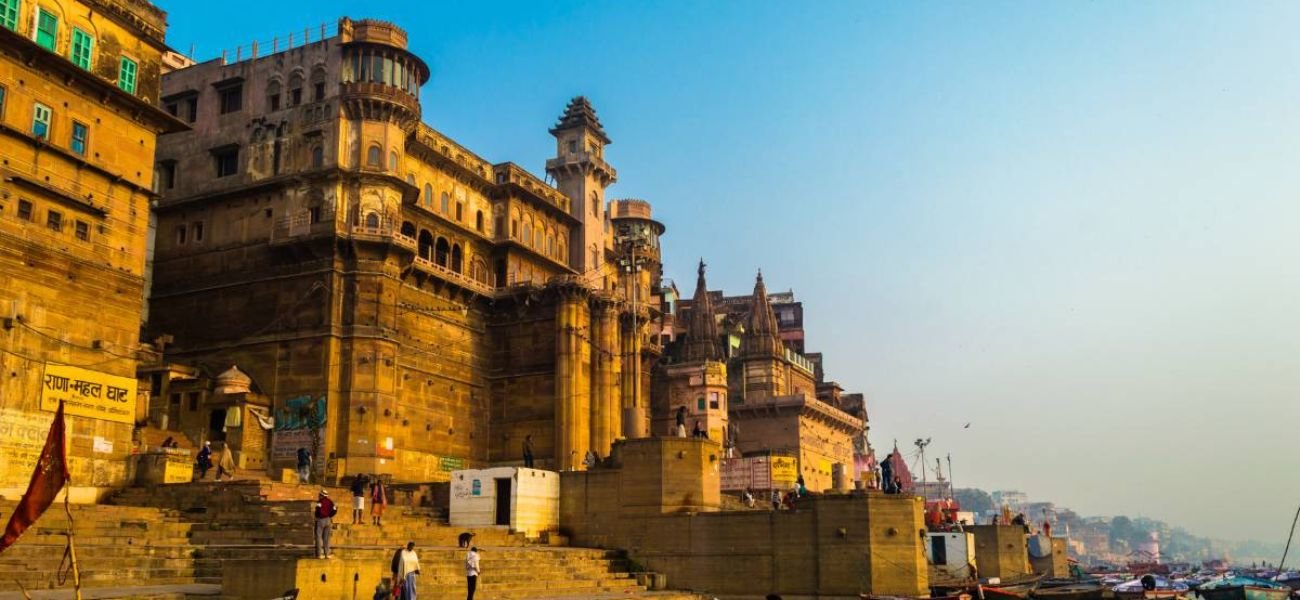
Manikarnika Ghat is located on the western bank of the Ganges in Varanasi’s old city, approximately 1 km north of Dashashwamedh Ghat along the ghat path.
| From | Mode | Distance | Time | Notes |
| Dashashwamedh Ghat | Walk (ghat path) | 1 km north | 15 minutes | Most common approach |
| Kashi Vishwanath Temple | Walk | 1 km (through lanes) | 12-15 min | Via Lalita Ghat direction |
| Godowlia Chowk | Walk | 1.2 km | 15-20 min | Through old city lanes |
| Varanasi Cantt Station | Auto | 5-6 km | 25-30 min | ₹80-₹120 |
| By boat | River | From any ghat | Varies | Recommended approach |
The most important navigation note: Manikarnika Ghat is best approached by boat – not on foot. The active cremation area is immediately adjacent to the lane entrance from the land side and approaching on foot puts visitors in direct proximity to grieving families. A boat-based approach maintains respectful distance while providing a full view of the ghat.
From Dashashwamedh Ghat, a boat can reach Manikarnika in 5-8 minutes on the river. Experience My India includes Manikarnika in all Varanasi boat circuits – 2 Nights 3 Days Varanasi Tour Package builds both the sunrise boat ride (Manikarnika passing) and the evening Ganga Aarti (Dashashwamedh) into the standard Day 1.
Best Time to Visit Manikarnika Ghat
Manikarnika Ghat is open 24 hours, 7 days a week – the pyres never stop. However, different times of day offer different viewing experiences:
| Time | Character | Verdict |
| Sunrise (5:00-6:30 AM) | Golden light on pyres + river + Ratneshwar Temple | ✅ Most atmospheric from boat |
| Morning (7:00-9:00 AM) | Full daylight – clear visibility from boat | ✅ Good |
| Afternoon (10 AM-4 PM) | Bright daylight – less atmospheric | ⚠️ Functional but flat light |
| Evening (5:00-7:00 PM) | Warm golden light + approaching dusk | ✅ Highly atmospheric from boat |
| Night (after 8 PM) | Firelight on the Ganges – deeply dramatic | ✅ Most visually intense |
Best time overall: The sunrise boat ride (5:00-6:30 AM) passes Manikarnika in the most atmospheric light of the day – the orange glow of the pyres against the rising sun on the Ganges, the smoke in the morning air and the leaning Ratneshwar Temple emerging from the mist. This is consistently described as the most memorable single visual experience of any Varanasi visit.
Season: October to March is the best season – comfortable temperatures for an early morning boat. Read our Best Time to Visit Varanasi 2026 for the complete month-by-month guide. The 3 Nights 4 Days Ayodhya Varanasi Tour Package includes the sunrise boat ride as a standard Day 3 activity.
How to Visit Manikarnika Ghat – The Correct Way
The correct approach to Manikarnika Ghat is from a boat on the Ganges.
This is not merely a suggestion – it is the practical and respectful way to experience this site:
From a boat:
- You maintain respectful distance from the cremation area and grieving families
- You see the complete ghat panorama – pyres, Ratneshwar Temple, Dom Raja’s house, the stacked firewood
- You are free from the touts who operate near the land entrance
- The visual experience – especially at sunrise or evening – is significantly more moving than the ground-level view
From the land (northern section only):
- The northern bathing/prayer section is accessible on foot for respectful visitors
- Do NOT enter the southern cremation section
- Maintain silence throughout
- Keep your distance from families present
Experience My India pre-arranges boat-based Manikarnika viewing for all Varanasi tour groups. The 2 Night 3 Days Ayodhya Varanasi Tour Package includes the complete boat circuit passing Manikarnika. WhatsApp +91-7302265809.
Strict Visitor Protocol – What You Must Know Before Going
| Rule | Detail |
| Photography | Strictly prohibited – no photos, no videos, no phone cameras |
| Videography | Strictly prohibited |
| Noise | Maintain complete silence near the active cremation area |
| Behavior | No laughing, loud talking or disrespectful behavior |
| Dress | Modest clothing – covered shoulders and knees |
| Distance | Do not approach the active southern cremation section on foot |
| Footwear | Remove if entering the northern prayer section |
| Reaction | If in a boat, keep phone away and do not point at the pyres |
Photography is the most strictly enforced rule. Families at Manikarnika are in the middle of their most intimate grief. A photograph of the cremation – taken without consent, often shared on social media – is considered by the Dom community and by most visitors from all backgrounds as a profound violation. Photography attempts have resulted in confrontations, phone confiscation and forced deletions. Experience My India makes this the first briefing point before any Manikarnika boat visit.
The Cremation Wood Scam – Critical Warning
This is the most important practical warning for visitors to Manikarnika Ghat:
The scam: Men near the land entrance of Manikarnika – often presenting themselves as guides, priests or Dom community representatives – approach visitors and explain the high cost of cremation wood, implying that visitors must contribute money to help a poor family afford cremation. Amounts ranging from ₹500 to ₹5,000 are typically solicited.
The reality: This is a well-documented scam at Manikarnika. The Dom Raja (the hereditary head of the cremation management) charges families directly for the cremation process. Visitors are under no obligation to contribute. The solicitors at the entrance are not officiants and are not affiliated with the families being cremated.
What to do: Decline politely and continue walking. If approached on a boat, your boatman will handle this. Experience My India’s tour guides manage all interactions at Manikarnika for every group – no pilgrim is approached or pressured when traveling with us. WhatsApp +91-7302265809.
Famous Ghats Near Manikarnika Ghat
| Ghat | Distance from Manikarnika | Significance |
| Scindia Ghat | 200 m north | Leaning submerged Shiva temple – visible from boat |
| Lalita Ghat | 300 m south | Near Kashi Vishwanath Corridor – Nepal Temple |
| Dashawamedh Ghat | 1 km south | Ganga Aarti every evening – most visited ghat |
| Mir Ghat | 500 m south | Near Vishalakshi Shakti Peeth |
| Panchganga Ghat | 1.5 km north | Five rivers confluence (mythological) – Bindu Madhav Temple |
| Harishchandra Ghat | 1.5 km south | Second cremation ghat – smaller than Manikarnika |
Scindia Ghat immediately to the north of Manikarnika is notable for its dramatically submerged Shiva temple – a stone structure that partially sank into the Ganges due to the weight of its construction and can be seen tilting at the river’s edge. This is a different structure from the Ratneshwar Temple at Manikarnika itself. Both are best photographed from a passing boat. The 5 Days Ayodhya Varanasi Tour Package includes a full ghat walk covering all major ghats from Assi to Panchganga. WhatsApp +91-7302265809.
For the complete guide to all 30 major Kashi attractions: 30 Best Places to Visit in Kashi 2026.
Manikarnika Ghat in the Complete Kashi Sightseeing Circuit
Experience My India places Manikarnika Ghat in the sunrise boat ride – the natural position in the Varanasi itinerary where it is viewed correctly, respectfully and in the most atmospheric light:
| Time | Activity |
| 5:00 AM | Board boat at Assi Ghat or Dashashwamedh |
| 5:00-5:30 AM | Sunrise begins – south ghats (Assi, Tulsi Manas, Sankat Mochan area) |
| 5:30-6:00 AM | Central ghats – Dashashwamedh, Mir Ghat, Lalita Ghat |
| 6:00-6:20 AM | Manikarnika Ghat – pass slowly from river, maintain silence |
| 6:20-6:45 AM | Scindia Ghat, Panchganga Ghat continuing north |
| 6:45-7:00 AM | Return south – full circuit complete |
| 7:00-8:00 AM | Kaal Bhairav Temple (first, before Kashi Vishwanath) |
| 7:30-10:00 AM | Kashi Vishwanath darshan |
For the complete Kashi Vishwanath darshan guide: Kashi Vishwanath Temple Varanasi. For best season planning: Best Time to Visit Varanasi 2026.
Book the complete Varanasi circuit via 1 Night 2 Days Varanasi Tour Package or 2 Nights 3 Days Varanasi Tour Package.
Ground Truth – What Nobody Tells You About Manikarnika Ghat
1. The cremation wood scam is more sophisticated than most warnings describe – some operators quote “government-fixed rates” for wood donations. The scam has evolved. Some operators now claim a “government rate” of ₹2,000-₹5,000 is mandatory for all visitors. There is no such rate. Experience My India has guided hundreds of groups past Manikarnika by boat – no legitimate contribution is ever required of visitors.
2. Approaching Manikarnika on foot from the lane entrance puts you directly in the active cremation area within 30 seconds. The land approach from the Dashashwamedh direction enters the ghat between the stacked firewood and the active pyres – there is no buffer. Most first-time visitors who approach on foot are immediately approached by touts and are within 5 metres of the cremation area before they have time to orient themselves. The boat approach allows you 200+ metres of respectful viewing distance.
3. The Ratneshwar Mahadev Temple (leaning temple) at Manikarnika is best seen from a boat – and from land it is barely visible at all. The dramatic lean of the Ratneshwar Temple – which has been compared to the Leaning Tower of Pisa by multiple visitors – is fully visible only from the river. From the ghat steps, you see it from an angle that does not convey the dramatic tilt. Experience My India always positions boats for a clear river-facing view of both Manikarnika’s pyres and the leaning temple.
4. Night viewing (after 8 PM) from a boat is the most visually intense experience at Manikarnika – and almost no tour operator offers this. At night, the pyres’ orange light reflects on the Ganges without any daylight competing. The silhouettes of the mourners against the fire, the reflected light on the river and the sound of the water against the boat create an experience that several pilgrims have described as the single most profound moment of their India visit. The 2 Nights 3 Days Varanasi Tour Package can include an evening Manikarnika boat pass after the Ganga Aarti on request. WhatsApp +91-7302265809.
5. Manikarnika is a site of active grief – the most respectful attitude is that of a guest who has been allowed to witness something private. Many first-time visitors approach Manikarnika with the same attitude they bring to other tourist attractions. The correct attitude – which Experience My India conveys before every visit – is that of a guest who has been extended a rare privilege of witnessing the most intimate human moment. Silence, stillness and the absence of cameras are not restrictions. They are the minimum forms of respect that the site deserves.
Frequently Asked Questions – Manikarnika Ghat Varanasi
Manikarnika Ghat is Varanasi’s primary cremation ghat and is considered the most sacred cremation site in all of Hinduism. Known as Maha Smashaan (the Great Cremation Ground), its unique significance comes from the belief that Lord Shiva personally whispers the Taraka Mantra (liberation mantra) into the ears of all those who die in Kashi – granting immediate moksha (liberation from rebirth) regardless of karma accumulated during life. The pyres have burned continuously for centuries without interruption. It is also a Shakti Peeth where Sati’s earring is believed to have fallen. Experience My India explains this complete theological context before every Manikarnika boat visit. WhatsApp +91-7302265809.
Yes – the northern section of Manikarnika Ghat is a designated bathing area for sacred ritual dips. This section is separate from the southern cremation area and is used by pilgrims for Ganga snan (holy bathing) and ancestral offerings (pind daan). Bathing at Manikarnika is considered particularly auspicious given the ghat’s status in the moksha tradition. However, the active cremation area in the southern section must not be entered. The water quality at Manikarnika, as across Varanasi’s central ghats, is not considered safe for swimming or recreational bathing – the ritual dip is brief and devotional. Experience My India advises all groups on the correct ghat sections. WhatsApp +91-7302265809.
Yes – there are no gender-based restrictions at Manikarnika Ghat. Women visit regularly as pilgrims, to observe from the boat and for bathing rituals at the northern section. The one distinction is a traditional Hindu custom: women are generally not present at cremations in the active southern section – this is a family custom observed by the families of the deceased, not a restriction on women visitors. Women visitors who approach on foot or observe from a boat follow the same protocol as all visitors – silence, no photography, modest dress, respectful distance from the active cremation area. Experience My India guides women-only and mixed groups to Manikarnika regularly. WhatsApp +91-7302265809.
Yes – visiting Manikarnika Ghat is a meaningful and important part of the Varanasi pilgrimage for most visitors, but it requires the correct approach and mindset. From a boat at sunrise or evening, the experience of witnessing the eternal pyres against the Ganges – in the theological context of moksha and Shiva’s eternal presence – is described by many pilgrims as the most spiritually significant experience of their India journey. It is not a comfortable tourist attraction. It is an encounter with mortality and liberation that asks something of the visitor. Those who approach with silence, respect and theological context leave transformed. Those who approach with a camera and tourist-site expectations leave disturbed. Experience My India prepares every pilgrim for Manikarnika before arriving. WhatsApp +91-7302265809.
No – photography and videography are strictly prohibited at Manikarnika Ghat. This applies to mobile phone cameras, video cameras and any recording device. Families cremating their deceased are in their most intimate moment of grief – photography is considered a profound violation of that privacy. Photographing the cremation area can also lead to confrontations with the Dom community and other visitors. Experience My India instructs every group member to keep phones away (in pockets, not in hand) before the boat passes Manikarnika. WhatsApp +91-7302265809.
Manikarnika Ghat is open 24 hours a day, 7 days a week – there are no closing times and no set visiting hours. The cremation pyres burn continuously at all hours. There is no entry fee. The best time for a boat-based visit is the sunrise window (5:00-6:30 AM) when the golden light on the pyres and the Ganges creates the most atmospheric viewing or the evening window (5:30-7:00 PM). The night-time boat pass (after 8 PM) is the most visually intense but least commonly arranged. Experience My India organises boat circuits at all three windows depending on the tour schedule. WhatsApp +91-7302265809.
Manikarnika Ghat is approximately 1 km north of Dashashwamedh Ghat – about 15 minutes walking along the ghat path or 5-8 minutes by boat on the river. Dashashwamedh is the most commonly used starting point for the Varanasi boat circuit and Manikarnika is the natural midpoint of the northward circuit from Dashashwamedh toward Scindia Ghat and Panchganga Ghat. Experience My India’s sunrise boat circuit starts from Assi Ghat in the south and travels north to Manikarnika and beyond before returning – covering all major ghats in one 90-minute ride. WhatsApp +91-7302265809.
Near the land entrance of Manikarnika Ghat, some men approach visitors claiming that a poor family cannot afford cremation wood and asking for donations of ₹500-₹5,000. This is a well-documented scam. The Dom Raja (hereditary head of cremation management) charges families directly – visitor contributions are not required or legitimate. Some operators now quote a “government rate” that does not exist. Decline politely and continue. If visiting by boat, your boatman manages all interactions. Experience My India guides handle all such approaches for every tour group – no pilgrim is pressured when traveling with us. WhatsApp +91-7302265809.
Recommended products
-
1 Night 2 Days Varanasi Tour Package
Original price was: ₹7,000.00.₹6,000.00Current price is: ₹6,000.00. -
2 Nights 3 Days Varanasi Tour Package
Original price was: ₹11,000.00.₹9,500.00Current price is: ₹9,500.00. -
3 Nights 4 Days Ayodhya Varanasi Tour Package
Original price was: ₹11,000.00.₹10,000.00Current price is: ₹10,000.00. -
5 Days Ayodhya Varanasi Tour Package


🙏 Ready to Visit Manikarnika Ghat the Right Way?
WhatsApp Experience My India and receive your complete Varanasi itinerary within 30 minutes – Manikarnika sunrise boat circuit scheduled, scam briefing done before arrival, Kashi Vishwanath Sugam Darshan booked and all transport arranged.
WhatsApp +91-7302265809 – Book Now
Jai Shri Ram 🙏