

Dashrath Mahal timings in Ayodhya: Morning session 8:00 AM-12:00 PM, Evening session 4:00 PM-10:00 PM (some seasonal close at 9 PM). Closed for deity rest 12:00-4:00 PM daily. Daily aartis: Morning Puja 8 AM, Morning Aarti 11:30 AM, Evening Bhajans 6:00-8:00 PM, Sandhya Aarti 7:30 PM. Entry is free. Leather items strictly prohibited inside. Distance from Ram Mandir: 500 metres. Experience My India includes Dashrath Mahal in all Ayodhya tours from ₹1,999 per person. WhatsApp +91-7302265809. See our Ayodhya Varanasi Tour Package or message WhatsApp +91 7302265809.
Dashrath Mahal – the palace of King Dashrath – is one of Ayodhya’s most historically and emotionally resonant sites. While Ram Mandir draws hundreds of thousands of pilgrims to the birthplace of Lord Rama, Dashrath Mahal represents the home in which that birth occurred – the palace of the father, the royal court, the childhood setting of the Ramayana’s central family. Located in the Ramkot area of Ayodhya, 500 metres from Ram Mandir and adjacent to Hanuman Garhi, it receives a fraction of Ram Mandir’s crowd while offering a deeply personal connection to the Ramayana narrative.
I am Gurudutt, born and raised in Braj Bhoomi and the founder of Experience My India. Since 2018, I have guided 50,000+ pilgrims through Ayodhya – including Dashrath Mahal’s courtyard with its continuously chanting priests and vibrantly painted walls that most pilgrims pass without entering. This guide gives you everything you need to plan your Dashrath Mahal visit correctly.
What Is Dashrath Mahal and Why Visit It
Dashrath Mahal (also written Dashrath Bhawan) is the temple-palace built at the site traditionally believed to be the original palace of King Dashrath – the father of Lord Rama and ruler of the Ikshvaku dynasty. In the Ramayana narrative, this is where Rama, Lakshmana, Bharat and Shatrughan grew up, where Kaikeyi’s fateful request for Dashrath to exile Rama took place and where Dashrath died of grief after Rama’s departure.
The site is maintained as both a palace-memorial and an active temple. The courtyard contains multiple shrines and the main darshan hall displays vibrantly painted murals of Ramayana scenes on its entrance walls. Most distinctively, the inner courtyard maintains a continuous akhand kirtan (unbroken devotional chanting) – a tradition of non-stop Ram naam jap that is said to have continued without interruption for decades.
For pilgrims who visit Ram Mandir, Hanuman Garhi and Kanak Bhawan, Dashrath Mahal adds the crucial family-history layer to the Ayodhya experience – the royal household context that makes the Ram Mandir darshan more complete.
Experience My India includes Dashrath Mahal in every multi-day Ayodhya itinerary. See: Ayodhya City Tour Guide 2026 and Best Places to Visit in Ayodhya 2026. WhatsApp +91-7302265809.
Dashrath Mahal Timings 2026 – Complete Darshan Schedule
Morning Session
| Detail | Time |
| Morning opening | 8:00 AM |
| Morning closing | 12:00 PM |
Afternoon Closure (Deity Rest)
| Detail | Time |
| Afternoon closure | 12:00 PM |
| Afternoon reopening | 4:00 PM |
| Duration of closure | 4 hours daily |
Evening Session
| Detail | Time |
| Evening opening | 4:00 PM |
| Evening closing | 10:00 PM (9:00 PM some seasonal variations) |
Seasonal note: The evening closing time may shift to 9:00 PM in winter months (November-February) when nights are colder. Experience My India confirms current-season timings for all Ayodhya tour groups. WhatsApp +91-7302265809.
Festival day timings: During Ram Navami (March/April), Diwali, Deepotsav and other major Ayodhya festivals, Dashrath Mahal may remain open for extended hours with additional aarti and cultural programs. Confirm locally or through Experience My India before festival visits.
Full timing summary at a glance:
| Session | Opens | Closes |
| Morning | 8:00 AM | 12:00 PM |
| Afternoon (closed) | 12:00 PM | 4:00 PM |
| Evening | 4:00 PM | 10:00 PM |
| Entry fee | Free | – |
| Days open | All 7 days | – |
Aarti and Devotional Schedule – All Four Daily Aartis
| Aarti / Program | Time | Character |
| Morning Puja | 8:00 AM | Temple opening ceremony – first darshan of the day |
| Morning Aarti | 11:30 AM | Pre-closure aarti – last morning ritual before 12 PM break |
| Evening Bhajans | 6:00-8:00 PM | Continuous akhand kirtan – most atmospheric window |
| Sandhya Aarti | 7:30 PM | Main evening aarti – lamp ceremony |
Evening Bhajans (6:00-8:00 PM) – The Most Atmospheric Window: This is the period most consistently described by Experience My India pilgrims as the most moving experience at Dashrath Mahal. From 6:00 PM, the inner courtyard fills with devotional music – bhajans dedicated to Ram, continuous akhand kirtan and the lamp-lit atmosphere of the evening Sandhya Aarti at 7:30 PM. The combination of dimming daylight, lit lamps, continuous chanting and the painted walls of the palace courtyard creates an atmosphere that is distinctly different from both the busy Ram Mandir and the more ornate Kanak Bhawan.
Experience My India schedules Dashrath Mahal as the 6:00-7:00 PM stop before Ram Ki Paidi Saryu Aarti at 7:00-7:30 PM for all Ayodhya tour groups. WhatsApp +91-7302265809.
Book Sugam/VIP Darshan and Aarti – Ayodhya Shri Ram Janmbhoomi 2026
How Far Is Dashrath Mahal from Ram Mandir
| From | To | Distance | Walk Time |
| Ram Janmabhoomi Mandir | Dashrath Mahal | 500 metres | 7-10 minutes |
| Hanuman Garhi | Dashrath Mahal | 100 metres | 2 minutes – adjacent |
| Kanak Bhawan | Dashrath Mahal | 600 metres | 8-10 minutes |
| Ram Ki Paidi (Saryu Ghat) | Dashrath Mahal | 1.5 km | 20 min walk / 5 min e-rickshaw |
| Nageshwarnath Temple | Dashrath Mahal | 800 metres | 10-12 minutes |
Key proximity: Dashrath Mahal is located directly adjacent to Hanuman Garhi – only 100 metres apart. Pilgrims who climb Hanuman Garhi’s 76 steps and descend can walk directly to Dashrath Mahal in 2 minutes. This makes Hanuman Garhi + Dashrath Mahal a natural combined morning stop before proceeding to Ram Mandir.
E-rickshaw between sites: ₹20-₹40 for most of these distances. Full day e-rickshaw hire: ₹500-₹800.
Dashrath Mahal in the Correct Ayodhya Visiting Sequence
Experience My India follows this sequence for every Ayodhya tour group:
| Time | Stop | Why |
| 5:30-6:30 AM | Hanuman Garhi | Guardian of Ayodhya – visit before Ram Mandir by local tradition |
| 6:30-7:00 AM | Dashrath Mahal | Adjacent to Hanuman Garhi – 100 m. Morning puja begins at 8 AM |
| 7:00-9:30 AM | Ram Janmabhoomi Mandir | Morning session, Sugam Darshan pre-booked |
| 10:00-10:45 AM | Kanak Bhawan | 300 m from Ram Mandir – morning session |
| 11:00-11:30 AM | Nageshwarnath Temple | Oldest Shiva temple in Ayodhya |
| 12:00-4:00 PM | Lunch and rest | All temples closed |
| 4:30-5:30 PM | Treta Ke Thakur | Evening session |
| 6:00-7:00 PM | Dashrath Mahal (second visit) | Evening bhajans 6-8 PM – most atmospheric |
| 7:00-7:30 PM | Ram Ki Paidi – Saryu Aarti | Evening conclusion |
Note: Dashrath Mahal appears twice in this sequence – morning visit for the puja atmosphere and an optional evening return for the bhajans at 6 PM. Experience My India recommends the evening bhajans window (6:00-8:00 PM) as the more emotionally resonant visit of the two.
For the complete Ayodhya darshan guide: Ayodhya Ram Mandir Tour Guide 2026
History and Mythological Significance of Dashrath Mahal
| Historical Detail | Information |
| Sanskrit name | Dashrath Bhawan / Raja Dashrath Mahal |
| Dedicated to | King Dashrath – father of Lord Rama |
| Location | Ramkot area, Ayodhya |
| Dynasty | Ikshvaku (Surya Vansha / Sun Dynasty) |
| Ramayana significance | Palace where Rama, Lakshmana, Bharat and Shatrughan grew up |
| Key events | Kaikeyi’s boon request, Dashrath’s death of grief after Rama’s exile |
| Current structure | Temple-palace maintained by the Vaishnav Sampraday |
| Akhand kirtan | Continuous Ram naam jap in inner courtyard |
The three pivotal Dashrath Mahal moments in the Ramayana:
- The childhood of the four princes: Dashrath Mahal is where Rama, Lakshmana, Bharat and Shatrughan grew up after their births – the setting of the Bal Kanda chapters of the Valmiki Ramayana.
- Kaikeyi’s boons: The fateful scene in which Queen Kaikeyi asked King Dashrath to fulfill two old boons – placing Bharat on the throne and exiling Rama for 14 years – occurred within this palace. Dashrath Mahal is therefore simultaneously the site of the greatest family love and the greatest personal tragedy in the Ramayana.
- Dashrath’s death: After Rama’s departure for the forest, King Dashrath could not survive the separation from his son. He died in grief at this palace – one of the Ramayana’s most emotionally charged events. The site carries the weight of this story in every stone.
For the full Ayodhya city context: Ayodhya City Tour Guide 2026
Practical Visitor Guide – Entry, Prohibitions and Dress Code
| Detail | Information |
| Entry fee | Free |
| Days open | All 7 days – Monday to Sunday |
| Footwear | Must be removed at entrance gate |
| Dress code | Covered shoulders and knees – traditional Indian attire preferred |
| Leather items | Strictly prohibited – belts, wallets, leather bags must be left outside |
| Electronic items | Mobile phones generally permitted in outer areas – check at gate |
| Photography | Inner shrine: generally not permitted. Outer courtyard and murals: usually permitted |
| Time needed | 30-60 minutes |
| Facilities | No lockers on-site – leave leather items in e-rickshaw or hotel before visiting |
The leather prohibition at Dashrath Mahal: Like Ram Mandir and several other Ayodhya temples, Dashrath Mahal prohibits leather items inside the complex. This includes leather belts, leather wallets, leather bags and leather footwear. Synthetic alternatives are acceptable. Experience My India briefs every group on this before entry – a leather wallet discovered at the security check causes a delay and requires backtracking to leave it outside.
Painted entrance walls: One of the distinctive visual features of Dashrath Mahal is its vibrantly painted entrance walls – large-scale paintings depicting Ramayana scenes that are immediately visible from the approach lane. These murals are photographable and make for one of Ayodhya’s most distinctive visual stops.
Best Time to Visit Dashrath Mahal
| Timing | Crowd Level | Experience | Verdict |
| Morning 8:00-9:00 AM | Very low | Morning puja atmosphere | ✅ Best for quiet darshan |
| Mid-morning 9:00-11:30 AM | Low | Manageable | ✅ Good |
| Morning Aarti 11:30 AM | Low-Moderate | Pre-closure ceremony | ✅ Good |
| Evening opening 4:00-5:30 PM | Low | Quieter start to evening | ✅ Good |
| Evening Bhajans 6:00-8:00 PM | Moderate | Most atmospheric – music, lamps | ✅ Best for atmosphere |
| Sandhya Aarti 7:30 PM | Moderate | Main evening ceremony | ✅ Most visually rich |
| Ram Navami / Diwali | High | Festival atmosphere | ✅ Special – book ahead |
The honest recommendation: The evening bhajans window from 6:00-8:00 PM on a weekday evening is the single best time to visit Dashrath Mahal. The continuous devotional music, the lamps, the painted walls in the dimming light, the Sandhya Aarti at 7:30 PM – this window consistently produces the most described experiences from Experience My India pilgrims.
For seasonal timing guidance: Best Time to Visit Ayodhya 2026
Dashrath Mahal vs Other Major Ayodhya Temples – At a Glance
| Temple | Distance from Ram Mandir | Entry | Crowd | Best Timing |
| Ram Janmabhoomi Mandir | Central | Free / ₹250 Sugam | Very High | 7-9 AM |
| Hanuman Garhi | 500 m | Free | Moderate | 5:30-7 AM |
| Dashrath Mahal | 500 m | Free | Low | 6-8 PM bhajans |
| Kanak Bhawan | 300 m | Free | Low-Moderate | 8-11 AM / 7 PM aarti |
| Nageshwarnath Temple | 1 km | Free | Low | Morning |
| Treta Ke Thakur | 3 km | Free | Low | Morning / Evening |
Dashrath Mahal shares the same proximity to Ram Mandir as Hanuman Garhi (500 metres each) but has a fraction of the crowd – making it the most accessible deeper pilgrimage stop in the immediate Ram Mandir area.
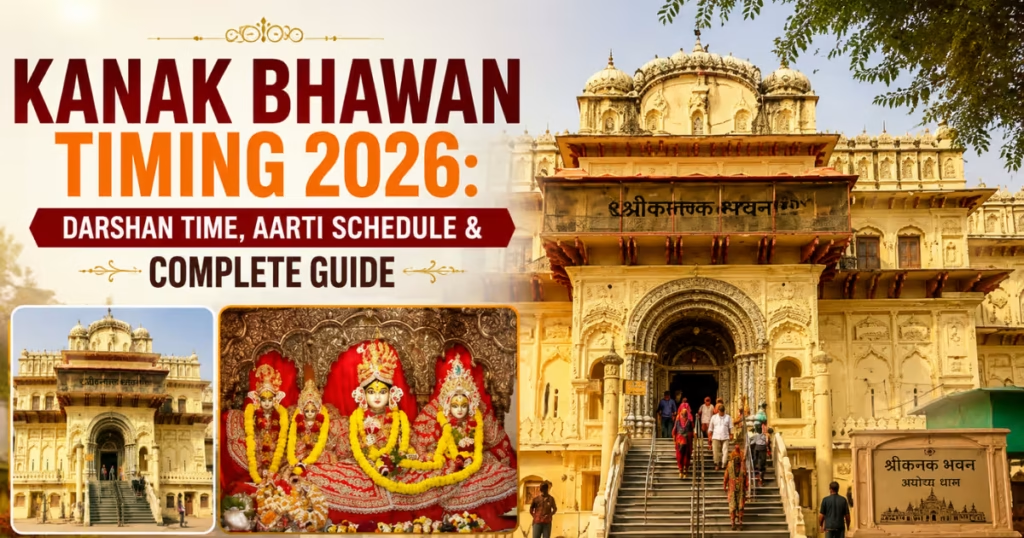
For Kanak Bhawan timing details: Kanak Bhawan Timing
Ground Truth – What Nobody Tells You About Dashrath Mahal
1. Dashrath Mahal is 100 metres from Hanuman Garhi – pilgrims who descend Hanuman Garhi’s 76 steps walk past Dashrath Mahal without realising it. The approach lane from Hanuman Garhi toward Ram Mandir passes directly adjacent to Dashrath Mahal’s entrance. Without a guide or specific awareness, most pilgrims simply continue toward Ram Mandir without entering. Experience My India stops at Dashrath Mahal immediately after Hanuman Garhi descent – a 2-minute walk.
2. The akhand kirtan (continuous unbroken Ram chanting) in Dashrath Mahal’s inner courtyard is said to have continued without interruption for decades – this fact alone makes it one of the most spiritually significant sites in Ayodhya. Unlike Ram Mandir where the focus is on the Jyotirlinga-equivalent darshan of Ram Lalla, Dashrath Mahal carries the weight of the Ramayana’s most human stories – a father’s love, a mother’s fateful request, a son’s obedience, a king’s grief. The akhand kirtan in this setting is profoundly affecting.
3. The leather prohibition at Dashrath Mahal catches many first-time visitors by surprise – because Ram Mandir’s cloakroom handles this, but Dashrath Mahal’s entry check is separate. Pilgrims who deposit their phone and bag at Ram Mandir’s cloakroom retrieve them before leaving. If they then visit Dashrath Mahal with a leather wallet in their pocket, they encounter a secondary leather prohibition that requires another backtrack. Experience My India warns groups to leave leather items behind before starting the Ram Mandir + Dashrath Mahal + Kanak Bhawan morning circuit.
4. The evening bhajans at Dashrath Mahal (6:00-8:00 PM) are the most underrated devotional experience in central Ayodhya – and almost no travel guide mentions them. The combination of the Ram Ki Paidi Saryu Aarti (7:00-7:30 PM) and the Dashrath Mahal evening bhajans (6:00-8:00 PM overlapping) creates an extraordinary 90-minute evening window in Ayodhya’s Ramkot area. Experience My India schedules groups for Dashrath Mahal at 6:00 PM → Saryu Aarti at 7:00 PM as the ideal Ayodhya evening conclusion.
5. The painted murals on Dashrath Mahal’s entrance walls are among the most photographable scenes in all of Ayodhya – and are visible before even entering the complex. The large-scale Ramayana murals on the outer walls and entrance archways are brightly coloured, detailed and unique. Photography is permitted here. Most pilgrims who stop for 30 seconds to photograph the murals end up entering the temple – the murals serve as the most effective self-invitation of any Ayodhya temple.
Frequently Asked Questions – Dashrath Mahal Timings
Dashrath Mahal is approximately 500 metres from Ram Janmabhoomi Mandir – a 7-10 minute walk through the Ramkot lanes. More importantly, Dashrath Mahal is directly adjacent to Hanuman Garhi – only 100 metres away, 2 minutes walk. Pilgrims who descend Hanuman Garhi’s 76 steps can walk directly to Dashrath Mahal before proceeding to Ram Mandir 500 metres further. Experience My India sequences every Ayodhya group through this three-stop corridor: Hanuman Garhi → Dashrath Mahal → Ram Mandir. WhatsApp +91-7302265809.
Kanak Bhawan is approximately 600 metres from Dashrath Mahal – both are in the Ramkot area and within the same central Ayodhya pilgrimage cluster. Kanak Bhawan is 300 metres from Ram Mandir; Dashrath Mahal is 500 metres from Ram Mandir; the two temples are therefore approximately 600 metres apart, with Ram Mandir between them. A complete morning circuit covers Hanuman Garhi → Dashrath Mahal → Ram Mandir → Kanak Bhawan in a natural geographic loop. Experience My India plans this circuit for every Ayodhya tour. WhatsApp +91-7302265809.
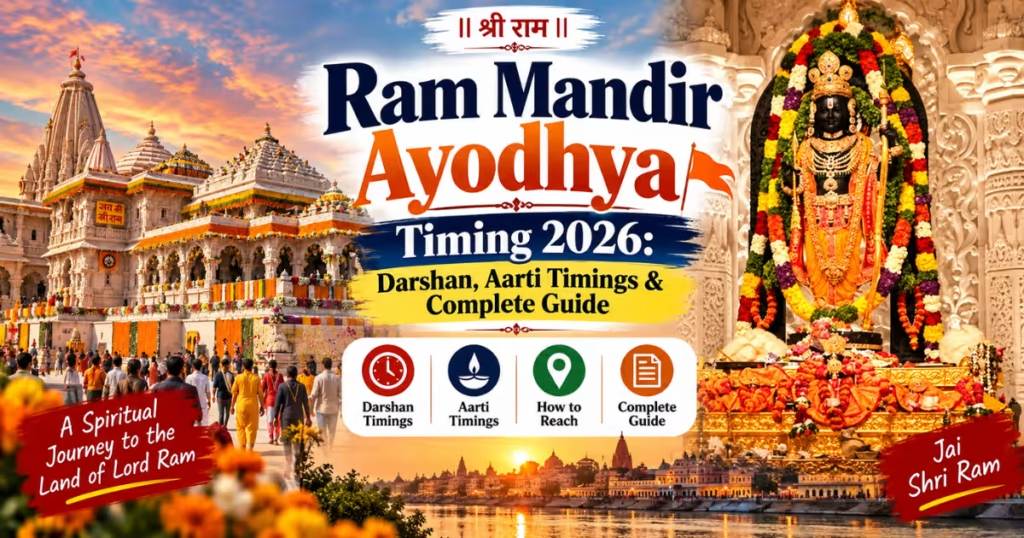
Major Ayodhya temple timings: Ram Janmabhoomi Mandir – 7:00 AM-11:30 AM and 2:00-7:00 PM. Hanuman Garhi – opens 5:00 AM. Kanak Bhawan – 8:00 AM-11:30 AM and 4:30-9:30 PM (summer) / 9:00 AM-12:00 PM and 4:00-9:00 PM (winter). Dashrath Mahal – 8:00 AM-12:00 PM and 4:00-10:00 PM. Treta Ke Thakur – 8:00 AM-12:00 PM and 4:00-8:00 PM. All temples close for deity rest in the afternoon – typically 12:00 PM-4:00 PM. All entry free. Experience My India confirms current-day timings before every Ayodhya visit. WhatsApp +91-7302265809.
No – Ram Janmabhoomi Mandir is not open 24 hours. It operates in two daily sessions: morning 7:00 AM-11:30 AM and evening 2:00 PM-7:00 PM. The temple closes for the afternoon deity rest from 11:30 AM to 2:00 PM daily. Five aartis are performed daily beginning with Mangala Aarti at 3:00 AM, but public darshan for general visitors begins at 7:00 AM. Experience My India advises all pilgrim groups to plan for the 7:00-9:30 AM morning window for the most manageable queue. Sugam Darshan ₹250 further reduces wait time. WhatsApp +91-7302265809.
Two windows stand out at Dashrath Mahal. The morning window (8:00-9:30 AM) offers a quiet darshan immediately after the temple opens – very few visitors before the Ram Mandir crowd spills over. The evening bhajans window (6:00-8:00 PM) is the most atmospheric – continuous akhand kirtan, the Sandhya Aarti at 7:30 PM and lamps lighting the painted walls of the inner courtyard. Experience My India schedules most groups for the 6:00 PM evening bhajans, immediately before the Saryu Ghat Aarti at 7:00 PM. WhatsApp +91-7302265809.
No – Dashrath Mahal in Ayodhya is completely free to enter for all devotees and visitors. There are no ticket counters, no Sugam Darshan or fast-track charges and no donation boxes at the gate. The only restriction is the removal of footwear at the entrance and the prohibition of leather items (belts, wallets, leather bags) inside the complex. Photography of the outer painted walls and courtyard murals is generally permitted. Experience My India guides manage footwear and leather items for all group members before entry. WhatsApp +91-7302265809.
Yes – leather items are strictly prohibited inside Dashrath Mahal’s complex. This includes leather belts, leather wallets, leather bags and leather shoes. Visitors must remove leather footwear at the entrance gate along with regular footwear. Synthetic or cloth alternatives are permitted. Experience My India briefs every group specifically about the leather prohibition before the Hanuman Garhi + Dashrath Mahal + Ram Mandir morning circuit – leaving all leather items secured in the tour vehicle prevents repeated backtracking at each temple’s entry point. WhatsApp +91-7302265809.
Yes – Dashrath Mahal and Ram Mandir are 500 metres apart and Experience My India always covers both on the same Ayodhya visit. The recommended sequence: Hanuman Garhi at 5:30-6:30 AM → Dashrath Mahal morning darshan at 8:00 AM → Ram Mandir with Sugam Darshan at 7:00-9:30 AM → Kanak Bhawan at 10:00 AM. For a single-day visit, Experience My India’s Same Day Ayodhya Tour Package from ₹1,999 covers all four sites in the correct sequence. WhatsApp +91-7302265809.
Recommended products
-
1 Night 2 Days Ayodhya Tour Packages
Original price was: ₹6,000.00.₹5,000.00Current price is: ₹5,000.00. -
2 Night 3 Days Ayodhya Varanasi Tour Package
Original price was: ₹9,000.00.₹8,000.00Current price is: ₹8,000.00. -
3 Days Lucknow and Ayodhya Tour Package
-
5 Days Ayodhya Varanasi Tour Package


🙏 Ready to Plan Your Ayodhya Visit with Experience My India?
WhatsApp us and receive a complete Ayodhya itinerary within 30 minutes – Dashrath Mahal scheduled (morning AND evening bhajans), Sugam Darshan booked for Ram Mandir, leather prohibition briefed, Kanak Bhawan timing confirmed and all transport arranged.
WhatsApp +91-7302265809 – Book Now
Jai Shri Ram 🙏