

Ayodhya’s top 10 places to visit in 2026 are Ram Janmabhoomi, Hanuman Garhi, Kanak Bhawan, Ram Ki Paidi, Nageshwarnath Temple, Guptar Ghat, Treta Ke Thakur, Mani Parbat, Tulsi Smarak Bhawan and Gulab Bari. General darshan at Ram Mandir is free – book your Sugam Darshan e-pass 15 days in advance. A guided 2-day Ayodhya tour with Experience My India starts from ₹3999 per person. Call us at +91-7302265809 to plan. Jai Shri Krishna
Why Every Pilgrim Must Visit Ayodhya in 2026
Ayodhya is not merely a city – it is the living heartbeat of Sanatan Dharma. As the birthplace of Lord Ram and one of the seven sacred Saptapuris of Hinduism, Ayodhya has drawn pilgrims for over three millennia. Since the consecration of the Ram Janmabhoomi Mandir on 22 January 2024, the city has witnessed a transformation of scale and spirit: new ghats, wider roads, a laser show on the Sarayu and Maharishi Valmiki International Airport connecting it to every corner of India.
I am Gurudutt, founder of Experience My India, born and raised in the sacred Braj Bhoomi. Since 2014, I have personally guided more than 10,000 pilgrims through Ayodhya, Mathura, Vrindavan, Varanasi and Prayagraj. I know which temple gets crowded by 8 AM and which ghat stays calm until noon. That ground-level knowledge is what this guide is built on.
By the end of this guide you will find: the top 10 places to visit in Ayodhya with exact timings and entry fees, a practical 2-day Ayodhya tour itinerary, the honest tips that travel aggregators never mention, a complete cost breakdown and a senior citizen accessibility guide built from real on-ground experience. Let us begin.
Top 10 Places to Visit in Ayodhya in 2026
1. Shri Ram Janmabhoomi Temple
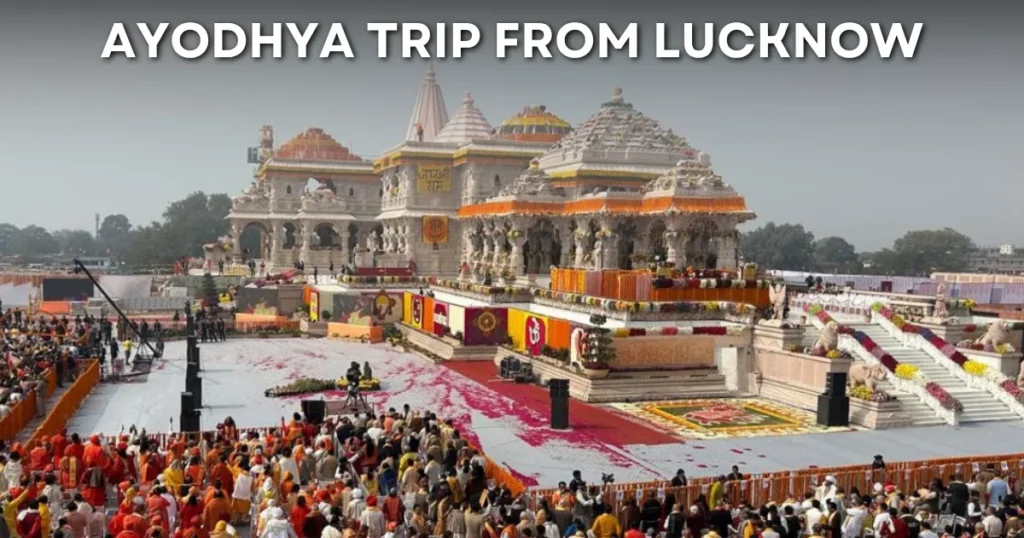
The most sacred site in Ayodhya – and arguably in all of India – Ram Janmabhoomi is the spot where Lord Ram was born in the Treta Yuga. The newly constructed mandir, built in Nagara architectural style using pink sandstone from Rajasthan’s Bansi Paharpur quarry, rises to a height of 161 feet across three floors. The sanctum sanctorum houses Ram Lalla’s black stone idol, sculpted from a single stone.
| Detail | Information |
| Morning darshan | 6:00 AM – 12:00 PM |
| Evening darshan | 2:00 PM – 10:00 PM |
| Afternoon break | 12:00 PM – 2:00 PM (bhog and rest) |
| Mangala Aarti | 6:30 AM |
| Sandhya Aarti | 7:00 PM |
| Entry fee | Free – general darshan |
| Sugam Darshan e-pass | Free – book online 15 days in advance |
Scam warning: No paid VIP darshan pass exists. Any agent offering a paid VIP ticket is running a scam. Experience My India coordinates the Sugam e-pass booking as part of every Ayodhya tour. WhatsApp +91-7302265809.
2. Hanuman Garhi
Before entering Ram Janmabhoomi, tradition requires every devotee to seek Bajrang Bali’s blessings at Hanuman Garhi first. This fortress-temple sits 65 feet above the city on a small hill, reached by climbing exactly 76 steps. Built in the 10th century, it houses the presiding deity Aanjanidevi with infant Hanuman in her lap – an iconography unique in all of North India.
| Detail | Information |
| Timings | 4:00 AM – 10:00 PM (no afternoon break) |
| Mangala Aarti | 5:30 AM |
| Shayan Aarti | 9:30 PM |
| Entry fee | Free |
| Wheelchair access | Yes – accessible entry on the left side of the complex |
| Best photography time | 6:00 AM – 7:00 AM for panoramic city view |
3. Kanak Bhawan
Kanak Bhawan – literally Palace of Gold – is the most ornate temple in Ayodhya. Legend holds that Queen Kaikeyi gifted this palace personally to Goddess Sita as a muhurt gift after her marriage. The temple houses three distinct golden-crowned idols of Lord Ram and Sita beneath a silver-canopied sanctum. The shringar (divine dressing) of the idols changes daily – no two visits look the same.
| Detail | Information |
| Morning timings | 8:00 AM – 12:00 PM |
| Evening timings | 4:30 PM – 9:00 PM |
| Afternoon break | 12:00 PM – 4:30 PM |
| Entry fee | Free |
| Photography | Not permitted inside the sanctum |
| Distance from Ram Janmabhoomi | 400 metres – 5-minute walk |
4. Ram Ki Paidi & Sarayu Ghat Aarti
Ram Ki Paidi is a 750-metre stretch of grand stone ghats on the Sarayu River’s banks, approximately 1.5 km from Ram Janmabhoomi. Reconstructed with 27 ghats and illuminated by 1,400 LED lights at night, it is one of the most visually striking pilgrimage sites in Uttar Pradesh today. The evening Aarti – conducted by 11 priests simultaneously – mirrors the style of Varanasi’s Ganga Aarti but with the quieter, more intimate Sarayu as its backdrop.
| Detail | Information |
| Ghat timings | 24 hours – no break |
| Summer Aarti (April–Oct) | 7:00 PM |
| Winter Aarti (Nov–March) | 6:00 PM |
| Laser show | Daily at 7:30 PM – 20-minute Ramayana narrative |
| Laser show entry | Free – watch from the ghat |
| Sarayu boat ride | ₹100–₹200 per person (30 minutes) |
Planning Your Ayodhya Darshan? Experience My India’s Ayodhya Pilgrimage Tour includes Ram Janmabhoomi Sugam Darshan coordination, Sarayu Aarti reserved seating, private AC cab and local guide throughout. From ₹3,999 per person · Hotel, cab, guide included View 2 Days Ayodhya Tour Package
5. Nageshwarnath Temple
Located directly at Ram Ki Paidi, Nageshwarnath is Ayodhya’s most significant Shiva temple and one of its oldest, said to have been established by Kush – Lord Ram’s son. The temple becomes especially significant during Mahashivratri, when a three-day fair draws over 200,000 devotees. Visit Nageshwarnath immediately before or after the Sarayu Aarti since both are on the same ghat premises – you can combine both in one 90-minute visit.
| Detail | Information |
| Morning timings | 6:00 AM – 12:00 PM |
| Evening timings | 4:00 PM – 9:00 PM |
| Entry fee | Free |
| Combine with | Ram Ki Paidi Aarti – same ghat, 5-minute walk |
| Best for | Shiva devotees, Mahashivratri pilgrims |
6. Guptar Ghat
Guptar Ghat is Ayodhya’s most spiritually solemn site – the sacred crossing point where Lord Ram is believed to have taken Jal Samadhi, his final journey into the Sarayu and departure from the mortal world. The ghat sits 5 km from the city centre (15 minutes by auto-rickshaw) in a quieter area, far less crowded than Ram Ki Paidi. A cluster of ancient temples lines the ghat banks – the Chakrahari Vishnu Temple and the Sitakund are both worth a 15-minute walk.
| Detail | Information |
| Timings | 5:00 AM – 9:00 PM |
| Guptar Ghat Aarti | Approximately 6:00 PM – 7:00 PM (near sunset) |
| Entry fee | Free |
| Distance from city | 5 km – 15 minutes by auto-rickshaw |
| Crowd level | Significantly quieter than Ram Ki Paidi |
7. Treta Ke Thakur
Treta Ke Thakur is one of the rarest temples in Ayodhya – every idol inside is carved from a single piece of black stone, not assembled. The site marks the exact spot where Lord Ram performed the Ashvamedha Yagna, as described in the Uttarakanda of the Valmiki Ramayana. The primary idol of Lord Ram stands 3 feet tall, flanked by Sita, Lakshman, Bharat, Shatrughan and Hanuman – all in black stone.
| Detail | Information |
| Morning timings | 6:00 AM – 12:00 PM |
| Evening timings | 4:00 PM – 9:00 PM |
| Entry fee | Free |
| Distance from Hanuman Garhi | 1.5 km – 15-minute auto-rickshaw |
| Pro tip | The exterior is understated – the sanctum is small and ideal for quiet meditation |
8. Mani Parbat
Mani Parbat is a natural hillock rising 65 feet above Ayodhya, offering the best panoramic view of the city available without entering any temple complex. Historians believe a stupa built by Emperor Ashoka originally stood here. The summit has a small Hanuman shrine and is surrounded by Sugriv Parbat and Angad Parbat – all connected to Ramayana geography. This site rarely appears on mainstream tourist maps yet offers a completely crowd-free experience.
| Detail | Information |
| Timings | Sunrise to sunset (no formal gate) |
| Entry fee | Free |
| Best time | Sunrise – panoramic views, no crowds |
| Travel time from bazaar | 10 minutes by auto-rickshaw |
| Best for | Photographers, pilgrims seeking solitude |
9. Tulsi Smarak Bhawan
Established in honour of 16th-century saint-poet Goswami Tulsidas – composer of the Ramcharitmanas – this cultural complex is believed to stand on the site where Tulsidas wrote significant portions of his epic. The complex includes a 100,000-volume research library, the Ayodhya Research Sansthan, an open-air theatre for Ram Katha performances and a permanent exhibition on Tulsidas’s life.
| Detail | Information |
| Timings | 9:00 AM – 5:00 PM |
| Closed | National holidays |
| Entry fee | Free |
| Best for | Pilgrims seeking cultural depth beyond darshan, Sanskrit literature students |
10. Gulab Bari
Gulab Bari – Garden of Roses – is the tomb-complex of Nawab Shuja-ud-Daula, the third Nawab of Awadh, built in the late 18th century. The complex blends Mughal and Indo-European architectural styles and is protected by the Archaeological Survey of India. It offers a complete contrast to the temple circuit – useful for visitors wanting historical depth alongside spiritual travel.
| Detail | Information |
| Timings | 6:00 AM – 6:00 PM |
| Entry fee (Indians) | ₹25 |
| Entry fee (foreign nationals) | ₹300 |
| Best for | History enthusiasts, architecture photographers |
| Visit duration | 45 minutes |
Ayodhya Tourist Places Timings 2026 – Complete Table
All timings verified by Experience My India’s local team – May 2026. Several temples close 3-4 hours in the afternoon. Planning darshan around these windows is the single most important factor in a well-paced Ayodhya itinerary.
| Place | Morning Opens | Afternoon Closes | Evening Opens | Entry Fee |
| Ram Janmabhoomi Temple | 6:00 AM | 12:00 PM | 2:00 PM | Free |
| Hanuman Garhi | 4:00 AM | No break | – | Free |
| Kanak Bhawan | 8:00 AM | 12:00 PM | 4:30 PM | Free |
| Ram Ki Paidi / Sarayu Ghat | 24 hours | No break | – | Free |
| Nageshwarnath Temple | 6:00 AM | 12:00 PM | 4:00 PM | Free |
| Guptar Ghat | 5:00 AM | No break | – | Free |
| Treta Ke Thakur | 6:00 AM | 12:00 PM | 4:00 PM | Free |
| Mani Parbat | Sunrise | – | Sunset | Free |
| Tulsi Smarak Bhawan | 9:00 AM | No break | 5:00 PM close | Free |
| Gulab Bari | 6:00 AM | No break | 6:00 PM close | ₹25 |
Experience My India plans every Ayodhya visit around these exact closing windows. First-time visitors who arrive between 12:00 PM and 4:00 PM without knowing about afternoon closures miss darshan at 4-5 temples entirely. WhatsApp +91-7302265809 – our guides ensure morning and evening darshan windows are used correctly.
Best 2-Day Ayodhya Sightseeing Itinerary
This is the exact itinerary Experience My India follows for our 2-day Ayodhya city tour. It is designed around crowd-aware pacing – not maximum temples in minimum time.
Day 1 – The Sacred Core
| Time | Activity | Notes |
| 5:30 AM | Hanuman Garhi Mangala Aarti | Tradition: Hanuman’s darshan before Ram’s |
| 7:00 AM | Ram Janmabhoomi Sugam Darshan | Carry original ID for e-pass entry |
| 9:00 AM | Kanak Bhawan darshan | 400 metres walk from Ram Janmabhoomi |
| 10:00 AM | Treta Ke Thakur | Auto-rickshaw, 15 minutes |
| 11:00 AM | Tulsi Smarak Bhawan | Library and cultural exhibit |
| 12:30 PM | Lunch at local dhaba | ₹80–₹150 per person |
| 2:30 PM | Hotel rest / check-in | Afternoon break aligns with temple closures |
| 5:00 PM | Ram Ki Paidi – Sarayu Ghat | Arrive before Aarti begins |
| 6:00 PM (Winter) / 7:00 PM (Summer) | Sarayu Evening Aarti | Upper steps give full view |
| 7:30 PM | Laser show at Ram Ki Paidi | Free – 20 minutes |
| 8:30 PM | Nageshwarnath Temple evening darshan | 5-minute walk from ghat |
Day 2 – The Quieter Circuit
| Time | Activity | Notes |
| 6:00 AM | Mani Parbat sunrise | Best views, no crowds |
| 7:30 AM | Guptar Ghat – Sarayu dip | Carry change of clothes |
| 9:00 AM | Chakrahari Vishnu Temple + Sitakund | 15-minute walk from Guptar Ghat |
| 11:00 AM | Gulab Bari | ₹25 entry; 45-minute visit |
| 1:00 PM | Lunch and departure preparation | – |
| 3:00 PM | Ram Katha Park (optional) | Free entry; pleasant grounds |
To book this exact 2-day itinerary with private car, guide and hotel assistance, call Experience My India at +91-7302265809.
Places Near Ayodhya City Worth Visiting
Ayodhya’s location in Uttar Pradesh makes it an ideal base for a broader pilgrimage circuit. All destinations below are within 5 hours.
| Place | Distance | Travel Time | Significance | Package |
| Varanasi (Kashi) | 219 km | 4 hours | Kashi Vishwanath, Ganga Aarti, Sarnath | Ayodhya–Varanasi 4-Day Tour from |
| Prayagraj | 164 km | 3 hours | Triveni Sangam, Akbar’s Fort | Ayodhya–Prayagraj–Varanasi 5-Day from |
| Lucknow | 137 km | 2 hours | Gateway airport, Bara Imambara | Transfer stop |
| Chitrakoot | 270 km | 5 hours | Ram’s 11-year exile forest – deeply sacred | Chitrakoot Tour from |
| Naimisharanya | 221 km | 4 hours | Sacred Puranic forest – 88,000 rishis’ yagna site | Day addition to any package |
Experience My India recommends 4–5 days minimum for the Ayodhya–Varanasi–Prayagraj complete circuit. WhatsApp +91-7302265809 to plan.
Best Time to Visit Ayodhya
| Season / Month | Weather | Crowd Level | Special Events | Verdict |
| October – February | 10°C – 25°C | Moderate on weekdays | Kartik month (Oct–Nov), Diwali | Best season – all sites accessible |
| Ram Navami (April) | 25°C – 35°C | Very High | Ram Navami – 2–3 million pilgrims over 3 days | Go for the festival – prepare for large crowds |
| Summer (April–June) | 35°C – 47°C | Low | – | Only if unavoidable – mornings before 9 AM only |
| Monsoon (July–Sept) | 28°C – 36°C | Moderate | – | Some ghats flood – not ideal for ghat walks |
| Diwali (Oct–Nov) | 20°C – 28°C | Very High | 2.5 million earthen lamps – Guinness Record | Go for Diwali – book 60 days ahead |
| Morning (any season) | Coolest part of day | Low | Sunrise at Guptar Ghat | Best time of day regardless of month |
Experience My India operates year-round with itineraries adapted to each season. For Ram Navami and Diwali tours, call +91-7302265809 at least 60 days before the festival – hotels within 1 km of Ram Janmabhoomi fill completely.
How to Reach Ayodhya – From All Major Cities
| From City | Mode | Travel Time | Experience My India Service |
| Delhi / NCR | Road via NH27 | 656 km – 10-11 hours | AC cab pickup from your hotel, station, or airport |
| Delhi / NCR | Fly to Ayodhya Airport (AYJ) | 1.5 hours flight + 20 min taxi | Airport pickup direct to hotel |
| Lucknow | Road / Vande Bharat Express | 137 km – 2 hours road / 1 hr 40 min train | Station pickup ₹[PRICE] |
| Varanasi | Road | 219 km – 4.5 hours | Varanasi–Ayodhya leg included in combo packages |
| Mumbai | Fly Delhi IGI + road | Flight 2 hrs + road 10 hrs (or fly AYJ direct) | Delhi airport pickup or AYJ direct |
| Bangalore | Fly AYJ direct or via Delhi | 2.5–3.5 hours total | AYJ airport pickup arranged |
By train: Ayodhya Dham Junction (AYDH) is the main station, renovated as a temple-themed landmark. Over 50 trains connect Ayodhya to Delhi, Lucknow, Varanasi, Mumbai and Patna. From station to Ram Janmabhoomi: e-rickshaw ₹30-₹50, private cab ₹150-₹200, travel time 15-20 minutes.
By air: Maharishi Valmiki International Airport (AYJ) is 8 km from the city centre. Prepaid taxi to city: ₹250–₹400. Experience My India arranges airport pickup for all flight-arrival packages – WhatsApp +91-7302265809.
Ayodhya for Senior Citizens and Differently-Abled Visitors – Honest Accessibility Guide
Ayodhya is navigable for elderly and mobility-limited pilgrims but requires honest planning. Here is what each major location actually involves.
| Location | Accessibility Reality | Experience My India Approach |
| Ram Janmabhoomi | Wide paved approach. Flat temple floor. Long queue without Sugam pass. | Sugam e-pass arranged in advance. The guide manages crowd movement. |
| Hanuman Garhi | 76 steps to reach the temple. Wheelchair-accessible entry exists on the LEFT side of the complex – almost no tourists know this. | Always use wheelchair entry for elderly groups – same darshan, no steps. |
| Kanak Bhawan | Flat approach. Narrow entrance during afternoon closure rush. | Morning visit only – lanes significantly calmer before 10 AM. |
| Ram Ki Paidi | Long ghat stretch – 750 metres. Steps down to water. Platform seating above for those who cannot descend. | Aarti is fully visible from the upper platform. No descent required. |
| Guptar Ghat | Quieter, less crowded. Gentle slope down to ghat level. | Ideal for elderly – significantly easier than Ram Ki Paidi. |
| Mani Parbat | Short climb. Uneven path. No formal steps. | Morning visit before heat builds. Cab waits at base – short walk only. |
| Tulsi Smarak Bhawan | Flat complex. Wide paths. Chairs available in the exhibition hall. | Included in all senior citizen packages as cultural rest stops. |
| Ayodhya Streets | Widened post-2024 but some old lanes remain narrow. | AC cab follows the entire itinerary – no unnecessary walking. |
WhatsApp +91-7302265809 with your family member’s specific mobility requirements before booking. Experience My India plans the itinerary around your needs – not around a fixed schedule.
What Nobody Tells You About Ayodhya
The queue for Ram Janmabhoomi on weekends runs 4–6 hours without a Sugam pass. With a Sugam Darshan e-pass, the same darshan takes 45–75 minutes. The slot opens online at midnight exactly 15 days before your visit – on weekends and festivals, it is gone by 6 AM. Experience My India books this pass as part of every Ayodhya tour package.
Hanuman Garhi has 76 steps – not “a few steps.” Most travel sites call it “a short climb.” For elderly visitors or anyone with knee problems, the wheelchair-accessible entry on the LEFT side of the complex covers the same darshan without any stairs. Barely 2% of visitors know this entry exists. Our guides take all elderly groups through it.
The Sarayu Aarti timing shifts by one full hour between seasons. 7:00 PM in summer (April–October). 6:00 PM in winter (November-March). Most travel websites list only one timing. Arriving at the wrong hour means the Aarti is already over. Experience My India guides carry real-time timing updates on every tour day.
Hotels within 1 km of Ram Janmabhoomi fill up 45–60 days before Ram Navami and Diwali. During festivals, those same hotels cost ₹2,500-₹5,000 per night vs ₹800-₹1,500 on regular days. Independent travelers who book 2 weeks out end up staying 8–10 km away and adding 2–3 hours of daily transit. Experience My India blocks hotel inventory before festival dates – call +91-7302265809 as early as possible.
The laser show cancels on heavy rain days without any prior notification. There is no official announcement system – no SMS, no website update. Our local guides receive word through temple and ghat contacts within 30 minutes of any cancellation. Guests on Experience My India tours are notified in time to restructure the evening.
Experience My India plans all Ayodhya itineraries around these exact realities – temple closure windows, ghat timing, crowd patterns and festival hotel reality are built into every tour schedule. WhatsApp +91-7302265809.
Ayodhya Experience Summary – Quick Reference
| Experience | Best Timing | Time Needed | Ideal For | Cost |
| Ram Janmabhoomi Darshan | 7:00 AM (Sugam pass) | 1-1.5 hours | All pilgrims – first priority | Free |
| Hanuman Garhi | 5:30 AM Mangala Aarti / or morning | 45 minutes | Every visitor – mandatory first stop | Free |
| Kanak Bhawan | 8:00–11:00 AM weekdays | 30-45 minutes | Devotees of Ram-Sita | Free |
| Ram Ki Paidi Aarti | 6:00 PM (winter) / 7:00 PM (summer) | 1 hour | All visitors – spiritual highlight | Free |
| Sarayu Laser Show | 7:30 PM daily | 20 minutes | Families, first-time visitors | Free |
| Nageshwarnath Temple | Before/after Ram Ki Paidi Aarti | 30 minutes | Shiva devotees | Free |
| Guptar Ghat | Sunrise 6:00 AM / Evening aarti 6:00 PM | 1 hour | Pilgrims seeking solitude | Free |
| Treta Ke Thakur | 6:00–10:00 AM weekdays | 30 minutes | Devotional pilgrims | Free |
| Mani Parbat | Sunrise – 6:00–7:00 AM | 45 minutes | Photographers, panoramic views | Free |
| Tulsi Smarak Bhawan | 9:00 AM–12:00 PM | 45 minutes | Culture and literature pilgrims | Free |
| Gulab Bari | Anytime 6:00 AM–6:00 PM | 45 minutes | History and architecture | ₹25 |
| Sarayu Boat Ride | Morning 6–8 AM or pre-Aarti sunset | 30 minutes | Families, couples | ₹100–₹200 |
Know Before You Plan Your Ayodhya Visit
● Book your Ram Janmabhoomi Sugam Darshan e-pass exactly 15 days before your visit – the slot opens online at midnight and fills within hours on weekends and festival dates
● Always visit Hanuman Garhi BEFORE Ram Janmabhoomi – this is the traditional darshan order followed by pilgrims for centuries
● Most major temples close 12:00 PM–2:00 PM (Ram Janmabhoomi) and 12:00 PM–4:30 PM (Kanak Bhawan) – arriving at 2 PM without checking timings means finding closed doors
● Hanuman Garhi wheelchair-accessible entry is on the LEFT side of the complex – take this route for all elderly family members; the same darshan, zero steps
● The Sarayu Aarti timing changes seasonally – 7:00 PM in summer, 6:00 PM in winter. Confirm the correct timing on the day of your visit
● The laser show at Ram Ki Paidi runs at 7:30 PM daily but cancels on rain without prior notice – local knowledge is the only way to confirm
● Hotels within 1 km of Ram Janmabhoomi fill 45–60 days before Ram Navami, Diwali and Janmashtami – book well in advance for festival visits
● No paid VIP darshan pass exists for Ram Janmabhoomi – any agent selling one is running a scam; the Sugam e-pass is free
● Do not carry large bags, DSLR cameras, or tripods to Ram Janmabhoomi – security deposit queues add 30–45 minutes
● Auto-rickshaw fares near the temple belt increase on weekends – standard city centre to Guptar Ghat: ₹60–₹80; weekend rate some drivers quote: ₹150–₹200. Experience My India uses pre-arranged private cabs – no negotiation on arrival
Experience My India builds all Ayodhya itineraries around these exact realities. WhatsApp +91-7302265809 – we send a personalised itinerary within 30 minutes of your enquiry.
Frequently Asked Questions – Places to Visit in Ayodhya
October to February is the best period to visit Ayodhya – temperatures stay between 10°C and 25°C and all sites are fully accessible. December and January are the most comfortable months for walking between temples and sitting at the ghats. For the grandest spiritual experience, plan for Ram Navami in April or Diwali in October–November. Experience My India operates year-round tours – call +91-7302265809 to plan for any month.
How to spend 3 days in Ayodhya?
Day 1: Hanuman Garhi, Ram Janmabhoomi, Kanak Bhawan, Treta Ke Thakur, Sarayu Aarti and laser show. Day 2: Mani Parbat sunrise, Guptar Ghat, Nageshwarnath Temple, Tulsi Smarak Bhawan, Gulab Bari. Day 3: Day trip to Naimisharanya (90 km, 2 hours) or begin onward journey to Varanasi or Prayagraj. Experience My India offers a complete 3-day Ayodhya itinerary per person – call +91-7302265809.
The ten essential places to visit in Ayodhya are: Ram Janmabhoomi Temple, Hanuman Garhi, Kanak Bhawan, Ram Ki Paidi (Sarayu Ghat), Nageshwarnath Temple, Guptar Ghat, Treta Ke Thakur, Mani Parbat, Tulsi Smarak Bhawan and Gulab Bari. All ten can be covered comfortably in 2 days with a well-planned Ayodhya sightseeing itinerary. Experience My India includes all ten in our guided city tours – call +91-7302265809.
Ayodhya is most famous as the birthplace of Lord Ram – the sacred Shri Ram Janmabhoomi, where the newly consecrated Ram Mandir now stands. Beyond the mandir, Ayodhya is famous for the Sarayu River Aarti, its Diwali celebrations (2.5 million earthen lamps on the ghats – a Guinness World Record) and being one of the seven sacred Saptapuris of Hinduism. Experience My India arranges complete Ayodhya darshan – call +91-7302265809.
In a single day, visit Hanuman Garhi first at 6:00 AM, then Ram Janmabhoomi (book Sugam e-pass in advance), followed by Kanak Bhawan. In the evening, reach Ram Ki Paidi by 5:30 PM for the Sarayu Aarti and 7:30 PM laser show. This 1-day Ayodhya circuit covers the spiritual core. Experience My India offers a 1-day guided Ayodhya city tour from ₹[1,999] – call +91-7302265809.
Yes – general darshan at Ram Janmabhoomi is completely free in 2026. The Sugam Darshan e-pass is also free and allows slot-based entry to avoid long queues. No paid VIP darshan ticket exists – any agent selling one is running a scam. Experience My India handles the Sugam booking process as part of every Ayodhya tour package – contact us at +91-7302265809.
Two full days are sufficient to visit all 10 main places at a comfortable pace. Three days allow you to add Naimisharanya and explore smaller ghats. Four to five days works best if combining Ayodhya with Prayagraj or Varanasi. Experience My India designs custom itineraries for 1 to 7 days – call +91-7302265809 for options across all durations.
The most visited places near Ayodhya are Varanasi (200 km), Prayagraj (163 km), Lucknow (135 km), Naimisharanya (90 km) and Chitrakoot (270 km). All five can be combined into a 5–7 day Uttar Pradesh pilgrimage circuit. Experience My India operates dedicated tours to each destination from Ayodhya – call +91-7302265809 for a personalised quote.
The Sarayu Evening Aarti at Ram Ki Paidi runs at 7:00 PM in summer (April–October) and at 6:00 PM in winter (November–March). It is conducted by 11 priests simultaneously and lasts approximately 30–40 minutes. After the Aarti, a free 20-minute laser show begins at 7:30 PM every evening. Experience My India reserves dedicated ghat seating for the Aarti as part of all Ayodhya Evening Darshan packages – call +91-7302265809.
Yes – with proper planning. Experience My India provides: the wheelchair-accessible entry at Hanuman Garhi (avoids all 76 steps), AC cab support throughout the full itinerary, Sugam Darshan pass to avoid long queue standing, platform seating at Ram Ki Paidi so no ghat descent is needed and morning-heavy itineraries that avoid afternoon heat. WhatsApp +91-7302265809 with your family member’s specific mobility requirements before booking.
Start early: Hanuman Garhi by 5:30–6:00 AM, Ram Janmabhoomi darshan by 7:00 AM with Sugam pass, Kanak Bhawan and Treta Ke Thakur before noon, afternoon rest during temple closure hours (12:00 PM–4:00 PM), then Ram Ki Paidi, Sarayu Aarti and laser show in the evening. Day 2: Guptar Ghat at sunrise, Mani Parbat, then cultural sites. Experience My India provides a printed itinerary with every tour – call +91-7302265809.
Yes – Ayodhya and Vrindavan (Mathura) are 575 km apart (approximately 9 hours by road or a short flight via Lucknow to Agra). Experience My India offers combined Ayodhya + Mathura Vrindavan pilgrimage tours covering both cities in 5–7 days. This is one of the most requested multi-city circuits on our calendar. Call +91-7302265809 to plan a combined yatra.
Recommended products
-
1 Night 2 Days Ayodhya Tour Package
Original price was: ₹6,000.00.₹5,500.00Current price is: ₹5,500.00. -

5 Days Ayodhya Varanasi Tour Package
-

3 Days Ayodhya Prayagraj Tour
-

7 Days Uttar Pradesh Sacred Circuit Tour

Ready to Plan Your Ayodhya Yatra with Experience My India?
WhatsApp us and receive your personalised Ayodhya itinerary within 30 minutes – temple timings, Sugam Darshan coordination, hotel, cab and all local experiences planned and confirmed. Packages from ₹[2,999] per person.
WhatsApp +91-7302265809 – Book Now
Written by Gurudutt Founder, Experience My India Born and raised in Braj Bhoomi – the sacred land of Mathura and Vrindavan. I have been guiding pilgrims through Ayodhya, Mathura, Vrindavan, Varanasi and Prayagraj since 2018 – more than a decade of yatras, every week, through every season. Experience My India was built on one belief: a well-planned yatra is a deeply felt one. 50,000+ pilgrims have trusted us with their most sacred journeys.
Jai Shri Ram