
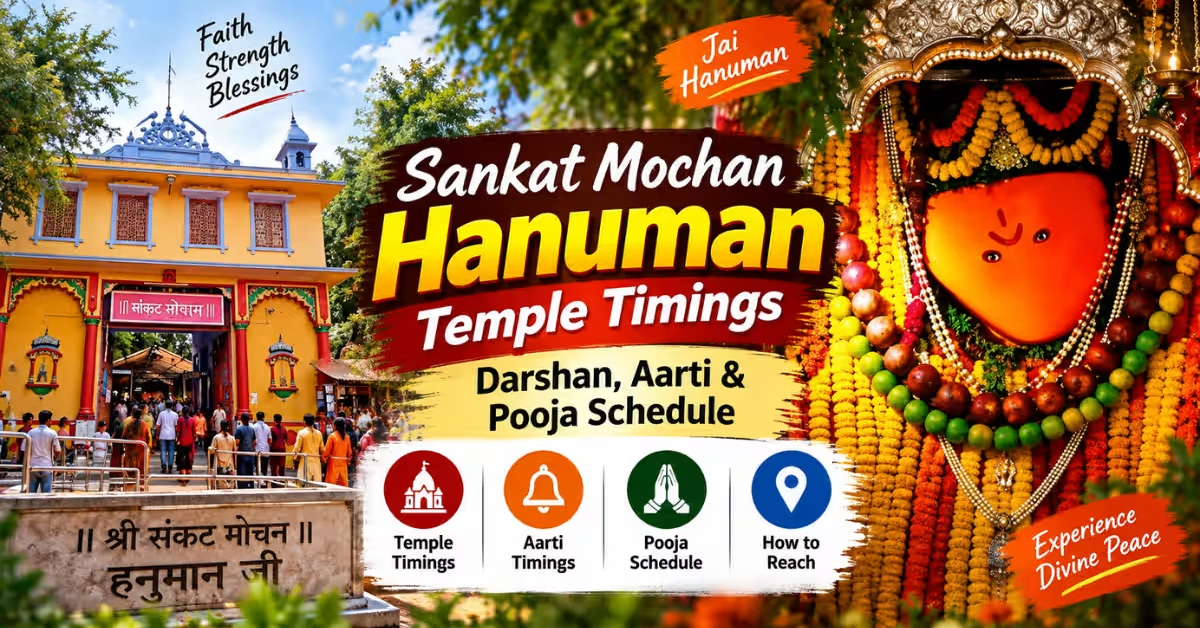
Sankat Mochan Hanuman Temple Varanasi timings: Open daily 5:00 AM-10:00 PM. Three daily aartis: 4:30 AM (Mangala), 12:00 PM (Madhyan), 8:00 PM (Sandhya). Entry free. Official prasad: Besan Laddoo. Mobile phones and cameras strictly prohibited. Busiest days: Tuesday and Saturday. Founded by Goswami Tulsidas (16th century), rebuilt by Madan Mohan Malaviya (20th century). Located 500 m from Assi Ghat, 3 km south of Kashi Vishwanath. Experience My India includes this temple in all Varanasi southern cluster tours. WhatsApp +91-7302265809. See our Ayodhya Varanasi Tour Package or message WhatsApp +91 7302265809.
Sankat Mochan Hanuman Temple is one of the most beloved temples in all of Varanasi – not because of its scale or architecture, but because of the character of the place itself. Founded by Goswami Tulsidas in the 16th century at the very location where he is said to have had a divine vision of Lord Hanuman, the temple sits within a shaded grove near the banks of the Assi stream. The tree canopy, the continuous devotional chanting, the large resident monkey population considered sacred to Hanuman – all give the temple a forest-hermitage atmosphere that is distinctly different from the stone-and-marble density of Varanasi’s central ghat temples.
I am Gurudutt, born and raised in Braj Bhoomi and the founder of Experience My India. Since 2018, I have guided 50,000+ pilgrims through the Varanasi southern temple cluster – Assi Ghat, Sankat Mochan and Tulsi Manas Mandir as a morning circuit. This guide gives you every practical timing, aarti schedule, historical detail and visitor tip for Sankat Mochan Hanuman Temple.
What Is Sankat Mochan Hanuman Temple
Sankat Mochan Hanuman Temple is a Hindu shrine dedicated to Lord Hanuman in his form as the remover of troubles – Sankat Mochan literally means “reliever from troubles” or “destroyer of difficulties” in Sanskrit. The temple is located in the Assi area of Varanasi, on the southern side of the city, near the banks where the Assi stream meets the Ganges.
The temple’s distinctiveness within Varanasi’s temple landscape: it is the only major Varanasi temple founded specifically by Goswami Tulsidas – the 16th-century poet-saint who wrote the Ramcharitmanas. The deity inside faces Lord Rama – Hanuman positioned in perpetual devotional service to the deity he serves – which reflects the temple’s deeply Vaishnav-Bhakti character rather than the primarily Shaivite orientation of most Varanasi temples.
The temple draws an extraordinarily broad range of devotees: students praying for academic success, businessmen seeking removal of obstacles, pilgrims with specific problems seeking Hanuman’s intervention and general Varanasi visitors drawn to the shaded, forest-like atmosphere. Tuesdays and Saturdays draw particularly large crowds – both are auspicious days for Hanuman worship.
Experience My India includes Sankat Mochan in the southern Varanasi morning cluster – Same Day Varanasi Tour Package from ₹2,999 and 1 Night 2 Days Varanasi Tour Package both include this temple as part of the Assi area circuit. WhatsApp +91-7302265809.
Sankat Mochan Hanuman Temple Timings – Complete Schedule
| Session | Opening Time | Closing Time |
| Full daily opening | 5:00 AM | 10:00 PM |
| Early pre-dawn window | 4:30 AM | – (Mangala Aarti only) |
Sankat Mochan Hanuman Temple is open 17 hours daily – from 5:00 AM to 10:00 PM without a midday closure. This is notably different from Varanasi’s other major temples (Kashi Vishwanath, Annapurna Devi Mandir) which close for the afternoon deity-rest period. Sankat Mochan’s continuous opening makes it accessible throughout the day.
No afternoon closure: The absence of a midday break is a practical advantage for pilgrims who want to visit after the Kashi Vishwanath morning queue and before the evening Ganga Aarti. A 12:00 PM-3:00 PM Sankat Mochan visit fits naturally into any Varanasi itinerary.
Festival and special day variations: On Tuesdays, Saturdays, Hanuman Jayanti and other major festivals, the temple may open earlier (4:00-4:30 AM) and close later. Experience My India confirms current-day timings for all Varanasi tour groups. WhatsApp +91-7302265809.
For the complete seasonal planning guide: Best Time to Visit Varanasi 2026.
Aarti Schedule – All Three Daily Aartis Explained
Sankat Mochan Hanuman Temple holds three daily aartis – each with its distinct character.
| Aarti | Time | Significance | Crowd |
| Mangala Aarti | 4:30 AM | Awakening ceremony – most sacred, fewest visitors | Very low – 20-50 devotees |
| Madhyan Aarti | 12:00 PM | Midday offering | Moderate |
| Sandhya Aarti | 8:00 PM | Evening ceremony – most attended | High on Tue/Sat |
Mangala Aarti (4:30 AM): The pre-dawn awakening aarti is the most spiritually significant and the most intimate. The grove is quiet, the lamps glow in darkness and the chanting echoes without competition from daytime noise. Pilgrims who attend this aarti often describe it as the most personally affecting temple experience of their entire Varanasi visit – because there is almost no one else present.
Sandhya Aarti (8:00 PM): The evening aarti is the most commonly attended. After the Dashashwamedh Ghat Ganga Aarti (7:00-7:45 PM), many pilgrims walk or take an auto to Sankat Mochan for the 8:00 PM aarti – making it one of the options for a double-aarti Varanasi evening. The 2 Nights 3 Days Varanasi Tour Package builds the Sandhya Aarti option into the Day 2 evening planning. WhatsApp +91-7302265809.
Tuesday and Saturday – The Busiest Days
Both Tuesday and Saturday are traditionally auspicious days for Hanuman worship across North India. At Sankat Mochan, these days bring significantly larger crowds:
| Day | Crowd Level | Queue at Peak | Best Arrival |
| Monday | Low | No queue | Any morning time |
| Tuesday | Very High | 45-90 min | Before 7:00 AM |
| Wednesday | Low | No queue | Any time |
| Thursday | Low-Moderate | No queue | Any time |
| Friday | Moderate | 15-20 min | Morning |
| Saturday | Very High | 45-90 min | Before 7:00 AM or after 8:00 PM |
| Sunday | Moderate-High | 20-30 min | Morning |
Why Tuesday and Saturday: Tuesday (Mangalwar) is specifically associated with Hanuman in the Vaishnav tradition – Mars (Mangal) is linked to Hanuman as a protective deity. Saturday (Shaniwar) is associated with Saturn (Shani) – and Hanuman is believed to ward off Saturn’s malefic influence, making Saturday the most important day for devotees seeking astrological protection.
For first-time visitors who want a quieter experience: Monday, Wednesday or Thursday morning between 7:00-9:00 AM. For devotees who want the full atmosphere of the peak day: arrive before 6:30 AM on Tuesday or Saturday.
Book Your Sugam Darshan and Rudrabhishek at Kashi Vishwanath
History of Sankat Mochan Temple – Two Founding Moments
Sankat Mochan Temple’s history involves two distinct founders – each responsible for a different stage of the temple’s existence.
First Founding – Goswami Tulsidas (16th Century)
Goswami Tulsidas (c. 1497/1532-1623 CE) – the poet-saint who composed the Ramcharitmanas – established the original temple site in the early 16th century. According to tradition, Tulsidas had a divine vision of Lord Hanuman at this location. Following this vision, he formed an idol of Hanuman from clay and established it at this site for worship. This original act of devotion at a specific location in Varanasi’s southern forest area is the founding of Sankat Mochan Hanuman Temple.
The same Tulsidas also composed the Hanuman Chalisa – the 40-verse devotional hymn to Hanuman that is recited continuously at the temple.
Second Founding – Madan Mohan Malaviya (Early 20th Century)
Pandit Madan Mohan Malaviya (1861-1946) – founder of Banaras Hindu University and one of India’s most influential educators – built the present-day temple structure in the early 20th century. Malaviya was both a devout Hanuman devotee and a practical institution builder. Under his direction, the original modest site was developed into the structured temple complex that exists today.
| Historical Layer | Who | When | What |
| First founding | Goswami Tulsidas | Early 16th century | Divine vision + clay idol placed + devotional tradition established |
| Second founding | Madan Mohan Malaviya | Early 20th century | Present temple structure built |
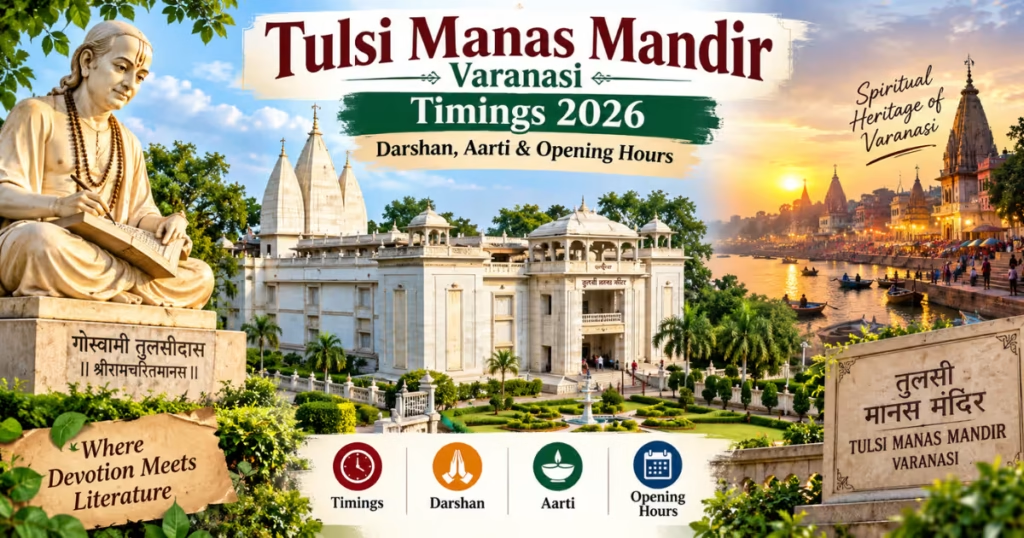
For context on Tulsidas’s other Varanasi site – the Tulsi Manas Mandir where he wrote the Ramcharitmanas – see the 30 Best Places to Visit in Kashi 2026 guide. Experience My India covers both Tulsidas sites in the southern Varanasi cluster.
Why Is Hanuman Called Sankat Mochan
The name “Sankat Mochan” provides the theological key to understanding why this form of Hanuman has been so universally significant across North India for centuries.
Sankat (Sanskrit) = difficulty, trouble, crisis, obstruction Mochan (Sanskrit) = remover, liberator, one who frees
“Sankat Mochan” therefore means “the one who removes difficulties” or “the liberator from troubles.”
The theological basis for this name is Hanuman’s role in the Ramayana: when Rama was in his most critical difficulty (Sita’s abduction, the war against Ravana, Lakshmana’s life-threatening injury), it was Hanuman who solved every crisis. He found Sita in Lanka, built the bridge, brought the Sanjeevani herb to restore Lakshmana. Hanuman in the devotional tradition is the archetype of the problem-solver who intervenes in impossible situations.
The specific belief at Sankat Mochan Varanasi: Devotees believe that sincere prayer at this specific temple – founded by Tulsidas at the site of his own divine Hanuman vision – carries particular potency for the removal of obstacles, the relief of astrological difficulties (especially Saturn/Shani related) and resolution of personal crises. This is why the temple draws such a diverse range of devotees: academic difficulties, business obstacles, health problems, legal disputes – all are brought to Sankat Mochan.
The Besan Laddoo Prasad Tradition
Sankat Mochan Hanuman Temple has a specific official prasad: Besan Laddoo (chickpea flour sweets).
| Prasad Detail | Information |
| Type | Besan ke Laddoo (chickpea flour sweets) |
| Significance | Hanuman’s preferred offering at this temple |
| Where to get | Temple prasad counter |
| Cost | Nominal – ₹20-₹100 for a packet |
| Quality | Temple-made, genuine – distinct from street vendor versions |
| Take home | Widely taken home as blessed prasad |
The Besan Laddoo at Sankat Mochan is not generic temple prasad – it is the specific traditional offering associated with Hanuman’s form at this temple. Devotees bringing prasad from Sankat Mochan Hanuman Temple carry it home as a specific blessing from the “remover of difficulties.” Experience My India mentions the prasad purchase at every Sankat Mochan visit. The 2 Night 3 Days Ayodhya Varanasi Tour Package includes prasad purchase guidance at all Varanasi temples. WhatsApp +91-7302265809.
Sankat Mochan Temple Location – How to Reach
Sankat Mochan Hanuman Temple is located in the Assi area of Varanasi’s southern zone – near the Assi stream and approximately 500 metres from Assi Ghat.
| From | Mode | Distance | Time | Cost |
| Assi Ghat | Walk | 500 m | 7 minutes | Free |
| Tulsi Manas Mandir | Walk | 500 m | 7 minutes | Free |
| Durga Temple (Durgakund) | Walk | 300 m | 4 minutes | Free |
| Kashi Vishwanath Temple | Auto | 3 km | 20-25 min | ₹60-₹100 |
| Dashashwamedh Ghat | Auto | 3.5 km | 20-25 min | ₹70-₹110 |
| Varanasi Cantt Station | Auto | 5 km | 30 min | ₹100-₹150 |
| LBS Airport (VNS) | Prepaid taxi | 26 km | 50-60 min | ₹500-₹700 |
Navigation tip: Give “Sankat Mochan Mandir” or “Sankat Mochan Temple” to any auto driver in Varanasi – universally known. The approach lane from the Durgakund Road direction is the most direct.
The southern cluster advantage: Sankat Mochan, Tulsi Manas Mandir, Durga Temple and Assi Ghat are all within 500 metres of each other – making the southern Varanasi cluster the most time-efficient multi-temple morning circuit in the city. Experience My India covers all four in a 2-hour morning window. The 3 Nights 4 Days Ayodhya Varanasi Tour Package from ₹5,999 includes the complete southern cluster. WhatsApp +91-7302265809.
Sankat Mochan Sangeet Samaroh – The Annual Music Festival
One of Sankat Mochan Temple’s most distinguished features is the Sankat Mochan Sangeet Samaroh – an annual classical music and dance festival held in the temple premises.
| Festival Detail | Information |
| Name | Sankat Mochan Sangeet Samaroh |
| Type | Classical Hindustani music + Bharatanatyam dance |
| Frequency | Annual |
| When | Usually April-May (around Hanuman Jayanti period) |
| Performers | Top classical artists from across India |
| Admission | Generally free or very low cost |
| Duration | Multi-day festival |
The Sangeet Samaroh is considered one of Varanasi’s most significant classical music events – the temple premises, with their shaded grove and open courtyard, create an extraordinary acoustic and atmospheric setting for classical performances. Artists of national and international reputation perform over multiple evenings.
For visitors traveling to Varanasi in April-May, checking the exact Sangeet Samaroh dates is worthwhile. Experience My India tracks the festival calendar for all Varanasi tours. The 5 Days Ayodhya Varanasi Tour Package can be timed for the Sangeet Samaroh period on request. WhatsApp +91-7302265809.
Important Rules – Mobile Phones, Monkeys and Dress Code
Mobile Phones and Cameras – Strictly Prohibited
Sankat Mochan Hanuman Temple has one of the strictest technology prohibition policies of any major Varanasi temple. Mobile phones, cameras, smartwatches and all electronic devices are strictly prohibited inside the temple premises. This applies not just to photography but to carrying the devices at all.
Lockers or deposit facilities are available at the entrance – leave all electronic items before entering. Experience My India briefs every pilgrim on this before arrival; having to return to the entrance to deposit a phone wastes 10-15 minutes of darshan time.
Monkey Safety – Critical Briefing
Sankat Mochan is home to a large resident monkey population – and the monkeys are known to be aggressive about food and shiny objects. Experience My India’s specific briefing for Sankat Mochan:
- Remove spectacles and secure in a closed bag before entering the approach area
- Keep mobile phones in zippered inner pockets
- Do not carry food in open bags or hands
- Do not eat inside the temple complex
- Maintain calm if a monkey approaches – do not shout or make sudden movements
- Sunglasses on top of the head are frequently grabbed
This is not a theoretical risk – Experience My India has seen glasses snatched within 30 seconds of entering the approach lane. The briefing prevents this for every group.
Dress Code
Covered shoulders and knees. Traditional Indian attire preferred. Remove footwear at the designated entrance area.
Best Time to Visit Sankat Mochan Hanuman Temple
| Timing | Crowd | Experience | Verdict |
| Mangala Aarti 4:30 AM | Very low | Most sacred, most intimate | ✅ Best for devotion |
| Morning 5:30-8:00 AM (Mon/Wed/Thu) | Low | Peaceful, shaded grove, monkey activity low | ✅ Best for first-time visitors |
| Tuesday/Saturday before 6:30 AM | Moderate | Still manageable peak-day atmosphere | ✅ Good if festival crowd wanted |
| Tuesday/Saturday 8:00 AM-12:00 PM | Very High | 45-90 minute wait | ⚠️ Only with Sugam position |
| 12:00-3:00 PM (any day) | Low | Post-rush, open throughout | ✅ Good afternoon option |
| Sandhya Aarti 8:00 PM | Moderate-High | Evening lamp ceremony | ✅ Atmospheric |
| Hanuman Jayanti | Extremely high | Major festival | ✅ Special – plan well ahead |
Season: October to March gives the most comfortable conditions – morning temperatures allow 5:30 AM walks from Assi Ghat without cold or heat concerns. For the full Varanasi month-by-month guide: Best Time to Visit Varanasi 2026.
Sankat Mochan in the Varanasi Southern Sightseeing Cluster
Experience My India places Sankat Mochan as the anchor of the southern Varanasi morning cluster – the most efficiently planned temple circuit in the city:
| Time | Site | Distance from Previous |
| 5:00-6:30 AM | Assi Ghat – Subah-e-Banaras | Starting point |
| 6:00-7:30 AM | Sankat Mochan Hanuman Temple | 500 m from Assi Ghat |
| 8:00-9:00 AM | Tulsi Manas Mandir | 500 m |
| 9:00-10:00 AM | Durga Temple (Durgakund) | 300 m |
| 10:00 AM-12:00 PM | BHU + New Vishwanath Temple | 1.5 km |
All five sites in one 2.5-hour morning walk from Assi Ghat – zero transport needed. The 2 Nights 3 Days Varanasi Tour Package builds this southern cluster as Day 2 morning alongside the Day 1 central circuit (Kaal Bhairav, Kashi Vishwanath, Ganga Aarti boat). For the complete list of all Kashi sightseeing sites: 30 Best Places to Visit in Kashi 2026.
Ground Truth – What Nobody Tells You About Sankat Mochan
1. The monkey situation at Sankat Mochan is the most consequential safety briefing in the Varanasi southern cluster – and almost no travel guide covers it specifically enough. “Beware of monkeys” appears on most temple guides. What doesn’t appear: the specific items that trigger snatching (glasses frames, anything shiny, open food), the correct physical response (stillness and calm, not shouting) and the 30-second window from entering the approach lane to first contact. Experience My India’s Sankat Mochan briefing is the same for every group: glasses in bag before entering the lane.
2. Sankat Mochan is open 17 hours daily with no afternoon closure – making it the most practically accessible major temple in Varanasi’s southern zone. While Kashi Vishwanath, Annapurna Mandir and most Varanasi temples close for 3-5 hours in the afternoon, Sankat Mochan remains open from 5:00 AM to 10:00 PM. This makes it the natural choice for pilgrims who need a temple visit during the 12:00-4:00 PM window when all other temples are closed.
3. The temple was founded by Tulsidas and rebuilt by Madan Mohan Malaviya – these are two completely separate founding moments separated by nearly 400 years and most temple guides conflate them. Tulsidas established the devotional tradition and clay idol at this site in the 16th century. Madan Mohan Malaviya built the physical structure in the early 20th century. The two are distinct founders of different aspects of the same temple – the devotional tradition and the architectural form.
4. The Sankat Mochan Sangeet Samaroh is one of Varanasi’s most significant classical music events – and tourists almost never know it exists. Held annually in the temple premises, the Samaroh draws India’s top classical musicians for multi-evening performances. The grove setting, the oil lamps and the acoustic character of the open courtyard make it one of the most atmospheric concert settings in North India. Experience My India tracks the Samaroh dates for April-May Varanasi bookings.
5. Monday, Wednesday and Thursday mornings at Sankat Mochan are the closest thing to a private temple experience available in Varanasi after 7:00 AM. While Kashi Vishwanath has a 45-90 minute queue even on quiet weekday mornings, Sankat Mochan on a Monday or Wednesday morning between 7:00-9:00 AM has a handful of devotees, complete access to the idol of Hanuman facing Rama and the shaded grove atmosphere fully available without crowds. Experience My India plans the quiet-day southern cluster specifically for pilgrims who want depth over spectacle.
Frequently Asked Questions – Sankat Mochan Hanuman Temple
Sankat Mochan Hanuman Temple Varanasi is famous for four things: it was founded by Goswami Tulsidas – author of the Ramcharitmanas – at the site of his divine Hanuman vision; Hanuman’s idol here faces Lord Rama, reflecting the temple’s deep Bhakti character; it is believed to remove obstacles including astrological difficulties (especially Saturn-related troubles), drawing a uniquely diverse range of devotees; and it hosts the annual Sankat Mochan Sangeet Samaroh – one of India’s most significant classical music festivals. The temple’s shaded grove atmosphere and 17-hour daily opening make it accessible throughout the Varanasi visit. Experience My India includes it in all southern cluster tours. WhatsApp +91-7302265809.
Sankat Mochan Hanuman Temple has two distinct historical founding moments. The original site was established by Goswami Tulsidas in the early 16th century – after he had a divine vision of Lord Hanuman at this location, he formed a clay idol and established devotional worship here. Tulsidas also composed the Hanuman Chalisa at this site. The present-day temple structure was built in the early 20th century by Pandit Madan Mohan Malaviya – founder of Banaras Hindu University – who developed the original devotional site into the organised temple complex that exists today. Experience My India explains both founding moments to every visiting group. WhatsApp +91-7302265809.
Hanuman is called Sankat Mochan – “remover of troubles” – because of his defining role in the Ramayana: when Lord Rama faced his most impossible crises (Sita’s abduction, Lakshmana’s near-death), it was Hanuman who intervened and resolved the impossible. Finding Sita in Lanka, bridging the ocean, fetching the Sanjeevani herb – Hanuman is the divine problem-solver. In the devotional tradition, this makes him the deity specifically approached for relief from personal difficulties, obstacles, astrological troubles and crises. The specific form worshipped at Varanasi’s Sankat Mochan Temple – established at the site where Tulsidas saw Hanuman – is considered particularly potent for these prayers. Experience My India includes this context in every Sankat Mochan visit briefing. WhatsApp +91-7302265809.
Sankat Mochan Hanuman Temple is a Hindu shrine in Varanasi’s Assi area dedicated to Lord Hanuman as the “remover of troubles.” Founded by Goswami Tulsidas in the 16th century and rebuilt by Madan Mohan Malaviya in the early 20th century, the temple is located 500 metres from Assi Ghat in a shaded grove. It is open daily from 5:00 AM to 10:00 PM with three aartis at 4:30 AM, 12:00 PM and 8:00 PM. Entry is free. Official prasad is Besan Laddoo. The temple hosts the annual Sankat Mochan Sangeet Samaroh classical music festival. Experience My India includes it in all Varanasi southern cluster tours. WhatsApp +91-7302265809.
Sankat Mochan Hanuman Temple Varanasi is open daily from 5:00 AM to 10:00 PM – 17 hours without a midday closure. This is one of the longest uninterrupted opening windows of any major Varanasi temple. The Mangala Aarti begins at 4:30 AM for the most dedicated early visitors. The three daily aartis are at 4:30 AM, 12:00 PM and 8:00 PM. On Tuesdays and Saturdays, the temple opens earlier and may close later. Entry is completely free. Experience My India advises visiting on Monday, Wednesday or Thursday morning for the quietest experience. WhatsApp +91-7302265809.
No – mobile phones, cameras, smartwatches and all electronic devices are strictly prohibited inside Sankat Mochan Hanuman Temple. This applies to carrying devices, not just to photography. Locker facilities are available at the temple entrance for depositing electronic items before entering. This prohibition is strictly enforced. Experience My India briefs every group to deposit all electronics before entering the approach lane. A phone in a pocket can be snatched by monkeys in the lane approach – so leaving electronics in the tour vehicle before walking to the temple entrance is the safest approach. WhatsApp +91-7302265809.
Monday, Wednesday or Thursday mornings between 6:00 AM and 9:00 AM offer the quietest and most personally accessible Sankat Mochan visit – few other visitors, complete access to the Hanuman-facing-Rama idol and the shaded grove fully peaceful. Tuesday and Saturday are the most auspicious days for Hanuman worship (Tuesday is Mars/Mangal day, Saturday for Saturn/Shani protection) – these draw very large crowds, so arrive before 6:30 AM for a manageable experience. Avoid Tuesday and Saturday afternoons. Experience My India plans the day-of-week timing for every Varanasi tour group based on travel dates. WhatsApp +91-7302265809.
Sankat Mochan Hanuman Temple is approximately 500 metres from Assi Ghat – about 7 minutes on foot. This makes it the most naturally combined temple with the Assi Ghat Subah-e-Banaras morning experience: start at Assi Ghat from 5:00 AM for morning prayers and sunrise, then walk 500 metres to Sankat Mochan for the morning opening at 5:00 AM or the 6:00 AM post-sunrise period. Tulsi Manas Mandir and Durga Temple are each another 300-500 metres from Sankat Mochan, making a complete 4-temple morning walk possible in under 2.5 hours entirely on foot. Experience My India plans this southern cluster for all 2-day+ Varanasi tours. WhatsApp +91-7302265809.
Recommended products
-
1 Night 2 Days Varanasi Tour Package
Original price was: ₹7,000.00.₹6,000.00Current price is: ₹6,000.00. -
2 Night 3 Days Ayodhya Varanasi Tour Package
Original price was: ₹9,000.00.₹8,000.00Current price is: ₹8,000.00. -
3 Nights 4 Days Ayodhya Varanasi Tour Package
Original price was: ₹11,000.00.₹10,000.00Current price is: ₹10,000.00. -

5 Days Ayodhya Varanasi Tour Package


🙏 Ready to Visit Sankat Mochan Hanuman Temple with Experience My India?
WhatsApp us – Monday morning 6 AM timing planned, monkey safety briefing done, electronics locker arranged, Besan Laddoo prasad counter shown and southern cluster (Assi Ghat + Sankat Mochan + Tulsi Manas + Durga Temple) all covered in one morning.
WhatsApp +91-7302265809 – Book Now
Jai Shri Ram 🙏