
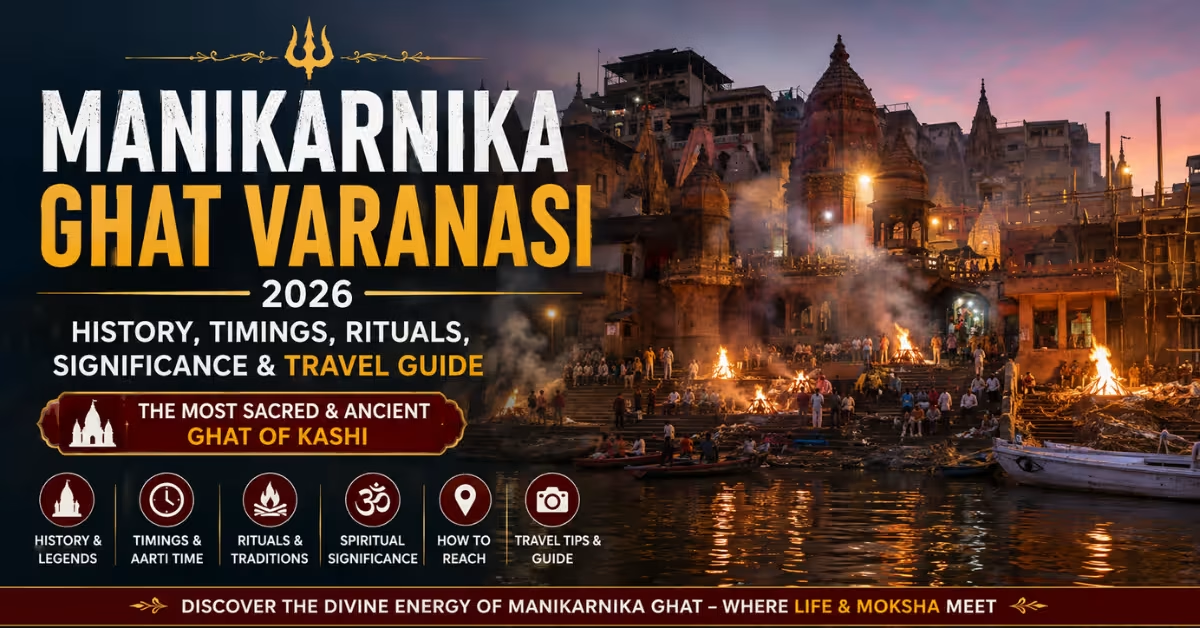
Manikarnika Ghat in Varanasi is the primary Hindu cremation ghat where funeral pyres burn continuously, 24 hours a day, 365 days a year. Between 100 and 300 cremations occur daily. The ghat is open to visitors who observe respectfully – no photography is permitted at any time. It is located between Dashashwamedh Ghat and Scindia Ghat, approximately 1 km north of Dashashwamedh. Hindus believe cremation here grants the soul moksha. Experience My India includes Manikarnika in all Varanasi tours from ₹2,999. WhatsApp +91-7302265809.
The Ghat Where the Fires Never Go Out
There are places in the world where the boundary between daily life and fundamental truth becomes unusually thin. Manikarnika Ghat is one of them. The cremation fires here have been burning continuously – by every credible account – for centuries. Between 100 and 300 bodies arrive every day, from across India and beyond, carried by families who believe that what happens here is not merely a funeral but a release from the entire cycle of birth, death and rebirth.
For visitors who encounter Manikarnika for the first time, the experience is rarely what they expected. The scale, the smoke, the efficient choreography of the Dom caste workers, the grief of the families and the philosophical calmness of the ghat’s regular inhabitants all coexist within a space the size of a football field. Most visitors leave with something they cannot easily put into words.
I am Gurudutt, born and raised in Braj Bhoomi and founder of Experience My India. Since 2018, our team has guided over 50,000 pilgrims through Varanasi, including many who specifically ask about Manikarnika. This guide covers the full history, mythology, rituals and the specific etiquette and practical guidance needed to approach this place with the respect it demands.
About Manikarnika Ghat
| Detail | Information |
| Type | Primary Hindu cremation ghat |
| Location | Between Dashashwamedh Ghat (south) and Scindia Ghat (north), Varanasi |
| Distance from Dashashwamedh Ghat | 1 km north – 15-20 minute walk along the ghat path |
| Distance from Kashi Vishwanath Temple | 800 metres – 10-15 minutes walk through old city lanes |
| Open hours | 24 hours, 7 days a week, 365 days a year |
| Cremations per day | Approximately 100 to 300 |
| Entry | Free – open to all respectful visitors |
| Photography | Strictly prohibited at all times |
| Nearest railway station | Varanasi Junction – approximately 5 km |
History – Construction and Maratha Patronage
Manikarnika Ghat’s recorded history goes back to at least the Gupta period – 5th-century inscriptions reference the ghat’s sacred status, placing its significance well over 1,500 years into documented history.
The modern stone architecture and ghat structures visible today are largely the result of two major Maratha patronage periods:
Bajirao Peshwa (1730): The Maratha statesman and military commander Bajirao Peshwa I undertook significant construction and expansion of the ghat’s infrastructure in 1730, establishing much of the stone ghat platform as it exists today.
Ahilyabai Holkar (1791): The Maratha queen Ahilyabai Holkar, whose name is associated with renovations at sacred sites across India, contributed further to the ghat’s structural development in 1791.
The combination of ancient religious significance and 18th-century Maratha architectural investment gives Manikarnika its current form – a ghat that is simultaneously ancient in meaning and structured in its physical organisation. View Our 2 Days Varanasi Tour Package
Mythology – Two Origin Stories
The name “Manikarnika” is Sanskrit – “mani” (jewel) and “karnika” (earring/channel). Two major origin mythologies explain the name and both are actively cited in the Varanasi devotional tradition.
The Vishnu Mythology
According to one account in the Skanda Purana, Lord Vishnu dug a well at this location using His chakra (discus). As He dug, the exertion caused one of His jewelled earrings to fall into the well. The well – called Manikarnika Kund – still exists at the ghat. The earring is the “mani-karnika” after which the ghat takes its name.
The Sati Mythology
A second, more frequently cited tradition holds that when Goddess Sati died and Lord Shiva carried her burning body across the universe in grief, the various body parts fell at different locations across the subcontinent, each creating a Shakti Peetha (goddess seat). At Manikarnika, it is the earring of Goddess Sati that is said to have fallen, creating one of the Shakti Peethas.
Both mythologies coexist in Varanasi’s devotional tradition – and neither excludes the other, since both establish the same theological point: this is a location of extraordinary sacred concentration where divine objects or divine body parts touched the earth.
Experience My India’s guides narrate both mythologies at the ghat. Call +91-7302265809 for a guided Varanasi heritage visit.
Book Your Ayodhya Varanasi Tour Package
Significance – Why Dying in Varanasi Matters
To understand Manikarnika Ghat fully, the theological concept behind it must be understood – not as a tourist explanation but as the actual belief system of the pilgrims and families who arrive here.
In Hindu cosmology, the soul undergoes repeated cycles of birth, death and rebirth (samsara) until it achieves liberation (moksha) – the permanent release from this cycle. Most forms of death, regardless of how virtuous the deceased was, do not automatically deliver moksha.
Varanasi is held to be different. The Kashi Kanda section of the Skanda Purana states that Lord Shiva himself whispers the Taraka Mantra (the liberation mantra) into the ear of the dying person at the moment of death in Kashi. This act of divine intervention is believed to grant moksha directly – regardless of the deceased’s karma – making death in Varanasi one of the most sought-after spiritual outcomes in the Hindu tradition.
Manikarnika Ghat is where this belief is enacted most directly. Families who bring their dead to Manikarnika are not simply performing a funeral – they are bringing their loved one to the threshold of liberation.
This context transforms everything about the ghat: the fires, the constant activity, the absence of visible mourning in the conventional sense – all of it reflects an understanding of death as completion rather than loss.
Rituals – What Happens at the Ghat
The Cremation Process
Each cremation at Manikarnika follows a specific traditional sequence:
1. Arrival: The body is carried through the old city lanes on a bamboo stretcher by family members, typically wrapped in white cloth and accompanied by chanting of “Ram naam satya hai” (The name of Ram is truth).
2. Purification: The body is brought to the Ganga edge for ritual washing in the sacred water before cremation.
3. Wood preparation: The family purchases wood from designated sellers at the ghat. The type and amount of wood is chosen based on family tradition and capacity – sandalwood, mango and other aromatic woods are traditional, with ashwood as the standard.
4. Lighting the pyre: The eldest son or the designated family male traditionally circles the pyre three or five times and then lights it from the eternal flame – the fire kept by the Dom caste.
5. The cremation: The pyre burns for approximately 3-4 hours. Family members remain at the ghat throughout.
6. Immersion: After cremation, the ashes and remaining bone fragments are immersed in the Ganga.
Book Your Sugam Darshan and Rudrabhishek at Kashi Vishwanath
The Dom Caste – Keepers of the Eternal Flame
One of the most distinctive elements of Manikarnika Ghat is the Dom caste – the hereditary community whose specific traditional role is the management of the cremation ground.
The Dom (also written as Dum) community at Manikarnika are the keepers of the eternal fire – a flame that, according to ghat tradition, has been burning continuously for centuries and from which every funeral pyre at the ghat is lit. The head of the Dom community holds the title “Dom Raja” (King of the Dom).
The Dom community’s role at Manikarnika is both sacred and hereditary – managing the cremation grounds, charging for the eternal flame and maintaining the operational continuity of the ghat. Their presence at Manikarnika is as continuous as the fires themselves.
Note on “donations” to Dom community members: Some Dom caste members approach visitors to ask for donations in exchange for explanations of the cremation process or for access to better viewing positions. These requests are not official – visitors are not obligated to pay and unsolicited guided access requests may not be from genuine Dom Raja family members. See the Visitor Guidelines section below. View Our Same Day Varanasi Tour Package
Timings & Access
| Detail | Information |
| Open hours | 24 hours, 7 days a week, every day of the year |
| Best visiting time | Early morning (5:30-7:30 AM) – quieter, fewer visitors, river mist |
| Boat approach | Possible at any hour – best for sunrise circuit (5:30 AM) |
| On-foot approach | Via ghat path from Dashashwamedh (15-20 min north) or through old city lanes from Kashi Vishwanath (10-15 min) |
| Photography | Strictly prohibited at all times – no exceptions |
| Entry fee | None |
Best seasons to visit: October to March – comfortable temperatures for the ghat approach walk, morning boat rides and extended time near the ghat. The fires burn in every season and weather condition, but visitor comfort for the outdoor approach varies significantly.
How to Reach Manikarnika Ghat
By Foot from Dashashwamedh Ghat
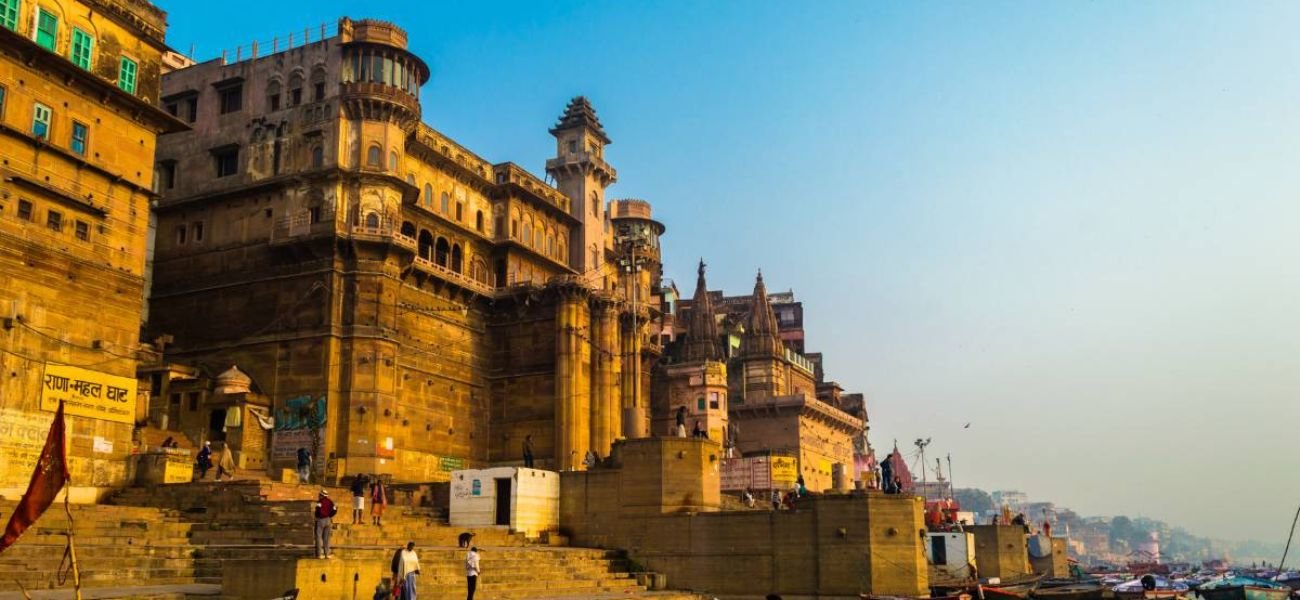
The most natural approach – walk north from Dashashwamedh along the ghat path for approximately 1 km. Passing through Lalita Ghat (Nepali Temple visible) before reaching Manikarnika. Allow 15-20 minutes.
By Boat
A boat on the Ganga passes Manikarnika as part of the standard Varanasi ghat circuit – the fires and the structure are clearly visible from the river. A sunrise boat from Assi Ghat passes Manikarnika by approximately 6:15-6:30 AM depending on pace. The boat view provides a complete, respectful vantage without entering the ghat itself.
By Auto from Varanasi Junction
From Varanasi Junction (approximately 5 km), an auto-rickshaw to the nearest approach point (Lalita Ghat area) costs ₹80-₹120, taking 20-30 minutes. The final approach to Manikarnika is always on foot through the ghat lanes – no vehicle access exists within 200-300 metres.
Experience My India manages all transport to and from the Manikarnika approach. Call +91-7302265809 for transport arrangements. View Our 3 Days Varanasi Tour Package
Visitor Guidelines – How to Approach Respectfully
This section matters more for Manikarnika than for any other site in Varanasi. The ghat is an active cremation ground – families are present throughout – and the standards of behaviour required are specific.
What is required
- Silence and solemnity – do not speak loudly, make jokes or treat the ghat as a tourist attraction
- Modest clothing – no shorts, sleeveless shirts or revealing clothing
- Slow, deliberate movement – the lanes approaching the ghat are narrow and can be slippery from water and ash; move carefully
- Respectful distance from families – do not approach grieving families, make eye contact unnecessarily or linger near active pyres
What is strictly prohibited
- Photography of any kind – including phones, cameras or any recording device – of the pyres, families, Dom caste workers or the cremation process. This is enforced by Dom caste members and is also a matter of basic human respect.
- Pointing or gesturing toward active pyres or families
Navigating touts
Manikarnika Ghat has a specific problem with unofficial guides and donation solicitors – individuals who approach visitors offering to explain the ghat in exchange for large “donations” to a fictional temple fund, orphanage or wood charity.
| Common Approach | What It Is | How to Respond |
| “Come, I show you burning ghat, small donation only” | Unofficial tout – not a genuine Dom Raja guide | Politely decline and continue walking |
| “Our temple needs wood donation for poor families” | Common scam – no such official scheme exists | Decline; any legitimate wood donation is handled by the family privately |
| “Follow me, special area, better view” | Attempt to manoeuvre you into a position requiring payment | Do not follow |
Experience My India’s guides accompany every group to Manikarnika and manage these interactions. Call +91-7302265809 for a guided visit. View Our 5 Days Ayodhya Varanasi Tour Package
Nearby Attractions
| Attraction | Distance from Manikarnika | Notes |
| Scindia Ghat | 100 metres north | Partially submerged leaning Shiva temple – best from a boat |
| Lalita Ghat & Nepali Temple | 200 metres south | 19th-century pagoda temple by Nepalese royal family |
| Dashashwamedh Ghat | 1 km south | Evening Ganga Aarti at 6:30-7:00 PM |
| Kashi Vishwanath Temple | 800 metres via inner lanes | Most important Shiva temple in Varanasi |
| Man Mandir Ghat | 500 metres south | 18th-century Jantar Mantar observatory above the ghat |
Experience My India sequences the morning ghat walk to include Manikarnika as part of the Assi-to-Manikarnika circuit. WhatsApp +91-7302265809 for the complete route.
Ground Truth – What Nobody Tells You About Manikarnika Ghat
After guiding 50,000+ pilgrims through Varanasi since 2018, here is what Experience My India knows about Manikarnika that most guides will not say:
The experience depends almost entirely on what you know before you arrive. Visitors who approach Manikarnika without any context – no knowledge of the moksha theology, no understanding of the Dom caste’s role, no awareness of the ghat’s mythological history – experience it as disturbing and bewildering. Visitors who arrive with the context intact find it one of the most philosophically confronting and clarifying experiences of their lives. The difference is not the ghat – it is the preparation.
Photography prohibition is not just a rule – it is an active human rights issue. Families at Manikarnika are in acute grief. The prohibition on photography is not a bureaucratic restriction; it is the bare minimum of respect owed to people in the worst moment of their lives. Visitors who attempt to photograph discreetly – or from boats at closer range than is respectful – are violating something that cannot be undone. Experience My India is unequivocal with every group on this point.
The Dom caste tout problem is more organised than it appears. The individuals who approach visitors near Manikarnika with donation requests and “private viewing” offers are often well-practised and persistent. Some claim Dom Raja credentials. The honest truth is that legitimate Dom Raja family members do not solicit tourists for donations – they are running a cremation ground, not a visitor attraction. Declining firmly and continuing to walk is the correct response.
The boat approach is genuinely the most respectful and complete view. Watching from a boat approximately 50 metres from the ghat gives a full visual context – the wood stacks, the fires, the scale of the operation – without entering the space where families are grieving. For visitors who want to understand Manikarnika without feeling they are intruding on private grief, the morning boat circuit is the most respectful mode.
Know Before You Visit – Manikarnika Ghat Varanasi
- Photography is absolutely prohibited – no cameras, no phones, no recording of any kind, at any proximity
- Open 24 hours – visit at any time; early morning (5:30-7:30 AM) is the quietest window
- Free entry – no ticket, no compulsory donation, no official paid access exists
- Maintain silence – speak only at low volume; no loud conversation, no laughter
- Modest clothing – shoulders and knees covered; no flip-flops on the wet, slippery lanes (wear shoes that can grip)
- Touts at Manikarnika are a known issue – decline all unsolicited guide offers and donation requests firmly
- The boat view is equally valid – a morning boat ride past Manikarnika is fully respectful and gives complete visual context
- Do not approach grieving families – maintain physical distance and avoid eye contact with family members of the deceased
- Experience My India briefs every group on all of these points before approaching. WhatsApp +91-7302265809.
Frequently Asked Questions – Manikarnika Ghat Varanasi
At Manikarnika Ghat, the primary ritual is Hindu cremation following the traditional sequence: the body is carried to the ghat, ritually washed in the Ganga, placed on a wooden pyre and lit by the eldest son or male family member using fire from the Dom caste’s eternal flame. The pyre burns for approximately 3-4 hours, after which the ashes are immersed in the Ganga. Between 100 and 300 cremations occur daily. Experience My India explains the full ritual sequence in every guided Varanasi visit. Call +91-7302265809.
For Hindu pilgrims, the primary spiritual significance of Manikarnika Ghat lies in the belief that souls cremated here attain moksha – permanent liberation from the cycle of rebirth – because Lord Shiva is believed to whisper the Taraka Mantra into the ear of the dying person at the moment of death in Kashi. For visitors (rather than the deceased), Manikarnika offers a direct encounter with the Hindu philosophical understanding of death as release rather than ending. Experience My India provides this theological context before every group visit. WhatsApp +91-7302265809.
The most discussed “mystery” of Manikarnika Ghat is the Dom caste’s eternal flame – a fire that is said to have been burning continuously for centuries, from which every funeral pyre is lit. The continuity of this flame is maintained by the Dom community as both a sacred duty and a hereditary occupation. The second mystery is the Manikarnika Kund (the well dug by Lord Vishnu), which remains within the ghat complex. The name “Manikarnika” itself – referring to a divine earring that fell here – is part of both the Vishnu and Sati mythological traditions. Experience My India narrates all of these at the ghat. Call +91-7302265809.
In the Shiva Purana tradition, Manikarnika Ghat is associated with the story of Goddess Sati’s death – when Sati immolated herself after her father Daksha insulted Lord Shiva. Shiva carried her burning body across the cosmos in grief and different body parts fell at different locations, creating Shakti Peethas. At Manikarnika, her earring is said to have fallen. The “curse” element in some tellings relates to Daksha’s act being considered such a transgression that the location became permanently associated with death and transformation. Experience My India’s guides explain the full context at the ghat. WhatsApp +91-7302265809.
No. Photography – including phones, cameras or any recording device – is strictly prohibited at Manikarnika Ghat at all times. The prohibition applies to photographs of the cremation pyres, grieving families, Dom caste workers and the cremation process itself, from any proximity including from boats that approach closely. This is not a bureaucratic rule but a basic matter of respecting families in acute grief. Experience My India is explicit about this rule before every group approaches the ghat. Call +91-7302265809.
The Dom (or Dum) caste is the hereditary community responsible for managing Manikarnika Ghat’s cremation operations. Their specific role includes maintaining the eternal flame from which every funeral pyre is lit, supplying wood for cremations and overseeing the general operation of the ghat. The community’s head holds the title “Dom Raja.” The Dom community’s presence at Manikarnika is as ancient as the ghat’s recorded history. Note that some individuals near the ghat who claim Dom Raja credentials to solicit donations from visitors may not be legitimate family members. Experience My India advises on this. WhatsApp +91-7302265809.
Manikarnika Ghat is accessible 24 hours daily – fires burn at all hours. The early morning window (5:30-7:30 AM) is the quietest in terms of visitor numbers and offers the most contemplative atmosphere. October to March is the best season – comfortable temperatures for the ghat walk and morning boat ride, with good light for river-distance viewing. At any time of year, the boat approach at sunrise is Experience My India’s most recommended viewing mode. Call +91-7302265809 to arrange a morning boat ride.
Do not take any photographs – this is non-negotiable. Do not speak loudly or treat the ghat as a tourist attraction. Do not approach or make eye contact with grieving families. Do not accept unsolicited guide offers or pay “donations” to individuals who approach you with stories about wood charities, temple funds or orphanages – these are standard touts. Do not wear revealing clothing. Do not point toward active pyres. Experience My India briefs every guided group on all of these points before approaching. WhatsApp +91-7302265809.
Recommended products
-
1 Night 2 Days Varanasi Tour Package
Original price was: ₹7,000.00.₹6,000.00Current price is: ₹6,000.00. -
2 Night 3 Days Ayodhya Varanasi Tour Package
Original price was: ₹9,000.00.₹8,000.00Current price is: ₹8,000.00. -
2 Nights 3 Days Varanasi Tour Package
Original price was: ₹11,000.00.₹9,500.00Current price is: ₹9,500.00. -
5 Days Ayodhya Varanasi Tour Package


Ready to Visit Manikarnika Ghat with Experience My India?
WhatsApp us and receive your complete Varanasi itinerary within 30 minutes – the morning ghat walk with full Manikarnika theological context, the Dashashwamedh Ganga Aarti positioning, sunrise boat timing and all the practical guidance you need to approach this ghat with the respect and preparation it deserves.
Varanasi Packages from ₹2,999 per person · All inclusive
WhatsApp +91-7302265809 – Book Now
Jai Shri Ram 🙏