
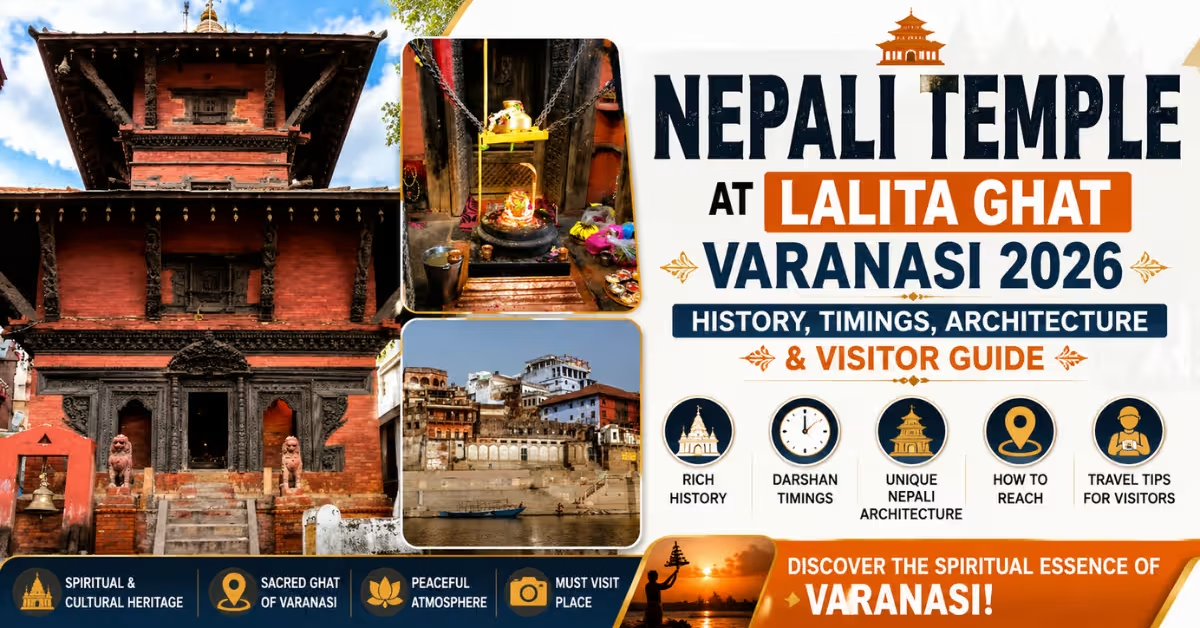
The Nepali Temple (Kathwala Mandir) at Lalita Ghat in Varanasi is a 19th-century pagoda-style temple built by the Nepalese royal family – King Rana Bahadur Shah and completed by his son Vikram Shah. Dedicated to Lord Shiva as Pashupatinath, it contains a replica of Kathmandu’s Pashupatinath lingam. Timings: 4:00 AM-12:00 PM and 1:00 PM-9:00 PM daily. Entry is free. Located between Dashashwamedh and Manikarnika ghats. Experience My India includes it in Varanasi heritage tours from ₹2,999. WhatsApp +91-7302265809.
A Temple That Does Not Look Like Varanasi – By Design
Among the hundreds of temples that line the Varanasi ghats, one stands out immediately and unmistakably – not because it is the largest or the most visited, but because it does not look like it belongs on this stretch of the Ganga at all. The Nepali Temple at Lalita Ghat has a multi-tiered pagoda roof that belongs architecturally to Kathmandu, not Kashi. Intricate wood carvings of the kind found on Himalayan temples cover its struts and pillars. And inside, a sacred Pashupatinath lingam – a replica of the one in Nepal’s most revered Shiva temple – makes this the only point on the Varanasi ghat circuit where Nepal’s royal devotion and Varanasi’s ancient sacred geography intersect.
This is not a commonly visited temple – most standard Varanasi itineraries walk past Lalita Ghat without stopping. That is precisely why it rewards a visit. Thirty to forty-five minutes at the Nepali Temple gives you a dimension of Varanasi’s ghat architecture and spiritual history that even many experienced Braj pilgrims have never encountered.
I am Gurudutt, born and raised in Braj Bhoomi and founder of Experience My India. Since 2018, our team has guided over 50,000 pilgrims through Varanasi – including those who specifically seek out lesser-known heritage sites. This guide gives you the complete history, architectural detail and practical visitor information for one of Varanasi’s most distinctive temple gems.
About the Nepali Temple at Lalita Ghat Varanasi
| Detail | Information |
| Also known as | Kathwala Mandir (wooden temple), Mini Khajuraho |
| Location | Lalita Ghat, Varanasi – between Dashashwamedh Ghat and Manikarnika Ghat |
| Deity | Lord Shiva as Pashupatinath – contains a replica of the Kathmandu Pashupatinath lingam |
| Built by | Rana Bahadur Shah (begun) and Vikram Shah (completed) – Kings of Nepal |
| Period | 19th century |
| Architecture style | Nepalese Pagoda – distinct from all other Varanasi ghat temples |
| Materials | Terracotta, stone and sacred wood imported from Nepal |
| Entry fee | Free |
| Timings | 4:00 AM – 12:00 PM and 1:00 PM – 9:00 PM daily |
| Time needed | 30 – 45 minutes |
| Photography | Permitted in outer areas; confirm restrictions near the sanctum |
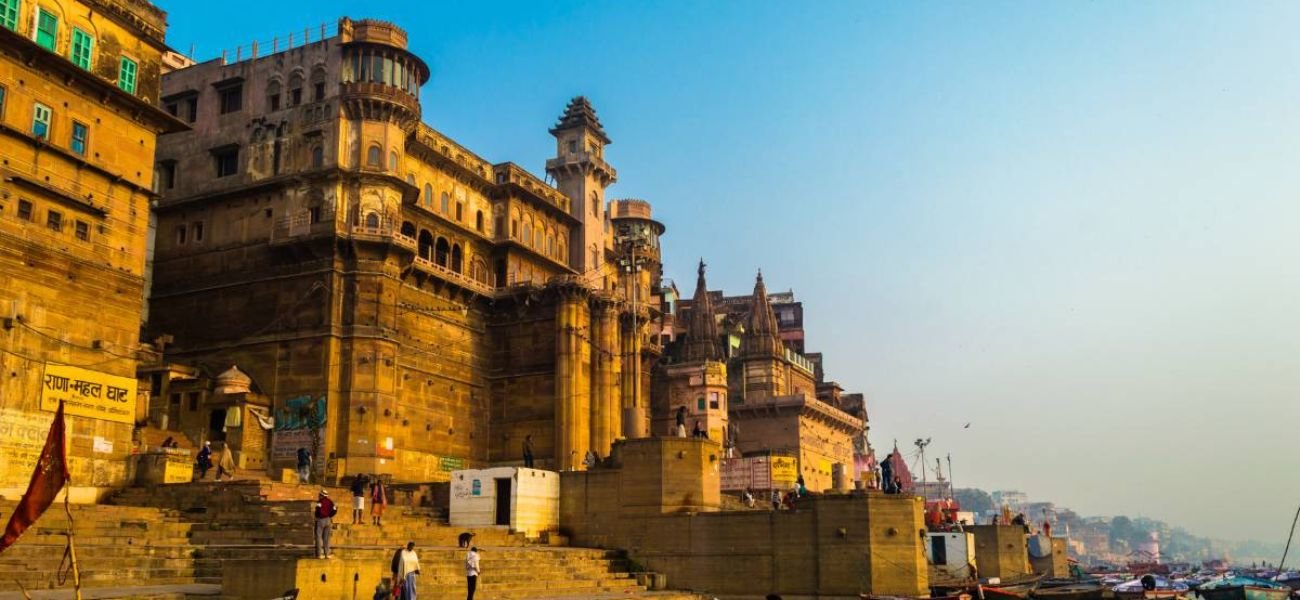
The Nepali Temple is one of Varanasi’s most architecturally distinctive structures – and one of the least crowded significant sites on the ghat circuit. Its setting on Lalita Ghat, visible from the river, makes it identifiable even on a boat ride before you step ashore.
Book Your Ayodhya Varanasi Tour Package
History – Two Kings and a Royal Commission
The First King – Rana Bahadur Shah
The Nepali Temple at Lalita Ghat has an unusual origin rooted in political exile. Rana Bahadur Shah, who served as King of Nepal (technically as regent) in the late 18th century, came to Varanasi after being deposed and forced to leave his kingdom. He arrived in the sacred city that Hindus across the subcontinent – including from Nepal – venerated as Kashi, the city of Shiva.
Rana Bahadur Shah chose Lalita Ghat on the Varanasi riverbank as the site for a temple that would honour Pashupatinath – the supreme form of Shiva worshipped in Nepal’s most sacred temple complex in Kathmandu. The temple he began carried both personal devotion and political symbolism: a Nepalese king in exile building a piece of Nepal’s sacred tradition on the banks of the Ganga.
The Second King – Vikram Shah
Construction was not completed during Rana Bahadur Shah’s lifetime. His son Vikram Shah continued and completed the temple, which is why the structure carries the devotional intent of two generations of the Nepalese royal family.
| Historical Detail | Information |
| Founded by | Rana Bahadur Shah, King of Nepal (exiled period) |
| Completed by | Vikram Shah, son of Rana Bahadur Shah |
| Period | 19th century |
| Motivation | Royal devotion to Pashupatinath; exile in Varanasi |
| Significance | The only Nepali royal temple on the Varanasi ghat circuit |
The Pashupatinath Connection
The sacred lingam inside the Nepali Temple is a replica of the Pashupatinath lingam from Kathmandu – Nepal’s most revered Shiva shrine. This connection makes the Varanasi temple a secondary Pashupatinath tirtha (pilgrimage point) for Nepali devotees and for pilgrims who cannot travel to Kathmandu.
Experience My India’s guides narrate this complete royal history during every Nepali Temple visit. Call +91-7302265809 for a guided Varanasi heritage tour.
Book Your Sugam Darshan and Rudrabhishek at Kashi Vishwanath
Architecture – Pagoda Style, Wood Carvings & Why It Looks Different
The Nepali Temple’s architecture is the reason it arrests attention from the river long before any visitor steps ashore at Lalita Ghat.
The Pagoda Roof
The temple’s most immediately identifiable feature is its multi-tiered pagoda roof – a form that is the architectural signature of Nepalese and Tibetan religious structures. Unlike the shikhara (tower) form that characterises most North Indian temples on the Varanasi ghat circuit, the pagoda’s tiered, overhanging roofline is a direct expression of Himalayan temple architecture transplanted to the plains.
This pagoda form is why the temple is visible and distinct even from the middle of the Ganga – no other structure on the Varanasi ghat line looks like this.
The Sacred Wood
The temple is built using a combination of:
- Terracotta – for structural base elements
- Stone – for foundational and structural load-bearing sections
- Sacred wood imported from Nepal – for the distinctive carved elements that give the temple its “Kathwala” (wooden temple) nickname
The use of Nepali sacred wood – brought specifically from the Himalayas – was a deliberate royal decision, intended to make this Varanasi temple as authentically Nepalese in material as possible, not just in form.
The Erotic Carvings – Why They Exist
The Nepali Temple is also known informally as “Mini Khajuraho” for the intricate wood carvings on its struts and pillars that depict erotic scenes. This is not decorative excess – it follows a specific Nepalese temple tradition where such carvings are placed on the outer structure.
The most commonly cited interpretation in Nepali temple tradition is that these carvings are positioned to ward off lightning – the goddess of lightning (Vajraghata in some traditions) is considered to be a celibate goddess who will not strike a place depicting erotic scenes. Others interpret them as representations of the full range of human experience that must be left behind before entering the divine space of the sanctum.
| Architectural Feature | Detail |
| Roof style | Multi-tiered pagoda – Himalayan, not North Indian |
| Materials | Terracotta + stone + Nepali sacred wood (imported) |
| Carvings | Intricate erotic wood carvings on struts and pillars |
| Nickname | “Mini Khajuraho” and “Kathwala Mandir” |
| Distinctive factor | Only pagoda-style temple on the Varanasi ghat circuit |
Experience My India’s guides explain the architectural tradition and the significance of the erotic carvings during every heritage tour. The context transforms what might seem like curiosity into genuine cultural understanding. Call +91-7302265809 to book.
🙏 Visiting Varanasi’s Hidden Heritage Sites? Experience My India includes the Nepali Temple in our 2-Day Varanasi Heritage Tour – alongside the main ghats, Kashi Vishwanath, Sarnath and Bharat Mata Mandir. Varanasi Heritage Tour from ₹3,999 per person · AC cab, hotel, guide included WhatsApp +91-7302265809
Timings, Entry Fee & Visitor Details
| Detail | Information |
| Morning session | 4:00 AM – 12:00 PM |
| Afternoon break | 12:00 PM – 1:00 PM (brief closure for rituals) |
| Evening session | 1:00 PM – 9:00 PM |
| Weekly closure | None – open all 7 days |
| Entry fee | Free – no ticket, no donation box at entrance |
| Photography | Permitted in outer areas and for architecture; confirm at sanctum |
| Time needed | 30 – 45 minutes for a complete visit including the carvings |
| Dress code | Modest attire recommended – temple convention |
| Crowd level | Low – significantly less crowded than Dashashwamedh or Manikarnika |
Best visit timing: The Nepali Temple is best visited in the morning (7:00-9:00 AM) when the light quality on the wood carvings is best for viewing and photography or in the late afternoon (4:00-6:00 PM) before the evening ghat activity builds. The very long operational hours (4 AM-9 PM) make it flexible to include in any time slot.
Experience My India confirms the current day’s temple schedule for every guided visit. WhatsApp +91-7302265809 for the day’s confirmed opening status.
How to Reach Nepali Temple Varanasi
The Nepali Temple is positioned directly on Lalita Ghat – accessible either by walking through Varanasi’s ghat alleys or by river boat.
| Route | From | Distance | Travel Time | Cost |
| By boat (recommended) | Dashashwamedh Ghat | 500 metres along the river | 5 – 10 min boat ride | ₹100-₹300 (shared/private boat) |
| Walking (ghat path) | Dashashwamedh Ghat | 500 metres north along ghat steps | 8 – 12 min | Free |
| Walking (inner lanes) | Kashi Vishwanath Temple | 800 metres through the old city lanes | 12 – 18 min | Free |
| Auto-rickshaw | Varanasi Junction | 4 km | 15 – 25 min | ₹80 – ₹120 |
Navigation note: Lalita Ghat sits between the two most famous ghats in Varanasi – Dashashwamedh (the aarti ghat, slightly south) and Manikarnika (the cremation ghat, slightly north). Most visitors reach the Nepali Temple by walking north from Dashashwamedh along the ghat path – it is visible from the ghat steps even before you arrive.
Experience My India includes the Nepali Temple as a ghat-walk stop in all Varanasi heritage itineraries. Call +91-7302265809 for transport arrangements.
About Lalita Ghat – The Setting
Lalita Ghat is one of Varanasi’s 84 named ghats – less famous than Dashashwamedh or Assi, but with a distinct character that comes from its position and its landmarks.
| Lalita Ghat Detail | Information |
| Position | Between Dashashwamedh Ghat (south) and Manikarnika Ghat (north) |
| Character | Quieter than both adjacent ghats; primarily a bathing and residential ghat |
| Primary landmark | The Nepali Temple (the main reason visitors come to Lalita Ghat specifically) |
| Crowd level | Low – the contrast with nearby Dashashwamedh and Manikarnika is significant |
| Boat access | Accessible from the river on any ghat circuit boat ride |
Is there an aarti at Lalita Ghat? Lalita Ghat itself does not host a major dedicated daily aarti comparable to Dashashwamedh’s evening Ganga Aarti. The main Varanasi Ganga Aarti is at Dashashwamedh Ghat (approximately 500 metres south). The Nepali Temple does perform its own internal puja and aarti at the designated darshan windows.
Nearby Attractions – Walk from the Nepali Temple
| Attraction | Distance | Time Needed | Notes |
| Dashashwamedh Ghat | 500 metres south | – | Main Ganga Aarti ghat; evening aarti 6:30-7:00 PM |
| Manikarnika Ghat | 300 metres north | – | Primary cremation ghat; photography prohibited |
| Kashi Vishwanath Temple | 800 metres (inner lanes) | 45-60 min darshan | Deposit phone at cloak room; no phones inside |
| Gyan Vapi Well | Near Kashi Vishwanath | 10 min | Historic well adjacent to the temple complex |
| Man Mandir Ghat | 1 km south | 15-20 min | Jantar Mantar observatory above the ghat |
| Scindia Ghat | 500 metres north of Manikarnika | 10 min walk | Partially submerged temple – photogenic |
Suggested ghat walk including Nepali Temple: Dashashwamedh Ghat (start, morning boat ride) → walk north to Lalita Ghat and Nepali Temple (30-45 min) → continue north to Manikarnika Ghat (respectful viewing, 15 min) → return south through inner lanes to Kashi Vishwanath Temple.
Experience My India structures Varanasi morning ghat walks around exactly this sequence. Call +91-7302265809 to book.
Best Time to Visit the Nepali Temple
| Time | Crowd Level | Light Quality | Best For |
| 7:00 AM – 9:00 AM | Very Low | Morning side light on carvings | ✅ Best for photography and quiet exploration |
| 9:00 AM – 11:00 AM | Low – Moderate | Overhead light | ✅ Good – the carved details are clearly visible |
| 1:00 PM – 4:00 PM | Very Low | Afternoon shade | ⚠️ Visit is possible but light quality lower |
| 4:00 PM – 6:00 PM | Low | Warm afternoon light | ✅ Good – combine with nearby ghat aarti preparation |
| Evening (6:00 PM+) | Moderate (ghat activity) | Low inside temple | ⚠️ Combine with Dashashwamedh aarti nearby |
October to March is the recommended season for visiting the Nepali Temple and the wider Varanasi ghat circuit – the morning light during these months falls on the riverbank in a way that illuminates the pagoda structure particularly well.
How the Nepali Temple Fits in a Varanasi Itinerary
The Nepali Temple is best positioned as a morning ghat walk addition on Day 1 or Day 2 of a Varanasi itinerary – combining naturally with the sunrise boat ride and the Kashi Vishwanath morning darshan.
Suggested Morning Sequence (including Nepali Temple)
| Time | Activity |
| 5:30 AM | Sunrise boat ride – departing Assi or Dashashwamedh Ghat |
| 7:00 AM | Arrive at Lalita Ghat by boat; Nepali Temple visit (30-45 min) |
| 7:45 AM | Continue north on foot to Manikarnika Ghat (brief, respectful viewing) |
| 8:15 AM | Walk back south through inner lanes to Kashi Vishwanath Temple |
| 8:30 AM | Kashi Vishwanath morning darshan (after cloak room deposit) |
This sequence covers the Nepali Temple without requiring a separate trip – it slots naturally into the ghat-to-temple morning circuit. Experience My India includes this exactly in our 3-day Varanasi heritage tour.
Ground Truth – What Nobody Tells You About the Nepali Temple
After guiding 50,000+ pilgrims through Varanasi’s complete heritage landscape since 2018, here is what Experience My India knows that most visitor guides will not say:
The Nepali Temple is genuinely undervisited – which is its greatest asset. Even on a busy Varanasi weekend, the temple compound has almost no crowd. The contrast with Dashashwamedh (500 metres away and densely packed) or Kashi Vishwanath (queue-intensive) is striking. Visitors who stop here often describe it as the most peaceful 40 minutes of their entire Varanasi visit.
The wood carvings are best seen in morning light. The erotic scenes and the decorative carving on the struts and pillars are intricate and require close viewing. Morning light (7:00-9:00 AM) coming from the east side illuminates the carvings more effectively than midday or afternoon light. Most visitors who arrive midday miss the detail that morning visitors see clearly.
Without the two-king story, the temple is just an interesting building. The context of Rana Bahadur Shah’s exile and his choice of Varanasi as the location for a piece of Nepal’s most sacred temple – the Pashupatinath replica inside – transforms a 40-minute architecture stop into something genuinely affecting. Experience My India provides this context before every entry.
The “Mini Khajuraho” name has created a misconception that the carvings are the entire point. They are not – the carvings are one element of a temple that is architecturally significant in multiple ways: the pagoda form, the imported Nepali wood, the royal commission history and the Pashupatinath devotional lineage all matter as much as the erotic scenes. Visitors who come expecting only the carvings and leave after photographing them miss the temple’s actual depth.
Know Before You Visit – Nepali Temple at Lalita Ghat
- Entry is completely free – no ticket, no compulsory donation at the entrance
- Timings: 4:00 AM-12:00 PM and 1:00 PM-9:00 PM – brief midday closure for rituals; no weekly holiday
- Photography permitted in the outer complex and for the architecture; confirm at the sanctum entrance
- Morning visit (7-9 AM) gives the best light for viewing the wood carvings and pagoda architecture
- Modest dress is recommended – standard temple convention applies
- Accessible by a 500-metre ghat walk from Dashashwamedh – no separate transport required if you are already at the main ghat
- By river boat: Ask your boatman to stop at Lalita Ghat specifically – it is visible from the river
- The temple is low-crowd even on weekends – no queue, no security checkpoint, accessible pacing
- Experience My India includes the Nepali Temple in all guided heritage Varanasi itineraries. WhatsApp +91-7302265809.
Frequently Asked Questions – Nepali Temple at Lalita Ghat Varanasi
The Nepali Temple (Kathwala Mandir) is located at Lalita Ghat – positioned between Dashashwamedh Ghat (approximately 500 metres south) and Manikarnika Ghat (approximately 300 metres north). Lalita Ghat is on the Varanasi riverfront and the temple is visible from the Ganga on any boat ride along the central ghat circuit. It can be reached by walking north from Dashashwamedh along the ghat path. Experience My India includes it in the morning ghat walk on all guided Varanasi tours. Call +91-7302265809.
Lalita Ghat does not have a major dedicated daily aarti in the way Dashashwamedh Ghat does. The famous evening Ganga Aarti takes place at Dashashwamedh Ghat (approximately 500 metres south of Lalita Ghat) at around 6:30-7:00 PM daily. The Nepali Temple at Lalita Ghat performs its own internal puja at the darshan opening windows (4:00 AM and 1:00 PM). Experience My India plans all Varanasi evening aarti visits at Dashashwamedh. WhatsApp +91-7302265809.
The Nepali Temple at Lalita Ghat features a multi-tiered pagoda roof – the Nepalese Himalayan architectural form, distinct from the shikhara tower style of North Indian temples. It is built using terracotta, stone and sacred wood imported from Nepal, earning it the nickname “Kathwala Mandir” (wooden temple). The outer struts and pillars feature intricate erotic wood carvings similar to those found at Khajuraho, leading to its “Mini Khajuraho” description. Experience My India’s guides explain the architectural tradition on site. Call +91-7302265809.
In Varanasi’s sacred geography and local lore, Lolark Kund (associated with a specific part of the ghat circuit near Assi Ghat) carries a story of divine displeasure, but no mainstream ghat is formally described as “cursed” in the Puranic tradition. Varanasi itself is considered entirely under Shiva’s protection – the city is believed to rest on Shiva’s trident and dying here is considered a path to liberation. Experience My India’s guides can discuss the specific stories and mythology of all 84 ghats in detail. WhatsApp +91-7302265809.
The Nepali Temple was begun in the 19th century by Rana Bahadur Shah, King of Nepal, who was living in exile in Varanasi. He chose Lalita Ghat as the site for a temple dedicated to Pashupatinath – Nepal’s most revered Shiva form – and commissioned a replica of the sacred Pashupatinath lingam from Kathmandu for the sanctum. Construction was completed by his son Vikram Shah. The temple represents a royal Nepali devotional presence on the Varanasi ghat circuit. Experience My India narrates this history on every guided visit. Call +91-7302265809.
Entry to the Nepali Temple at Lalita Ghat is completely free for all visitors – no ticket, no online booking, no donation requirement at the entrance. Photography is also permitted in the outer complex and for the architecture. The temple is open daily from 4:00 AM to 12:00 PM and 1:00 PM to 9:00 PM with no weekly holiday. Experience My India confirms current access details for every heritage visit. WhatsApp +91-7302265809.
Yes, particularly for visitors with an interest in architecture, heritage or less-visited Varanasi sites. The pagoda style, the imported Nepali sacred wood, the erotic carvings and the royal Pashupatinath history make it one of the most architecturally distinctive temples on the entire Varanasi ghat circuit. It is significantly less crowded than Kashi Vishwanath or Dashashwamedh and takes only 30-45 minutes to explore properly. Experience My India includes it in all heritage-focused Varanasi itineraries. Call +91-7302265809.
The Nepali Temple at Lalita Ghat is also widely known as Kathwala Mandir (meaning “wooden temple” – a reference to the Nepali sacred wood used in its construction) and informally as “Mini Khajuraho” because of the intricate erotic wood carvings on its outer struts and pillars. It is sometimes also referred to simply as “the Nepalese temple at Varanasi” or “the pagoda temple on the ghats.” Experience My India uses all these names in guided commentary to help visitors locate it on local maps. WhatsApp +91-7302265809.
Recommended products
-
1 Night 2 Days Varanasi Tour Package
Original price was: ₹7,000.00.₹6,000.00Current price is: ₹6,000.00. -
10 Days Complete Uttar Pradesh Spiritual Tour
-
2 Night 3 Days Ayodhya Varanasi Tour Package
Original price was: ₹9,000.00.₹8,000.00Current price is: ₹8,000.00. -
5 Days Ayodhya Varanasi Tour Package


Ready to Plan Your Varanasi Heritage Visit with Experience My India?
WhatsApp us and receive your personalised Varanasi itinerary within 30 minutes – the Nepali Temple included in your morning ghat walk, alongside Kashi Vishwanath, the Dashashwamedh Ganga Aarti, Sarnath and all the less-visited heritage sites.
Heritage Tour Packages from ₹2,999 per person · All inclusive
WhatsApp +91-7302265809 – Book Now
Jai Shri Ram 🙏