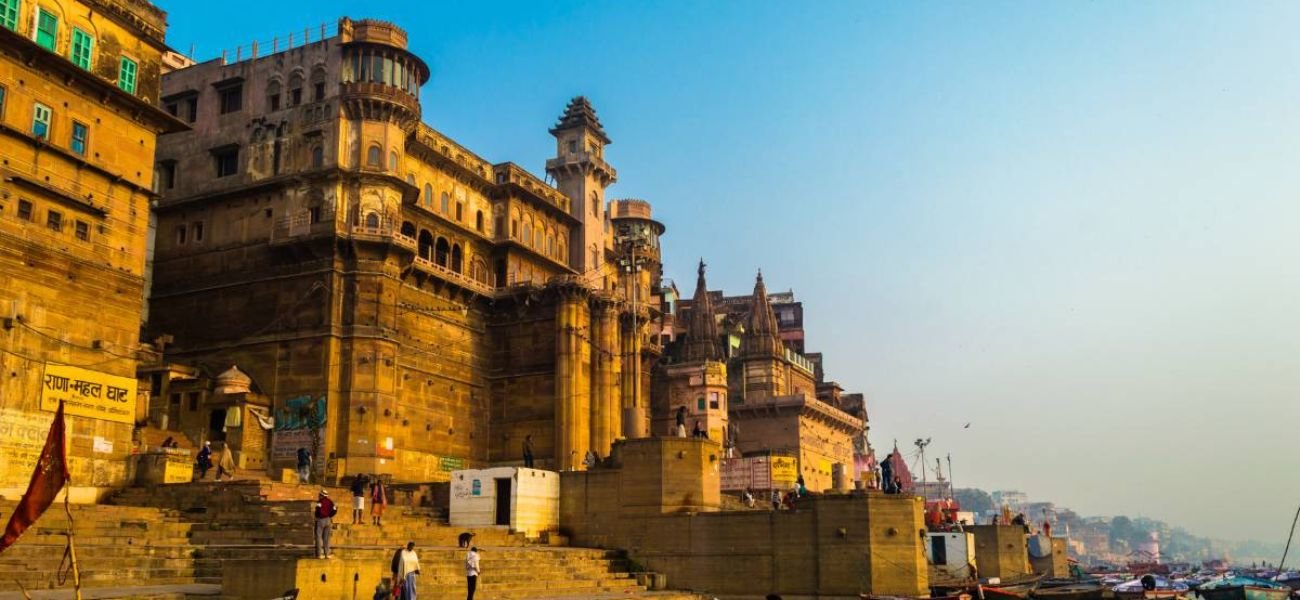


Sarayu Nadi is the sacred river flowing through Ayodhya – birthplace of Lord Rama – described in the Valmiki Ramayana as the river on whose banks Ayodhya was founded. Key ghats: Ram Ki Paidi (central – 25 lakh Deepotsav diyas), Guptar Ghat (Rama’s Jal Samadhi site, 9 km), Naya Ghat (primary bathing), Swargdwar Ghat (cremation). Saryu Aarti: 7:00-7:30 PM daily at Ram Ki Paidi. Entry free. Experience My India plans complete Ayodhya-Saryu circuits from ₹1,999. WhatsApp +91-7302265809. See our Ayodhya Varanasi Tour Package or message WhatsApp +91 7302265809.
The Sarayu Nadi (Saryu River) is the sacred waterway that gives Ayodhya its reason for existence. In the Valmiki Ramayana, Ayodhya is described as a city founded on the banks of the Sarayu – the river whose name appears in the very first cantos of the epic as the setting for the kingdom of the Ikshvaku dynasty and the birthplace of Lord Rama. To visit Ayodhya without visiting the Sarayu is to see the stage set without the backdrop.
I am Gurudutt, born and raised in Braj Bhoomi and the founder of Experience My India. Since 2018, I have guided 50,000+ pilgrims through Ayodhya – including the Ram Ki Paidi Saryu Aarti at 7 PM, the Guptar Ghat at sunrise where Rama took his Jal Samadhi and the Deepotsav night when 25 lakh diyas light the Sarayu from end to end. This guide gives you every practical detail for your Sarayu Nadi visit.
By the end of this guide you will know every major Sarayu ghat, the Saryu Aarti timing, the honest answer on bathing safety, the Deepotsav festival context and how to include the Sarayu in a complete Ayodhya circuit.
What Is Sarayu Nadi and Why It Is Sacred
Sarayu Nadi (also written Saryu Nadi or simply the Saryu) is a river in Uttar Pradesh originating in the Himalayas and flowing southeast through the Terai region before joining the Ghaghra River near Ayodhya. In the ancient and devotional geography of Hinduism, it is one of the most sacred rivers of North India – not because of its physical scale (it is significantly smaller than the Ganges), but because of its theological association with Lord Rama.
Why Sarayu Nadi is considered sacred:
- Birthplace river: The Valmiki Ramayana names the Sarayu as the river on whose banks Ayodhya was founded and where Lord Rama was born. The name “Ayodhya” (unconquerable) and the name “Sarayu” (swift-flowing) are linked through centuries of devotional tradition.
- Rama’s final departure: The Jal Samadhi (merging with the sacred water) of Lord Rama, his brothers Lakshmana, Bharat and Shatrughan and thousands of the citizens of Ayodhya is said to have occurred in the Sarayu at Guptar Ghat – making it the river through which the Ramayana’s central figure returned to his divine form.
- Purification tradition: The Sarayu is one of the rivers specifically named in the Puranas and Dharmashastra texts as capable of destroying sins through ritual bathing – in the same category as the Ganges, Yamuna, Godavari and Narmada for its sacred geography.
For the complete Ayodhya sacred city context: Ayodhya City Tour Guide 2026. Experience My India includes the Sarayu Aarti in every Ayodhya tour. The Same Day Ayodhya Tour Package from ₹1,999 ends every single-day Ayodhya circuit at Ram Ki Paidi for the 7 PM Saryu Aarti. WhatsApp +91-7302265809.
Sarayu Nadi in the Valmiki Ramayana – Key References
The Sarayu is not a minor geographical note in the Ramayana – it is named in the first sarga (chapter) of the Bal Kanda (Book 1) as the river defining Ayodhya’s position:
“Koshala nama mudhita, sphita janapadah mahan. Sarayv-anumate ramye shreshto janpado bhuvi.” (There exists a blessed and prosperous country called Kosala, the most excellent among all lands, situated on the banks of the Sarayu.)
This opening reference establishes the Sarayu as the foundational geographical marker of the Ramayana’s sacred setting. The river appears at multiple subsequent points:
| Ramayana Episode | Sarayu’s Role |
| Bal Kanda – founding of Ayodhya | River on whose banks Ayodhya is established |
| Bala Kanda – Rama’s childhood | Bathing and ritual activities of the Ikshvaku dynasty |
| Ayodhya Kanda – Bharata’s return | Bharata crosses the Sarayu returning to Ayodhya |
| Uttara Kanda – Jal Samadhi | Rama, brothers and citizens of Ayodhya merge with the Sarayu |
The Jal Samadhi episode is the most theologically significant: having returned to Ayodhya after the defeat of Ravana, Lord Rama eventually decided to return to his divine abode (Vaikuntha/Param Dhama). He and thousands of Ayodhya’s citizens walked into the Sarayu at Guptar Ghat and merged with the divine waters – the ultimate liberation narrative of the Ramayana.
Sarayu River Origin – Where Does the Sarayu Begin
| Detail | Information |
| Sanskrit name | Sarayu (सरयू) – meaning “swift-flowing” or “flowing quickly” |
| Origin | Mansarovar Lake region, Tibet / Himalayan watershed near Baijnath, Uttarakhand |
| Himalayan source | Sarvansari Lake (near Bageshwar, Kumaon Himalayas) |
| Total length | Approximately 350 km |
| Joins | Ghaghra River near Faizabad-Ayodhya region |
| Current name | The Sarayu in Ayodhya is fed by the Ghaghra – the ancient Sarayu’s course has partially shifted over millennia |
| Modern classification | The river called Saryu at Ayodhya is the lower section of the Ghaghra tributary system |
| Sacred name | Sarayu / Saryu / Sarju (various local pronunciations) |
Note on the river’s course: The original ancient Sarayu of Vedic and Ramayana texts has been subject to geographical study – the modern river at Ayodhya is identified with the Sarayu through continuous devotional and textual tradition rather than necessarily precise hydrological continuity with the Vedic river. For pilgrims, this distinction is academic – the Saryu at Ram Ki Paidi has been the sacred river of Ayodhya for millennia of unbroken tradition.
Book Sugam/VIP Darshan and Aarti – Ayodhya Shri Ram Janmbhoomi
All Major Ghats on Sarayu Nadi Ayodhya
| Ghat | Distance from Ram Mandir | Significance | Best For |
| Ram Ki Paidi | 1.5 km | Central Saryu ghat – Aarti venue, Deepotsav | Evening Aarti, Deepotsav |
| Naya Ghat | 1.5 km (adjacent to Ram Ki Paidi) | Primary bathing ghat | Saryu snan, boat rides |
| Swargdwar Ghat | 2 km | Ayodhya’s principal cremation ghat | Antim Sanskar, Pind Daan |
| Lakshman Ghat | 1.8 km | Associated with Lakshmana’s worship | Darshan |
| Janki Ghat | 2.2 km | Named for Janaki (Sita) | Devotional visit |
| Dashrath Ghat | 2 km | Associated with King Dashrath | Ancestral offerings |
| Kaikeyighat | 2.5 km | Associated with Queen Kaikeyi | Parikrama path |
| Brahmakund Ghat | 3 km | Ancient sacred tank + ghat | Sacred bath |
| Guptar Ghat | 9 km | Rama’s Jal Samadhi site | Sunrise visit |
Total ghat sequence: Ayodhya’s Saryu riverfront has approximately 14-20 named ghats depending on the source. The central cluster around Ram Ki Paidi and Naya Ghat within 2 km is accessible on foot. Guptar Ghat (9 km) requires a separate e-rickshaw journey.
For the complete Ayodhya sightseeing guide including all ghats: Best Places to Visit in Ayodhya 2026. Experience My India covers the central ghat cluster in all Ayodhya tours and Guptar Ghat in the 1 Night 2 Days Ayodhya Tour Package. WhatsApp +91-7302265809.
Ram Ki Paidi – The Heart of the Sarayu Ghat Sequence
Ram Ki Paidi is the most important and most visited ghat complex on the Sarayu in Ayodhya. The name means “the steps of Rama” – referring to the stone staircase ghats where Rama is said to have bathed and performed rituals during his time in Ayodhya.
| Ram Ki Paidi Detail | Information |
| Location | Central Ayodhya, 1.5 km from Ram Mandir |
| Ghat length | Approximately 600 metres of developed ghat frontage |
| Key feature | Saryu Aarti performed here daily |
| Deepotsav | Central site for 25 lakh diyas – Chhoti Diwali |
| Boat rides | Available from Naya Ghat (adjacent) – ₹100-₹150 per person |
| Sacred bath | Punya Snan (meritorious bathing) – auspicious days draw large crowds |
| Entry | Free – 24 hours |
What to do at Ram Ki Paidi:
- Attend the Saryu Aarti (7:00 PM in summer, 6:30 PM in winter)
- Take a Saryu Snan (ritual bath) at Naya Ghat (adjacent)
- Boat ride on the Sarayu – ₹100-₹150 per person, 30 minutes
- Witness or participate in Pind Daan (ancestral offering) ceremonies during Pitru Paksha
- Evening walk along the lit ghat frontage
Experience My India schedules Ram Ki Paidi as the final stop of every Ayodhya day – after Ram Mandir, Hanuman Garhi and Kanak Bhawan darshan. The 2 Nights 3 Days Ayodhya Tour Package includes Ram Ki Paidi Saryu Aarti on Day 1 and Day 2 evenings.
Saryu Aarti at Ram Ki Paidi – Timings and How to Watch
The Saryu Aarti at Ram Ki Paidi is Ayodhya’s most atmospheric evening ritual – priests performing the lamp ceremony on the river steps as the last light leaves the sky over the Sarayu.
| Season | Months | Saryu Aarti Time |
| Summer | April-September | 7:00-7:30 PM |
| Monsoon | July-September | 7:00-7:30 PM |
| Winter | October-March | 6:30-7:00 PM |
| Deepotsav (Chhoti Diwali) | October/November | Extended – 6:00 PM onwards |
How the Saryu Aarti works: Priests stationed along the Ram Ki Paidi ghat steps perform the lamp ceremony facing the river. Unlike the Ganga Aarti at Varanasi – which has seven priests in a synchronized formation – the Saryu Aarti at Ram Ki Paidi is more distributed along the ghat, with priests at multiple points performing simultaneously. The overall effect is of a riverfront illuminated by multiple lamp ceremonies rather than a single focal point.
Best position: Standing on the upper ghat steps or the elevated embankment above Ram Ki Paidi gives a view of the entire ghat sequence during the aarti. For the lamp reflection on the river surface, the boat position is most effective – Naya Ghat boat rides can be timed to arrive at the aarti section during the ceremony.
Experience My India arranges all Ram Ki Paidi aarti logistics for tour groups. The Same Day Ayodhya Tour Package from ₹1,999 ends at the Saryu Aarti as the natural conclusion of the Ayodhya day. For Deepotsav: Deepotsav Ayodhya. WhatsApp +91-7302265809.
Guptar Ghat – Where Rama Took Jal Samadhi
Guptar Ghat is the most spiritually significant site on the Sarayu – and the most consistently undervisited by first-time pilgrims who spend all their time in central Ayodhya.
Located approximately 9 km from Ram Mandir in the Faizabad Cantonment zone, Guptar Ghat is the site where Lord Rama is traditionally believed to have taken his Jal Samadhi – the final departure from the mortal world by merging with the sacred Sarayu waters, along with his brothers, family members and thousands of the citizens of Ayodhya who chose to follow their king into the divine waters.
| Guptar Ghat Detail | Information |
| Distance from Ram Mandir | 9 km |
| Transport | E-rickshaw ₹60-₹80 / auto |
| Entry | Free |
| Best time | Sunrise 5:30-7:00 AM – most contemplative |
| Evening | Sunset over the Saryu – excellent |
| Key temple | Gupta Hari Temple at the ghat |
| Character | Serene – away from main city crowds |
| Crowd level | Very low on normal days |
Experience My India includes Guptar Ghat as a Day 2 extension in the 1 Night 2 Days Ayodhya Tour Package – departing at 5:30 AM for the sunrise atmosphere before returning for the central temple circuit. WhatsApp +91-7302265809.
Naya Ghat – The Primary Sarayu Bathing Ghat
Naya Ghat (New Ghat) is immediately adjacent to Ram Ki Paidi and serves as the primary Saryu Snan (holy bathing) ghat for pilgrims. The newer paved steps and wider access make it the most accessible ghat for the physical act of ritual bathing.
| Naya Ghat Detail | Information |
| Location | Adjacent to Ram Ki Paidi – same complex |
| Primary use | Saryu Snan (ritual bath) + boat rides |
| Boat rides | ₹100-₹150 per person, 30 min circuit |
| Open | 24 hours |
| Entry | Free |
| Changing facilities | Available near the ghat – nominal charge |
| Best time for snan | Sunrise 5:00-6:30 AM (auspicious) or any morning |
| Festival bathing | Makar Sankranti, Kartik Purnima – very high crowds |
Swargdwar Ghat – The Cremation Ghat of Ayodhya
Swargdwar Ghat (Gateway to Heaven Ghat) is Ayodhya’s primary cremation ghat on the Sarayu – the equivalent of Varanasi’s Manikarnika Ghat in function, though smaller in scale. The name “Swargdwar” (Gate of Heaven) reflects the Hindu theological belief that cremation here, in the sacred land of Ayodhya on the banks of the Sarayu, facilitates the soul’s liberation.
Visiting protocol: Swargdwar Ghat is an active cremation site and requires the same respectful approach as Manikarnika in Varanasi – silence, no photography, modest dress, appropriate distance from active funeral rituals. Experience My India guides all groups with a pre-visit briefing before Swargdwar Ghat. The ghat is also the site for Asthi Visarjan (immersion of cremation ashes) and Pind Daan (ancestral offering ceremonies).
Deepotsav on Sarayu Nadi – The November Lamp Festival
The Deepotsav festival – held on Chhoti Diwali (Kartik Krishna Chaturdashi) at Ayodhya – is the single most spectacular visual event on the Sarayu Nadi. In 2026 (10th edition), the target is 25 lakh (2.5 million) earthen diyas placed along the entire Ram Ki Paidi and Saryu ghat sequence.
| Deepotsav 2026 Detail | Information |
| Date | 7 November 2026 (main event) |
| Diyas target | 25 lakh+ earthen oil lamps |
| Location | Ram Ki Paidi + all adjacent Saryu ghats |
| Events | Saryu Maha Aarti, drone show (500 drones), 3D hologram projections |
| Start time | Diya lighting from 6:00 PM |
| Arrive by | 2:30 PM for central ghat position |
| Hotel booking | Book by August 2026 – sells out completely |
| Guinness record | 2025 set world record for largest display of oil lamps (26,17,215) |
The Deepotsav-Dev Deepawali combination: Deepotsav falls on Chhoti Diwali. Dev Deepawali at Varanasi falls exactly 15 days later (Kartik Purnima – expected 22-23 November 2026). A single November trip covers both – the Sarayu in lamp-light at Ayodhya and the Ganges in lamp-light at Varanasi – the two most spectacular river illumination events in North India.
For the complete Deepotsav guide: Deepotsav Ayodhya. For the Ayodhya-Varanasi November combination: 3 Nights 4 Days Ayodhya Varanasi Tour Package from ₹5,999. WhatsApp +91-7302265809.
Is Sarayu River Safe for Bathing – Honest Guidance
This is one of the most frequently asked questions about the Sarayu – and one that requires an honest, factual answer that most travel guides avoid.
| Consideration | Detail |
| Traditional sanctity | Puranas describe Sarayu snan as highly meritorious – equivalent to Ganges bathing |
| Current water quality | Improved in recent years but with variable quality – central Ayodhya stretch receives some urban runoff |
| Government measures | UP government has implemented river cleaning projects for the Saryu, with visible improvement |
| Practical recommendation | Ritual dip (knee-deep, brief) at the designated bathing ghats (Naya Ghat) is widely practiced |
| Full swimming | Not recommended in the main current – river has unpredictable depth and flow speed |
| Monsoon season | July-September: river floods, lower ghats submerged, bathing restricted – ghat steps inaccessible |
| Best bathing window | October-March: lowest water levels, clearest water, all ghat steps accessible |
The practical middle path: Receive the Sarayu’s blessings with a ritual dip at the designated Naya Ghat steps during morning hours. Take a small copper vessel of Saryu jal (sacred water) home as prasad. Avoid full-body immersion in the open current away from the designated ghat areas.
For the complete seasonal guide: Best Time to Visit Ayodhya 2026.
Best Time to Visit Sarayu Nadi Ayodhya
| Season | Months | Sarayu Condition | Verdict |
| Post-monsoon | October-November | Beautiful high water, clear air | ✅ Best – Deepotsav season |
| Winter | December-February | Low, clear water – all ghats accessible | ✅ Excellent |
| Spring | March-April | Comfortable, all ghats open | ✅ Good |
| Summer | May-June | Very low water, extreme heat | ⚠️ Dawn visit only |
| Monsoon | July-September | Flooding – lower ghats submerged | ❌ Visit restricted |
Best specific window: The October to February period gives the Sarayu at its most accessible, most visually beautiful and most comfortable for ghat walking. November additionally offers the Deepotsav festival. Experience My India plans all Saryu Aarti visits for the 6:30-7:30 PM window in this season – giving the golden-hour approach to the aarti and the lamp-lit aftermath. WhatsApp +91-7302265809.
How to Reach Saryu Ghat Ayodhya
| From | Mode | Distance | Time | Cost |
| Ram Janmabhoomi Mandir | Walk / e-rickshaw | 1.5 km | 20 min walk / 7 min e-rickshaw | Free / ₹30-₹50 |
| Hanuman Garhi | Walk | 1.5 km | 18 min | Free |
| Ayodhya Dham Junction | E-rickshaw | 3 km | 15 min | ₹40-₹60 |
| Maharishi Valmiki Airport (AYJ) | Taxi / e-rickshaw | 12 km | 30-40 min | ₹150-₹250 |
| Lucknow | Car / bus | 136 km | 2.5 hours | Varies |
| Varanasi | Car / Vande Bharat | 200 km | 4 hr road / 2.5 hr train | Varies |
Transport within Ayodhya: E-rickshaws (₹20-₹50) connect all major sites to Ram Ki Paidi. The pedestrian zone around Ram Mandir means the final 300-500 metres to any ghat is always on foot. Experience My India coordinates all Ayodhya internal transport for tour groups. The 2 Nights 3 Days Ayodhya Tour Package includes all Saryu ghat visits with transport arranged. WhatsApp +91-7302265809.
Ground Truth – What Nobody Tells You About Sarayu Nadi Ayodhya
1. Guptar Ghat (9 km, Rama’s Jal Samadhi site) is one of the most spiritually significant sites in all of Ayodhya – and 90% of first-time pilgrims never visit it because it is not mentioned in standard Ayodhya itineraries. The site where the Ramayana’s central figure made his final departure is 9 km from the central temple area and requires a separate 20-minute e-rickshaw journey. Experience My India includes Guptar Ghat at sunrise in all 2-day+ Ayodhya packages.
2. During monsoon (July-September), the Sarayu floods and the lower ghat steps at Ram Ki Paidi are submerged – the famous stone steps visible in photos are underwater. Most Ayodhya travel photos show the ghat steps at low water. In July-August, the river is 3-5 metres higher and the entire lower ghat section is inaccessible. The Saryu Aarti still takes place on the upper steps/embankment during monsoon.
3. The Saryu Aarti at Ram Ki Paidi is performed along the entire ghat frontage simultaneously – not at a single focal point like Varanasi’s Ganga Aarti. First-time visitors sometimes arrive expecting the organized 7-priest Varanasi-style ceremony at one location. The Saryu Aarti is distributed – multiple aarti points along 600 metres of ghat. The most atmospheric view is from the upper embankment looking down the full length of the lit ghat.
4. The Deepotsav 2026 main event is on 7 November – but the ghat fills completely by 4:30 PM, making a 2:30 PM arrival the minimum requirement for a central Ram Ki Paidi position. Most pilgrims arrive at 6 PM for a 6 PM diya lighting and find themselves 200 metres back on the embankment. Experience My India positions all Deepotsav groups at the ghat by 2:30 PM.
5. Makar Sankranti (January 14) is the single most crowded bathing day at the Sarayu – not Ram Navami or Diwali. Makar Sankranti draws pilgrims specifically for the Saryu snan. The ghat crowd at sunrise on Makar Sankranti can exceed 200,000. Experience My India books Makar Sankranti Ayodhya visits with pre-dawn 4 AM departure to reach the ghat before the main crowd arrives.
Frequently Asked Questions – Sarayu Nadi Ayodhya
Sarayu Nadi (Saryu River) is the sacred river on whose banks Ayodhya was founded according to the Valmiki Ramayana – the birthplace river of Lord Rama. Its sanctity comes from three sources: the Ramayana identifies it as the founding river of Ayodhya; Lord Rama and his brothers are said to have taken their Jal Samadhi (final departure) in the Sarayu at Guptar Ghat; and the Puranas name it among India’s most sacred rivers for ritual bathing. The daily Saryu Aarti at Ram Ki Paidi at 7:00 PM and the Deepotsav festival (25 lakh diyas in November) make the river a living centre of Ayodhya’s devotional life. Experience My India includes the Saryu Aarti in all Ayodhya tours. WhatsApp +91-7302265809.
The Sarayu river originates in the Kumaon Himalayas of Uttarakhand – specifically from the Sarvansari Lake region near Bageshwar, fed by glacial and monsoon waters from the Himalayan watershed. The river flows southeast through Uttarakhand and Uttar Pradesh before joining the Ghaghra River system near Ayodhya. The river that flows through Ayodhya today is identified with the ancient Sarayu of the Ramayana through unbroken devotional tradition. Total length: approximately 350 km. Experience My India provides this geographical context to every Ayodhya tour group. WhatsApp +91-7302265809.
The Saryu Aarti at Ram Ki Paidi Ayodhya takes place daily at approximately 7:00-7:30 PM in summer (April-September) and 6:30-7:00 PM in winter (October-March). The aarti is performed by priests along the full length of the Ram Ki Paidi ghat frontage – distributed along approximately 600 metres of steps, rather than at a single focal point. During Deepotsav (November), the aarti extends from 6:00 PM onwards with the diya lighting at the same time. Experience My India schedules every Ayodhya group for the Saryu Aarti as the day’s final programme. WhatsApp +91-7302265809.
According to the Uttara Kanda of the Valmiki Ramayana, Lord Rama ruled Ayodhya for 11,000 years after his return from Lanka. When the time came for him to return to his divine form as Vishnu in Vaikuntha (the divine abode), he walked into the Sarayu River at Guptar Ghat with his brothers Lakshmana, Bharat and Shatrughan, along with thousands of Ayodhya’s citizens who chose to depart with their king. This Jal Samadhi – merging with the sacred waters – is described as a form of divine departure unique to Ayodhya’s geography. The Sarayu at Guptar Ghat (9 km from central Ayodhya) is the specific site of this event. Experience My India includes Guptar Ghat in all 2-day+ Ayodhya tours. WhatsApp +91-7302265809.
The Sarayu Nadi in Ayodhya has approximately 14-20 named ghats along its urban riverfront, depending on the source. The most significant are Ram Ki Paidi (central Saryu Aarti venue and Deepotsav site), Naya Ghat (primary bathing ghat – adjacent to Ram Ki Paidi), Swargdwar Ghat (cremation ghat – 2 km from Ram Mandir), Guptar Ghat (Rama’s Jal Samadhi site – 9 km), Lakshman Ghat, Janki Ghat and Dashrath Ghat. All central ghats are within 2 km of each other. Guptar Ghat requires a separate e-rickshaw journey. Experience My India covers the complete ghat sequence in multi-day Ayodhya tours. WhatsApp +91-7302265809.
The Sarayu at the designated bathing ghats (Naya Ghat, Ram Ki Paidi) is widely used for ritual bathing (Saryu Snan) and has shown water quality improvements under the UP government’s river cleaning programme. A ritual dip at the designated ghat steps in October-March (lowest water level, clearest water) is the standard practice for pilgrims. Avoid full bathing in the open current or away from designated ghat areas. During monsoon (July-September), the river floods and lower ghat steps are submerged – bathing restricted. Experience My India advises on current ghat conditions for every seasonal tour. WhatsApp +91-7302265809.
Deepotsav is Ayodhya’s annual Festival of Lamps held on Chhoti Diwali (Kartik Krishna Chaturdashi) at Ram Ki Paidi and the surrounding Saryu ghats. In 2026 (10th edition, 7 November), the target is 25 lakh+ earthen diyas placed along the entire ghat sequence – breaking the previous year’s Guinness World Record of 26,17,215 simultaneous diyas. The event also includes a Saryu Maha Aarti, 500-drone aerial show and 3D hologram projections. Book Ayodhya hotels by August 2026 – all ghat-area accommodation sells out. Experience My India arranges complete Deepotsav packages. WhatsApp +91-7302265809.
Pilgrims can perform five major rituals at the Sarayu Nadi in Ayodhya. Saryu Snan (ritual bath) at Naya Ghat – considered highly meritorious, especially on auspicious days like Makar Sankranti and Kartik Purnima. Saryu Aarti attendance at Ram Ki Paidi (7:00 PM daily). Boat ride on the Saryu (₹100-₹150 per person from Naya Ghat, 30 minutes). Pind Daan (ancestral offering ceremonies) at Swargdwar or Dashrath Ghat – especially during Pitru Paksha. Asthi Visarjan (immersion of cremation ashes) at Swargdwar Ghat. Experience My India coordinates all ritual arrangements for Ayodhya tour groups. WhatsApp +91-7302265809.
Recommended products
-
1 Night 2 Days Ayodhya Tour Packages
Original price was: ₹6,000.00.₹5,000.00Current price is: ₹5,000.00. -
2 Night 3 Days Ayodhya Varanasi Tour Package
Original price was: ₹9,000.00.₹8,000.00Current price is: ₹8,000.00. -
3 Nights 4 Days Ayodhya Varanasi Tour Package
Original price was: ₹11,000.00.₹10,000.00Current price is: ₹10,000.00. -
5 Days Ayodhya Varanasi Tour Package


🙏 Ready to Visit Sarayu Nadi Ayodhya with Experience My India?
WhatsApp us – Saryu Aarti timing confirmed, Guptar Ghat sunrise arranged, Deepotsav ghat position secured, Ram Ki Paidi boat ride scheduled. Complete Sarayu pilgrimage from ₹1,999.
WhatsApp +91-7302265809 – Book Now
Jai Shri Ram 🙏