
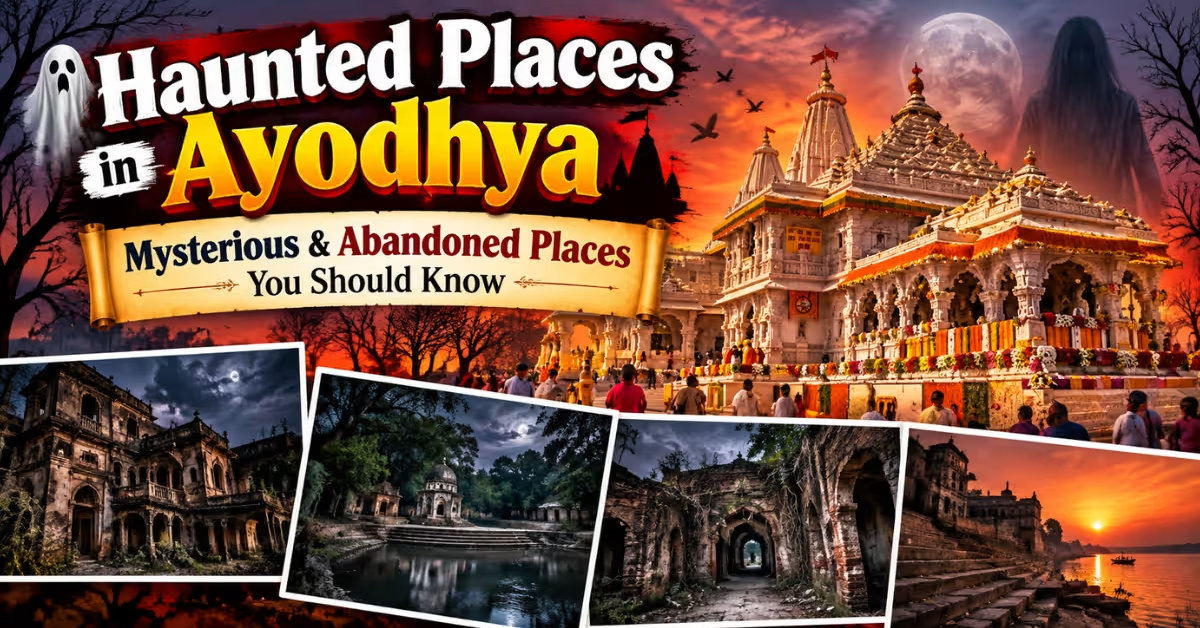
Haunted places in Ayodhya are not officially recognised paranormal sites but locations steeped in deep local folklore. The most famous is Adgada Dargah (Bhooton ki Adalat – Court of Ghosts) near Swargdwar, where thousands gather every Thursday believing a spiritual court exorcises malevolent spirits. Other locations in local lore include the Old Shamshan Ghat, certain abandoned havelis in the old city and Swargdwar Ghat at night. Ayodhya is primarily a sacred pilgrimage city – these sites carry spiritual, not horror-tourist, significance. Experience My India. WhatsApp +91-7302265809. See our Ayodhya Varanasi Tour Package or message WhatsApp +91 7302265809.
Ayodhya is one of the most sacred cities in Hinduism – the birthplace of Lord Rama, a site of continuous devotion for millennia. It is also, in the tradition of many intensely sacred places in India, a city where the boundary between the living and the departed is locally understood to be thin. The same spiritual geography that makes Ayodhya a centre of divine blessing also generates, in the folklore of its residents, a vivid tradition of spirit lore, exorcism rituals and locations where the departed are said to linger.
I am Gurudutt, born and raised in Braj Bhoomi and the founder of Experience My India. Since 2018, I have guided 50,000+ pilgrims through Ayodhya – and the local stories of the city’s mysterious locations are part of the complete picture of this ancient place. This guide covers the haunted places in Ayodhya that exist in local folklore – not as horror tourism, but as the shadow-side of one of India’s most spiritually charged cities.
Important context: Ayodhya does not have officially recognised haunted locations. Every site covered in this guide belongs to local oral tradition, folklore and cultural belief – not verified paranormal activity. Experience My India presents these as cultural and historical curiosities, not endorsements of paranormal claims. WhatsApp +91-7302265809.
Book Sugam/VIP Darshan and Aarti – Ayodhya Shri Ram Janmbhoomi 2026
Ayodhya and the Paranormal – Understanding the Sacred City Context
To understand why Ayodhya has ghost folklore at all, you need to understand what Ayodhya is at its core.
Ayodhya is one of the Sapta Puri – the seven sacred cities of Hinduism that are believed to grant moksha (liberation from rebirth) to those who die within their boundaries. It is the city where the dying are brought – like Varanasi – specifically because dying here is considered spiritually auspicious.
The theological connection: In Hindu cosmology, powerful sacred sites attract not only the divine but also the accumulation of spiritual energy – both from the living who pray there and from the spirits of the departed who passed through the city. Ayodhya’s tradition of spirit lore is directly connected to its status as a moksha-granting city: the city has been a destination for the dying and the cremated for thousands of years. The Swargdwar Ghat (literally “Gate of Heaven”) is where the ashes of the dead enter the Saryu River.
In this context, Ayodhya’s ghost stories are not about horror – they are about the overlap between the sacred and the transitional, the living and the departed, the physical city and the invisible geography of the afterlife. Experience My India always gives this context to visitors who ask about the mysterious side of Ayodhya. For the complete sacred city guide: Ayodhya City Tour Guide 2026. WhatsApp +91-7302265809.
Adgada Dargah – Bhooton ki Adalat (Court of Ghosts)
Location: Swargdwar area, near Nageshwarnath Temple, Ram Ki Paidi, Ayodhya
The most famous of Ayodhya’s mysterious locations is the Adgada Dargah – the shrine of Syed Ibrahim Shah Rahmatullah Aleh Pak, locally known as the Bhooton ki Adalat (Court of Ghosts or Court of Spirits).
What Is the Bhooton ki Adalat?
The local belief surrounding this dargah is specific and structured – not vague ghost stories but a complete folk-cosmological system:
Every Thursday, thousands of people gather at the Adgada Dargah. Local belief holds that on this day, a spiritual court (adalat) is convened at the dargah – presided over by the spirit of Syed Ibrahim Shah – where malevolent spirits, evil shadows and entities that are troubling living people are summoned, tried and punished or released.
People who believe they are afflicted by a malevolent spirit (known as being “haunted” or “possessed” in common parlance, referred to in Hindi as “Bhoot Preet” or “Saya”) come to the dargah on Thursdays specifically to petition this court on their behalf.
| Adgada Dargah Detail | Information |
| Full name | Dargah of Syed Ibrahim Shah Rahmatullah Aleh Pak |
| Location | Swargdwar area, near Nageshwarnath Temple |
| Popular name | Bhooton ki Adalat (Court of Ghosts) |
| Peak gathering | Every Thursday |
| Crowd | Thousands of visitors on Thursdays |
| Type of site | Muslim dargah (Sufi shrine) |
| Access | Open to all – Hindu and Muslim visitors both attend |
| Significance | Exorcism petitions, spiritual protection, relief from spirit affliction |
The Thursday Gathering
The Thursday gathering at Adgada Dargah is not a small informal event – it draws visitors from across Ayodhya and surrounding districts. The belief is sincere and the ritual is specific: petitioners write their name and complaint, present it at the shrine and believe that the spiritual court will address their case.
This is a uniquely syncretic tradition – a Muslim Sufi dargah functioning as the primary spirit-court for a predominantly Hindu city. It reflects the long-standing tradition in North India where Sufi shrines are approached by people of all backgrounds for spiritual protection.
Location proximity: The Adgada Dargah sits in the Swargdwar area – immediately adjacent to the Nageshwarnath Temple (the oldest Shiva temple in Ayodhya, founded by Kush, son of Lord Rama) and within 500 metres of Ram Ki Paidi. This means the “Court of Ghosts” is within walking distance of both the oldest Shiva temple in the city and Ayodhya’s central Saryu ghat.
For the Nageshwarnath Temple context: Best Time to Visit Ayodhya 2026. Experience My India includes the Adgada Dargah as a cultural curiosity stop for visitors interested in Ayodhya’s complete cultural landscape. WhatsApp +91-7302265809.
Old Shamshan Ghat – The Ancient Cremation Ground
Type of site: Active and historic cremation ghat Local reputation: Avoidance at night, intense local spirit lore
Every city with a long history of cremation develops local spirit traditions around its cremation grounds. Ayodhya’s Swargdwar Ghat – the primary cremation ghat – and the Old Shamshan Ghat (an older or secondary cremation site) are the locations most consistently mentioned in Ayodhya’s ghost folklore.
Why Cremation Grounds Accumulate Spirit Folklore
In Hindu cosmology, the cremation ground (shmashana) is a liminal space – a threshold between life and death, between the physical world and the invisible. It is simultaneously the most sacred and the most spiritually intense environment in a Hindu city. Lord Shiva himself is associated with the cremation ground – he is depicted seated in shmashanas, smeared with cremation ash, accepting what all of nature eventually offers.
The local spirit lore around Ayodhya’s cremation sites is not unique – it follows the universal pattern of human communities developing oral traditions around the places where the dead are processed. The specific character of Ayodhya’s cremation ground lore is informed by the city’s position as a moksha-granting site: the dead who arrive here from across the region bring their accumulated karmic weight, their unresolved attachments and their final spiritual energy.
What locals say: Residents of the area adjacent to the old cremation sites describe hearing sounds at night, seeing lights moving near the water and avoiding the area after dark. These accounts are consistent across communities and decades – forming a stable oral tradition rather than isolated incidents.
The reality for visitors: These are working cremation sites – they should be approached with the same respectful protocol as Manikarnika Ghat in Varanasi. Do not visit at night, do not photograph and do not approach the active cremation areas. The spiritual intensity of these sites is real in human terms – grief, transition, death – regardless of paranormal interpretation.
Swargdwar Ghat at Night – The Boundary Between Worlds
Location: Saryu riverfront, Ayodhya – literally “Gate of Heaven Ghat”
Swargdwar Ghat – whose name means “Gateway to Heaven” – is the ghat where the ashes of the cremated dead are immersed in the Saryu River. Its name is the most direct reference in Ayodhya’s geography to the transition between life and whatever comes after.
The ghat’s night atmosphere is described by local residents and long-term Ayodhya visitors as among the most intense they have experienced. Unlike the central ghats (Ram Ki Paidi, Naya Ghat) which are busy with pilgrims until late evening, Swargdwar Ghat at night is quiet, dark and immediately adjacent to the cremation area.
The local understanding: Residents near Swargdwar do not typically describe encounters with frightening presences – the local lore is more nuanced than that. The ghat is understood as a place where the “not yet departed” remain close to the physical world for a period after death and where those with unresolved attachments sometimes linger. This is not fear-based – it is part of the Hindu framework of understanding death as a process rather than an event.
Visitor guidance: Swargdwar Ghat is accessible during the day for the Asthi Visarjan (ash immersion) rituals and the Pind Daan (ancestral offering) ceremonies that take place there. Night visits are not recommended and serve no practical purpose. Experience My India does not arrange night visits to Swargdwar Ghat. WhatsApp +91-7302265809.
Abandoned Havelis of the Old City
Type of site: Historical architecture in various states of disrepair Local reputation: Ghost stories, abandoned nobility, forgotten stories
Ayodhya’s old city contains numerous havelis (traditional courtyard mansions) that were built during the Nawabi period (18th-19th centuries) and have since been abandoned, partially demolished or left in gradual disrepair. These structures – with their arched doorways, overgrown courtyards, faded fresco walls and sealed rooms – form the physical backdrop for a significant portion of Ayodhya’s ghost stories.
Why Abandoned Havelis Attract Ghost Stories
The pattern is universal: a grand building of obvious historical importance, now empty and deteriorating, generates stories about why it was abandoned, who lived there and what happened to them. The more dramatic the past – and Ayodhya’s Nawabi-era havelis have genuinely dramatic histories involving court intrigues, disputed inheritances and sudden reversals of fortune – the more elaborate the associated folklore.
What they represent: The abandoned havelis of Ayodhya’s old city are not primarily paranormal sites – they are architectural heritage sites that have been allowed to deteriorate without conservation. The “haunted” stories that accumulate around them are the oral tradition’s way of marking buildings whose history deserves to be remembered.
For heritage-curious visitors: The old city area between Hanuman Garhi and the river contains several of these structures, visible from the lanes. Some are partially accessible. Experience My India does not recommend trespassing in or around unstable structures – structural safety is the primary concern. However, a guided lane walk through the old city area is a legitimate and rewarding heritage experience. The 1 Night 2 Days Ayodhya Tour Package includes an old city heritage walk. WhatsApp +91-7302265809.
Why Ayodhya Has Intense Spirit Folklore – The Sacred Geography Explanation
A question worth addressing directly: why does a city so sacred, so continuously inhabited and so thoroughly maintained as a pilgrimage destination have such active ghost folklore?
Five reasons:
1. Sacred = Intense, Not Comfortable: Sacred sites in the Hindu tradition are powerful precisely because they concentrate spiritual energy. That energy is not uniformly benign or comfortable – it is intense. The same quality that makes Ayodhya a place where dying grants liberation also makes it a place where the transition between life and death is more vivid, more felt and more narratable.
2. The City Has Been a Destination for the Dying: For thousands of years, people have brought the dying and the dead to Ayodhya to benefit from the city’s moksha-granting spiritual energy. Every such passage leaves a human trace in local memory, story and belief.
3. Ayodhya Is Old: One of the oldest continuously inhabited cities in India. The depth of human history compressed into its geography – the layers of temples, ghats, cremation sites, buried structures and oral traditions – generates an extraordinary density of stories.
4. The Bhooton ki Adalat Tradition Is Syncretic: The Adgada Dargah’s tradition of the Thursday spirit court is not a fringe practice – it is a well-attended, socially accepted mechanism for addressing what people perceive as spirit affliction. Its existence in a predominantly Hindu city reflects the practical spiritual syncretism that has characterised North India for centuries.
5. The Line Between Sacred and Uncanny Is Thin in Braj Tradition: The theological tradition of the Braj region (which includes Ayodhya) has always understood the visible and invisible worlds as closely interpenetrating. Stories of divine presences, ancestor spirits and sacred energies are not separate from the pilgrimage tradition – they are part of it.
For the complete Ayodhya sacred geography: Ayodhya Parikrama 2026. Experience My India provides this context for every Ayodhya group that asks about the city’s mysterious side. WhatsApp +91-7302265809.
What Locals Actually Believe – A Grounded Perspective
The honest picture of Ayodhya’s “haunted” reputation from someone who has been there consistently since 2018:
Ayodhya residents do not describe their city as a scary place. The city is busy, devotional, commercially active and – in the areas around Ram Mandir, Hanuman Garhi and the main ghats – intensely alive with pilgrimage energy.
The ghost stories and spirit folklore belong to specific locations (the Adgada Dargah area, the old cremation sites, certain old city havelis) and specific times (Thursday evenings at the dargah, night at the cremation ghats). They are not city-wide.
The Adgada Dargah’s Bhooton ki Adalat is taken seriously by the people who attend it – but the attendance itself (thousands every Thursday) shows that the response to perceived spirit affliction in Ayodhya is an organised community ritual at a recognised shrine, not panic or avoidance.
The cremation ghats are taken seriously as liminally powerful spaces – but this is consistent with how cremation ghats are understood across Hindu India, not unique to Ayodhya.
The overall picture: Ayodhya is a sacred city with a long history, active spirit folklore rooted in genuine traditions and a specific exorcism-court tradition that is culturally significant and practically attended. It is not a “haunted city” in the horror-tourism sense – it is a living sacred city with a rich oral tradition about the boundary between the living and the departed.
Visiting These Sites – Practical and Respectful Guidance
| Site | When to Visit | Access | Experience My India Guidance |
| Adgada Dargah | Thursday (peak) or any day | Open to all, free | Cultural visit – observe with respect, no disruption to rituals |
| Old Shamshan Ghat / Swargdwar area | Day only | Accessible | Respectful observation only – these are active cremation sites |
| Abandoned havelis | Day, guided lane walk | Exterior only | Old city heritage walk – do not enter structurally unsafe buildings |
| Swargdwar Ghat | Day only | Open | Pind Daan and Asthi Visarjan rituals visible – with respect |
General rules for all sites:
- No photography at or near active cremation areas
- No night visits to cremation ghats or dargah premises
- Respectful attire (covered shoulders and knees)
- No loud behaviour or treating these as entertainment sites
- Ask permission before photographing any ritual or gathering
Experience My India does not arrange “ghost tours” – but does include the Adgada Dargah as an optional cultural curiosity stop for groups interested in Ayodhya’s complete cultural landscape. All visits are daytime, respectful and contextualised. WhatsApp +91-7302265809.
Ground Truth – What Nobody Tells You About Haunted Places in Ayodhya
1. The Bhooton ki Adalat at Adgada Dargah is a genuinely well-attended Thursday ritual – not an obscure legend – drawing thousands of people weekly from across the district. The “court of ghosts” is not a story told in hushed tones – it is a functioning community institution. Thousands attend every Thursday. The ritual has a specific structure, a recognised presiding spiritual authority and a defined purpose. This makes it one of the most interesting cultural phenomena in Ayodhya that almost no pilgrimage guide covers.
2. The Adgada Dargah is directly adjacent to the Nageshwarnath Temple – the oldest Shiva temple in Ayodhya – making this the single most theologically complex 50-metre stretch in the city. A Sufi spirit court dargah immediately next to a Hindu temple founded by Kush (son of Lord Rama), both in the Swargdwar area, both within 500 metres of Ram Ki Paidi. This concentration of spiritual traditions in one small area is as interesting as anything about “haunting.”
3. Ayodhya’s ghost stories are predominantly Thursday stories – the tradition is structured around a weekly court, not random paranormal events. Unlike most “haunted” locations where stories are vague and untimed, the Adgada Dargah’s spirit folklore has a specific weekly schedule. This makes it both more practical to experience (go on a Thursday) and more intellectually interesting (it’s a structured social institution, not random ghost stories).
4. The city’s “haunted” folklore is more syncretic than any other aspect of Ayodhya culture – a Muslim dargah serving as the primary spirit court for a Hindu pilgrimage city. The Bhooton ki Adalat tradition at Adgada Dargah exists because of the pragmatic spiritual traditions of North India, where people go where they believe help is available, regardless of religious boundary. This is one of the most genuinely fascinating aspects of Ayodhya’s complete cultural picture.
5. Ayodhya’s abandoned havelis are primarily a conservation failure story rather than a ghost story – the real mystery is why structures of obvious historical significance have been allowed to deteriorate without heritage protection. The “haunted” overlay on these buildings is the oral tradition’s way of marking important structures that deserve attention. The buildings’ stories – Nawabi court intrigue, inheritance disputes, British-era economic disruption – are more interesting than the ghost stories that have replaced them in popular conversation.
Frequently Asked Questions – Haunted Places in Ayodhya
Ayodhya does not have officially recognised haunted locations, but local folklore identifies several sites associated with spirit lore. The most famous is the Adgada Dargah (Bhooton ki Adalat – Court of Ghosts) near Swargdwar, where thousands gather every Thursday believing a spiritual court deals with troubled spirits. The Old Shamshan Ghat (cremation ground) and Swargdwar Ghat at night carry intense local spirit lore rooted in the city’s role as a moksha-granting sacred city. Abandoned havelis in the old city area also feature in local ghost stories. These are cultural folklore sites, not verified paranormal locations. Experience My India provides cultural context. WhatsApp +91-7302265809.
Bhooton ki Adalat (Court of Ghosts) is the popular name for the Adgada Dargah – the shrine of Syed Ibrahim Shah Rahmatullah Aleh Pak located in the Swargdwar area near Nageshwarnath Temple and Ram Ki Paidi in Ayodhya. Every Thursday, thousands of people gather here believing that a spiritual court presided over by the saint’s spirit convenes to address the cases of malevolent entities troubling living people. Petitioners write their name and complaint and present it at the shrine. The tradition is syncretic – attended by both Hindu and Muslim visitors – and represents a deeply rooted North Indian practice of seeking spiritual protection at Sufi shrines. Experience My India can include this as a cultural stop. WhatsApp +91-7302265809.
India’s most consistently cited “haunted” locations in popular culture and folklore are: Bhangarh Fort (Rajasthan) – an 18th-century abandoned fort with a formal Archaeological Survey of India notice restricting night entry; Dumas Beach (Gujarat) – a beach near Surat with intense local ghost lore; Ramoji Film City (Hyderabad) – staff reported unusual experiences; Sanjay Van (Delhi) – forest area with local ghost stories; and Shaniwar Wada (Pune) – 18th-century fort where screams are reportedly heard. Ayodhya’s Adgada Dargah (Bhooton ki Adalat) belongs to a different category – a functioning ritual institution for spirit affliction, not an abandoned or feared site. Experience My India focuses on Ayodhya’s pilgrimage heritage. WhatsApp +91-7302265809.
The title of “world’s most haunted place” is subjective and varies by source, but locations consistently named include: The Tower of London (UK) – 900+ years of executions and imprisonment, multiple historical ghost accounts; Eastern State Penitentiary (Philadelphia, USA) – former prison with documented unusual occurrences; Aokigahara Forest (Japan) – historically associated with suicides; Edinburgh Castle (Scotland) – one of the most paranormally tested buildings in the world; and Château de Brissac (France) – reportedly housing multiple historical spirits. These are international paranormal tourism destinations – distinct from Ayodhya’s Adgada Dargah, which is a functioning sacred institution rather than an abandoned site. Experience My India plans Ayodhya pilgrimage tours. WhatsApp +91-7302265809.
Yes – Ooty (Udhagamandalam) in Tamil Nadu has several locations that feature in local ghost folklore. The most commonly mentioned are: Ooty Lake Road area at night (colonial-era ghost stories); certain sections of the Nilgiris forest trails (tribal folklore about forest spirits); and some abandoned colonial-era bungalows and tea estate properties. These are rooted in Ooty’s colonial history and the local Toda tribal traditions of the Nilgiri Hills. This is separate from the Ayodhya folklore covered in this guide, which is rooted in Hindu sacred city tradition and North Indian Sufi exorcism practices. For Ayodhya and Varanasi pilgrimage planning, contact Experience My India. WhatsApp +91-7302265809.
The “first haunted place in India” cannot be determined historically, as ghost folklore predates written records. However, the oldest consistently documented location in India’s paranormal folklore tradition is likely Bhangarh Fort in Rajasthan’s Alwar district – an 18th-century abandoned fort for which the Archaeological Survey of India itself has posted notices restricting entry after dark, making it one of the few government-acknowledged unusual locations. Older sites like certain ancient temples, forest locations and battlefields also carry millennia-old spirit lore. Ayodhya’s Adgada Dargah (Bhooton ki Adalat), while not India’s oldest haunted site, is one of India’s most actively functioning spirit-court traditions. WhatsApp +91-7302265809.
Sacred cities in the Hindu tradition are intensely powerful spaces – not only for blessing but for all forms of spiritual intensity. Ayodhya is one of the seven Sapta Puri (moksha-granting cities) where the dying are traditionally brought and the dead are cremated for liberation. This makes it a city that has processed human death and transition for thousands of years, creating deep layers of human spiritual energy, memory and oral tradition. The ghost stories of Ayodhya – particularly the Bhooton ki Adalat at the Adgada Dargah and the lore around the cremation ghats – are rooted in this sacred geography rather than in horror-tourism. The city is a living pilgrimage destination, not a haunted attraction. Experience My India guides pilgrims through Ayodhya’s complete cultural landscape. WhatsApp +91-7302265809.
Yes – the Adgada Dargah (Bhooton ki Adalat) in Ayodhya is accessible to all visitors, free of charge. It is an open Sufi shrine in the Swargdwar area near Nageshwarnath Temple and Ram Ki Paidi. The best time to visit is Thursday when the traditional spirit court gathering draws thousands of people – a genuine cultural phenomenon. Respectful attire is expected; disruptive or disrespectful behaviour at an active religious site is inappropriate. Photography during active rituals should be done only with permission. Experience My India can include the Adgada Dargah as an optional cultural curiosity stop in the [1 Night 2 Days Ayodhya Tour Package] or longer Ayodhya programmes. WhatsApp +91-7302265809.
Recommended products
-
1 Night 2 Days Ayodhya Tour Package
Original price was: ₹6,000.00.₹5,500.00Current price is: ₹5,500.00. -
2 Night 3 Days Ayodhya Varanasi Tour Package
Original price was: ₹9,000.00.₹8,000.00Current price is: ₹8,000.00. -

3 Days Ayodhya Prayagraj Tour
-

5 Days Ayodhya Varanasi Tour Package


🙏 Ready to Explore Ayodhya’s Complete Cultural Landscape with Experience My India?
WhatsApp us – Ram Mandir, Hanuman Garhi, Saryu Aarti and, for those curious about the city’s deeper folklore, the Bhooton ki Adalat Thursday experience included. Rated 4.5★ by 204+ pilgrims.
WhatsApp +91-7302265809 – Book Now
Jai Shri Ram 🙏