
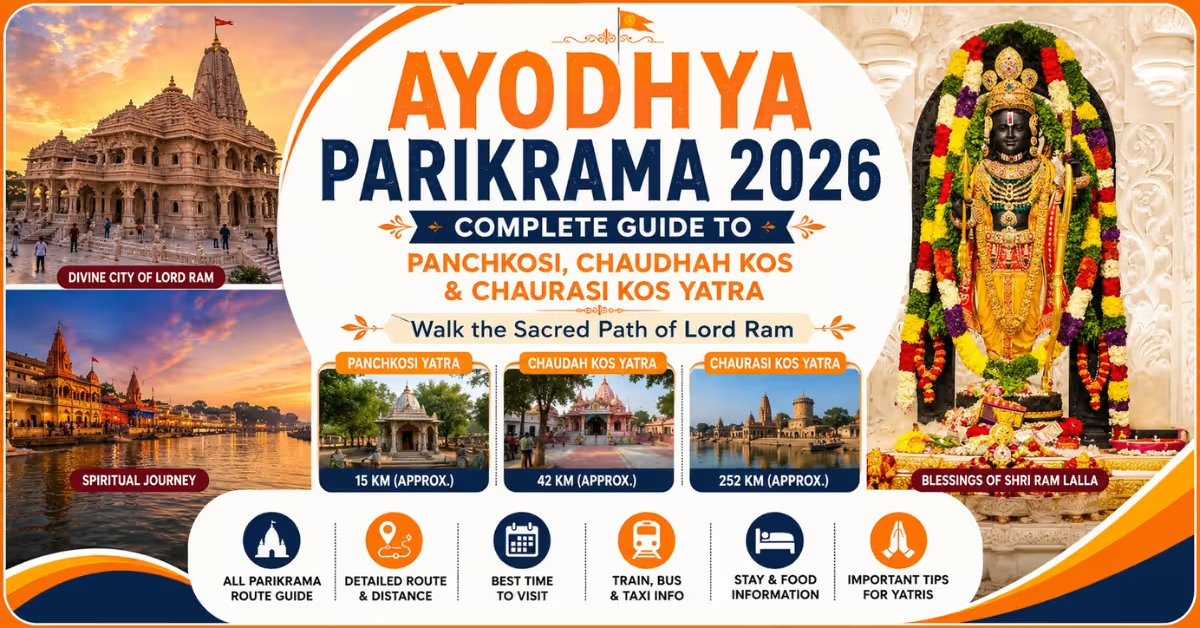
Ayodhya Parikrama has three sacred circuits: Panchkosi (15 km, 1 day, Kartik Ekadashi), Chaudah Kos (42-45 km, 1-2 days, Kartik Akshay Navami) and Chaurasi Kos Yatra (275 km across 5 districts, 20-23 days – 2026 Chaitra leg: April 2-24). All parikramas begin with Saryu Snan and are traditionally done barefoot. Experience My India arranges guided Ayodhya Parikrama support from ₹1,999 per person. WhatsApp +91-7302265809.
Ayodhya is not simply a city to visit – it is a sacred geography to be circumambulated. The tradition of parikrama (walking around a sacred site in reverence) is one of the oldest practices in Hinduism and Ayodhya has not one but three parikrama circuits – each representing a progressively larger sacred boundary of the city of Lord Rama.
I am Gurudutt, born and raised in Braj Bhoomi and the founder of Experience My India. Since 2018, I have guided 50,000+ pilgrims through Ayodhya, including hundreds who have completed the Panchkosi and Chaudah Kos Parikramas on Kartik Ekadashi. The practical details in this guide – distances, temple stops, auspicious dates, barefoot customs – come from walking these routes ourselves.
By the end of this guide you will know all three Ayodhya parikramas in full detail, the correct auspicious dates for 2026, the starting point and key temple stops and the practical arrangements for completing each one.
What Is Ayodhya Parikrama?
Parikrama means circumambulation – walking around a sacred site in a clockwise direction, keeping the sacred place to your right, as an act of devotion and reverence. In Ayodhya, parikrama is not a tourist activity. It is the devotional acknowledgement that the entire city of Ayodhya – its streets, its ghats, its forests – is sacred ground, every inch associated with Lord Rama’s presence.
The three Ayodhya Parikramas trace three concentric circles around the holy city. The innermost (Panchkosi) covers the original royal heartland. The middle circuit (Chaudah Kos) traces the expanded sacred boundary. The outermost (Chaurasi Kos) encompasses the entire region associated with Rama’s reign – crossing district boundaries and covering over 100 mythological sites across 275 km.
Each parikrama has its own auspicious timing, its own protocol and its own scale. Together they represent the complete devotional geography of Ayodhya as Lord Rama’s capital.
Experience My India explains this full context to every pilgrim before the parikrama begins. WhatsApp +91-7302265809. View Our Same Day Ayodhya Tour Package
The Three Parikramas – Quick Comparison
| Parikrama | Distance | Duration | Auspicious Date | Scale |
| Panchkosi Parikrama | 15 km | 1 day | Kartik Shukla Ekadashi | Inner sacred core – Ayodhya royal heartland |
| Chaudah Kos Parikrama | 42-45 km | 1-2 days | Kartik Akshay Navami | Wider municipal boundary of Ayodhya |
| Chaurasi Kos Yatra | 275 km | 20-23 days | Chaitra month / Sawan | Complete Rama’s Kingdom circuit – 5 districts |
All three begin with a holy dip in the Saryu River (Saryu Snan) and are traditionally completed barefoot while chanting bhajans.
Panchkosi Parikrama – 15 Km Inner Circuit
The Panchkosi Parikrama is the most accessible of Ayodhya’s three circuits – a 15 km walk completing in one day that covers the inner sacred core of Ayodhya where Lord Rama’s royal palace and primary temples stood.
Distance: 15 km Duration: 1 day (approximately 5-6 hours walking at devotional pace) Auspicious date: Ekadashi of Shukla Paksha in the month of Kartik (October-November) Starting point: Ram Ki Paidi / Saryu Ghat – after Saryu Snan Completion: Returns to Saryu Ghat
Key Temple Stops on the Panchkosi Route
| Stop | Significance |
| Ram Ki Paidi (Start) | Saryu Snan – mandatory beginning |
| Hanuman Garhi | 76 steps – Hanuman as guardian of Ayodhya |
| Ram Janmabhoomi | Birthplace of Lord Rama |
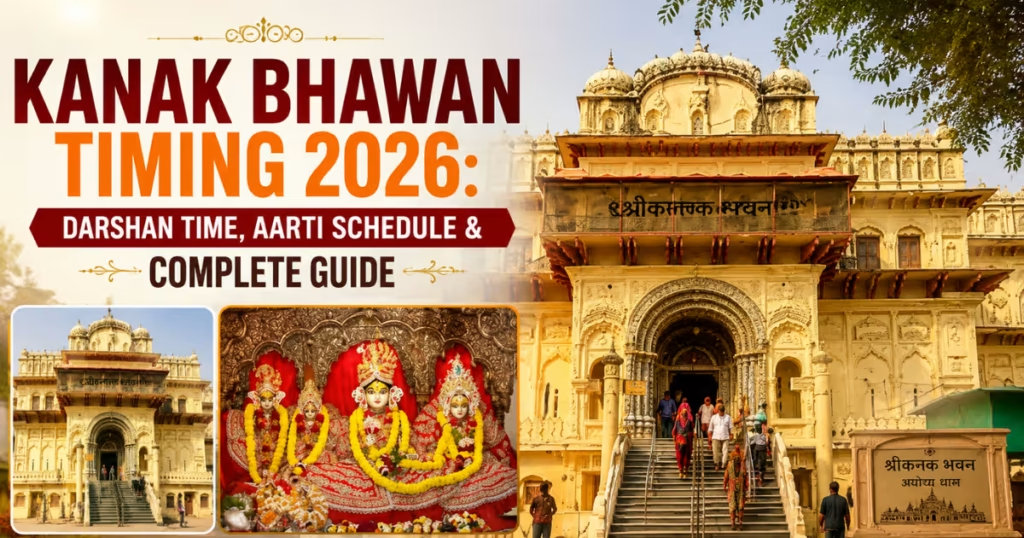
| Kanak Bhawan | Temple of Sita-Ram in palace setting |
| Nageshwarnath Temple | Oldest Shiva temple in Ayodhya – established by Kush |
| Sita Ki Rasoi | Ancient site of Sita’s kitchen |
| Guptar Ghat | Sacred ghat where Rama took Jal Samadhi |
| Return: Ram Ki Paidi | Circuit completion – final prayers |
What to know: The Panchkosi route passes through the heart of Ayodhya’s old city – lanes as narrow as 2-3 metres in places. The Kartik Ekadashi day draws tens of thousands of pilgrims on this route simultaneously. Experience My India recommends starting by 5:00 AM on Ekadashi to complete the inner circuit before the peak crowd window of 8:00-11:00 AM.
Footwear: Traditionally barefoot throughout. The Panchkosi Parikrama covers stone-paved lanes – manageable in October-November when temperatures are mild. Footwear storage is available at the Saryu Ghat starting point.
Experience My India guides the Panchkosi Parikrama as part of all Ayodhya tour packages – with correct starting time, lane navigation and temple sequence. WhatsApp +91-7302265809.
Book Your Ayodhya Varanasi Tour Package
Chaudah Kos Parikrama – 42 Km Outer Circuit
The Chaudah Kos (14 Kos) Parikrama traces the wider sacred boundary of Ayodhya – covering 42 to 45 km around the outer perimeter of the Chaudahkos Parivrut, the traditional boundary of Ayodhya’s sacred zone.
Distance: 42-45 km Duration: 1-2 days Auspicious date: Akshay Navami – Navami of Shukla Paksha in Kartik month Starting point: Ram Ki Paidi (Saryu Ghat) after Saryu Snan Route character: Moves through both urban and semi-rural areas of greater Ayodhya
Chaudah Kos Route Overview
The Chaudah Kos Parikrama covers a significantly larger circuit than the Panchkosi – extending to the outer boundary of the traditional Ayodhya sacred zone. The route passes through villages, sacred forests (vans), ancient ghats and smaller temples that most standard Ayodhya tours never reach.
| Detail | Information |
| Distance | 42-45 km |
| Duration | Typically completed in 1 day by fit pilgrims; 2 days is more comfortable |
| Barefoot | Traditional – same as Panchkosi |
| Key stops | Ram Ki Paidi, Sugriv Parbat, Mani Parvat, Sita Ki Rasoi, Guptar Ghat, outer sacred vans |
| Crowd level | Significant on Akshay Navami – smaller than Panchkosi day |
| Facilities | Temporary medical camps, rest tents set up during Kartik period |
Practical note for Chaudah Kos: The outer 20-25 km of this circuit passes through areas less well-served by urban infrastructure. Carrying 1 litre of water minimum and some light snacks is essential. Experience My India provides support vehicles at key intervals for older pilgrims completing this circuit.
View Our 7 Days Uttar Pradesh Sacred Circuit Tour
Chaurasi Kos Yatra – 275 Km Complete Circuit
The Chaurasi Kos Yatra is the largest and most significant of Ayodhya’s three parikramas – a 275 km pilgrimage covering the entire outer boundary of the land associated with Lord Rama’s kingdom, spanning five districts.
Distance: 275 km Duration: 20 to 23 days Districts covered: Ayodhya, Basti, Ambedkar Nagar, Barabanki, Gonda Sacred sites: Over 100 mythological sites tied to Lord Rama’s reign
2026 Chaurasi Kos Yatra Dates
Chaitra Month (Spring) Leg 2026: April 2 to April 24, 2026 Sawan Month (Monsoon) Leg: July-August 2026 (check local Ayodhya administration calendar for exact dates)
The Chaitra month leg (Ramnavami season) is the primary and most attended Chaurasi Kos Yatra. Hundreds of thousands of pilgrims undertake this journey – some walking the complete 275 km over 20+ days, others joining for specific segments.
Chaurasi Kos – Key Characteristics
| Feature | Detail |
| Total distance | 275 km |
| Districts crossed | 5 (Ayodhya, Basti, Ambedkar Nagar, Barabanki, Gonda) |
| Sacred sites | 100+ Ramayana-related temples and locations |
| Duration (walking) | 20-23 days |
| Duration (by vehicle with stops) | 4-6 days |
| Completion point | Returns to Ayodhya / Saryu Ghat |
| Administration support | Medical camps, rest tents, lost-and-found centers along route |
Vehicle-assisted Chaurasi Kos: For pilgrims who cannot walk the full 275 km, a vehicle-supported version covering all 100+ sacred sites by cab with walking at key stops is a genuine option. Experience My India offers the Chaurasi Kos by vehicle with guided stops as a 5-day package from ₹7,999 per person. WhatsApp +91-7302265809.
Auspicious Dates and Best Time for Ayodhya Parikrama
| Parikrama | Most Auspicious Date | 2026 Approximate Date | Season |
| Panchkosi | Kartik Shukla Ekadashi | October-November 2026 | Post-monsoon, cool |
| Chaudah Kos | Kartik Akshay Navami | October-November 2026 | Post-monsoon, cool |
| Chaurasi Kos | Chaitra month / Sawan | April 2-24, 2026 (Chaitra) | Spring / Monsoon |
Kartik Month (October-November): The most sacred month in the Vaishnav tradition for all parikrama activity in North India. Both the Panchkosi and Chaudah Kos parikramas are most auspiciously performed in Kartik. The weather is ideal – post-monsoon coolness, clear skies, temperatures 15-25°C.
Chaitra Month (March-April): The Chaurasi Kos Yatra in Chaitra month coincides with the Ram Navami season – the most spiritually charged period in Ayodhya. The 2026 Chaitra leg ran April 2 to April 24.
Can Ayodhya Parikrama be done outside these dates? Yes – all three parikramas can be walked at any time of year. The auspicious dates maximise spiritual merit in the traditional framework but are not prerequisites for the walk. Avoid the parikrama routes during summer afternoons (April-June, 11 AM-4 PM) when barefoot walking on stone surfaces becomes genuinely painful.
Experience My India checks the Ayodhya panchang for exact Kartik dates for your travel month. WhatsApp +91-7302265809.
Book Sugam/VIP Darshan and Aarti – Ayodhya Shri Ram Janmbhoomi 2026
Starting Point and Key Temples on the Route
Official starting point for all Ayodhya parikramas: Ram Ki Paidi / Saryu Ghat
Why Saryu Ghat: The Saryu River is the sacred river of Ayodhya – as significant to Ayodhya as the Yamuna to Vrindavan or the Ganga to Varanasi. Every parikrama begins with Saryu Snan (holy dip in the Saryu) as the purifying act before beginning the circumambulation.
Primary Temples on All Ayodhya Parikrama Routes
| Temple | Location on Route | Parikrama |
| Ram Janmabhoomi | Inner (Panchkosi) | Panchkosi |
| Hanuman Garhi | Inner (Panchkosi) | Panchkosi |
| Kanak Bhawan | Inner (Panchkosi) | Panchkosi |
| Nageshwarnath Temple | Inner (Panchkosi) | Panchkosi |
| Sita Ki Rasoi | Inner + Outer | Both |
| Guptar Ghat | Outer approach | Both |
| Sugriv Parbat | Outer (Chaudah Kos) | Chaudah Kos |
| Mani Parvat | Outer (Chaudah Kos) | Chaudah Kos |
| 100+ Ramayana sites | Various districts | Chaurasi Kos only |
Practical Guide – Saryu Snan, Barefoot Customs and Facilities
Saryu Snan
Every Ayodhya Parikrama begins with Saryu Snan – a holy dip in the Saryu River at Ram Ki Paidi. The dip is performed before sunrise ideally, before beginning the walk. Clean, dry clothes should be changed after the dip before starting the circumambulation. For elderly pilgrims or those with health restrictions, a symbolic sprinkling of Saryu water is accepted in many traditions.
Barefoot Walking
All three Ayodhya Parikramas are traditionally done barefoot – the entire route. Barefoot walking is an act of reverence to the sacred ground of Ayodhya – ground that Lord Rama himself walked.
Practical barefoot guidance:
- Panchkosi (15 km) – stone-paved lanes, manageable in October-November temperatures
- Chaudah Kos (42-45 km) – mixed terrain; some sections on rural roads where stone heat is less of an issue
- Chaurasi Kos (275 km) – long-distance walking; most pilgrims use thin rubber-soled footwear outside the core sacred zones and remove for temple entry
Footwear storage: Available at Ram Ki Paidi starting point – nominal fee of ₹20-₹50 per pair. Experience My India guides carry a footwear bag for each group member.
Book Our 3 Days Ayodhya Tour Package
Government Facilities During Parikrama Season
During the Kartik month Panchkosi and Chaudah Kos parikramas, Ayodhya administration sets up:
- Temporary medical camps at regular intervals along both routes
- Rest tents and water distribution points every 3-5 km
- Lost-and-found centres at major crossings
- Police assistance posts along the full route
What to carry:
- 1 litre water minimum (on-route water available but carry your own)
- Small first aid essentials (blister plasters particularly useful for barefoot walking)
- Light cotton kurta or salwar kameez – nothing synthetic
- Japa mala for chanting throughout the walk
Experience My India briefs every parikrama group on all of the above before departure. WhatsApp +91-7302265809.
Ground Truth – What Nobody Tells You About Ayodhya Parikrama
1. The Panchkosi Parikrama on Kartik Ekadashi draws over 200,000 pilgrims – starting at 5:00 AM is not optional, it is survival planning. By 8:00 AM on Ekadashi, the inner Ayodhya lanes on the Panchkosi route are shoulder-to-shoulder. Groups starting at 5:00 AM complete the first 8-10 km in near-peaceful conditions. Groups starting at 8:00 AM are navigating through the peak crowd for the entire walk. Experience My India schedules all Kartik Parikrama groups for pre-dawn start times.
2. The Chaurasi Kos Yatra in Chaitra 2026 ran April 2-24 – heat management is the primary practical challenge. April in Uttar Pradesh means 35-42°C daytime temperatures. The Chaitra Chaurasi Kos is held in this season because of its Ramnavami alignment – not because of comfortable weather. Long-distance walking pilgrims pace themselves to cover maximum distance in the 4:30-9:00 AM and 4:30-7:30 PM windows. Midday rest at shade camps is standard practice.
3. The Chaudah Kos Parikrama passes through areas that are not well-known to most Ayodhya visitors – and this is precisely what makes it valuable. The outer 20+ km of the Chaudah Kos circuit passes through small villages, sacred groves and ancient ghats that no standard Ayodhya tour includes. Pilgrims completing the Chaudah Kos often report this outer section as the most spiritually resonant – away from crowds, in the landscape that was Ayodhya before the city expanded.
4. The “84 Kos Parikrama” of Ayodhya is a separate and much larger circuit from the 84 Kos Parikrama of Braj. The Chaurasi Kos (84 Kos) Yatra of Ayodhya is 275 km and covers Rama’s kingdom across 5 UP districts. The 84 Kos Parikrama of Braj (Vrindavan/Mathura) is approximately 270 km and covers the Braj Mandal associated with Krishna. These are entirely separate circuits – different geography, different deity tradition, different auspicious timing.
5. Vehicle-supported Chaurasi Kos is a respected and widely practiced option – not a lesser version of the walk. Many elderly pilgrims, families with children and time-limited visitors complete the Chaurasi Kos by vehicle – stopping at all 100+ sacred sites for darshan without walking the full 275 km. This is an accepted and honoured form of the yatra. Experience My India’s vehicle-supported Chaurasi Kos runs as a 5-day guided circuit. WhatsApp +91-7302265809.
Frequently Asked Questions – Ayodhya Parikrama
The Panchkosi (5 Kos) Parikrama is the inner 15 km circumambulation of Ayodhya covering the original sacred heartland where Lord Rama’s royal palace and primary temples were located. It takes approximately 5-6 hours to walk at a devotional pace. The most auspicious time to complete it is Kartik Shukla Ekadashi (October-November). It begins and ends at Ram Ki Paidi (Saryu Ghat) with a mandatory Saryu Snan before starting. Experience My India guides this parikrama with correct 5 AM departure. WhatsApp +91-7302265809.
The Chaudah Kos (14 Kos) Parikrama is the middle circuit of Ayodhya – approximately 42 to 45 km covering the wider sacred boundary called Chaudahkos Parivrut. It takes 1 to 2 days to complete and is most auspiciously done on Kartik Akshay Navami (Navami of Shukla Paksha in Kartik month). The route passes through both urban Ayodhya and semi-rural sacred areas including Sugriv Parbat, Mani Parvat and outer sacred vans. Experience My India provides route support for this parikrama. WhatsApp +91-7302265809.
The Chaurasi Kos (84 Kos) Yatra of Ayodhya is a 275 km pilgrimage covering the complete outer boundary of Lord Rama’s kingdom – spanning five districts (Ayodhya, Basti, Ambedkar Nagar, Barabanki, Gonda) and visiting over 100 Ramayana-related sacred sites. It takes 20 to 23 days to walk or 4 to 6 days by vehicle. The 2026 Chaitra month leg was held April 2-24. Experience My India offers the vehicle-supported Chaurasi Kos as a 5-day package from ₹7,999 per person. WhatsApp +91-7302265809.
Ayodhya Parikrama 2026 key dates: Panchkosi Parikrama – Kartik Shukla Ekadashi (October-November 2026, exact date varies by Hindu calendar). Chaudah Kos Parikrama – Kartik Akshay Navami (October-November 2026). Chaurasi Kos Yatra (Chaitra leg) – April 2 to April 24, 2026 (completed). Chaurasi Kos (Sawan leg) – July-August 2026. Experience My India checks the exact panchang dates for your travel month and confirms current-year timings. WhatsApp +91-7302265809.
Ayodhya Parikrama duration depends on which circuit: Panchkosi (15 km) takes 1 day – approximately 5 to 6 hours walking. Chaudah Kos (42-45 km) takes 1 to 2 days. Chaurasi Kos (275 km) takes 20 to 23 days walking or 4 to 6 days by vehicle with stops at all sacred sites. All three begin with Saryu Snan and are traditionally done barefoot. Experience My India manages timing for all three circuits. WhatsApp +91-7302265809.
Yes – with the right planning. The Panchkosi Parikrama (15 km) is manageable for elderly pilgrims at a comfortable pace, ideally starting before 6:00 AM in the Kartik season. The Chaudah Kos requires 2 days for senior citizen groups. For the Chaurasi Kos, Experience My India’s vehicle-supported format covers all sacred sites by AC cab – no requirement to walk the full 275 km. All parikramas can be adapted to individual mobility. WhatsApp +91-7302265809 with your specific requirements.
Barefoot walking is the traditional practice for all Ayodhya Parikramas – it is an act of reverence to sacred ground that Lord Rama himself walked. For the Panchkosi (15 km) and Chaudah Kos (42-45 km), barefoot is practical in the Kartik season (October-November) when surfaces are cool. For the Chaurasi Kos (275 km), many pilgrims use thin rubber footwear on rural roads and remove it at temple entry points. Experience My India advises each pilgrim on seasonal footwear guidance. WhatsApp +91-7302265809.
All three Ayodhya Parikramas start at Ram Ki Paidi – the main Saryu River ghat in Ayodhya. The parikrama begins with Saryu Snan (holy dip in the Saryu River) as the purifying act before circumambulation. Footwear is deposited at the ghat (storage available, nominal fee ₹20-₹50). Experience My India groups assemble at Ram Ki Paidi at the agreed start time – 5:00 AM for Kartik Ekadashi Panchkosi, adjusted appropriately for other circuits. WhatsApp +91-7302265809.
Recommended products
-
1 Night 2 Days Ayodhya Tour Packages
Original price was: ₹6,000.00.₹5,000.00Current price is: ₹5,000.00. -
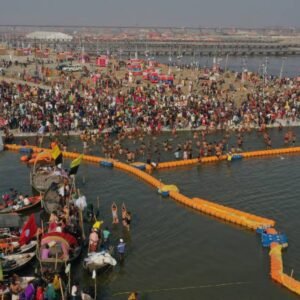
10 Days Complete Uttar Pradesh Spiritual Tour
-
2 Night 3 Days Ayodhya Varanasi Tour Package
Original price was: ₹9,000.00.₹8,000.00Current price is: ₹8,000.00. -
7 Days Uttar Pradesh Sacred Circuit Tour


🙏 Ready to Plan Your Ayodhya Parikrama with Experience My India?
WhatsApp us and receive your personalised parikrama plan within 30 minutes – correct auspicious date for your travel month, starting time, route briefing, barefoot guidance, senior citizen adaptations and complete support from Ram Ki Paidi to route completion. Packages from ₹1,999 per person.
WhatsApp +91-7302265809 – Book Now
Jai Shri Ram 🙏