

Most people don’t arrive in Ayodhya with a checklist. They arrive with something quieter. A question they don’t say out loud. A sense that two days might not be enough, but it’s all they have. And they hope that in those two days, they’ll understand why this city feels different from other spiritual places they’ve visited.
A 2 days Ayodhya Tour is not about rushing through temples. It’s about learning how to slow down in a place where faith is lived, not displayed. Ayodhya doesn’t overwhelm you the moment you arrive. It settles into you gradually. Through temple bells you hear before you see the temple. Through riverbanks where people sit longer than planned. And through lanes where nothing looks dramatic, yet everything feels meaningful.
If your time is limited, the question isn’t how many places you can cover. It’s which places will help you feel Ayodhya rather than just see it.
Understanding the Flow of a 2 Days Ayodhya Tour
A well-planned 2 days Ayodhya Tour usually follows a simple rhythm. Day one is about grounding yourself in the city—its main temples, its river, its history. Day two allows you to move more slowly, revisit what felt important, and explore nearby places without pressure.
Ayodhya rewards early mornings. Temples feel calmer. The river feels more present. Crowds exist, but they don’t dominate the experience if you move with the city instead of against it. Afternoons naturally slow down, and evenings bring a different kind of devotion, especially near the ghats.
A realistic 2 days Ayodhya itinerary respects this rhythm instead of fighting it.

About Ayodhya and Why Two Days Can Be Enough
Ayodhya isn’t large, but it’s layered. It carries centuries of belief quietly, without spectacle. Many visitors expect something grand at first glance and feel confused when they don’t see it immediately. What they don’t realise is that Ayodhya opens slowly.
A 2 days Ayodhya Tour works when expectations shift from sightseeing to presence. When you stop trying to “cover” Ayodhya and allow it to guide the pace, two days feel complete. You may not see everything, but you’ll leave with clarity about what mattered most to you.
This approach is especially important for those coming for an Ayodhya spiritual pilgrimage tour, where the inner experience matters as much as the outer journey.
Day-Wise Thinking for an Ayodhya Sightseeing Tour for 2 Days
Most travellers find it helpful to mentally divide the trip, even if the schedule stays flexible.
Day one usually focuses on Ayodhya’s core spiritual landmarks and the Sarayu river. Day two opens space for quieter temples and nearby places that add context rather than intensity. This separation keeps the journey balanced and prevents fatigue.
Temples in Ayodhya – Explained Clearly with Darshan Timings
Ayodhya has many temples, but visiting too many in a short time can dilute the experience. A thoughtful 2 days Ayodhya Tour focuses on a few key temples and visits them at the right time.
Shri Ram Janmabhoomi
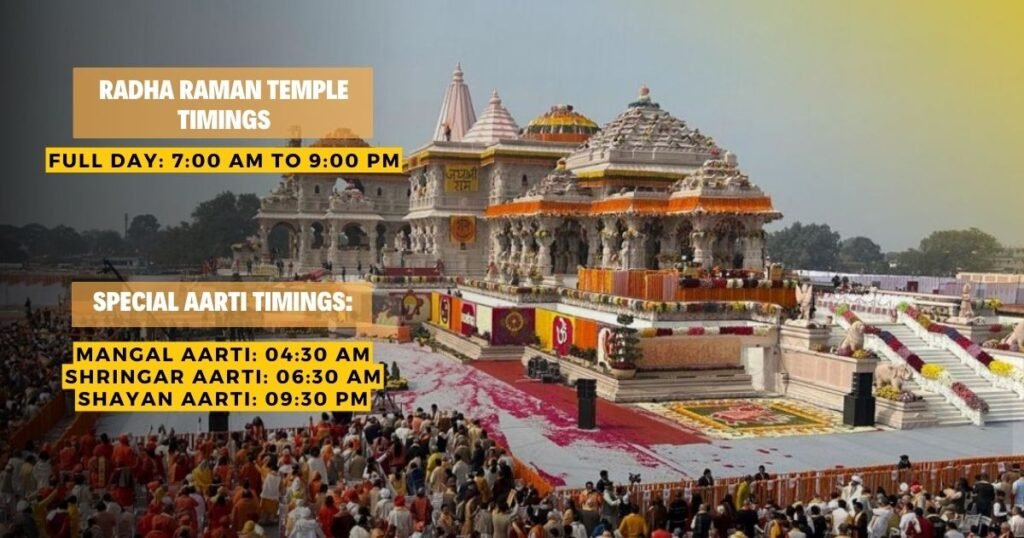
This is the spiritual centre of Ayodhya and the place most visitors feel drawn to first. The atmosphere here is deeply charged, especially during morning hours. Security procedures are thorough, and darshan happens in an organised flow.
Darshan Timing:
Morning: Early morning 4:30 AM to 7:00AM, 7 AM-12 PM
Evening: Late afternoon 2:00 PM-7:00 PM
(Exact timings can change depending on crowd movement and special occasions)
Morning darshan feels calmer and more focused. Evenings can be busier but emotionally powerful.
Hanuman Garhi
Located slightly uphill, Hanuman Garhi requires a short climb, but most visitors find the effort worthwhile. The temple feels protective rather than overwhelming, and many people pause here longer than planned.
Darshan Timing:
Morning: Around 5:00 AM to 12:00 PM
Evening: Around 4:00 PM to 10:00 PM
Mornings are better for those who prefer less crowd pressure.
Kanak Bhawan
Kanak Bhawan feels intimate compared to larger temples. It is associated with Lord Ram and Sita and is often described as peaceful and emotionally grounding.
Darshan Timing:
Morning: Around 8:00 AM to 12:00 PM
Evening: Around 4:00 PM to 9:00 PM
This temple is ideal for visitors seeking quiet devotion rather than grand ritual.
Nageshwarnath Temple
Nageshwarnath Temple is traditionally associated with Lord Shiva and holds significance within Ayodhya’s spiritual landscape. It feels steady and understated.
Darshan Timing:
Morning: Around 6:00 AM to 12:00 PM
Evening: Around 4:00 PM to 9:00 PM
It fits well into a relaxed afternoon or early evening visit.
Sarayu River and the Importance of Ghats
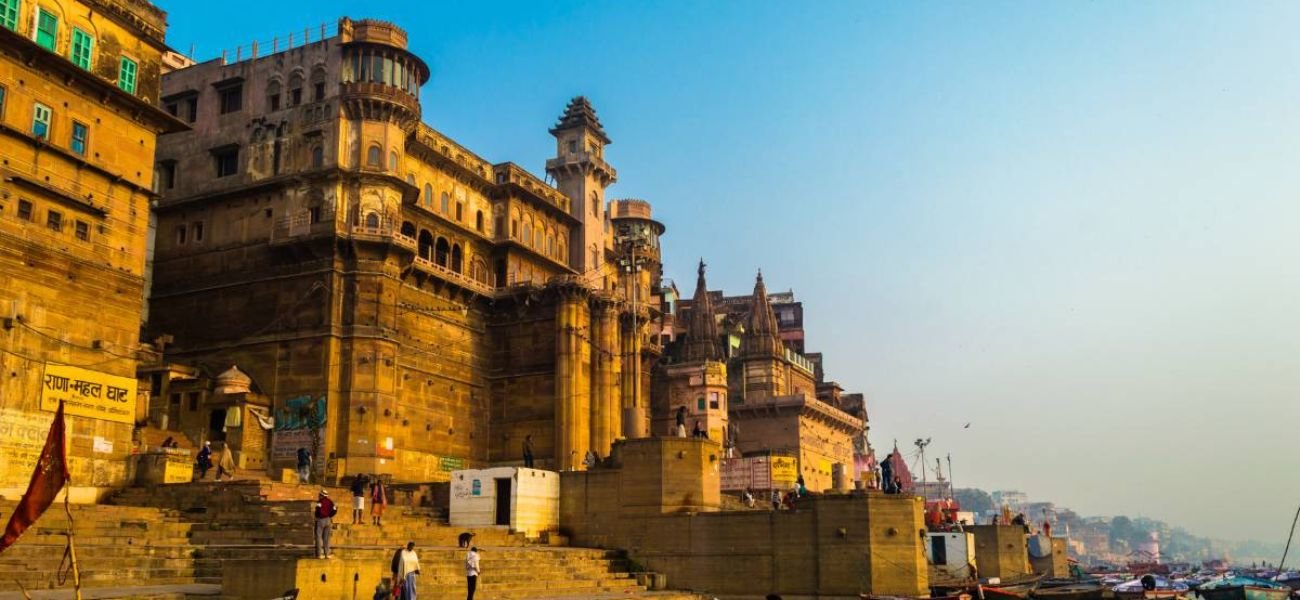
A 2 days Ayodhya Tour feels incomplete without time near the Sarayu river. This isn’t a place you rush through. People come here to sit, to watch the water, to attend evening aarti without needing explanations.
Saryu Ghat in the evening has a quiet intensity. Lamps float, chants echo softly, and even those who arrive distracted tend to leave calmer. It’s one of those places where silence teaches more than words.
Nearest Places to See Around Ayodhya – Explained Simply
With two days, nearby places should add understanding, not pressure.
Guptar Ghat
Guptar Ghat is closely associated with Lord Ram’s final moments on earth. The place feels reflective rather than dramatic.
It’s best visited in the early morning or evening when the river feels still. A short visit here often leaves a deep impression.
Treta Ke Thakur
This temple is believed to mark the place where Lord Ram performed the Ashwamedha Yajna. The atmosphere is calm, and the surroundings are not crowded.
It fits well into a relaxed second day when there is no urgency to move quickly.
Ram Ki Paidi
Ram Ki Paidi is a series of ghats along the Sarayu. It’s more about walking slowly than doing anything specific. Many visitors underestimate this place, but those who give it time often remember it most.
How to Reach Ayodhya Comfortably
Reaching Ayodhya is straightforward, but the choice of transport affects how rested you feel when the tour begins.
By Car
Road travel works well for families and older citizens. Ayodhya is well connected by highways, and driving allows flexibility with timings and rest stops. It’s especially useful if you plan to visit nearby ghats and temples without rushing.
By Train
Ayodhya is well connected by rail to major cities. Ayodhya Junction and Ayodhya Cantt are commonly used stations. Train travel suits those who prefer arriving rested and avoiding long drives.
By Air
Maharishi Valmiki International Airport in Ayodhya has improved connectivity. Air travel is useful for those coming from distant cities, followed by short local travel.
A well-planned Ayodhya sightseeing tour for 2 days aligns arrival time with temple schedules so the first day doesn’t feel wasted.
Why Quiet Planning Matters in an Ayodhya Spiritual Pilgrimage Tour
Ayodhya does not reward packed schedules. It responds to patience. Temples close in the afternoon. Crowds swell unexpectedly. Weather plays a role. When planning allows breathing room, these changes don’t feel like problems.
This is where experience-based planning, such as that quietly offered by Ayodhya Varanasi Tourism, helps travellers without overwhelming them. The support stays in the background. The experience stays in focus.
FAQs – 2 Days Ayodhya Tour
Q1. Is two days enough to visit Ayodhya properly?
Yes, when temples and ghats are chosen wisely and visited at the right time.
Q2. Which is the best time of day to visit major temples?
Early morning is generally calmer and more focused.
Q3. Is Ayodhya suitable for older citizens?
Yes, most places are accessible, and the city moves at a gentle pace.
Q4. Are evenings crowded in Ayodhya?
Some areas get busy, especially near ghats, but the atmosphere remains peaceful.
Q5. Can children manage a two-day Ayodhya tour?
Yes, distances are manageable, and the environment is calm.
Q6. Do temple timings change frequently?
Yes, especially during festivals and special occasions.
Q7. Is Sarayu aarti a must-experience?
Many visitors feel it is one of the most grounding moments of the trip.
Q8. Are nearby places worth visiting in two days?
Yes, if chosen carefully and without rushing.
Q9. Why choose an organised plan for Ayodhya?
Local understanding helps avoid confusion and wasted time.
Q10. What makes an Ayodhya tour feel meaningful?
Slow movement, quiet observation, and space for reflection.
Some cities show themselves immediately. Ayodhya doesn’t. It waits. And when you stop trying to rush through it, even a short 2 days Ayodhya Tour has a way of staying with you long after you’ve returned home.