

Top 12 hidden places to visit in Varanasi: Chet Singh Ghat (1781 battle fortress, crowd-free sunsets), Darbhanga Ghat (Rajput-Mughal-Greek palace), Chaumsathi Ghat + Lahiri Mahasya ashram, Kedar Ghat (striped steps, quiet sunrise), Lolark Kund (15-metre deep sun tank below street), Underground Shiva Temple (bow to enter, 30 feet underground), BHU Vishwanath Temple (77-metre marble, full Bhagavad Gita on walls), Sita-Rama Temple Jaipur House, Tomb of Lal Khan (Persian Charbagh garden), Rani Laxmibai Janmasthali, Garden of Spiritual Wisdom Sarnath and Vietnamese Pink Temple Sarnath. Experience My India. WhatsApp +91-7302265809. See our Ayodhya Varanasi Tour Package or message WhatsApp +91 7302265809.
While thousands of visitors crowd the lanes of Kashi Vishwanath and jostle for ghat steps at the Ganga Aarti, the true character of Varanasi – 3,999 years of continuous human habitation – is tucked away in forgotten corners. An 18th-century fortress where a raja once fired cannon at the British Governor-General. A palace ghat with Greek-style pillars in the middle of a Rajput-Mughal building. A tank sunk 15 metres below street level where the sun has been worshipped for 1,000 years. A temple 30 feet underground that you enter by bowing through a gap in the earth.
I am Gurudutt, born and raised in Braj Bhoomi and the founder of Experience My India. Since 2018, I have guided 50,000+ pilgrims through Varanasi – and these 12 places are the ones I personally take visitors who have already seen the famous circuit or who specifically want the Varanasi that most guides never reach. WhatsApp +91-7302265809.
Why the Real Soul of Varanasi Is Hidden
Varanasi is not hiding its soul – the city is simply too layered and too dense for casual exploration to reach it. Three millennia of construction, demolition, battle, devotion and reconstruction have produced a city where:
- A 16th-century Bengali king’s ghat leads to one of the rarest goddess temples in North India
- A 19th-century palace facade contains Greek-style Corinthian columns in a predominantly Mughal city
- A Mughal-era tomb’s garden is completely invisible from the famous riverbank that passes 50 metres below it
- India’s most celebrated female freedom fighter was born in a building that mainstream tourism has largely forgotten
The 12 places in this guide are not remote or inaccessible – they are in the middle of the most visited parts of Varanasi, available to anyone who knows where to look. Experience My India includes all 12 in extended Varanasi itineraries. WhatsApp +91-7302265809.
OFFBEAT GHATS
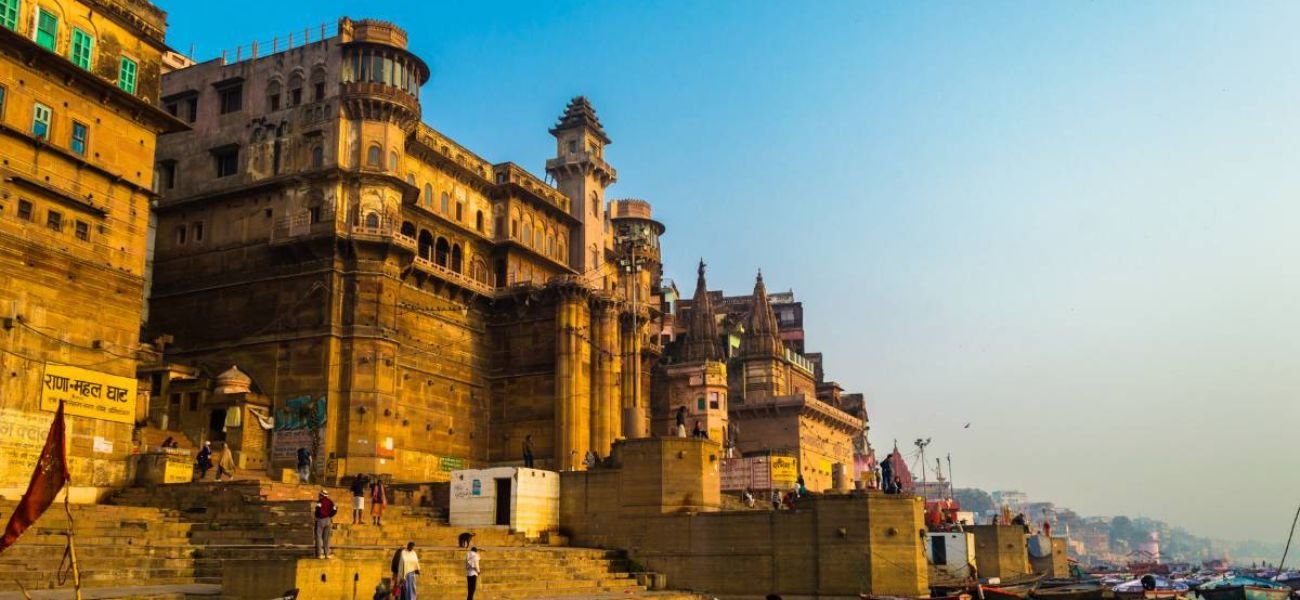
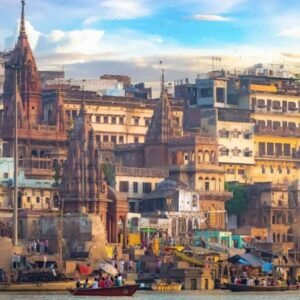
1. Chet Singh Ghat – Fortress Palace and the 1781 Battle
What it is: An 18th-century fortress-palace that rises directly from the Ganges water’s edge – unusual among Varanasi ghats, which are typically stone steps rather than defensive structures. It was the scene of one of the most dramatic confrontations between an Indian raja and British authority in pre-Rebellion history.
The 1781 story: In August 1781, Raja Chet Singh of Banaras refused to pay a forced contribution demanded by British Governor-General Warren Hastings. Hastings arrived in Varanasi with a small escort to personally arrest the Raja. Chet Singh’s soldiers resisted – in the ensuing confrontation, several British officers were killed, Chet Singh temporarily escaped by rope over the fort’s river wall and a full military confrontation followed. The event became a significant political scandal in Britain – Hastings was later impeached in London partly because of his handling of the Chet Singh affair.
Why visit: Chet Singh Ghat is one of the few sites in Varanasi where a specific historical event – with documented date, named participants and political consequences – can be directly related to the physical structure you are standing in. The fortress walls, the water’s edge and the scale of the structure make the 1781 confrontation completely imaginable.
The sunset view: The elevated position of the Chet Singh Ghat fortress walls gives a 180-degree view of the Ganges from the south – one of the least crowded and most majestic sunset views in Varanasi.
| Chet Singh Ghat | Information |
| Location | South of Kedar Ghat, central Varanasi river section |
| Access | Ghat path or river boat |
| Entry | Free (ghat area) |
| Best time | Late afternoon (4 PM-sunset) for crowd-free visit |
| Historical year | 1781 – Chet Singh vs Hastings confrontation |
Experience My India includes Chet Singh Ghat in the extended ghat walk for all 2-day+ Varanasi visitors. The 2 Nights 3 Days Varanasi Tour Package covers this on the Day 2 afternoon ghat walk. WhatsApp +91-7302265809.
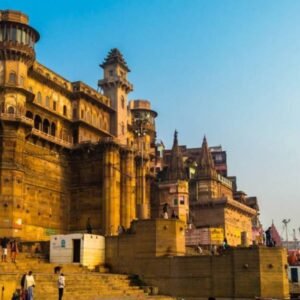
2. Darbhanga Ghat – Rajput-Mughal Palace with Greek Pillars
What it is: A massive sandstone palace that occupies the entire waterfront at Darbhanga Ghat – now a heritage hotel (Brijrama Palace), but architecturally one of the most unusual buildings on the Varanasi riverfront.
The architectural anomaly: The Darbhanga Palace combines three distinct architectural traditions in one building:
- Rajput elements: the overall massing, the jharokha (overhanging bay windows), the canopied balconies
- Mughal elements: the archwork, the proportions and decorative vocabulary
- Greek/Corinthian elements: the colonnades with Corinthian-style pillars on the riverfront facade
Greek-style pillars in a Mughal-Rajput sandstone palace on the banks of the Ganges in 18th-century Varanasi is as architecturally improbable as it sounds. The Darbhanga Maharajas (Bihar royal family) who commissioned this building were clearly drawing on an eclectic colonial-era vocabulary.
Why it is hidden in plain sight: Darbhanga Ghat is 300 metres from Dashashwamedh Ghat – one of the most visited sites in Varanasi. Yet the palace is consistently described as “the ghat most tourists walk past without stopping.” Experience My India always stops here and explains the architectural layers.
| Darbhanga Ghat | Information |
| Location | 300 m south of Dashashwamedh Ghat |
| Architecture | Rajput-Mughal-Greek fusion – sandstone palace |
| Now | Brijrama Palace heritage hotel (exterior accessible) |
| Best time | Morning (ghat path walk) or river boat |
| Photography | Excellent – the facade is very photogenic from the river |
3. Chaumsathi Ghat – 64 Yoginis and Lahiri Mahasya’s Hidden Ashram
What it is: A ghat in the Bengali neighbourhood of Varanasi, leading to two extraordinary sites at the top of its steep stairs: the Chausath Yogini Temple (64 Yogini goddesses) and the hidden ashram of Lahiri Mahasya.
The Chausath Yogini Temple: Commissioned by King Pratapaditya of Bengal in the late 16th century, this temple is dedicated to the 64 Yoginis – the 64 fierce goddesses (manifestations of Shakti) that form one of the most esoteric devotional traditions in Hinduism. Chausath Yogini temples are extremely rare in North India (the most famous being at Khajuraho and Hirapur in Odisha). Finding one in the middle of urban Varanasi, at the top of a ghat that most visitors pass without looking up, is genuinely surprising.
Lahiri Mahasya’s ashram: Shyama Charan Lahiri (1828-1895) – known as Lahiri Mahasya – was one of the most revered Indian yogis of the 19th century, credited with reviving the ancient Kriya Yoga tradition and becoming the teacher of Swami Sri Yukteswar Giri (in turn the teacher of Paramahansa Yogananda of Autobiography of a Yogi fame). Lahiri Mahasya’s ashram at Chaumsathi Ghat – now maintained as a quiet, well-kept space – is visited primarily by Kriya Yoga practitioners from around the world.
| Chaumsathi Ghat | Information |
| Location | Bengali neighbourhood, north of central ghats |
| At the top of stairs | Chausath Yogini Temple + Lahiri Mahasya Ashram |
| Entry | Temple free; ashram – respectful visit |
| Best time | Morning (7-9 AM) |
| For whom | Devotees of Shakti tradition; Kriya Yoga practitioners; heritage visitors |
For the complete Varanasi ghat guide: 30 Best Places to Visit in Kashi 2026. Experience My India includes Chaumsathi Ghat in heritage-focused itineraries. WhatsApp +91-7302265809.
4. Kedar Ghat – Striped Steps and Crowd-Free Sunrise
What it is: A ghat with a visually distinctive feature unique among Varanasi’s 84 ghats – its steps are painted in bold alternating stripes of red and white. The striped steps are immediately identifiable from a passing boat and make Kedar Ghat one of the most visually distinctive ghats on the river.
The Kedareshwar Temple: The ghat serves the Kedareshwar Temple – dedicated to Lord Shiva in his Kedarnath form. This is a “sister site” of the Himalayan Kedarnath Temple – pilgrims who cannot reach the high-altitude original shrine receive equivalent sacred benefit from the Varanasi Kedareshwar. The temple attracts a significant South Indian devotee community (South India has a strong Kedareshwar devotional tradition).
The sunrise: Kedar Ghat faces east-northeast across the Ganges – giving a clean, unobstructed view of the Ganges at sunrise. Because mainstream tourist activity is concentrated at Assi (south) and Dashashwamedh (central), Kedar Ghat at sunrise has the river view almost to itself.
| Kedar Ghat | Information |
| Location | Between Darbhanga and Scindia Ghat, central section |
| Visual feature | Red and white striped ghat steps – unique in Varanasi |
| Temple | Kedareshwar Temple (Kedarnath form of Shiva) |
| Community | Strong South Indian devotee presence |
| Best time | Sunrise (5-7 AM) for crowd-free river view |
SUBTERRANEAN AND CAMPUS TEMPLES
5. Lolark Kund – The Ancient Sun Tank 15 Metres Below the City
What it is: A large stepped tank (kund) sunk approximately 15 metres below the current street level of Varanasi – dedicated to Surya (the Sun God) and dating to approximately 1000 CE. The tank is invisible from street level: the only indication of its existence is a set of steps descending from a small, easy-to-miss entrance near Tulsi Ghat.
The descent: Walking down into Lolark Kund is one of the most spatially unusual experiences in Varanasi. You descend through red-brick stairways into a deep rectangular tank, the city above receding, the sound of traffic and life becoming muffled, the water surface far below reflecting the sky. The acoustic environment at the bottom of the kund – a cavernous, slightly echoing quiet – is completely different from anything else in this city.
Historical significance: Lolark is one of the 12 Adityas (sun deity sites) of Kashi – mentioned in the Kashi Khanda section of the Skanda Purana. The tradition of sun worship at this specific site dates to the early medieval period. Surya (the Sun God) worship is one of the oldest documented religious traditions in the Vedic corpus and the Kashi Khanda’s detailed treatment of the Lolark site suggests it was a major ritual centre.
The Lolark Shashthi festival: Once a year – on the 6th day of the bright fortnight of Bhadra month (August/September) – Lolark Kund fills with devotees who come specifically for this occasion: women who wish for children, couples seeking fertility blessings, pilgrims with prayers for their offspring. On this single day, the usually quiet tank sees significant crowds. On every other day of the year, it is one of the emptiest and most atmospheric places in Varanasi.
| Lolark Kund | Information |
| Location | Near Tulsi Ghat, southern Varanasi |
| Depth | 15 metres below street level |
| Entry | Free |
| Best time | Any weekday morning – almost always empty |
| Age | 1000 CE (early medieval) |
| One crowded day | Lolark Shashthi – August/September |
The 1 Night 2 Days Varanasi Tour Package from ₹3,999 can include Lolark Kund in the Day 2 southern ghat cluster walk. WhatsApp +91-7302265809.
6. Underground Shiva Temple – Bow to Enter, 30 Feet Down
What it is: A fully active Shiva temple located approximately 30 feet (9 metres) underground in the northern alleyways of Varanasi – carved into the earth as a defensive measure during the medieval period to protect the deities from destruction.
The entry: The approach is through the maze-like lanes of northern Varanasi. The entrance is through a narrow, completely unremarkable opening in the wall of a lane – so narrow and low that you must physically bow to pass through. Then stairs descend 30 feet into the earth and you emerge into a fully lit, fully active temple with priests, incense, oil lamps and devotees.
Why it was built underground: During the period of maximum temple destruction in the 12th-17th centuries, temple builders and devotees in some regions chose to carve shrines underground – below the level where surface demolitions could reach. The underground Shiva temple of northern Varanasi is one of the surviving examples of this defensive sacred architecture.
The experience: Sitting in an active underground Shiva temple – with the weight of the city above, the lamp-light filling the excavated space, the Maha Mrityunjaya Mantra chanting audible – is unlike any temple experience available at street level.
| Underground Shiva Temple | Information |
| Location | Northern alleyways – guide required |
| Entry | Physical bow to enter the narrow passage |
| Depth | 30 feet (9 metres) underground |
| Active? | Yes – fully active temple with daily worship |
| Best time | Morning (7-9 AM) |
| Navigation | Guide essential – easy to miss the entrance |
Experience My India arranges a guide for all northern alleyway heritage walks including this temple. The 2 Nights 3 Days Varanasi Tour Package includes this on Day 2 with a dedicated guide. WhatsApp +91-7302265809.
7. BHU Vishwanath Temple – 77-Metre Marble Tower with Bhagavad Gita on Walls
What it is: Shri Kashi Vishwanath Temple on the Banaras Hindu University campus – built by the Birla family in white Rajasthani marble, with a 77-metre shikhara (temple tower) that is one of the tallest in India and the complete text of the Bhagavad Gita inscribed on its inner walls.
The radical contrast with the old city temple: The famous Kashi Vishwanath Temple in the old city is intensely crowded, requires depositing belongings, navigating security queues and moving through narrow lanes. The BHU Kashi Vishwanath – 4 km south, on the spacious university campus – offers the same deity form in a completely different environment: open courtyards, clean marble, gardens, quiet and the ability to sit in the temple and actually read the Gita passages inscribed around the inner walls.
The Bhagavad Gita walls: The complete 700 verses of the Bhagavad Gita are inscribed on the interior walls of the BHU temple – an extraordinary feature that turns the temple visit into a scripture encounter. Pilgrims who have a copy of the Gita can follow the text around the walls; first-time visitors can simply absorb the scale of a complete sacred text carved in stone.
Campus access: The BHU campus requires a valid government ID at the gate. Photography on campus is generally permitted. The temple is 1-2 km inside the campus – accessible by cycle rickshaw from the main gate.
| BHU Vishwanath Temple | Information |
| Location | Banaras Hindu University campus, southern Varanasi |
| Distance from city | 4-5 km from Dashashwamedh |
| Tower height | 77 metres (one of tallest temple towers in India) |
| Material | White Rajasthani marble |
| Special feature | Complete Bhagavad Gita inscribed on inner walls |
| Open | 4:00 AM-12:00 PM and 1:00 PM-9:00 PM |
| Campus ID | Government photo ID required at BHU gate |
For the complete Varanasi sightseeing context: Kashi Vishwanath Temple Varanasi. WhatsApp +91-7302265809.
8. Sita-Rama Temple at Jaipur House – The Iconography Nobody Else Has
What it is: A small temple dedicated to Lord Rama and Sita housed within a building historically associated with the Queen of the royal Jaipur family – who gifted this Varanasi property to a local devotee.
The unique iconography: What makes this temple worth seeking out is its carved deity arrangement – a specific, unusual and theologically deliberate iconographic choice:
- Sita’s eyes are carved looking directly toward Lord Rama’s heart
- Lakshmana’s eyes are fixed respectfully at Sita’s feet
This specific eye-direction carving – requiring precise sculptural skill and theological intention – encodes the complete relational hierarchy of the Ramayana in three sets of eyes: Sita’s devotion directed at Rama’s heart (the source of his divine character), Lakshmana’s complete subordination to Sita’s presence (as the perfect devotee of his brother’s consort).
Architectural historians who document Indian temple iconography cite this specific Sita-Rama Temple as one of the most carefully designed small shrines in Varanasi – where the theological message is communicated entirely through the direction of carved stone eyes.
| Sita-Rama Temple (Jaipur House) | Information |
| Location | Old city alleyways – guide helpful |
| Entry | Free |
| Unique feature | Sita’s eyes → Rama’s heart; Lakshman’s eyes → Sita’s feet |
| History | Jaipur royal family gift to Varanasi devotee |
| Best for | Art history, iconography, Vaishnav devotees |
HIDDEN MONUMENTS AND HERITAGE SITES
9. Tomb of Lal Khan – The Persian Garden Hidden Above the River
What it is: The tomb (mausoleum) of Lal Khan – built in 1773 CE for the minister and army commander of the Maharaja of Banaras – located inside the grounds of the dismantled Raj Ghat fort, with a Persian-style paradise garden (Charbagh) that is completely invisible from the Ganges riverbank below.
Why it is truly hidden: The Raj Ghat fort area is elevated above the riverbank. From the Ganges – where the boats pass and most Varanasi sightseeing occurs – the entire Lal Khan Tomb complex is invisible. The Charbagh garden (the classic Persian garden layout: four quadrants divided by water channels, representing the four rivers of paradise in Islamic cosmological tradition) behind the tomb is completely insulated from the city’s noise and activity by its elevated position and garden walls.
The experience: Entering the Lal Khan Tomb complex from the Raj Ghat area and finding the Charbagh garden – lush, quiet, with the sound of the city entirely absent – is one of the most genuinely surprising moments available in Varanasi. The Indo-Islamic architecture of the tomb itself (1773 CE, under the Banaras Maharajas who had complex cultural relationships with both Mughal and British traditions) is architecturally significant.
| Tomb of Lal Khan | Information |
| Location | Raj Ghat fort area, northern end of ghat sequence |
| Built | 1773 CE |
| Style | Indo-Islamic, Charbagh (Persian paradise garden) |
| Hidden from | Ganges riverbank – completely invisible from boats |
| Entry | Check access at Raj Ghat area |
| Character | Peaceful, lush, acoustically insulated from city |
10. Rani Laxmibai Janmasthali – The Freedom Fighter’s Forgotten Birthplace
What it is: The birthplace of Rani Laxmibai of Jhansi – one of the most celebrated figures in India’s 1857 First War of Independence – located near Shivala in Varanasi.
Why it matters: Rani Laxmibai (1828-1858) – the queen who fought the British during the 1857 uprising and died defending Gwalior – was born Manikarnika Tambe in Varanasi. The house and site of her birth in the city has been designated as a memorial – Rani Laxmibai Janmasthali – featuring a statue and informational panels about her childhood and legacy.
Why it is hidden: Despite Rani Laxmibai being one of the most recognised names in Indian history (she appears on stamps, currency and countless memorials across the country), her Varanasi birthplace is consistently overlooked by the mainstream pilgrim and tourist circuit that focuses on the ghats and temples. This is partly because Varanasi is identified as a religious pilgrim destination rather than a historical monument destination – and the Janmasthali site is neither a temple nor a ghat.
What you will find: A clean, well-maintained space with the Rani Laxmibai statue, historical panels describing her Varanasi childhood and her later role in 1857 and a solemn, educational atmosphere.
| Rani Laxmibai Janmasthali | Information |
| Location | Near Shivala, Varanasi |
| Entry | Free |
| Character | Educational, solemn, well-maintained |
| Best for | History and heritage visitors; school groups; independent travelers |
| Crowd | Very low – almost always quiet |
For the complete Varanasi history and heritage guide: Best Time to Visit Varanasi 2026. Experience My India includes Rani Laxmibai Janmasthali in heritage-focused Day 2 itineraries. WhatsApp +91-7302265809.
OFFBEAT SARNATH CLUSTER
11. Garden of Spiritual Wisdom – Behind Chaukhandi Stupa, Sarnath
What it is: A beautifully curated garden located behind the Chaukhandi Stupa in Sarnath – designed to convey philosophical and spiritual concepts through carefully arranged spaces, symbols, exhibits and quiet areas for reflection.
Why it is hidden: The standard Sarnath visit follows a fixed circuit: Dhamek Stupa → Mulagandhakuti Vihara (Anagarika Dharmapala’s beautiful monastery) → Sarnath Archaeological Museum (closed Fridays) → departure. The Chaukhandi Stupa is usually a drive-past on the way into Sarnath. The Garden of Spiritual Wisdom behind it is essentially invisible to anyone following the standard route.
What makes it worth visiting: The garden does not replicate what the Dhamek Stupa area offers (archaeological ruins, historical scale, crowds). Instead it offers something most Buddhist pilgrimage sites lack: a quiet, intentionally designed contemplative space. Manicured paths, symbolic garden layouts, quiet seating areas and philosophical exhibit panels – the kind of space where you can actually stop and think.
Combine with: Most effective as a 30-minute extension before or after the main Sarnath circuit. Drive-by of Chaukhandi Stupa → Garden of Spiritual Wisdom (30 min) → Dhamek Stupa area → Museum (closed Fridays).
| Garden of Spiritual Wisdom | Information |
| Location | Behind Chaukhandi Stupa, Sarnath (10 km from Varanasi) |
| Entry | Free or nominal fee |
| Best time | Any morning |
| Character | Quiet, contemplative, philosophical |
| Crowd | Very low – almost unknown to visitors |
For the complete Sarnath guide: 30 Best Places to Visit in Kashi 2026. The 1 Night 2 Days Varanasi Tour Package from ₹3,999 includes Sarnath on Day 2 with time for the Garden. WhatsApp +91-7302265809.
12. Vietnamese Pink Temple Sarnath – The Most Beautiful Buddha Statue
What it is: A Vietnamese Buddhist temple at Sarnath with a distinctive pink-painted facade – immediately recognisable and entirely off the standard Sarnath tourist map.
Why it is hidden: The standard Sarnath route (Dhamek Stupa, Mulagandhakuti, Museum) does not pass the Vietnamese temple. It sits off the main archaeological campus track and is not signposted in standard tourist literature. The people who know about it tend to be slow-travelers, Buddhist practitioners making a thorough Sarnath circuit and visitors who have already seen everything on the standard route.
The Buddha statue: The temple houses what slow-travelers and Buddhist visitors consistently describe as one of the most aesthetically beautiful and spiritually powerful Buddha statues in the entire Sarnath cluster – a full-scale seated Buddha in a serene and well-lit interior, without the institutional scale that some of the larger national monasteries (Thai, Japanese, Chinese) present.
The pink facade: The distinctive pink exterior of the Vietnamese temple makes it visually unmistakable once you know to look for it – and a genuinely photogenic counterpoint to the weathered sandstone of the Dhamek Stupa area.
| Vietnamese Pink Temple Sarnath | Information |
| Location | Sarnath – off the main archaeological campus track |
| Entry | Free |
| Feature | Pink facade + exceptionally beautiful Buddha statue |
| Best time | Morning |
| Crowd | Very low – primarily Buddhist practitioners |
| Combine with | Garden of Spiritual Wisdom (same Sarnath visit) |
Complete Hidden Places Visiting Guide
| Category | Places | Best Combined With |
| Offbeat Ghats | Chet Singh, Darbhanga, Chaumsathi, Kedar | Sunrise boat – pass all on the river |
| Southern Varanasi | Lolark Kund, Chaumsathi Ghat | Day 2 morning – Assi Ghat + southern walk |
| Central / Underground | Underground Shiva Temple | Northern alleyway walk with guide |
| BHU Campus | BHU Vishwanath, Sita-Rama Temple | Afternoon Day 2 – after temple closure |
| Heritage sites | Lal Khan Tomb, Rani Laxmibai Janmasthali | Raj Ghat area visit |
| Sarnath offbeat | Garden of Spiritual Wisdom, Vietnamese Temple | Sarnath Day 2 extension |
Practical navigation note: The underground Shiva temple and Sita-Rama Jaipur House both require a local guide for navigation. Experience My India provides guides for all old city lane walks. WhatsApp +91-7302265809.
Ground Truth – What Nobody Tells You
1. Chaumsathi Ghat leads to both a rare 64 Yogini temple and the ashram of the yogi who revived Kriya Yoga – making it theologically the most concentrated single ghat in Varanasi. Almost nobody connects these two sites or even mentions them together.
2. Chet Singh Ghat’s 1781 battle is one of the most dramatic confrontations between an Indian ruler and British colonial authority in the pre-Rebellion period – fully documented, resulting in a parliamentary impeachment of Warren Hastings. Yet it is described by almost no Varanasi guide.
3. The Darbhanga Ghat palace has Corinthian/Greek-style pillars – in a sandstone Rajput-Mughal building on the Ganges. The cultural explanation for why an 18th-century Bihar maharaja included Greek architectural elements is itself a fascinating history of colonial-era eclecticism.
4. Lolark Kund is 15 metres below street level and invisible from the street. Most Varanasi visitors who walk past the entrance every day do not know a 1,000-year-old sun worship tank is 30 steps below their feet.
5. The BHU Vishwanath Temple has the entire Bhagavad Gita inscribed on its inner walls – all 700 verses – making it the only temple in Varanasi where you can read the complete Gita while standing inside the sacred precinct.
Frequently Asked Questions
The top hidden places in Varanasi are: Chet Singh Ghat (18th-century fortress palace, site of the 1781 Raja Chet Singh vs Warren Hastings battle), Lolark Kund (ancient sun worship tank 15 metres below street level near Tulsi Ghat), the Underground Shiva Temple in the northern alleyways (30 feet underground, entered by bowing), BHU Vishwanath Temple (77-metre marble temple with full Bhagavad Gita inscribed on walls), Chaumsathi Ghat (Chausath Yogini Temple + Lahiri Mahasya ashram) and the Vietnamese Pink Temple at Sarnath. Experience My India covers all 12 hidden places in extended Varanasi itineraries. WhatsApp +91-7302265809.
Lolark Kund is an ancient stepped tank (sacred water body) dedicated to the Sun God Surya, dating to approximately 1000 CE – located near Tulsi Ghat in southern Varanasi. The kund is sunk approximately 15 metres below street level and completely invisible from the road above. It is one of the 12 Aditya (sun deity) sacred sites of Kashi mentioned in the Kashi Khanda. Most of the year it is almost completely empty – one of the quietest sites in Varanasi. On the Lolark Shashthi festival day (August/September), it draws large crowds for fertility and child-related prayers. Experience My India includes Lolark Kund in heritage walks. WhatsApp +91-7302265809.
Chet Singh Ghat was the site of a significant 1781 confrontation between Raja Chet Singh of Banaras and British Governor-General Warren Hastings. When Hastings arrived with a small escort to arrest Raja Chet Singh for refusing to pay a forced contribution, the Raja’s soldiers resisted – several British officers were killed in the ensuing clash and Raja Chet Singh escaped by rope over the fort’s river wall. The event caused a major political scandal in Britain and became one of the grounds for Hastings’ later parliamentary impeachment. The fort-palace structure from which the Raja escaped still stands at Chet Singh Ghat. Experience My India explains this history at every heritage ghat visit. WhatsApp +91-7302265809.
The Shri Kashi Vishwanath Temple on the Banaras Hindu University campus is a white Rajasthani marble temple built by the Birla family with a 77-metre shikhara (tower) – one of the tallest temple towers in India. The complete text of the Bhagavad Gita (all 700 verses) is inscribed on its inner walls. Located approximately 4-5 km from Dashashwamedh Ghat in the spacious BHU campus, it offers a completely different experience from the crowded old city temple – open courts, clean marble, quiet atmosphere and no queue. Open 4 AM-12 PM and 1 PM-9 PM. Government ID required at the BHU campus gate. Experience My India includes this in Day 2 afternoon heritage itineraries. WhatsApp +91-7302265809.
Yes – there is a fully active Shiva temple approximately 30 feet underground in the northern alleyways of Varanasi. It was carved underground as a defensive measure during the medieval period to protect the deities from surface-level destruction. The entrance is through a narrow, unremarkable opening in a lane wall – so low that you must physically bow to pass through. Inside, stairs descend 30 feet into a lit, active temple with daily worship and priests. Navigation to this temple requires a local guide as the entrance is easily missed. Experience My India arranges guides for all northern alleyway heritage walks including this temple. WhatsApp +91-7302265809.
The Sita-Rama Temple at Jaipur House is a small temple in Varanasi’s old alleyways – housed in a building historically gifted by the Queen of the Jaipur royal family to a local devotee. The temple is noted for its unusual and theologically precise iconography: the carved statues show Sita’s eyes looking directly toward Rama’s heart, while Lakshmana’s eyes are fixed respectfully at Sita’s feet. This specific eye-direction carving encodes the devotional hierarchy of the Ramayana in stone – Sita’s devotion directed at Rama’s divine core, Lakshmana’s total deference to Sita. Architectural historians cite it as one of the most carefully designed small shrines in Varanasi. Experience My India includes it in heritage itineraries. WhatsApp +91-7302265809.
The Vietnamese Buddhist Temple in Sarnath is a temple with a distinctive pink-painted facade, located off the main archaeological campus track. It houses what Buddhist practitioners and slow-travelers consistently describe as one of the most aesthetically beautiful and peaceful Buddha statues in the Sarnath area – a full-scale seated Buddha in a serene, well-lit interior. Unlike the larger national monastery temples at Sarnath (Thai, Japanese, Chinese), the Vietnamese temple is small, quiet and almost entirely unvisited by mainstream tourists. Entry is free. Best visited in the morning, combined with the Garden of Spiritual Wisdom behind the nearby Chaukhandi Stupa. Experience My India includes both sites in extended Sarnath itineraries. WhatsApp +91-7302265809.
Covering all 12 hidden places in this guide requires at least 3 days in Varanasi – combined with the main famous sites. Day 1: Sunrise boat (all ghats – offbeat ghats visible from water) + central circuit (Kashi Vishwanath, Ganga Aarti). Day 2: Lolark Kund + Chaumsathi Ghat morning + Underground Shiva Temple (guide) + BHU Vishwanath Temple afternoon + Sita-Rama Temple. Day 3: Sarnath – Dhamek Stupa + Garden of Spiritual Wisdom + Vietnamese Pink Temple + heritage sites (Chet Singh, Rani Laxmibai, Lal Khan Tomb). Experience My India plans all 3 days with guides for the lane sites. The 2 Nights 3 Days Varanasi Tour Package covers this completely. WhatsApp +91-7302265809.
Recommended products
-
1 Night 2 Days Varanasi Tour Package
Original price was: ₹7,000.00.₹6,000.00Current price is: ₹6,000.00. -
2 Nights 3 Days Varanasi Tour Package
Original price was: ₹11,000.00.₹9,500.00Current price is: ₹9,500.00. -
3 Nights 4 Days Ayodhya Varanasi Tour Package
Original price was: ₹11,000.00.₹10,000.00Current price is: ₹10,000.00. -
5 Days Ayodhya Varanasi Tour Package


🙏 Ready to Discover Varanasi’s Hidden Places with Experience My India?
WhatsApp us – guide for underground Shiva temple arranged, Lolark Kund access confirmed, Chet Singh Ghat historical story prepared, Garden of Spiritual Wisdom + Vietnamese Temple added to Sarnath Day 2. The Varanasi most guides never reach. Rated 4.5★ by 204+ pilgrims.
WhatsApp +91-7302265809 – Book Now
Jai Shri Ram 🙏