

Ayodhya does not feel like a destination you arrive at. It feels like a place you slowly remember. Even before the car stops, even before you step onto its roads, something inside you softens. The noise of cities fades, conversations become quieter, and the mind — which is usually restless — begins to wait instead of rush.
People often ask about the Famous Temples to Visit in Ayodhya, expecting a neat list with timings and distances. But Ayodhya doesn’t open itself neatly. It opens gently, through stories, silences, bells, and moments when you stop walking and just stand there without knowing why.
Ayodhya Varanasi Tourism has guided pilgrims through this city for years, and one thing has always stayed true: Ayodhya is not meant to be consumed quickly. It is meant to be felt slowly.
This blog walks through twelve temples, yes — but more importantly, it walks through what each place adds to your understanding of Ayodhya.
Ayodhya’s History – Not Frozen, Still Flowing
Ayodhya is believed to be the birthplace of Lord Ram and one of the seven sacred Sapta Puris. But reducing it to a historical label does not do justice to the place. Ayodhya lives its history every day. Ram is not remembered here as a distant figure. He is discussed, debated, sung about, and quietly prayed to.
Stories of exile, duty, sacrifice, patience, and return are woven into daily life. That’s why an Ayodhya temple sightseeing guide is not just about architecture or rituals. It’s about understanding how values survive centuries.
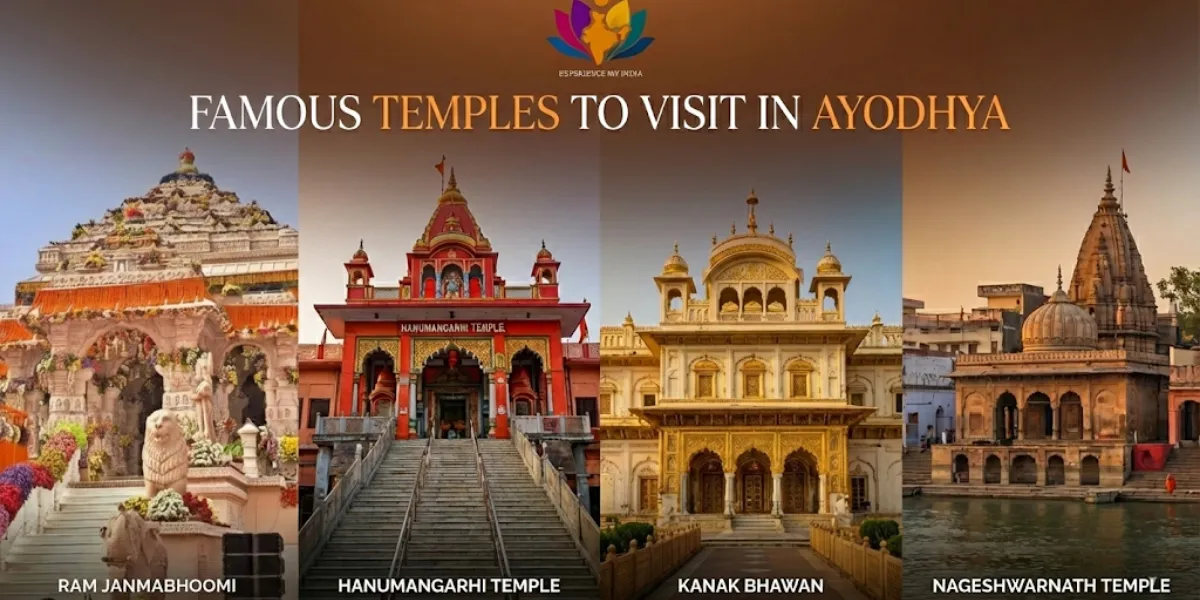
1. Shri Ram Janmabhoomi Temple – The Center of Everything
There is no way around this. Shri Ram Janmabhoomi is the heart of Ayodhya.
Standing here does not feel triumphant. It feels still. Controlled. Almost heavy in a way that makes you stand straighter without trying.
Darshan Timings (approximate):
Morning: Early hours till afternoon
Evening: Late afternoon till night
Aarti Timings:
Morning and evening aarti
Security is strict. Phones, bags, and electronics are not allowed inside. Waiting time varies greatly depending on the day.
Ayodhya Varanasi Tourism assists devotees with VIP Darshan arrangements, especially for older citizens, families with children, and visitors on limited schedules. This does not rush the experience. It simply removes unnecessary physical strain.
Among all Famous Temples to Visit in Ayodhya, this one carries the deepest emotional weight.
2. Hanuman Garhi – The Guardian of Ayodhya
Hanuman Garhi is not just a temple you visit. It is a temple you climb toward.
Located on a small hill, the climb itself becomes part of the ritual. Each step feels like preparation. Each pause feels intentional.
Darshan Timings:
Morning till evening
Local belief says that no visit to Ayodhya is complete without seeking Hanuman’s blessings first. That belief still lives strongly here.
This is one of the most visited religious places in Ayodhya, not because it is grand, but because it feels protective.
3. Kanak Bhawan – Where Divinity Feels Domestic
Kanak Bhawan feels different the moment you enter.
Dedicated to Lord Ram and Goddess Sita, the temple carries warmth instead of authority. The idols are beautifully adorned, and the atmosphere feels gentle, almost personal.
Darshan Timings:
Morning and evening
Many devotees say Kanak Bhawan feels like visiting Ram’s home, not his throne. It adds tenderness to the list of top temples in Ayodhya.
4. Dashrath Mahal – The Human Side of the Ramayana
Dashrath Mahal marks the palace of King Dashrath, Lord Ram’s father.
The temple is lively. Bhajans play. Children move freely. Elders sit and talk. Life continues here without ceremony.
Darshan Timings:
Daytime hours
This temple reminds visitors that before Ram became an ideal, he was a son. Before exile, there was family.
5. Nageshwarnath Temple – Shiva’s Place in Ram’s City
Nageshwarnath Temple is dedicated to Lord Shiva and is believed to have been established by Kush, Lord Ram’s son.
This temple gains special importance during Shivratri, when Ayodhya’s energy shifts slightly — quieter, deeper.
Darshan Timings:
Morning to evening
This temple balances Ayodhya’s Vaishnav devotion with Shaiv presence, making it essential in any Ayodhya temple sightseeing guide.
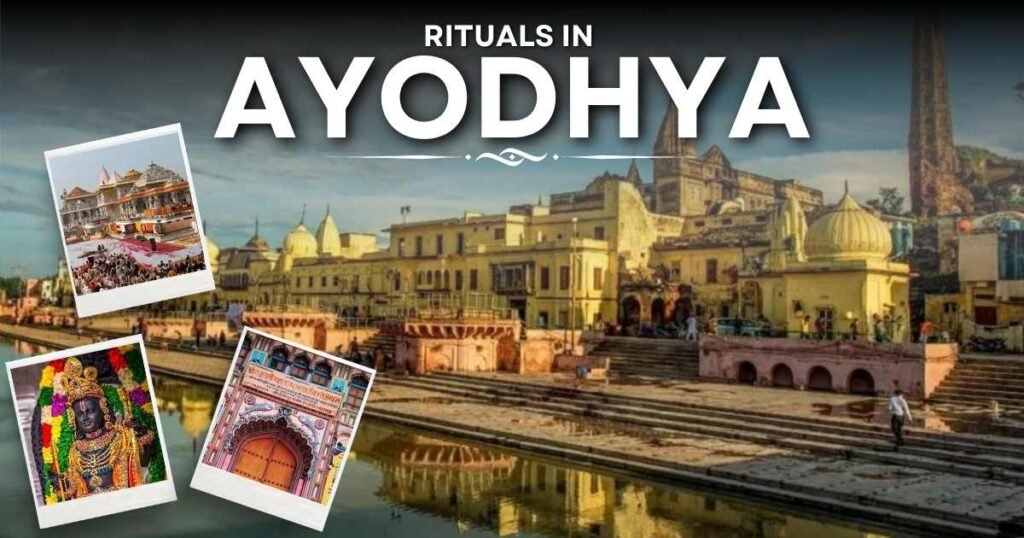
6. Ram Ki Paidi – Where Ritual Meets River
Ram Ki Paidi is a series of ghats along the Sarayu River. It is not enclosed by walls, yet it feels sacred the moment you arrive.
Pilgrims bathe here. Lamps float at dusk. Chants echo softly across the water.
Best Time to Visit:
Early morning or evening
During festivals, the aarti here becomes unforgettable. It is impossible to speak about Famous Temples to Visit in Ayodhya without including Ram Ki Paidi.
7. Treta Ke Thakur Temple – Quiet and Ancient
This temple marks the site where Lord Ram is believed to have performed the Ashwamedha Yagna.
Inside are ancient idols of Ram, Sita, Lakshman, Bharat, Shatrughna, and Hanuman.
Darshan Timings:
Limited and specific
This temple does not attract crowds. It attracts seekers. It speaks softly, but it stays with you.
8. Guptar Ghat – Where the Story Ends Gently
Guptar Ghat is believed to be the place where Lord Ram took Jal Samadhi.
It is peaceful. Introspective. Emotional in a quiet way.
Best Time to Visit:
Sunset
Many devotees say this is where Ayodhya finally speaks without words.
9. Valmiki Ramayan Bhawan – Honoring the Storyteller
Dedicated to Maharishi Valmiki, this place celebrates the Ramayana as a living narrative.
Darshan Timings:
Daytime hours
For those who want to understand Ram’s journey beyond rituals, this adds intellectual depth to the most visited religious places in Ayodhya.
10. Sita Ki Rasoi – Devotion in Simplicity
Sita Ki Rasoi is believed to be the kitchen used by Goddess Sita.
It is small. Simple. Quiet.
Darshan Timings:
Morning to evening
Many women devotees feel a strong emotional connection here. It reminds visitors that devotion also lives in service.
11. Mani Parvat – A Pause Above the City
Mani Parvat is associated with Hanuman and the Sanjeevani episode.
It offers a slight elevation and a moment of openness.
Darshan Timings:
Daytime hours
This place adds movement and reflection to the list of top temples in Ayodhya.
12. Tulsi Smarak Bhawan – Devotion Through Words
Dedicated to Goswami Tulsidas, this bhawan celebrates Ram through poetry and storytelling.
Darshan Timings:
Daytime
Ramcharitmanas recitations often take place here, reminding visitors that devotion can also be literary, reflective, and lyrical.
VIP Darshan & Travel Support
Ayodhya Varanasi Tourism provides:
– VIP Darshan assistance
– Temple timing coordination
– Older citizen support
– Experienced local guides
This makes temple visits calmer and more manageable, especially during peak seasons.
Festivals in Ayodhya
Major festivals include:
Ram Navami
Diwali
Kartik Purnima
During festivals:
– Darshan timings change
– Crowds increase
– Planning becomes essential
Ayodhya Varanasi Tourism helps pilgrims navigate these days without stress.
How to Reach Ayodhya
Air:
Maharishi Valmiki International Airport, Ayodhya
Train:
Ayodhya Junction and Faizabad Junction
Road:
Well-connected from Lucknow, Prayagraj, and Varanasi
A Quiet Ending Thought
One morning near the Sarayu, I saw a man fold his hands, look toward the river, and smile — not in relief, not in joy, but in acceptance. As if he had finally arrived somewhere he had been walking toward for years.
That is Ayodhya.
10 Informative FAQs
- How many days are enough to explore Ayodhya?
2–3 days. - Is VIP Darshan available at Ram Janmabhoomi?
Yes, with arrangements. - Are phones allowed inside temples?
Mostly restricted. - What is the best season to visit Ayodhya?
October to March. - Are festivals very crowded?
Yes, significantly. - Is Ayodhya suitable for older citizens?
Yes, with support. - Are ghats safe to visit?
Yes, especially during daylight. - Is local transport easily available?
Yes. - Can Ayodhya be combined with Varanasi?
Yes, very commonly. - Does Ayodhya Varanasi Tourism manage complete tours?
Yes, end-to-end planning is provided.