
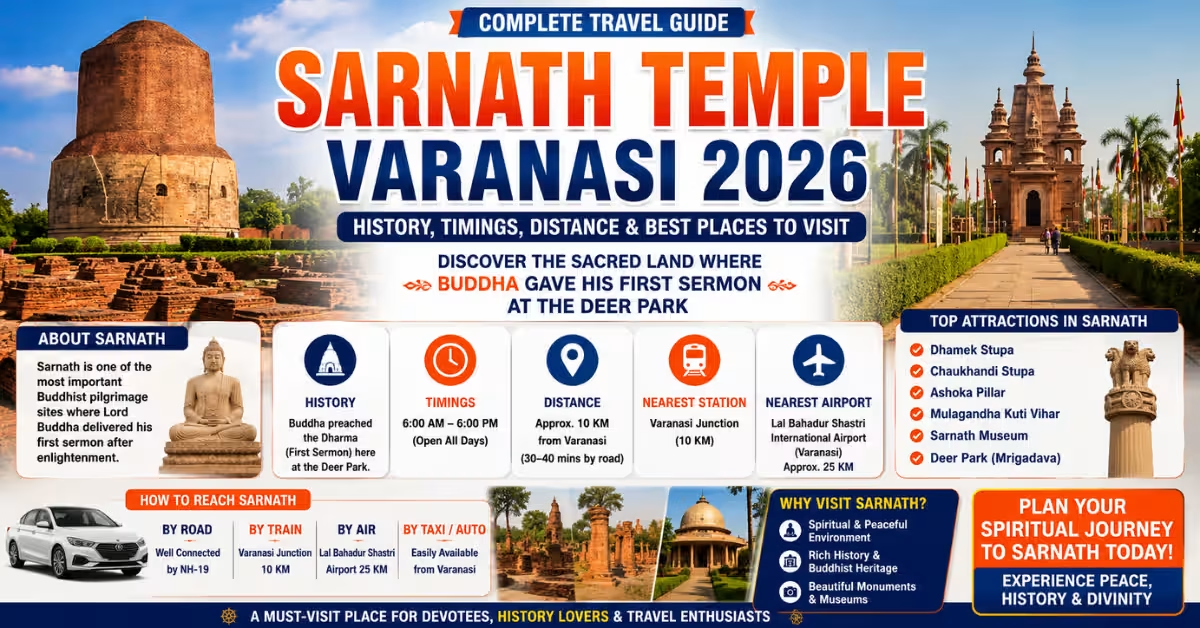
Sarnath – where Buddha gave his first sermon – sits 10 km northeast of Varanasi, a 25-45 minute drive. The Dhamek Stupa and ruins are open 6 AM-6 PM daily; the Museum runs 9 AM-5 PM and shuts every Friday. A full visit (stupa, museum, Mulagandha Kuti Vihar, Deer Park) takes 3-4 hours. Experience My India arranges guided Sarnath darshan with Varanasi sightseeing from ₹2,999 per person. WhatsApp +91-7302265809 for today’s exact timings.
Most visitors land in Varanasi for the ghats and the Ganga Aarti and treat Sarnath as an afterthought – a quick stop squeezed in if there’s spare time. That’s a mistake. Sarnath isn’t a side temple; it’s one of Buddhism’s four most sacred sites, the exact place where Gautama Buddha delivered his first sermon after attaining enlightenment at Bodh Gaya. Arrive without knowing the museum’s Friday closure or the actual distance from your hotel and you can lose half a day to confusion instead of standing where that sermon was given.
I’m Gurudutt, founder of Experience My India, born and raised in Braj Bhoomi and guiding pilgrims across Mathura, Vrindavan, Ayodhya and Varanasi since 2018. Our team has walked 50,000+ pilgrims through sites like this one and this guide is built from that on-ground experience, not a desk review.
By the end of this guide you’ll know the exact 2026 timings for every major site in Sarnath, the real entry fees, the actual distance and travel time from Varanasi, which places are worth your limited hours and how to fit it all into a half-day or full-day plan.
Why Sarnath Matters in Buddhist History
Sarnath was historically known as Isipatana – “the place where holy men landed” – and Mrigadava, meaning Deer Park. After attaining enlightenment at Bodh Gaya, Buddha walked to this spot to teach the Dharma to his five former companions, led by Kondanna. That first teaching is known as the Dharmachakra Pravartana, the “turning of the wheel of law,” and it marks the moment the Buddhist Sangha – the monastic order – came into existence.
Sarnath sits alongside Lumbini (Buddha’s birthplace), Bodh Gaya (his enlightenment) and Kushinagar (his Mahaparinirvana) as one of Buddhism’s four most important pilgrimage sites.
Emperor Ashoka patronized the site heavily in the 3rd century BCE, building stupas and a commemorative pillar. That pillar was found broken during excavation work in 1904, led by archaeologist Sir John Marshall. Its crowning piece – the Lion Capital – is now displayed in the Sarnath Archaeological Museum and was adopted as independent India’s national emblem.
Experience My India includes this full historical context with every guided Sarnath visit, rather than leaving you to read it off a signboard. WhatsApp +91-7302265809 if you’d like a guide who can walk you through it on-site.
Sarnath Temple Timings 2026
Timings vary by site inside the Sarnath complex – this is the single most common point of confusion for first-time visitors.
| Site | Opens | Closes | Weekly Closure |
| Dhamek Stupa & Archaeological Ruins | 6:00 AM | 6:00 PM | None – open all 7 days |
| Sarnath Archaeological Museum | 9:00 AM | 5:00 PM | Closed every Friday |
| Mulagandha Kuti Vihar (main temple) | 6:00 AM | 7:00 PM | None – open all 7 days |
| Sarnath Light and Sound Show | Gates 5:30 PM | Show 6:30-7:00 PM | Seasonal – confirm before travel |
Mulagandha Kuti Vihar holds a special evening chanting session in the late afternoon, which is worth timing your visit around if you want the temple at its most atmospheric. Experience My India schedules Sarnath in the morning block of every Varanasi itinerary – before the midday heat sets in and while the stupa grounds are still calm. Call +91-7302265809 to confirm the day’s exact schedule, since timings can shift slightly around festivals like Buddha Purnima.
Planning this trip? Experience My India’s Varanasi Sarnath Sightseeing Tour covers the full complex with a guide who knows every site’s actual hours – no wasted trips to closed gates. From ₹2,999 per person. View Our 2 Days Varanasi Tour Package
Sarnath Entry Fees & Tickets
| Site | Indian Visitors | Foreign Visitors | Notes |
| Dhamek Stupa & Archaeological Ruins (ASI) | ₹25 | ₹300 | Photo ID required at entry |
| Sarnath Archaeological Museum | ₹25 | ₹300 | Closed Fridays – ticket not valid that day |
| Mulagandha Kuti Vihar | Free | Free | Donations accepted, not mandatory |
| International temples (Tibetan, Thai, etc.) | Free | Free | No formal ticket counter |
| Light and Sound Show | ₹200 | ₹250 | Separate ticket from daytime entry |
Buying the combo ticket where offered (stupa + museum together) avoids a second queue later in the day. Experience My India pre-arranges all applicable entry tickets as part of its Sarnath packages, so there’s no separate cash counter or ID check to manage on the day – WhatsApp +91-7302265809 for the current combined-ticket breakdown before you travel, since ASI fees do get revised periodically.
Distance From Varanasi & How to Reach Sarnath
Sarnath sits roughly 10 to 13 km northeast of Varanasi city center and about 12 km from Varanasi Airport at Babatpur. The actual drive time depends heavily on traffic in the Cantt area near Varanasi Junction.
| From | Distance | Typical Drive Time | Mode |
| Varanasi Junction (railway station) | 10-13 km | 25-35 minutes | Taxi, auto-rickshaw |
| Varanasi Airport (Babatpur) | 12 km | 30-40 minutes | Pre-booked taxi |
| Dashashwamedh Ghat / Old City | 10 km | 35-45 minutes | Taxi, auto-rickshaw (denser traffic) |
By Taxi or Private Cab
The most comfortable option for families and senior travelers and the one Experience My India uses for every package – an AC cab that waits through your full visit rather than charging a fresh fare for the return leg.
By Auto-Rickshaw
Affordable and widely available from anywhere in Varanasi, but fares aren’t fixed – agree the round-trip price, including wait time, before you start.
By Local Bus
The cheapest option, running regularly between Varanasi and Sarnath, though timings are less predictable and not ideal if you’re short on time.
As Part of a Guided Tour
Experience My India includes the Sarnath transfer inside every Varanasi tour package, so the distance and traffic variability stop being your problem to manage. Call +91-7302265809 to add a Sarnath half-day to an existing Varanasi or Ayodhya Varanasi trip.
Best Places to Visit in Sarnath
Every major site in Sarnath sits within 1-2 km of the others, making the whole complex easily walkable once you’ve reached the area.
Dhamek Stupa
The most iconic structure in Sarnath – a cylindrical stupa roughly 43 metres tall or iginally built by Emperor Ashoka in the 3rd century BCE and rebuilt in its current form around 500 CE. It marks the precise spot where Buddha delivered his first sermon to the five ascetics. The stone surface carries intricate Gupta-period carvings of birds and script.
Sarnath Archaeological Museum
Home to the Lion Capital of Ashoka – the original sculpture that became India’s national emblem – alongside Buddhist and Hindu sculptures recovered from the 1904 excavation. One of India’s oldest purpose-built archaeological museums, closed every Friday.
Mulagandha Kuti Vihar
A modern Buddhist temple built by the Mahabodhi Society, with interior frescoes depicting the life of Buddha and a Bodhi tree planted in the adjoining garden. The temple holds an evening chanting session that’s worth timing your visit around.
Tibetan Temple and Thai Temple
These international temples reflect Sarnath’s standing as a living, global pilgrimage site – built and maintained by Buddhist communities from Tibet and Thailand. The Thai temple complex includes a large standing Buddha statue.
Chaukhandi Stupa and Deer Park
Chaukhandi Stupa marks an early meeting point on Buddha’s route into Sarnath; Deer Park, right beside the main ruins, is the green space where the first sermon’s setting is preserved, with deer still kept on the grounds today.
Sarnath Light and Sound Show
After dark, the Dhamek Stupa becomes the screen for a light and sound show narrating Buddha’s life. Gates open around 5:30 PM and the show itself runs roughly 6:30 PM to 7:00 PM for about 30 to 45 minutes. Tickets cost approximately ₹200 for Indian visitors and ₹250 for foreign visitors – separate from your daytime entry ticket. This is a good way to close a half-day Sarnath visit if your schedule allows the extra hour, though it does mean staying in the area past the museum and main ruins’ closing time. Experience My India can include this in an extended Sarnath itinerary – WhatsApp +91-7302265809 to check the current show schedule before your trip, as timing can shift seasonally.
Best Time to Visit Sarnath
| Season | Months | Temperature | Verdict |
| Winter | October-March | 10-25°C | Best – comfortable walking, full visibility at the stupa |
| Summer | April-June | 35-45°C | Visit only between 6:00-9:00 AM, avoid midday entirely |
| Monsoon | July-September | 24-33°C | Workable with rain breaks; ruins can get slippery |
Within any season, 6:00-9:00 AM and 4:00-6:00 PM give the most comfortable light for walking and photographs and the calmest crowds at the Dhamek Stupa. Experience My India schedules Sarnath visits inside these exact windows rather than around generic “daytime sightseeing” hours.
Suggested Sarnath Sightseeing Itinerary
If You Have Only 2-3 Hours
Prioritize the Dhamek Stupa and the Archaeological Museum (skip if it’s a Friday) – these two alone cover the historical core.
If You Have a Full Half-Day (4-5 Hours)
Add Mulagandha Kuti Vihar, Deer Park and the Tibetan or Thai Temple to the above, with a tea break in between.
Combined Varanasi + Sarnath Full Day
| Time | Activity |
| 6:00-9:00 AM | Sarnath: Dhamek Stupa, Museum, Mulagandha Kuti Vihar |
| 9:30-10:30 AM | Drive back, breakfast |
| 11:00 AM-1:00 PM | Kashi Vishwanath Temple darshan |
| 1:00-4:00 PM | Lunch and rest (afternoon heat/crowd lull) |
| 5:30-7:00 PM | Ganga Aarti at Dashashwamedh Ghat |
Experience My India Same Day Varanasi Tour is built around exactly this flow – Sarnath in the morning, temple and ghats in the evening, with a private cab handling every transfer.
Ground Truth – What Nobody Tells You
The museum closure catches more people off guard than anything else. Plenty of visitors plan an afternoon Sarnath trip only to find the museum shut on a Friday – the stupa and temple stay open, but the Lion Capital won’t be visible that day.
The complex is genuinely walkable – you don’t need a cab between sites. All major points sit within 1-2 km of each other; budget the time for walking, not for hailing transport between stops.
Photo ID is checked at the Dhamek Stupa entrance. Carry a physical copy, not just a phone photo of your ID.
The light and sound show needs a separate ticket and a separate trip back after dark if you’ve already left the area earlier in the day – plan for it upfront if you want it.
April-June heat (35-45°C) makes a midday Sarnath visit genuinely unpleasant, not just uncomfortable – this is the one season where timing your visit to the early window (6:00-9:00 AM) isn’t optional.
Experience My India plans every Sarnath visit around these exact realities. WhatsApp +91-7302265809 to build them into your trip.
Frequently Asked Questions
October to March is the best time to visit Sarnath, when temperatures stay between 10°C and 25°C and walking between the stupa, museum and temples is comfortable. April to June gets uncomfortably hot (35-45°C). Within the day, 6:00-9:00 AM and 4:00-6:00 PM offer the coolest light and calmest crowds. Experience My India builds Sarnath into Varanasi itineraries around these exact windows – WhatsApp +91-7302265809 to confirm season-specific timing.
The Sarnath Archaeological Museum is closed every Friday – the only weekly closure in the complex. The Dhamek Stupa, surrounding ruins and Mulagandha Kuti Vihar remain open all seven days, including Fridays. If your visit falls on a Friday, Experience My India simply reorders the itinerary to cover the stupa and temple first and skip the museum or shifts the visit to another day. Call +91-7302265809 to plan around this.
The must-see places in Sarnath are the Dhamek Stupa, the Sarnath Archaeological Museum (home to the Lion Capital of Ashoka, India’s national emblem), Mulagandha Kuti Vihar, the Tibetan and Thai Temples and Deer Park. Chaukhandi Stupa and the Sarnath Light and Sound Show are worthwhile additions with more time. Experience My India covers all of these on its guided Sarnath tours.
A focused visit covering the Dhamek Stupa, museum, Mulagandha Kuti Vihar and Deer Park takes 3 to 4 hours, since every major site sits within 1-2 km of the others and is walkable. Add the Tibetan Temple, Thai Temple and Chaukhandi Stupa and budget closer to 5 hours. Experience My India’s Sarnath tours are built around this realistic window – WhatsApp +91-7302265809 for a time-blocked itinerary.
Entry to the Dhamek Stupa and the main archaeological site costs around ₹25 for Indian visitors and ₹300 for foreign nationals. The Archaeological Museum charges a similar fee. Mulagandha Kuti Vihar and most international temples have no entry fee. Experience My India includes all applicable Sarnath entry tickets in its guided packages – call +91-7302265809 for current rates.
Mulagandha Kuti Vihar, the main Sarnath temple, is open for darshan from 6:00 AM to 7:00 PM daily, with a special evening chanting session in the late afternoon. The Dhamek Stupa and ruins keep a similar window, 6:00 AM to 6:00 PM. Experience My India schedules Sarnath darshan in the morning block of its Varanasi itineraries – WhatsApp +91-7302265809 to fit this into your trip.
Sarnath is about 10 to 13 km northeast of Varanasi city, roughly a 25 to 45 minute drive depending on traffic near the Cantt area and about 12 km from Varanasi Airport. Taxis, auto-rickshaws and local buses all run this route. Experience My India includes private AC cab transfers to Sarnath in every Varanasi package – call +91-7302265809 to add this transfer to your trip.
Sarnath is famous as the place where Buddha delivered his first sermon, the Dharmachakra Pravartana, after attaining enlightenment at Bodh Gaya – one of Buddhism’s four most sacred sites alongside Lumbini, Bodh Gaya and Kushinagar. It’s equally known for the Lion Capital of Ashoka, now India’s national emblem, displayed at the Sarnath Archaeological Museum. Experience My India introduces both layers of significance during every guided Sarnath visit.
Yes – Sarnath fits comfortably into a single Varanasi day trip since the drive is only 25 to 45 minutes each way and the full visit takes 3 to 4 hours. A typical combined day covers Sarnath in the morning, lunch and rest at midday and Kashi Vishwanath darshan or Ganga Aarti in the evening. Experience My India’s Same Day Varanasi Tour is built around exactly this flow – WhatsApp +91-7302265809 for the full plan.
Mulagandha Kuti Vihar and most of the international Buddhist temples in Sarnath have no entry fee. The fee applies only to the ASI-managed archaeological zone (around ₹25 for Indians, ₹300 for foreigners) and the Museum. Experience My India pre-includes all applicable site tickets in its Sarnath and Varanasi packages – call +91-7302265809 for the current combined ticket details.
Recommended products
-
1 Night 2 Days Varanasi Tour Package
Original price was: ₹7,000.00.₹6,000.00Current price is: ₹6,000.00. -
2 Nights 3 Days Varanasi Tour Package
Original price was: ₹11,000.00.₹9,500.00Current price is: ₹9,500.00. -
Same Day Varanasi Tour Package
Original price was: ₹4,000.00.₹3,500.00Current price is: ₹3,500.00. -
7 Days Uttar Pradesh Sacred Circuit Tour

Conclusion
Sarnath rewards exactly the kind of planning most visitors skip – knowing the museum’s Friday closure, the real 25-45 minute distance from Varanasi and which two or three sites matter most if your time is limited. Get those right and a rushed afternoon stop becomes a genuinely meaningful visit to where Buddhism’s first teaching took place.
Experience My India builds every Sarnath visit around these exact timings and realities, with packages from ₹2,999 per person including transfers, guide and entry tickets.
WhatsApp +91-7302265809 – Book Now
Jai Shri Ram 🙏