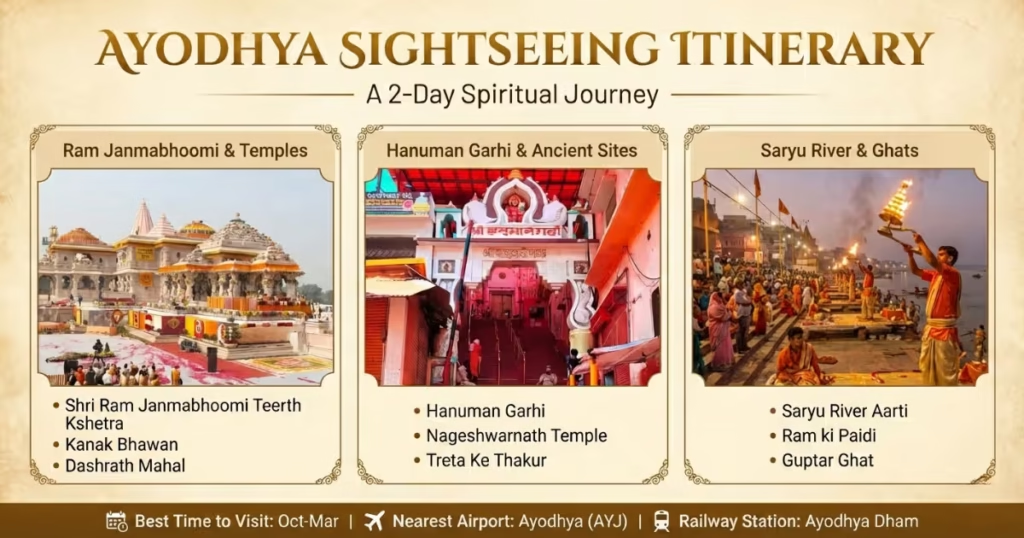


Hanuman Garhi is Ayodhya’s guardian temple – visited before Ram Mandir by tradition. Open 5:00 AM to 11:30 AM and 4:00 PM to 10:00 PM daily. Entry is completely free. The shrine is at the top of 76 stone steps – doli (palanquin) available for elderly pilgrims. The sanctum holds a rare 6-inch golden idol of Bal Hanuman on Mata Anjani’s lap. Experience My India includes Hanuman Garhi in all Ayodhya tours. Guided tours from ₹2,999. WhatsApp +91-7302265809.
Every serious pilgrim’s Ayodhya itinerary begins at Hanuman Garhi – not at Ram Mandir. This is not simply local custom; it reflects a theological reality embedded in Ayodhya’s tradition: Hanuman is the guardian deity of the city and the protector of Ram’s birthplace. Visiting Ram Janmabhoomi before seeking Hanuman’s blessings is, in local belief, considered spiritually incomplete.
I am Gurudutt, born and raised in Braj Bhoomi and the founder of Experience My India. Since 2018, I have guided 50,000+ pilgrims through Ayodhya – and Hanuman Garhi is the first stop on every one of those tours. The darshan timings, crowd realities, accessibility facts and temple sequence strategy in this guide come directly from that experience.
By the end of this guide you will know the exact 2026 Hanuman Garhi darshan and aarti timings, the honest entry fee situation, what the golden Bal Hanuman idol actually looks like inside, how the 76 steps are managed for elderly pilgrims and the exact sequence for combining Hanuman Garhi with Ram Mandir in a single Ayodhya day.
Hanuman Garhi Ayodhya – The Guardian of the City
Hanuman Garhi stands at the geographic and spiritual centre of Ayodhya’s Ramkot zone – the most sacred neighbourhood of the city. The temple-fortress sits atop a natural mound approximately 10 metres above street level, overlooking the approach to Ram Janmabhoomi. From its upper platform, the Ram Mandir complex is clearly visible in the distance.
The name “Hanuman Garhi” translates directly to “Hanuman’s Fort” – a reference both to the four-sided fortified architecture that surrounds the hilltop shrine and to the tradition that Lord Hanuman guarded Lord Ram’s birthplace from this elevated position. The outer wall is punctuated by four large circular bastions at each corner, giving the complex the visual impression of a small medieval fortress.
Hanuman Garhi is considered one of the most important of the Five Panch Kosi Yatra pilgrimage sites in Ayodhya. For serious pilgrims, the correct Ayodhya sequence is: Hanuman Garhi first – then Ram Mandir. Experience My India follows this sequence without exception in all guided Ayodhya tours. View the Same Day Ayodhya Tour
Hanuman Garhi Darshan Timings 2026 – Daily Schedule
Hanuman Garhi operates on a split daily schedule with a 4.5-hour afternoon break, every day of the week.
| Session | Opening Time | Closing Time |
| Morning Darshan | 5:00 AM | 11:30 AM |
| Afternoon Break | 11:30 AM | 4:00 PM |
| Evening Darshan | 4:00 PM | 10:00 PM |
Key planning points:
- The temple opens seven days a week with no weekly closing day
- The 4.5-hour afternoon closure is the most common planning mistake – arriving between 12:00 PM and 3:30 PM means a closed gate
- During major festivals (Ram Navami, Hanuman Jayanti, Diwali), darshan hours extend and the temple may remain open without the afternoon break. Experience My India confirms festival timings with our local Ayodhya team before every tour.
- Arrive at least 20 to 30 minutes before any aarti to secure a position in the inner courtyard
Experience My India always schedules Hanuman Garhi as the first darshan of any Ayodhya day – using the 7:00 AM to 9:00 AM window on weekdays for a 15 to 20 minute queue. WhatsApp +91-7302265809.
Complete Aarti Schedule – Hanuman Garhi Ayodhya
Hanuman Garhi conducts two principal aartis daily – one at opening and one before closing – plus ongoing bhajan sessions throughout the day.
| Aarti Name | Time | Notes |
| Mangala Aarti | 5:00 AM – 5:30 AM | First aarti of the day – most peaceful atmosphere, minimal crowd |
| Mid-morning bhajans | Throughout morning session | Continuous devotional singing – no fixed single aarti |
| Shayan Aarti | 9:30 PM – 10:00 PM | Final aarti before closing – emotionally charged evening session |
For first-time visitors: The 7:00 AM to 9:00 AM window on weekdays – after the Mangala Aarti crowds disperse and before the main pilgrim rush peaks – offers the most focused and unhurried darshan of the day. Experience My India schedules all single-day Ayodhya groups in this window to ensure time for both Hanuman Garhi and Ram Mandir within the morning session.
View the 3 Day Ayodhya Tour that covers both the Mangala Aarti and Shayan Aarti →
Entry Fee & VIP Darshan – Honest Reality
General entry: Completely free. There is no entry ticket, no donation gate and no mandatory payment at any point inside the temple premises.
VIP darshan: There is no official government-managed or temple-trust-managed VIP darshan pass at Hanuman Garhi. Any individual outside the temple offering a “special darshan pass,” “priority entry,” or “VIP queue access” for payment is operating unofficially. Politely decline and join the standard queue.
Prasadam and offerings: Traditional laddoos (sweetmeat prasadam) can be purchased from vendors outside the temple – this is a voluntary offering, not a fee. Prices vary by vendor but standard laddoo prasadam starts at ₹20-₹50 per packet.
| Type | Cost |
| General darshan | Free |
| VIP / priority darshan | Does not exist officially – decline all offers |
| Prasadam laddoos (outside vendors) | ₹20-₹50 per packet |
| Doli (palanquin) for steps | Negotiated – approx ₹100-₹300 per person |
Experience My India briefs every pilgrim about the unofficial tout situation before approaching Hanuman Garhi. WhatsApp +91-7302265809.
Book Your Ayodhya Varanasi Tour Package
History of Hanuman Garhi Ayodhya
Hanuman Garhi’s origins are rooted in both mythology and documented history – and the two layers sit alongside each other at the site.
Mythological foundation: According to the tradition preserved in Ayodhya’s Vaishnav and Shaiva communities, Lord Hanuman lived in a cave on this mound to guard Lord Ram’s birthplace at Ramkot. This is why Hanuman Garhi is positioned to overlook the Ram Janmabhoomi complex directly – the guardian’s vantage point over what he is protecting.
Structural history: The current fortified temple structure is architecturally dated to the 10th century CE in its earliest elements. The characteristic four-sided fort design with circular bastions at each corner reflects a later era of fortified religious construction common across the Gangetic plain.
Nawab patronage: The most historically significant development of the Hanuman Garhi complex occurred under the patronage of the Nawabs of Awadh – specifically Nawab Shuja-ud-Daula and his successors in the 18th century. This is a historically unusual relationship: Muslim rulers providing substantial patronage to one of Hinduism’s most significant pilgrimage sites. The Nawabs of Awadh maintained deep connections with the religious culture of Ayodhya and Hanuman Garhi’s current grandeur reflects that patronage directly.
The temple management: Hanuman Garhi is managed by the Digambara Akhara – one of the major Vaishnav monastic orders whose presence in Ayodhya dates back several centuries. Experience My India’s guides explain the complete historical context at the temple itself.
The Golden Bal Hanuman Idol – What to Expect Inside
The main sanctum of Hanuman Garhi houses one of the most distinctive Hanuman deities in all of Ayodhya – and in all of North India. This is not the typical standing or kneeling Hanuman with mace. The idol here is:
- A 6-inch golden idol of Bal Hanuman (child Hanuman)
- Seated on the lap of Mata Anjani (Hanuman’s mother)
- Dressed in gold fabric and jewellery with fresh flower garlands changed daily
- Lit with lamps and surrounded by a fragrant incense atmosphere in a small, intimate sanctum
The intimacy of the inner sanctum – compared to the scale of Ram Mandir’s outer complex – is something that many pilgrims find unexpectedly moving. The darshan here is close and personal: devotees pass within 2 to 3 metres of the idol in the main queue.
Photography: Generally restricted inside the sanctum. The outer courtyard and the fortress walls are photographable. Follow temple staff instructions.
Experience My India provides historical and iconographic context for the Bal Hanuman deity to every pilgrim before entering – so the darshan is experienced with full understanding of what makes this particular form of Hanuman significant in Ayodhya’s tradition.
The 76 Steps – Accessibility Guide for Elderly & Differently-Abled Pilgrims
The main shrine at Hanuman Garhi is situated at the top of 76 stone stairs that ascend the mound from the main entrance lane. This is one of the most important practical facts for any pilgrim planning the visit.
| Detail | Information |
| Number of steps | 76 stone stairs |
| Step condition | Well-maintained, handrails on most sections |
| Typical climb time | 5-10 minutes at a comfortable pace |
| Doli (palanquin) availability | Yes – available at the base of the steps |
| Doli cost | Negotiated with carriers – approx ₹100-₹300 per person one-way |
| Wheelchair access | Not available – steps only |
| Assistance from local carriers | Available – doli-wallahs wait at the foot of the stairs |
For senior citizens and differently-abled pilgrims: The doli (hand-carried palanquin) is the standard accessibility option for Hanuman Garhi. The doli-wallahs are experienced and the ride is generally smooth, though pilgrims should confirm the fare before boarding. Experience My India briefs all senior citizen groups on the doli option and average pricing before arrival. Darshan inside the sanctum is on a flat floor once you reach the top.
Bannered words note: The steps are steep in sections – pilgrims are encouraged to take them at their own pace with the handrail for support. Non-slip footwear is recommended.
Experience My India builds doli time and cost into all senior citizen Ayodhya itineraries. View the Senior Citizen Ayodhya Tour
How to Reach Hanuman Garhi Ayodhya
Address: Hanuman Garhi, Ramkot, Ayodhya, Uttar Pradesh – 224123
Hanuman Garhi is located in the Ramkot area – the sacred core of Ayodhya – approximately 500 metres from Ram Janmabhoomi and approximately 700 metres from Kanak Bhawan.
From Ayodhya Dham Railway Station (AY):
- Distance: ~2 km
- Mode: E-rickshaw or auto – ₹20-₹50, 5 to 10 minutes
- Note: Vehicles stop at the main Ramkot junction. The final 200-400 metres to Hanuman Garhi is on foot – narrow lanes restrict vehicles.
From Ayodhya Cantt Station (AYC):
- Distance: ~10.5 km
- Mode: Auto (₹150-₹300) or cab (₹650-₹1,200) to Ramkot junction, then on foot
- Full guide: Ayodhya Cantt to Ram Mandir Distance →
From Maharishi Valmiki International Airport (Ayodhya):
- Distance: ~11.5 km
- Mode: Pre-booked cab – 20 to 30 minutes, ₹400-₹700
Local approach: Private vehicles are not permitted in the narrow lanes of Ramkot. All visitors are dropped at the main Ram Janmabhoomi Path junction and walk 200 to 400 metres through the pedestrian lane to the Hanuman Garhi entrance. Experience My India’s drivers are briefed on the exact drop point for each Ayodhya temple. WhatsApp +91-7302265809.
Best Time to Visit Hanuman Garhi Ayodhya
By time of day:
- 5:00-6:00 AM (Mangala Aarti) – Quietest darshan of the day. Devotionally charged but minimal tourist crowd.
- 7:00-9:00 AM (mid-morning) – Best window for first-time and family visitors. Queue: 15 to 20 minutes on weekdays.
- 10:00-11:30 AM – Building crowd. Still manageable on weekdays.
- 4:00-5:30 PM (evening opening) – Moderate crowd. Good for a second visit.
- 9:30 PM (Shayan Aarti) – Final and most intimate aarti session of the day.
By day of week:
- Tuesday and Saturday – Sacred to Hanuman. Queues can reach 60 to 120 minutes. Not recommended for first-time visitors with limited time.
- Monday, Wednesday, Thursday – Significantly lighter crowds. 15 to 30 minute queues in the morning window.
- Sunday – Moderate to heavy. Avoid 9:00-11:00 AM on Sundays.
By season:
| Season | Temperature | Crowd Level | Notes |
| October-March | 10°C-25°C | Moderate | Best season – all sessions comfortable |
| Hanuman Jayanti (April 2026) | 28°C-35°C | Very High | Most important Hanuman festival of the year – arrive 60 min early |
| Ram Navami (March 2026) | 20°C-28°C | Very High | Full Ayodhya at peak – combine with advance Ram Mandir Sugam pass |
| Summer (April-June) | 35°C-44°C | Low | Morning only – heat is intense from 10:00 AM |
| Diwali (Oct 2026) | 20°C-28°C | High | Extended hours – no afternoon closure on Diwali |
Hanuman Garhi to Ram Mandir – The Right Darshan Sequence
This is the most practically valuable section of this guide – and the one most online sources omit entirely.
The traditional and practical Ayodhya darshan sequence:
| Time | Activity | Notes |
| 7:00-7:30 AM | Arrive at Hanuman Garhi, begin ascent | 76 steps – allow 10 min |
| 7:30-8:30 AM | Hanuman Garhi darshan | 15-30 min queue on weekday mornings |
| 8:30-9:00 AM | Walk to Ram Janmabhoomi (500 m) | Pedestrian lane – 5-7 min |
| 9:00-11:30 AM | Ram Mandir darshan | Sugam pass: 15-30 min. General queue: 60-180 min |
| 11:30 AM-4:00 PM | Midday rest (both temples closed) | Hotel lunch, rest |
| 4:30-5:30 PM | Kanak Bhawan evening darshan | Opens 4:30 PM daily |
| 6:30-7:30 PM | Saryu Ghat Aarti | Begins at sunset |
Why Hanuman Garhi first: Ayodhya’s traditional belief – consistently maintained by local pujaris and pilgrimage guides – is that entering Ram Janmabhoomi without first seeking Hanuman’s blessing at his guardpost is spiritually incomplete. Hanuman is revered as the gatekeeper and protector of Ayodhya; the pilgrimage acknowledges his role before entering the birthplace he guards.
Practical reason: Hanuman Garhi’s queue is shorter and the temple’s timing is more flexible than Ram Mandir’s. Completing Hanuman Garhi at 8:30 AM positions you perfectly for the Ram Mandir morning darshan before the queue builds toward its 10:00-11:30 AM peak.
Experience My India uses this exact sequence in every guided Ayodhya tour. View the full Ayodhya Day Tour itinerary
Ground Truth – What Nobody Tells You About Hanuman Garhi
Tuesday and Saturday queues are 3x to 4x longer than weekday queues. Both days are considered sacred to Hanuman – Tuesday more universally, Saturday specifically in North Indian tradition. A 20-minute weekday queue becomes a 60 to 120 minute wait on these days. If your Ayodhya trip falls on a Tuesday or Saturday, Experience My India advises arriving before 6:30 AM.
The 76 steps are steep in the upper third. The lower half of the ascent is gradual, but the final 20 to 25 steps increase significantly in incline. Pilgrims with knee conditions or reduced mobility should confirm doli availability before beginning the climb – doli-wallahs wait at the base but are fewer in number before 7:00 AM.
Leather items are ideally left at your hotel. While not as strictly enforced as the electronics ban at Ram Mandir, Hanuman Garhi temple norms request that leather belts, wallets and bags not be brought inside the sanctum area as a sign of purity and respect. Carry a small cloth bag with cash only.
The golden Bal Hanuman idol is genuinely small – and that is the point. Many pilgrims expect a large, imposing Hanuman deity based on the scale of the fortress. The 6-inch seated golden idol on Mata Anjani’s lap is intimate and compact. The darshan is close – within 2 to 3 metres – and lasts only 20 to 30 seconds per pilgrim in the queue. The significance is in the proximity, not the scale.
Unofficial guides near the entrance overstate their services. Several individuals position themselves on the lane approaching Hanuman Garhi offering “complete Ayodhya guided tour” services and “special entry” claims. Experience My India advises all pilgrims that the temple has no paid guides or special entry system – darshan is free and accessible to all on the standard queue.
FAQ – Hanuman Garhi Ayodhya
No – entry to Hanuman Garhi is completely free. There is no ticket, no donation gate, no mandatory payment and no official VIP darshan pass at this temple. Any individual offering paid “priority darshan” or “special entry” outside the temple is unofficial – politely decline. Prasadam laddoos are available from vendors outside for ₹20-₹50 voluntarily. Experience My India includes Hanuman Garhi in all Ayodhya tour packages at no additional cost. WhatsApp +91-7302265809.
Hanuman Garhi is open from 5:00 AM to 11:30 AM (morning session) and 4:00 PM to 10:00 PM (evening session) every day of the week. The afternoon break runs from 11:30 AM to 4:00 PM. The Mangala Aarti is at 5:00-5:30 AM and the Shayan Aarti is at 9:30-10:00 PM. On festival days (Ram Navami, Hanuman Jayanti, Diwali), hours may extend without the afternoon closure. Experience My India confirms timings before every guided tour. WhatsApp +91-7302265809.
Hanuman Garhi should always be visited first. Ayodhya’s tradition – maintained by local pujaris and pilgrimage authorities – holds that Hanuman is the guardian deity of the city and the protector of Ram’s birthplace. Pilgrims seek his blessings before entering Ram Janmabhoomi. Practically, visiting Hanuman Garhi first (7:00-8:30 AM) also positions you perfectly for the Ram Mandir morning window before queues peak. Experience My India follows this sequence in every Ayodhya tour.
For Ram Mandir (Ram Janmabhoomi) – not Hanuman Garhi, which has no VIP system – the Sugam Darshan E-Pass is available free of charge at online.srjbtkshetra.org. It opens 15 days before your darshan date and reduces the general queue of 1 to 3 hours to approximately 15 to 30 minutes. Experience My India guides every pilgrim through the Sugam pass booking process before their travel date. WhatsApp +91-7302265809 for assistance.
Hanuman Garhi has 76 stone steps from the entrance lane to the main shrine at the top of the mound. The lower sections are gradual; the upper third is steeper. A handrail is available on most sections. For elderly or differently-abled pilgrims, doli (palanquin) carriers are available at the foot of the steps for approximately ₹100-₹300 per person one-way. Experience My India arranges doli logistics for all senior citizen Ayodhya groups.
Hanuman Garhi and Ram Janmabhoomi (Ram Mandir) are approximately 500 metres apart within the Ramkot area of Ayodhya – a 5 to 7 minute walk through the pedestrian lane called Ram Janmabhoomi Path. No vehicles operate between the two temples on this inner lane. This proximity makes it natural to visit both temples in the same morning session. Experience My India guides every pilgrim through the exact walking route and security approach for Ram Mandir after Hanuman Garhi darshan.
Hanuman Garhi is famous as Ayodhya’s guardian temple – the fort-like shrine where, by tradition, Lord Hanuman lives to protect Ram’s birthplace. It houses a rare 6-inch golden idol of Bal Hanuman (child Hanuman) seated on Mata Anjani’s lap – one of only a few such forms in all of India. The temple’s four-sided fortress architecture with circular corner bastions is structurally unique in Ayodhya. Experience My India includes the complete history of this idol in every Ayodhya tour.
Yes – with doli (palanquin) assistance for the 76 stone steps. Doli carriers wait at the foot of the stairs and carry pilgrims to the top for approximately ₹100-₹300 per person. Once at the top, the temple floor and inner courtyard are level and accessible. Experience My India pre-arranges doli logistics for all senior citizen group tours so no one arrives without knowing the option. WhatsApp +91-7302265809 with your family member’s specific mobility requirements before booking.
Yes – Hanuman Garhi is open 7 days a week with no weekly closing day. Standard timings apply: 5:00 AM to 11:30 AM and 4:00 PM to 10:00 PM. Note that Tuesday and Saturday are sacred to Hanuman – queues are significantly longer on these days (60 to 120 minutes versus 15 to 20 minutes on weekdays). Experience My India advises first-time visitors to plan for Monday, Wednesday, Thursday or Friday mornings for the most comfortable darshan experience.
Recommended products
-
1 Night 2 Days Ayodhya Tour Packages
Original price was: ₹6,000.00.₹5,000.00Current price is: ₹5,000.00. -

10 Days Complete Uttar Pradesh Spiritual Tour
-
2 Night 3 Days Ayodhya Varanasi Tour Package
Original price was: ₹9,000.00.₹8,000.00Current price is: ₹8,000.00. -
Same Day Ayodhya Tour Package
Original price was: ₹4,000.00.₹3,500.00Current price is: ₹3,500.00.



Conclusion
Hanuman Garhi is where every Ayodhya pilgrimage correctly begins – not because it is the biggest temple or the most recently built, but because the tradition of this city places Hanuman as the gatekeeper of everything that follows. Standing at the top of those 76 steps, with the Ram Mandir complex visible in the distance, is one of the most centring moments in Ayodhya.
Experience My India plans every detail of this visit – the sequence, the timing, the doli for elderly pilgrims, the crowd management, and the Sugam Darshan pass for Ram Mandir – so that your attention is on the darshan, not the logistics.
Ayodhya guided tours from ₹2,999. Rated 4.5★ by 204+ pilgrims.
WhatsApp +91-7302265809 – Book Now
Jai Shri Ram 🙏