

Hanuman Garhi Ayodhya is a 10th-century hilltop fortress temple, open daily 5:00 AM-12:00 PM and 4:00 PM-9:00 PM. Entry is completely free. 76 stone steps lead to the sanctum – paalki (palanquin) service is available at the base for elderly visitors. By tradition, pilgrims visit Hanuman Garhi before Ram Mandir, just 500 metres away. Experience My India arranges guided Ayodhya darshan tours from ₹2,999 per person. WhatsApp +91-7302265809 for same-day booking.
Every pilgrim who arrives in Ayodhya wants Ram Mandir. That’s natural – it’s one of the most significant temples in India and the darshan of Ram Lalla is the reason most people make the journey. But the traditional Ayodhya pilgrimage sequence doesn’t start there. It starts at Hanuman Garhi, a hilltop fortress temple dedicated to Lord Hanuman, about 500 metres from Ram Janmabhoomi. Skipping it and going straight to Ram Mandir doesn’t just break with centuries of tradition – it also means arriving at Ram Mandir’s crowd without the calm that the earlier stop provides.
I’m Gurudutt, founder of Experience My India, born and raised in Braj Bhoomi and guiding pilgrims through sacred sites like this one since 2018. Our team has walked 50,000+ pilgrims up Hanuman Garhi’s 76 steps and into its inner sanctum and this guide is built from that on-ground experience, not a desk review.
By the end of this guide you will know the exact 2026 darshan and aarti timings, what the 76 steps actually involve, the full history of the temple, how to get here from Ayodhya Junction and how to sequence your entire Ayodhya day around this visit properly.
Why Hanuman Garhi Comes Before Ram Mandir
The tradition is specific: before seeking darshan at Ram Janmabhoomi, a devotee must first take Hanuman’s blessing at Hanuman Garhi. The reasoning is grounded in Vaishnav devotion – Hanuman is Ram’s eternal protector, stationed at this hilltop to guard the birthplace. Seeking the guardian’s permission before entering the Lord’s presence is the right devotional sequence.
Practically, this tradition also works in your favour as a visitor. <cite index=”22-1″>The traditional pilgrimage sequence starts with Hanuman Garhi (500 metres from Ram Mandir, hilltop temple, 76 steps, 30 minutes) before proceeding to Ram Mandir. Hanuman Garhi’s morning darshan opens at 5:00 AM, Ram Mandir’s morning darshan at 7:00 AM – the sequence is built into the timings themselves.
Experience My India structures every Ayodhya tour package around this exact sequence: Hanuman Garhi first, then Ram Mandir, then Saryu Aarti in the evening. Call +91-7302265809 to get a day-wise plan that respects both temples’ timings and avoids the midday closures.
History of Hanuman Garhi Temple Ayodhya
Hanuman Garhi Temple is a 10th-century Hindu temple located in the city of Ayodhya. The origin story holds that after Lord Rama returned to Ayodhya from Lanka, he asked Lord Hanuman to remain in the city and protect it permanently – and that Hanuman chose this hilltop as his residence.
While the precise origin remains a topic of discussion, certain narratives indicate that the temple was constructed in the 10th century, possibly by King Jagat Singh, who was the sibling of King Vikramaditya. During the Mughal period, the original structure faced desecration under Aurangzeb’s campaign and the present complex was eventually rebuilt by the Nirvani Ani Akhara – the Bairagi Vaishnav sect that administers the temple to this day.
The Nawab of Awadh later contributed land revenue for the temple’s maintenance in 1855, giving Hanuman Garhi its current institutional footing. The complex is built in the shape of a four-sided fort with circular bastions at each corner – a design that gave it its name: “garhi” meaning fortress or fortified position.
Within this temple resides a 6-inch idol of Hanuman, portrayed in his youthful (Bal) form, seated on the lap of his mother, Anjani. This representation – Hanuman as a child, sitting on Anjani Mata’s lap – is rare across North Indian temples. The Hanuman Chalisa is inscribed on the walls throughout the complex.
Experience My India shares this full history with every pilgrim on guided Ayodhya tours. WhatsApp +91-7302265809 if you’d like a guide who can walk you through the significance at each stop.
Book Your Ayodhya Varanasi Tour Package
Hanuman Garhi Ayodhya Darshan Timings 2026
Timings vary slightly across sources, but based on verified June 2026 checks, the confirmed operational schedule is as follows:
| Session | Timing | Notes |
| Morning Darshan | 5:00 AM – 12:00 PM | Calmest from 5:00 AM to 8:00 AM |
| Midday Closure | 12:00 PM – 4:00 PM | Darshan paused; temple lanes remain accessible |
| Evening Darshan | 4:00 PM – 9:00 PM | Busiest from 6:00 PM-8:00 PM (aarti hour) |
| Late Evening | Closes by 10:00 PM on most days | May extend on festival nights |
On Tuesdays and Saturdays – Hanuman’s auspicious days – crowds double and queues begin forming before 6:00 AM. On Ram Navami, Hanuman Jayanti and Diwali, the temple may open earlier than 5:00 AM and extend beyond 10:00 PM, with tighter security and longer queue management systems in place.
Experience My India confirms the day’s operational timings on the morning of every Ayodhya tour – not the night before, since festival-period changes can be announced with very little notice. WhatsApp +91-7302265809 to have current timings confirmed before you travel.
Book Your Sugam/VIP Darshan and Aarti
Aarti Schedule at Hanuman Garhi
| Aarti | Time | What to Expect |
| Mangala Aarti | 5:30 AM | Quietest aarti – intimate, few visitors |
| Shringar Aarti | 7:00 AM approx. | Moderate crowd; deity decorated for the day |
| Bhog Aarti | 11:30 AM | Just before midday closure; temple fills quickly |
| Sandhya Aarti | 6:00 PM | Busiest aarti – arrive 30-40 minutes before for space |
| Shayan Aarti | 9:30 PM | Closing ritual; smaller, devotional crowd |
The Sandhya Aarti at 6:00 PM is the most attended session of the day, particularly during winter months when the evening light and cooler temperature draw the largest crowds. Arrive by 5:30 PM if you want to be near the sanctum area during the aarti itself – after 6:00 PM the courtyard fills quickly and movement toward the inner sanctum becomes restricted.
The Mangala Aarti at 5:30 AM is the reverse – genuinely quiet, attended mainly by local devotees and serious pilgrims who have stayed in Ayodhya overnight. If your schedule allows an overnight stay, Experience My India includes the 5:30 AM Mangala Aarti as part of its 2-day Ayodhya package. Call +91-7302265809 for details.
Entry Fee, Steps & Practical Visitor Guide
Entry fee: Free for all visitors, no ticket counter, no online booking required or available. Walk-in darshan throughout the open window.
The 76 steps: The climb from street level to the main temple courtyard involves exactly 76 stone steps. Metal handrails line both sides. At a comfortable pace the climb takes 8 to 12 minutes. The steps are worn smooth in places – the descent requires full attention and a grip on the railing.
Paalki service: A palanquin carry service is available at the base of the steps for elderly, mobility-limited, or unwell visitors. Rates are fixed and displayed at the base. Experience My India can confirm the current paalki rate at the time of your visit – WhatsApp +91-7302265809.
What to leave behind:
- Footwear must be removed before climbing – shoe stands are available at street level near the base
- Large bags are not permitted inside the complex
- Photography is not allowed inside the temple compound (photos of the exterior from street level are fine)
What to carry:
- Small cloth bag for offerings
- Cash in small denominations (₹20-₹100) for prasad – ladoo baskets from stalls on the staircase range from ₹20 to ₹100
- Water bottle – no shade on the staircase in summer
Dress code: Cover shoulders and knees. Traditional Indian attire (kurta-pyjama for men, salwar kameez or saree for women) is the norm. Shorts, sleeveless tops and skirts will be asked to be covered before entry.
Book Your 2 Days Ayodhya Tour Package
The Deity – Bal Hanuman & the Hanuman Nishan
The central sanctum houses a 6-inch gold-ornamented idol of Bal Hanuman – Hanuman in his child form – seated on the lap of his mother, Goddess Anjani. This is one of the rarest depictions of Hanuman in North Indian temple tradition; most temples show him standing or in active pose. The idol of Anjani Mata is separately enshrined within the complex.
One tradition rarely mentioned in standard guides: the temple has a special ‘Hanuman Nishan’ – a flag approximately four metres wide and eight metres long. According to belief, before every puja, the Hanuman Nishan is taken to the Ram Janmabhoomi site, where it is worshipped first. 200 people together take this mark to Ram Janmabhoomi.
This daily procession – 200 devotees carrying the Nishan from Hanuman Garhi to Ram Janmabhoomi before the day’s first puja – is one of the living ritual links between the two temples that no tourist description captures. Arriving before 6:00 AM gives you a chance to see it.
How to Reach Hanuman Garhi Ayodhya
Hanuman Garhi is located in central Ayodhya, near the Sai Nagar area, approximately 500 metres to 1 km from Ram Janmabhoomi. Private vehicles are not permitted in the narrow lanes immediately surrounding the temple – all visitors approach on foot for the final 200-300 metres.
| From | Distance | Mode | Cost / Time |
| Ayodhya Dham Junction (railway station) | 1.5-2 km | E-rickshaw / auto | ₹15-₹20 (e-rickshaw) / ₹30-₹50 (auto) – 10-15 min |
| Ram Janmabhoomi (Ram Mandir) | 500 m | Walk | 10 minutes on foot |
| Kanak Bhawan Temple | 300 m | Walk | 5 minutes on foot |
| Maharishi Valmiki International Airport | 10 km | Taxi / cab | ₹300-₹500 – 20-30 min |
| Lucknow | 135 km | Car | Approximately 2.5 hours |
| Delhi | 630 km | Train to Ayodhya Dham Jn, then local | 7-8 hrs by Shatabdi or AC express |
From Ayodhya Dham Junction, take an e-rickshaw to Hanuman Garhi Chowk (₹15-₹20 per person), then walk the final 100-150 metres through the market lane to the base of the steps. Experience My India arranges pickup from Ayodhya Dham Junction and all in-city transfers in every Ayodhya tour package – call +91-7302265809 to confirm your arrival point.
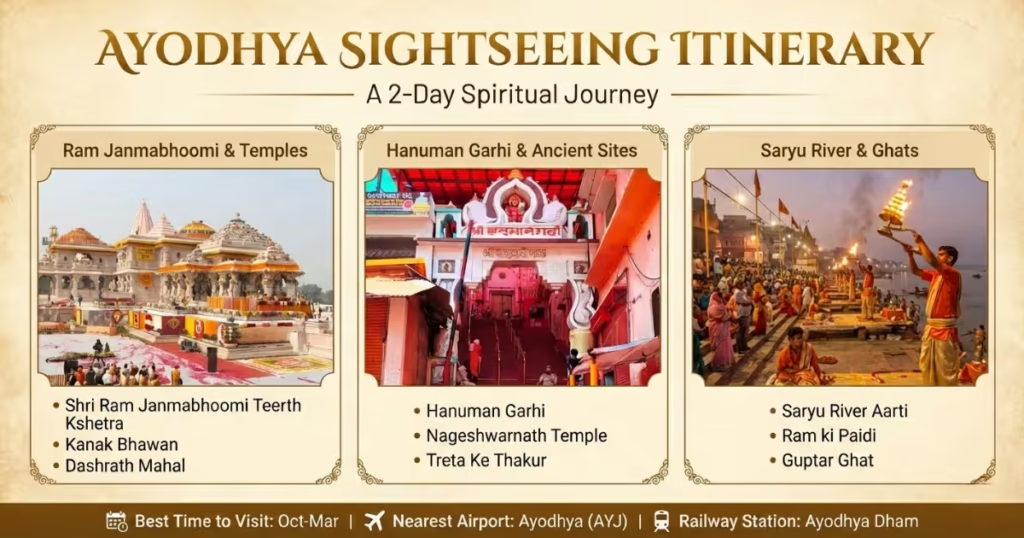
Recommended One-Day Ayodhya Itinerary
The correct Ayodhya pilgrimage sequence, planned around each temple’s operating hours:
| Time | Activity | Notes |
| 6:00-6:30 AM | Arrive Hanuman Garhi | Before Tuesday/weekend queues build |
| 6:30-7:30 AM | Hanuman Garhi darshan + Mangala Aarti | Full visit: 30-45 min |
| 7:45 AM | Walk to Ram Mandir (10 min) | Morning darshan opens at 7:00 AM |
| 8:00-11:00 AM | Ram Janmabhoomi darshan | Sugam Darshan pass available online at online.srjbtkshetra.org |
| 11:30 AM | Kanak Bhawan Temple | 200 m from Ram Mandir – relatively uncrowded |
| 12:00-4:00 PM | Lunch + rest (both temples closed) | Ideal time for Dashrath Mahal or local dhaba |
| 4:00 PM | Hanuman Garhi evening darshan (optional second visit) | Or proceed to Saryu Ghat |
| 5:30 PM | Reach Ram Ki Paidi / Saryu Ghat | Arrive by 5:45 PM for Saryu Aarti |
| 6:00-6:30 PM | Saryu Aarti at Ram Ki Paidi | Ayodhya’s equivalent of the Ganga Aarti |
Experience My India’s Same Day Ayodhya Tour follows this exact flow – every transfer pre-arranged, no afternoon confusion. From ₹2,999 per person.
Best Time to Visit Hanuman Garhi Ayodhya
| Season | Months | Temperature | Verdict |
| Winter | October – March | 10-25°C | Best – comfortable climb, full darshan windows available |
| Holi / Ram Navami | March | 20-30°C | Spiritually charged; book accommodation 4-6 weeks ahead |
| Summer | April – June | 35-45°C | Visit only in the 5:00-8:00 AM window; stairs are exposed to full sun |
| Monsoon | July – September | 25-34°C | Steps become slippery – use handrail throughout, wear grip-soled footwear |
| Hanuman Jayanti | May/June 2026 | Varies | Largest single-day crowd of the year – arrive before 5:30 AM or after 7:00 PM |
| Tuesday / Saturday | Any season | – | Auspicious days – queues form before opening time; plan 30 extra minutes |
The single most consistent advice for Hanuman Garhi: the 6:00-8:00 AM window gives you the best combination of calm, light and manageable steps. By 9:00 AM on any day except extreme off-season the queue at the base of the stairs begins to grow. Experience My India builds every Ayodhya itinerary around this morning primacy.
Ground Truth – What Nobody Tells You
The descent requires more care than the climb. The stone steps are worn smooth from decades of foot traffic and most slips happen on the way down, not up. Hold the handrail throughout the descent. Do not check your phone, look at the view, or step aside for photos while descending – take each step with your eyes on the next one.
Photography inside the complex is strictly not allowed – this includes phones. The ban is enforced. Volunteers and temple staff will ask you to put your device away at the courtyard entry. A photo of the exterior from the street below is fine; inside is not.
Tuesday and Saturday crowds are not comparable to other weekdays. On auspicious Hanuman days the queue at the base can stretch 40 to 60 minutes even at 6:00 AM. If your travel dates fall on a Tuesday or Saturday, add an extra hour of buffer to your morning plan.
There is no VIP darshan or priority pass at Hanuman Garhi. The temple has a single walk-in queue for everyone – no payment to any agent, operator, or counter gives queue priority here. Anyone selling a “VIP pass” for Hanuman Garhi is selling nothing.
The midday closure (12:00 PM-4:00 PM) aligns with Ram Mandir’s Bhog closure (12:00 PM-2:00 PM). This is actually useful planning information: both major temples close at noon. Use that window for Kanak Bhawan (which stays open), lunch and rest – not for standing in a queue at a closed gate.
Experience My India plans every Ayodhya visit around these exact realities. WhatsApp +91-7302265809 to build them into your itinerary.
Frequently Asked Questions
Hanuman Garhi Ayodhya is open for morning darshan from 5:00 AM to 12:00 PM and evening darshan from 4:00 PM to 9:00 PM daily. The temple closes between 12:00 PM and 4:00 PM for the midday break. On Tuesdays, Saturdays and major festivals (Ram Navami, Hanuman Jayanti), the temple may open earlier and close later. Experience My India confirms the exact operating schedule on the morning of every Ayodhya tour – WhatsApp +91-7302265809 for your travel date’s confirmed timings.
There is no paid VIP darshan at Ram Mandir. The official free Sugam Darshan pass is available online at online.srjbtkshetra.org – book it before your visit to skip the general walk-in queue. Hanuman Garhi has no VIP or priority pass system at all: entry is free and walk-in only for everyone. Anyone selling a “VIP pass” for either temple is offering nothing official. Experience My India can guide you through the Sugam Darshan registration – WhatsApp +91-7302265809 for help.
Ram Janmabhoomi (Ram Mandir) is approximately 500 metres to 1 km from Hanuman Garhi – roughly a 10-minute walk through Ayodhya’s central market lanes. An e-rickshaw covers this in 5 minutes (₹15-₹20). The traditional pilgrimage sequence is to visit Hanuman Garhi first, take Hanuman’s blessing and then proceed to Ram Mandir. Experience My India builds both into a single morning block in every Ayodhya itinerary – call +91-7302265809 for the timing.
Hanuman Garhi has exactly 76 stone steps from street level to the main temple courtyard. Metal handrails line both sides. The climb takes 8 to 12 minutes at a moderate pace. The descent requires more care – the steps are worn smooth and slips happen most often on the way down, not up. For elderly or mobility-limited visitors, paalki (palanquin) service is available at the base of the steps at a fixed displayed rate. Experience My India pre-confirms paalki availability for every senior-citizen tour – call +91-7302265809.
No – entry to Hanuman Garhi Ayodhya is completely free for all visitors. There is no ticket counter, no online booking and no donation requirement. Prasad (ladoo) is sold by stalls on the staircase at ₹20-₹100 per basket. Experience My India includes Hanuman Garhi in every Ayodhya package at no additional cost – WhatsApp +91-7302265809 for the full itinerary.
Hanuman Garhi dates to the 10th century and is built in the shape of a four-sided fortress with circular bastions at each corner. Tradition holds that Lord Hanuman chose this hilltop to guard Ayodhya after Lord Rama’s return from Lanka. The current structure was administered by the Nirvani Ani Akhara (Bairagi sect), with the Nawab of Awadh granting land revenue for its maintenance in 1855. The central deity is a 6-inch gold-ornamented idol of Bal Hanuman seated on Anjani Mata’s lap. Experience My India explains this history on every guided visit – call +91-7302265809.
The main deity at Hanuman Garhi is Bal Hanuman – Hanuman in child form – shown seated on the lap of his mother, Goddess Anjani. This is one of the rarest depictions of Hanuman in North Indian temple tradition; most temples depict him standing or in active warrior pose. The idol is 6 inches and gold-ornamented. The complex also holds the Hanuman Nishan, a flag carried by 200 devotees to Ram Janmabhoomi before every morning puja. Experience My India shares these details on every guided Ayodhya visit – WhatsApp +91-7302265809.
Yes – with planning. The 76 steps have metal handrails on both sides and paalki (palanquin) carry service is available at the base for visitors who cannot manage the climb. Most elderly visitors who take the steps slowly with handrail support complete the climb comfortably. Experience My India’s Ayodhya packages for senior citizens include paalki pre-confirmation, hotel near the temple belt and a guide who manages pace and crowd positioning throughout – WhatsApp +91-7302265809 with your family member’s specific requirements before booking.
The 6:00 AM to 8:00 AM window is the calmest time for Hanuman Garhi darshan on any day of the week. By 9:00 AM the queue at the base of the steps begins to grow. Tuesday and Saturday are the busiest weekdays; Hanuman Jayanti, Ram Navami and Diwali bring the year’s largest crowds. October to March offers the most comfortable weather for the climb. Experience My India plans all Ayodhya darshan in the morning window – call +91-7302265809 to schedule your visit correctly.
Recommended products
-
1 Night 2 Days Ayodhya Tour Packages
Original price was: ₹6,000.00.₹5,000.00Current price is: ₹5,000.00. -
2 Night 3 Days Ayodhya Varanasi Tour Package
Original price was: ₹9,000.00.₹8,000.00Current price is: ₹8,000.00. -

3 Days Ayodhya Prayagraj Tour
-

7 Days Uttar Pradesh Sacred Circuit Tour


Conclusion
Hanuman Garhi is where every Ayodhya pilgrimage properly begins. The 76 steps, the rare Bal Hanuman idol on Anjani Mata’s lap, the Hanuman Nishan that travels to Ram Janmabhoomi before the day’s first puja – these are not background details. They are the reason this temple comes first in the sequence, before Ram Mandir, before anything else in Ayodhya.
Experience My India has guided 50,000+ pilgrims through this exact sequence since 2018, with packages starting from ₹2,999 per person. Private AC cab, a guide who knows each temple’s timing, no afternoon queue confusion, and a day that ends at the Saryu Aarti rather than in traffic.
WhatsApp +91-7302265809 – Book Now
Jai Shri Ram 🙏