
Ayodhya is not a place you rush into. It doesn’t reward hurry. It asks for patience, a little silence, and a willingness to let things unfold slowly. People often ask, “What is the best time to visit Ayodhya?” expecting a simple answer — a month, a season, a date. But the truth is, Ayodhya changes with time, weather, festivals, and crowds, and each version of it feels slightly different.
The Best Time to Visit Ayodhya depends as much on what you are looking for as on the calendar. Some people want quiet darshan. Some want to witness festivals. Some want to sit by the Sarayu when the city feels almost empty. And some want to be part of the great movement of devotion when the city fills with pilgrims.
Ayodhya Varanasi Tourism has seen visitors arrive with fixed plans and leave with softened expectations. That’s usually when the journey feels complete.
A Brief History That Still Shapes the Present
Ayodhya is believed to be the birthplace of Lord Ram. For centuries, it has been a center of faith, debate, devotion, and waiting. Unlike many pilgrimage cities that feel layered with time, Ayodhya feels rooted. It doesn’t overwhelm with architecture alone. It speaks through stories, rituals, and repetition.
Temples rise, crowds come and go, seasons change — but the rhythm of Ayodhya remains steady. Understanding this rhythm helps in deciding the Best Time to Visit Ayodhya, because the city doesn’t behave the same way throughout the year.
Understanding Ayodhya’s Weather (What It Really Feels Like)
Let’s talk honestly about weather, because it plays a big role here.
Winter (October to February): The Most Comfortable Season
If someone asks me without context, I usually say winter. Not because it’s perfect, but because it’s forgiving.
– Day temperatures: 15°C to 25°C
– Nights can get cool, especially in December and January
– Walking between temples feels easier
– Long darshan queues are manageable
This is when most people experience the Best Time to Visit Ayodhya in a physical sense. The Ayodhya weather and climate guide clearly shows winter as the most balanced season — not too hot, not too humid.
Ayodhya Varanasi Tourism sees maximum family travelers during these months, especially older devotees.
Summer (March to June): For the Determined Devotee
Summer in Ayodhya is not gentle.
– Temperatures often cross 40°C
– Afternoon temple visits become tiring
– Crowds reduce, but heat replaces them
Yet, some people prefer this season. Why? Because the city feels quieter. Darshan lines are shorter. The Sarayu ghats feel emptier.
If you can handle heat and plan early-morning and evening visits, summer can still be considered the Best Time to Visit Ayodhya for those seeking solitude over comfort.
Monsoon (July to September): Unpredictable but Alive
Monsoon brings relief from heat, but also unpredictability.
– Rain-cooled air
– Occasional waterlogging
– Green surroundings near ghats
Ayodhya feels softer during monsoon. The temples feel less crowded, but travel plans can change suddenly. If you enjoy slower travel and don’t mind adjusting plans, this season offers a different side of the city.
Ayodhya Peak Tourist Season (When the City Feels Full)
The Ayodhya peak tourist season usually overlaps with winter and major festivals.
During this time:
– Hotels fill up quickly
– Darshan queues grow longer
– The city feels constantly awake
This is when Ayodhya feels like a collective experience rather than a personal one. Some people love this energy. Others find it overwhelming.
Ayodhya Varanasi Tourism often advises travelers to book well in advance if they plan to visit during peak months.

Temple Darshan Timings (What to Expect, Not Just the Clock)
Temple timings matter, but crowd behavior matters more.
Ram Janmabhoomi Temple (Indicative Timings)
– Morning darshan: around 6:00 AM onwards
– Afternoon break may apply
– Evening darshan continues till 9:00 PM
Security checks are strict. Phones and electronic items are restricted. Darshan is well-organized but can take time during peak hours.
The Ayodhya temple darshan timings remain similar through the year, but waiting time changes drastically depending on season and festival.
Hanuman Garhi
– Morning: 5:00 AM – 12:00 PM
– Evening: 4:00 PM – 10:00 PM
This temple often gets crowded, especially on Tuesdays and Saturdays. Early morning visits are usually calmer.
Kanak Bhawan
Kanak Bhawan feels gentler. Darshan here is slower, less rushed, and emotionally warm. Many devotees end their day here because the atmosphere allows reflection.
Aarti Timings and Rituals (The Soul of Ayodhya)
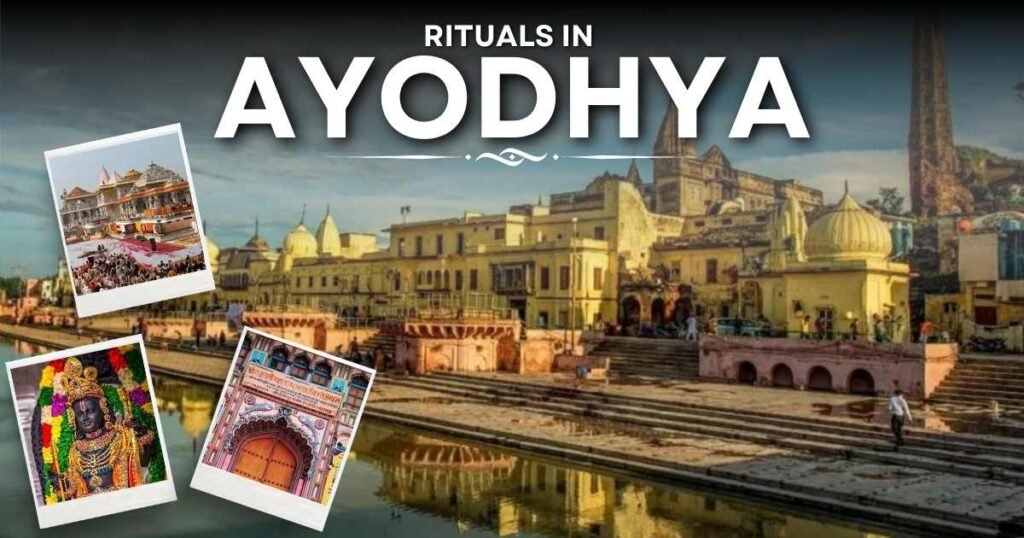
Aarti in Ayodhya is not about spectacle. It’s about continuity.
Sarayu Aarti
– Evening, usually around sunset
Watching the lamps float on the river while chants rise softly is one of those experiences that doesn’t depend on season. Still, winter evenings make it more comfortable to sit and stay.
This is why many travelers feel the Best Time to Visit Ayodhya is when evenings are pleasant enough to linger.
Festivals in Ayodhya (When Time Speeds Up)
Ayodhya transforms during festivals.
Ram Navami
– The most important festival
– Massive crowds
– Extended darshan hours
– Intense security
Deepotsav (Diwali Period)
– Thousands of lamps lit along the Sarayu
– Ayodhya feels luminous, almost unreal
– Heavy crowds, heavy emotion
Shravan Month
– Increased devotional activities
– Calm but continuous temple visits
If festivals are your reason for coming, then those dates automatically become the Best Time to Visit Ayodhya for you. But be prepared — emotionally and physically.
Ayodhya Varanasi Tourism often suggests festival visits only if travelers are comfortable with crowds and long waiting periods.
Crowds: When They Help and When They Don’t
Crowds in Ayodhya are not chaotic by default. They are devotional. But they can still be exhausting.
– Winter weekends: busy
– Festival days: extremely busy
– Summer weekdays: calmer
If you want:
– Quiet darshan → Summer mornings
– Comfortable walking → Winter weekdays
– Festive atmosphere → Ram Navami or Deepotsav
Understanding this balance helps you decide the Best Time to Visit Ayodhya more realistically.
How to Reach Ayodhya (Timing Matters Here Too)
By Train
Ayodhya is well-connected to major cities like:
– Delhi
– Varanasi
– Lucknow
Train travel works best in winter and monsoon. Summer daytime journeys can be tiring.
By Road
Road journeys from Lucknow or Varanasi are common. Winter and post-monsoon months offer the most comfortable drives.
By Air
Ayodhya airport connectivity is improving. Flight timings often align better with peak seasons.
Ayodhya Varanasi Tourism usually plans arrival timings so that travelers don’t land right before peak darshan hours.
Nearby Places to Combine With Ayodhya
If time allows, travelers often combine:
– Varanasi
– Prayagraj
– Chitrakoot
Season choice becomes even more important when multiple destinations are involved. Winter remains the safest choice for combined itineraries.
Food and Daily Rhythm
Ayodhya’s food is simple and sattvic.
– Light thalis
– Kachori-sabzi
– Milk-based sweets
Heavy meals don’t suit long temple days. Winter helps here too — appetite feels balanced, digestion easier.
A Personal Reflection
I once visited Ayodhya in peak winter. The city was crowded, yes. But early one morning, before sunrise, I walked towards the Sarayu. There were barely any people. Just a few priests, a few lamps, and a quiet that felt earned.
That moment didn’t care about season charts or crowd predictions. And yet, it happened because the weather allowed me to stand there comfortably, waiting.
That’s when I understood something important about the Best Time to Visit Ayodhya — it’s not just about when the city is ready for you, but when you are ready for it.
So, When Is the Best Time to Visit Ayodhya?
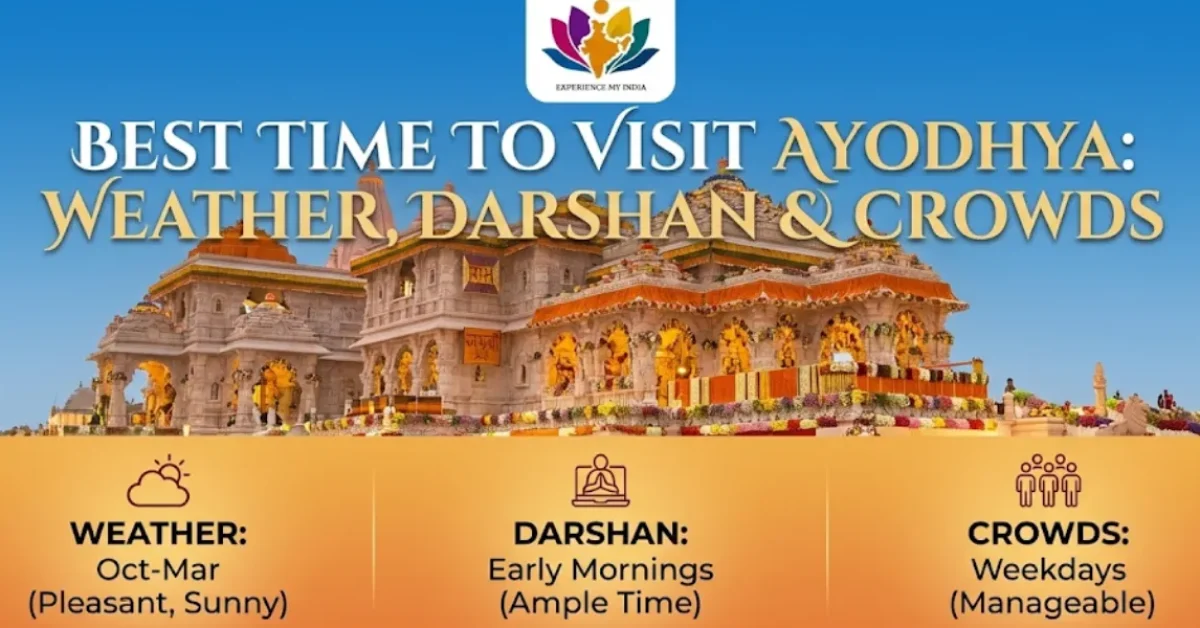
- – For comfort: October to February
- – For fewer crowds: April to early June (with care)
- – For festivals: Ram Navami and Diwali period
- – For reflection: Monsoon and winter mornings
Ayodhya Varanasi Tourism often reminds travelers that Ayodhya doesn’t offer instant experiences. It unfolds slowly, across hours, rituals, and silence.
FAQs – Best Time to Visit Ayodhya
1. Which is the best month to visit Ayodhya?
November to February is most comfortable.
2. Is summer a bad time to visit Ayodhya?
Not if you plan early mornings and evenings.
3. When is Ayodhya most crowded?
During Ram Navami and Diwali.
4. Are temple darshan timings same throughout the year?
Mostly yes, but waiting time varies.
5. Is winter suitable for older travelers?
Yes, it is the best season for them.
6. Can Ayodhya be visited in monsoon?
Yes, with flexible travel plans.
7. How many days are enough for Ayodhya?
1–2 days are usually sufficient.
8. Are aartis held daily?
Yes, especially at Sarayu Ghat.
9. Is advance booking required during peak season?
Highly recommended.
10. Does Ayodhya Varanasi Tourism help plan visits by season?
Yes, including timing, darshan planning, and travel support.