
Some journeys are not planned; they are remembered.
They begin quietly — not with tickets and dates, but with a small voice inside that says, go back. Go back to where faith still breathes in air, where lamps float over rivers, and where the sound of bells is older than words.
For every soul that has felt that call, there exists one path — the Ayodhya Varanasi Tour.
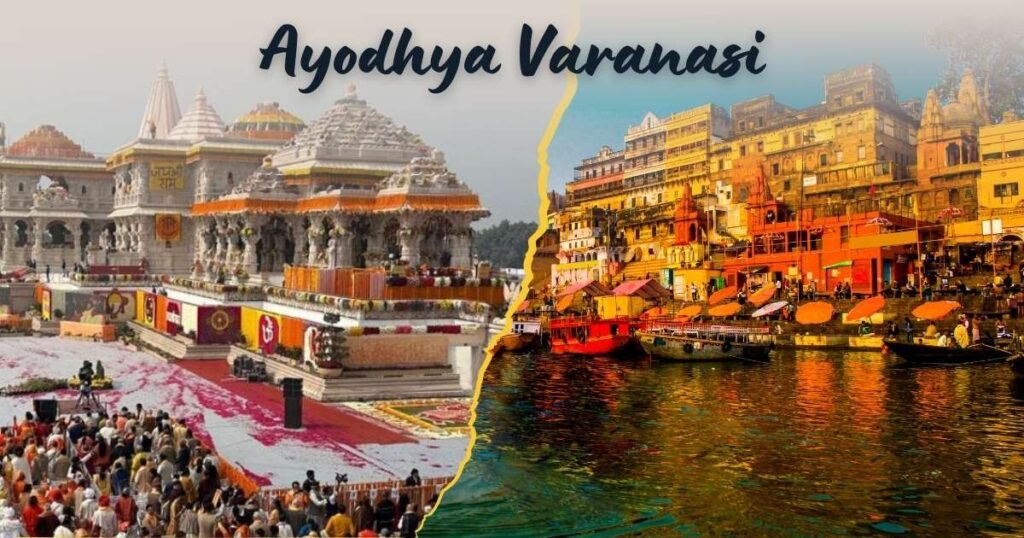
Two cities, two rivers, two names — Rama and Shiva — and yet one meaning, one peace, one silence that holds everything together.
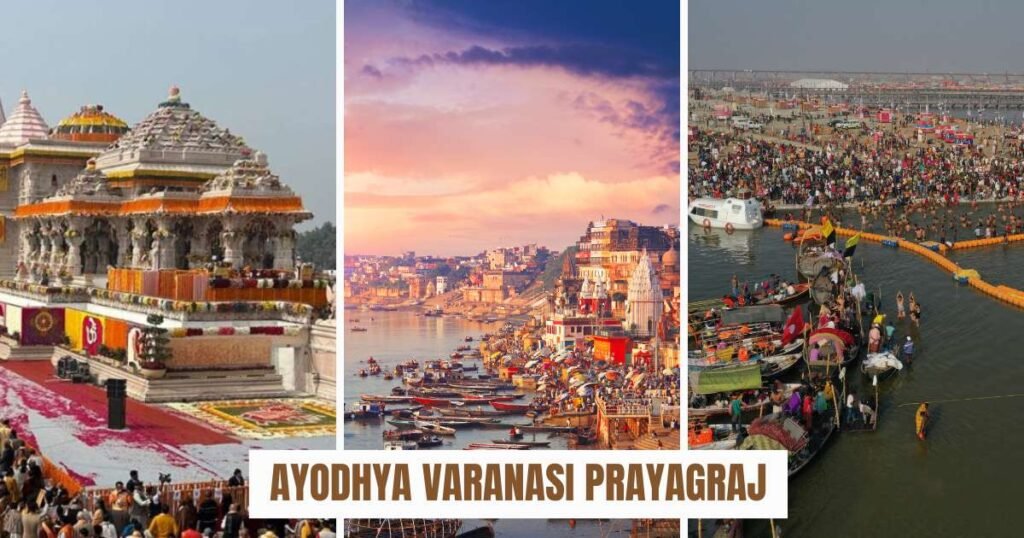
Ayodhya stands on the banks of Sarayu, gentle, golden, like a prayer that never ends.
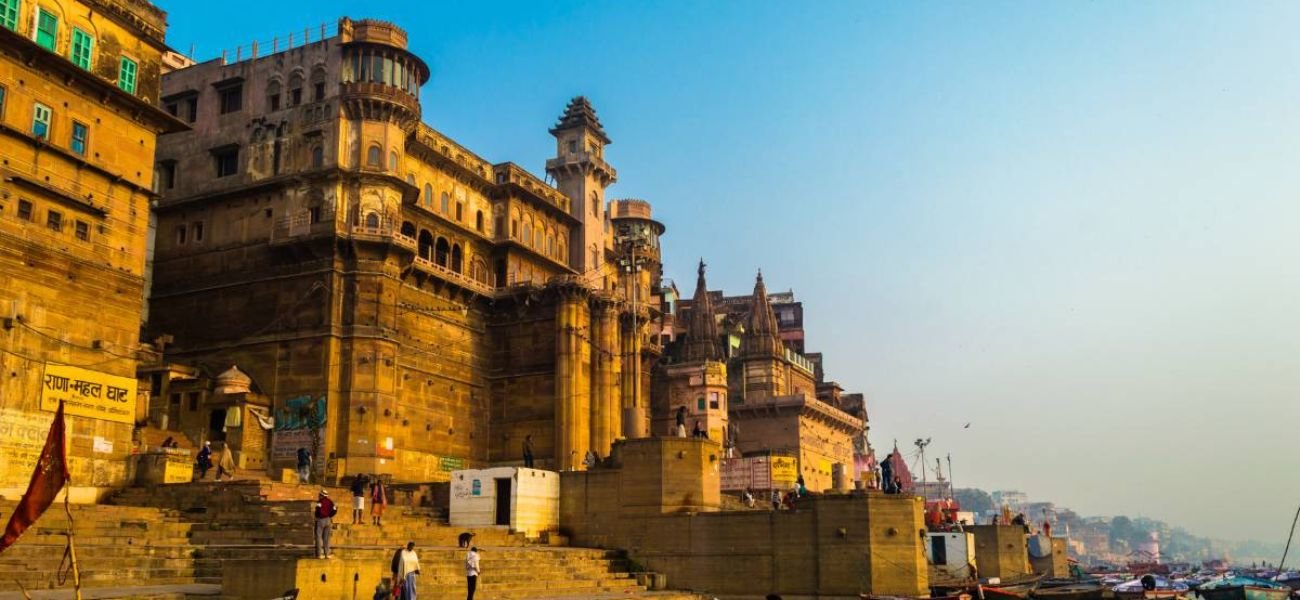
Varanasi sits by the Ganga, fierce and eternal, where even death bows its head and becomes holy.
To walk through these two cities is to walk through life and liberation together — one teaching how to live, the other teaching how to leave.
Ayodhya – Where Faith Feels Like Home
Ayodhya is not a city you visit; it is a memory you step back into.
The first sight of Ram Janmabhoomi fills the heart with something that cannot be explained.
You hear the chants before you reach, the bells before you see the spire, and when you finally stand before it, you don’t pray — you simply breathe, slowly, as if the air itself has turned sacred.
The lanes are narrow, the people simple, and yet everything glows with devotion.
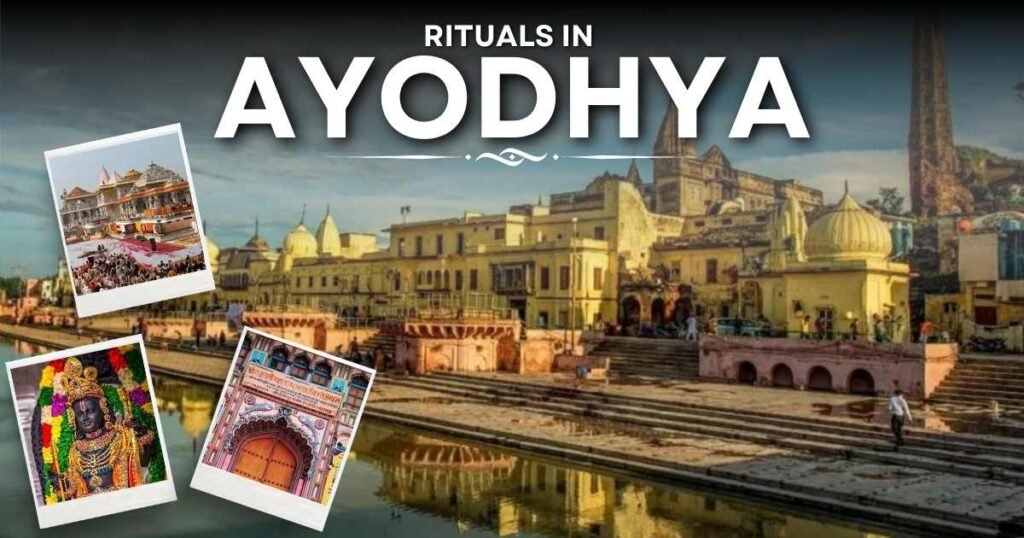
From Hanuman Garhi to Kanak Bhawan, from Nageshwarnath Temple to the soft banks of Sarayu Ghat, every corner feels like a verse from the Ramayana — still alive, still unfolding.
And when evening comes, and the lamps are set afloat upon the river, you realise that even light knows how to return home.
Varanasi – Where Time Learns to Stop
If Ayodhya is silence, Varanasi is song.
The Ganga does not flow here — she moves like thought, like faith, like forgiveness.
This city does not just exist; it burns and shines at once.
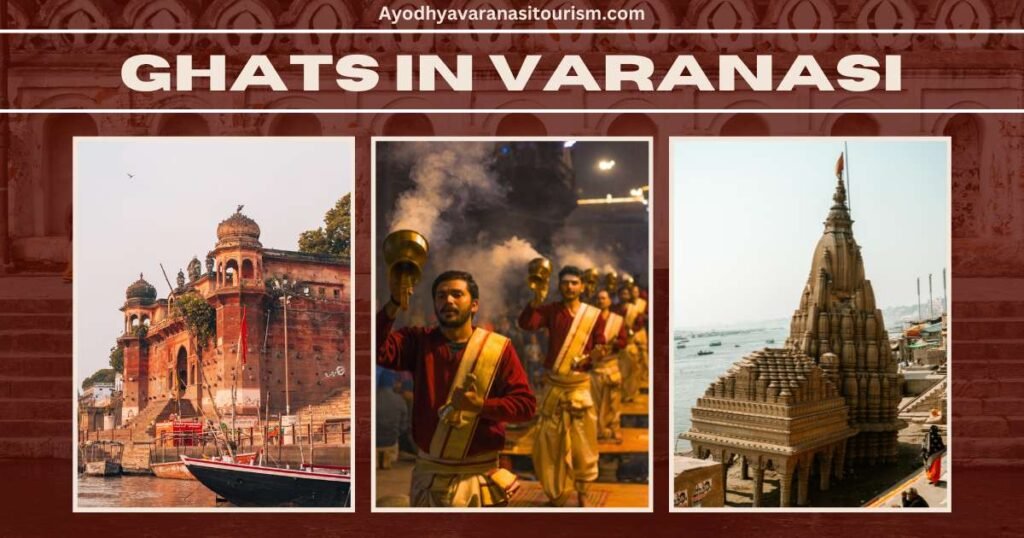
You walk through its ghats — Dashashwamedh, Manikarnika, Assi — and you feel it: life and death meeting like two friends who have known each other forever.
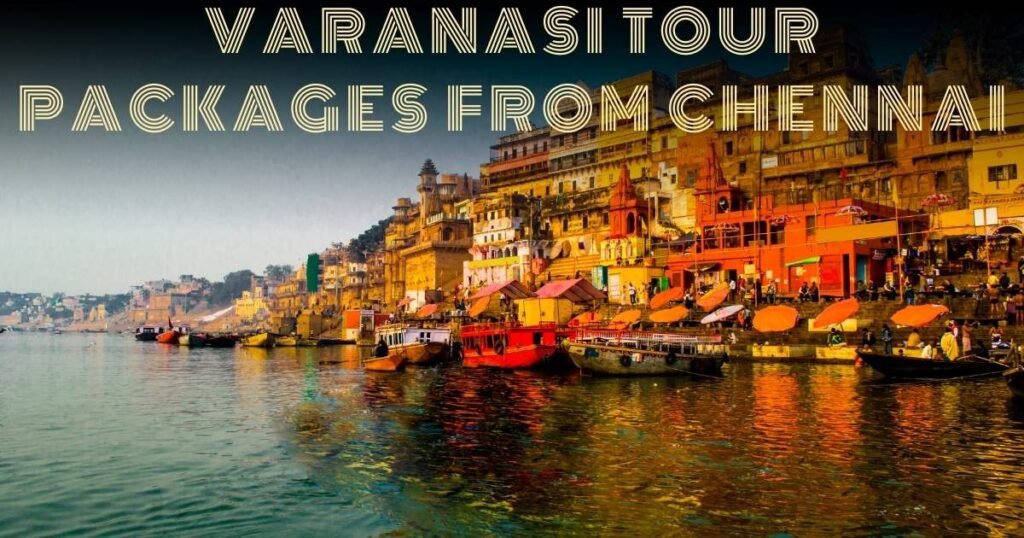
At dawn, when you sit in a boat and the river mirrors the first flame of the sun, you understand why this place is called Kashi — the city of light.
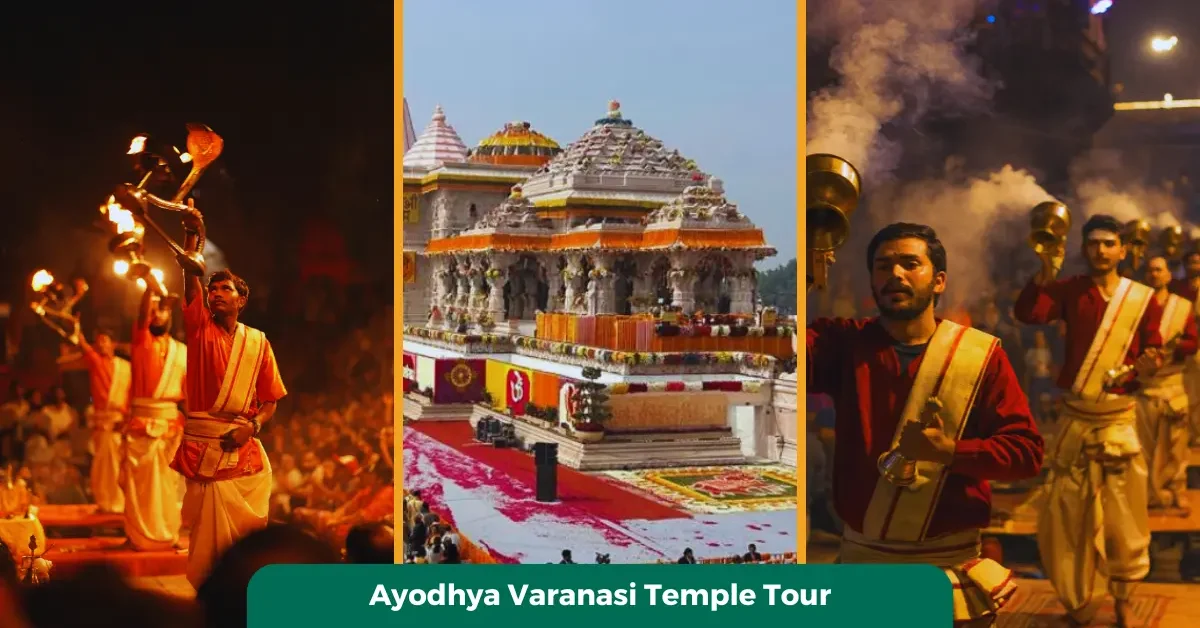
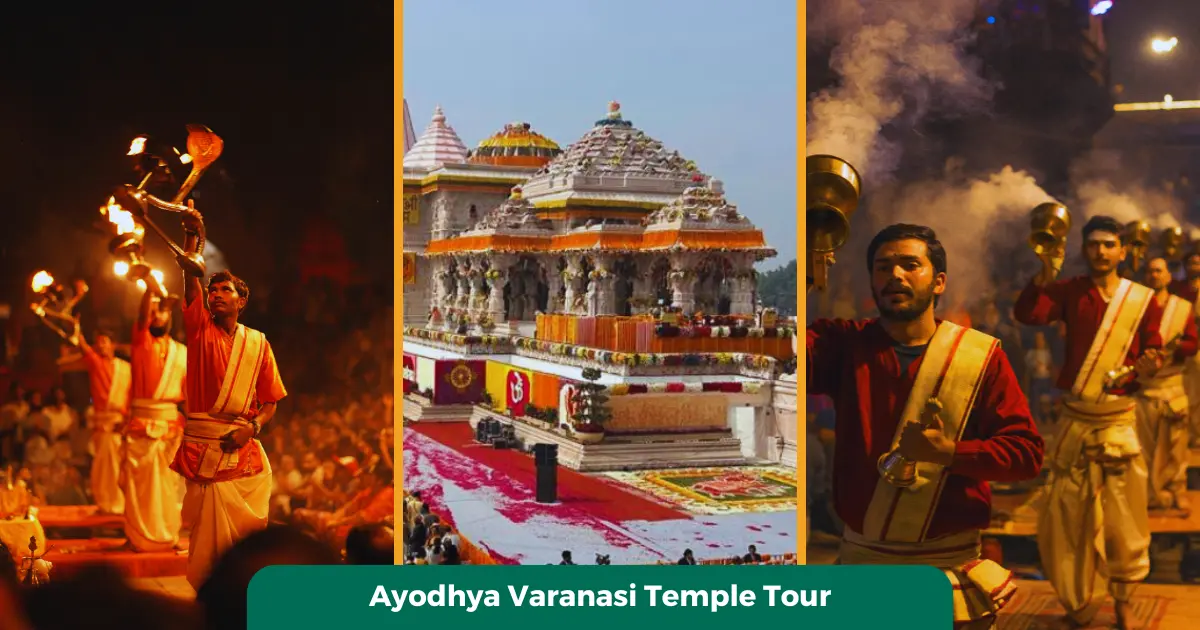
And when the evening aarti begins, thousands of lamps rising and turning together, it feels as though even the air has begun to pray.
Varanasi does not ask you to believe.
It simply shows you what belief looks like.
A Journey Between Two Souls
The road between Ayodhya and Varanasi is not long — a few hours by car, a few blinks by faith.
But what it connects is immeasurable.
On one end stands Rama, teaching truth through duty.
On the other stands Shiva, teaching peace through surrender.
And somewhere between them, you find yourself — quieter, humbler, lighter.
Our Ayodhya Varanasi pilgrimage itinerary at Ayodhya Varanasi Tourism is shaped not by distance, but by feeling.
We don’t count kilometres; we count moments —
the moment you close your eyes at Sarayu Ghat,
the moment your hands fold before the Kashi Vishwanath Temple,
the moment you realise that you came searching for God, but found yourself.
The Spiritual Tour to Ayodhya and Varanasi
Day 1: You arrive in Ayodhya. The air smells of incense and history. You visit Ram Janmabhoomi, and by evening, you stand beside the river, watching the diyas float away — each carrying someone’s wish into the dark.
Day 2: You visit Hanuman Garhi, Kanak Bhawan, and the quiet steps of Guptar Ghat. The day moves slowly, filled with chants, temple bells, and the warmth of strangers who smile like they already know you.
Day 3: The drive towards Varanasi begins. The road is lined with small temples and banyan trees that look older than time. By afternoon, the Ganga appears — wide, calm, infinite. Evening brings the Ganga Aarti, and as the lamps rise, you feel that you, too, are a small flame among many.
Day 4: Early morning boat ride, the river wrapped in mist. You see priests, pilgrims, children, life — all sharing the same water. Later, you visit Kashi Vishwanath, Annapurna Temple, and Sarnath, where Buddha once spoke of peace.
And before you leave, you look once more at the river — and it feels as though she’s looking back.
Best Time to Visit Ayodhya and Varanasi
From October to March, both cities rest under kind skies.
The air is cool, the evenings gentle, the mornings full of light.
During Diwali, Ayodhya glows brighter than stars; during Dev Deepawali, Varanasi turns into heaven itself.
But truthfully, there is no wrong time to visit. Faith does not follow weather.
Why Choose Ayodhya Varanasi Tourism
Because we do not arrange tours — we arrange peace.
We believe travel, especially spiritual travel, should not be rushed or crowded with checklists.
Our team plans everything — from simple stays near temples to clean, private cabs — so that you can move freely, pray quietly, and rest deeply.
With Ayodhya Varanasi Tourism, your Ayodhya Varanasi Tour becomes less about moving through places, and more about being moved by them.
In the End
When you return home, it is never the same home.
Something changes — gently, quietly.
The eyes that once looked at the world now see a little differently.
The noise that once filled your days now feels lighter, softer.
Because some part of you is still walking beside the Sarayu, still sitting by the Ganga, still folded in prayer.
That is the gift of this journey —
You leave Ayodhya with devotion,
You leave Varanasi with peace,
And somewhere in between, you find yourself.
The Ayodhya Varanasi Tour is not just about two holy cities.
It is about two sides of the same heart.
FAQs – Ayodhya Varanasi Tour
1. What makes the Ayodhya Varanasi Tour special?
Because it is not sightseeing; it is soul-seeing — two cities, one purpose: peace.
2. What is the ideal duration for the tour?
Four days is perfect to experience both Ayodhya and Varanasi fully.
3. What are the main temples included?
Ram Janmabhoomi, Hanuman Garhi, Kanak Bhawan, Kashi Vishwanath, Annapurna Temple.
4. Can I visit Sarnath during this journey?
Yes, Sarnath is part of our itinerary.
5. What is the best time to visit?
Between October and March, or during Diwali and Dev Deepawali.
6. Is accommodation included in the package?
Yes, we provide comfortable hotels near the temples and ghats.
7. Is transport arranged between the two cities?
Yes, private vehicles with local drivers who know the route well.
8. Are your tours suitable for older citizens?
Absolutely. The itinerary is designed for slow, comfortable travel.
9. Can I customize my pilgrimage plan?
Yes, every journey can be shaped according to your devotion and time.
10. Why should I book with Ayodhya Varanasi Tourism?
Because we do not just take you to holy places — we take you to peace itself.
The Last Word
Ayodhya and Varanasi are not just two dots on a map.
They are two mirrors — one showing where we came from, the other showing where we are going.
Between them flows every prayer ever whispered, every tear ever shed, every light ever lit.
And when you walk through them with Ayodhya Varanasi Tourism, you are not travelling — you are remembering.
Because the way to God was never outside; it was always within.