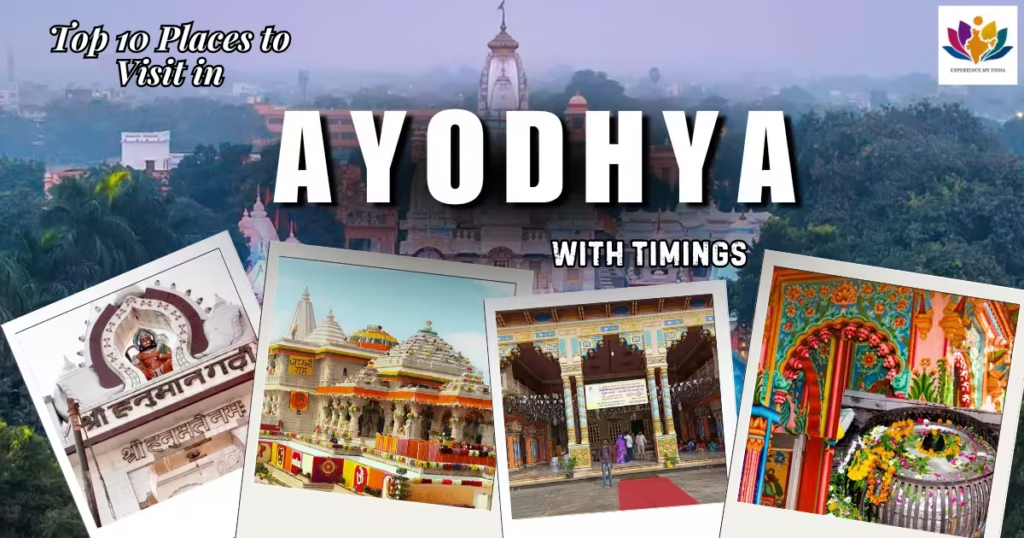

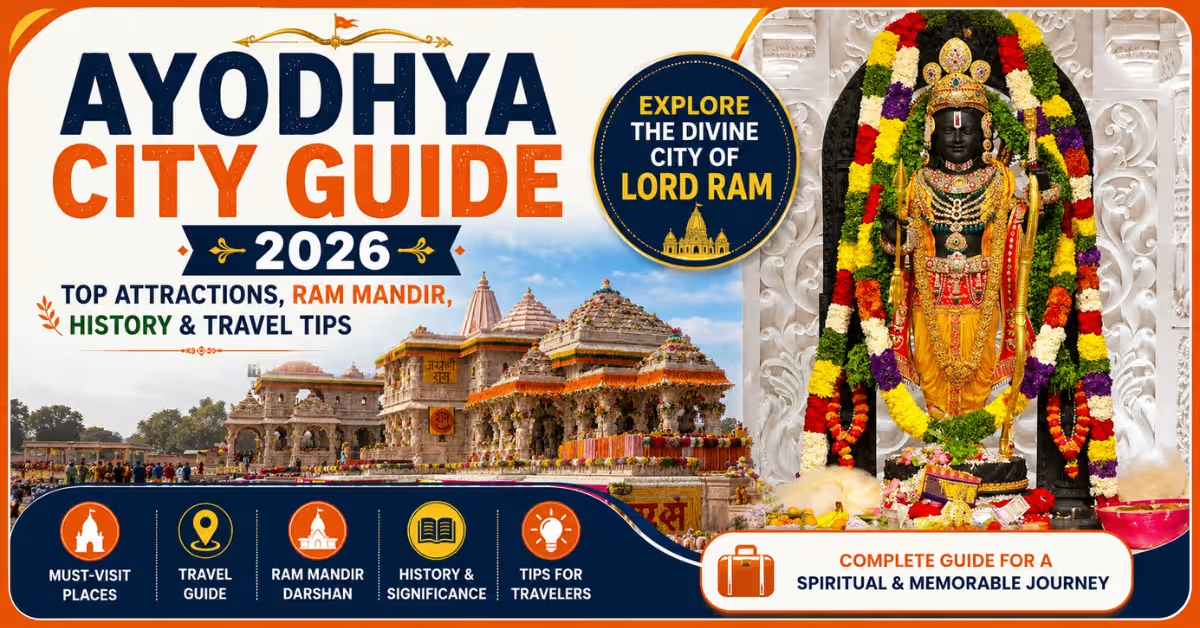
Ayodhya City is the birthplace of Lord Rama – home to Ram Janmabhoomi Mandir (consecrated 22 January 2024), Hanuman Garhi (76 steps, visit first by tradition), Kanak Bhawan, Ram Ki Paidi Saryu Ghat and over 100 temples. There is no VIP darshan – Sugam Darshan pass (nominal fee, book online) reduces queue time. Mobile phones are not allowed inside Ram Mandir. E-rickshaws connect all sites at ₹30-₹80 per ride. Experience My India plans complete Ayodhya tours from ₹1,999 per person. WhatsApp +91-7302265809.
Ayodhya City is one of the seven Mukti Kshetras – the seven sacred cities of India believed to grant liberation – and since the consecration of Ram Janmabhoomi Mandir on 22 January 2024, it has become one of the most visited cities in North India. More than 100,000 pilgrims arrive on some peak days. Yet despite this scale, Ayodhya’s essential character remains what it has always been: a pilgrimage city defined by the life of Lord Rama.
I am Gurudutt, born and raised in Braj Bhoomi and the founder of Experience My India. Since 2018, I have guided 50,000+ pilgrims through Ayodhya – including many who arrived at Ram Mandir without knowing where to go first, what the Sugam Darshan process involves or what the cloakroom handles. This guide gives you every practical detail for a well-planned Ayodhya city visit.
By the end you will know the correct visiting sequence, Ram Mandir’s practical entry rules, how Sugam Darshan works, e-rickshaw fares, what to buy, what to avoid and the best season to come.
Ayodhya City – A Brief Introduction
Ayodhya City sits on the southern bank of the Saryu River in Faizabad district, Uttar Pradesh. The city’s population is approximately 55,000 within the old city core, but the wider Ayodhya-Faizabad urban area is significantly larger. Post-2024, the city has seen rapid infrastructure development – new road widening, hotel construction, improved ghat infrastructure and expanded Ram Mandir complex facilities.
The city is compact by pilgrimage standards. All major attractions are within a 5 km radius. An e-rickshaw can cover the complete circuit – Hanuman Garhi, Ram Mandir, Kanak Bhawan, Ram Ki Paidi, Treta Ke Thakur and Guptar Ghat – in a well-planned full day.
Experience My India plans single-day and multi-day Ayodhya circuits with correct sequencing. WhatsApp +91-7302265809.
History of Ayodhya City
Ayodhya is described in the Valmiki Ramayana as the capital of the Ikshvaku dynasty – the royal lineage of the Sun (Surya Vansha) to which Lord Rama belonged. The city’s name in Sanskrit means “that which cannot be conquered” – a reflection of its status as an invincible royal capital.
| Historical Period | Significance |
| Treta Yuga (mythological) | Lord Rama’s birth, kingdom and rule |
| 5th-6th century BCE | Buddhist and Jain traditions also associate the city with their early histories |
| Gupta period (4th-6th CE) | Major pilgrimage centre, temples and akharas established |
| Mughal period | Complex religious history including the Babri Masjid construction (1528) |
| 20th century | Major pilgrimage centre despite the site dispute |
| 9 November 2019 | Supreme Court judgment – entire Ram Janmabhoomi site awarded for temple construction |
| 22 January 2024 | Ram Janmabhoomi Mandir consecrated (Prana Pratishtha) |
The Sarayu River connection: The Sarayu (also spelled Saryu) is the sacred river of Ayodhya – as central to the city’s identity as the Yamuna is to Vrindavan. According to the Ramayana, Lord Rama took his final departure (Jal Samadhi) into the Sarayu at Guptar Ghat, 5 km from the city centre. View Our Same Day Ayodhya Tour Package
Top Attractions in Ayodhya City
| Attraction | Distance from Ram Mandir | Time Needed | Entry | Significance |
| Ram Janmabhoomi Mandir | Central | 60-180 min | Free | Birthplace of Lord Rama – primary pilgrimage site |
| Hanuman Garhi | 500 m | 45-60 min | Free | 10th-century Hanuman temple – visit before Ram Mandir |
| Kanak Bhawan | 300 m | 30-45 min | Free | Palace gifted to Sita by Kaikeyi |
| Ram Ki Paidi (Saryu Ghat) | 1.5 km | 60-90 min | Free | Main ghat – Saryu Aarti at sunset |
| Treta Ke Thakur | 3 km | 30-45 min | Free | Ancient single-stone black idol temple |
| Nageshwarnath Temple | 1 km | 30 min | Free | Oldest Shiva temple in Ayodhya – built by Kush |
| Guptar Ghat | 5 km | 30-45 min | Free | Rama’s Jal Samadhi site |
| Sita Ki Rasoi | 1.2 km | 20-30 min | Free | Ancient symbolic kitchen of Goddess Sita |
| Gulab Bari (Faizabad) | 6 km | 45-60 min | Free | Nawabi tomb garden – Faizabad heritage |
| Mani Parvat | 2 km | 30 min | Free | Sacred hillock with Sita-Ram temple |
Ram Janmabhoomi Mandir – Timings, Darshan & Entry Rules
Ram Janmabhoomi Mandir is the focal point of any Ayodhya City visit. Consecrated on 22 January 2024, the Nagara-style temple stands 161 feet tall in pink Rajasthani sandstone and houses the ancient Ram Lalla idol in the sanctum sanctorum.
Darshan Timings
| Session | Opening | Closing |
| Morning | 7:00 AM | 11:30 AM |
| Afternoon (closed) | 11:30 AM | 2:00 PM |
| Evening | 2:00 PM | 7:00 PM |
Book Sugam/VIP Darshan and Aarti – Ayodhya Shri Ram Janmbhoomi 2026
Sugam Darshan – How It Works
There is no VIP darshan at Ram Janmabhoomi. All visitors enter the same security process. However, the Sugam Darshan pass (available online through the official Ram Janmabhoomi portal) provides a dedicated queue lane that significantly reduces waiting time.
| Darshan Type | Queue Time (typical weekday) | Queue Time (festival/weekend) | Cost |
| General entry | 45-90 minutes | 2-4 hours | Free |
| Sugam Darshan pass | 15-30 minutes | 30-60 minutes | Nominal fee |
Experience My India books Sugam Darshan passes for all Ayodhya tour groups. WhatsApp +91-7302265809 to arrange.
What Is Not Allowed Inside Ram Mandir
| Item | Allowed? |
| Mobile phones | ❌ Not allowed – must be deposited at free cloakroom |
| Cameras / video cameras | ❌ Not allowed |
| Bags / backpacks | ❌ Not allowed – deposit at cloakroom |
| Leather items (belts, wallets) | ❌ Many pilgrims leave these – check at cloakroom |
| Water bottles (sealed) | ✅ Usually permitted |
| Prasad / flowers | ✅ Check current policy at gate |
| Footwear | ❌ Removed before entry – designated deposit area |
Cloakroom process: The cloakroom is free of charge and located before the first security checkpoint. Build 15-20 minutes into your schedule for cloakroom deposit and collection.
Hanuman Garhi – Visit Before Ram Mandir
Local Ayodhya tradition holds firmly that Hanuman Garhi must be visited before Ram Mandir – not after. Hanuman is the protector of Ayodhya and Rama’s supreme devotee; his blessings are sought before entering Lord Rama’s birthplace.
Hanuman Garhi sits on a hillock at the centre of Ayodhya – 76 stone steps lead to the main shrine. The climb takes approximately 10-15 minutes at a comfortable pace. The temple houses a large idol of Hanuman with baby Ram in his arms.
| Detail | Information |
| Steps | 76 stone steps to main shrine |
| Opening time | Approximately 5:00 AM |
| Entry | Free |
| Distance from Ram Mandir | 500 metres – 8 minutes walk |
| Best timing | 5:30-7:00 AM before Ram Mandir darshan |
| Crowd level | Significantly less crowded than Ram Mandir |
Experience My India always begins the Ayodhya darshan day at Hanuman Garhi – without exception. WhatsApp +91-7302265809. View Our 2 Days Ayodhya Tour Package
Kanak Bhawan and Other Key Temples
Kanak Bhawan
Kanak Bhawan is one of Ayodhya’s most loved temples – and consistently one of its least crowded. According to tradition, this is the golden palace that Kaikeyi (Rama’s stepmother) gifted to Sita after her marriage to Rama. The gold-domed structure houses beautiful images of Sita-Ram in royal attire.
| Detail | Information |
| Timings | 8:00 AM-12:00 PM / 4:00 PM-9:00 PM |
| Entry | Free |
| Distance from Ram Mandir | 300 metres – 5-minute walk |
| Crowd level | Low – peaceful |
Nageshwarnath Temple
The oldest Shiva temple in Ayodhya, believed to have been established by Kush – the son of Lord Rama. This makes Nageshwarnath pre-date most Ayodhya temples in mythological tradition and gives it particular significance for pilgrims who want to experience the complete sacred geography of the city.
Treta Ke Thakur
Houses idols carved from a single black sandstone piece – believed to have been made by Kusha himself. The temple stands on the site where the Ashwamedha Yajna (horse sacrifice ritual) is believed to have taken place.
Ram Ki Paidi – Saryu Ghat Evening Aarti
Ram Ki Paidi is Ayodhya’s main ghat complex – a wide stepped platform along the Saryu River built to accommodate the city’s growing pilgrim population. The Saryu Aarti at sunset is Ayodhya’s equivalent of Varanasi’s Ganga Aarti – quieter in scale but deeply moving for pilgrims who have spent a day at Ram Mandir.
| Detail | Information |
| Location | Saryu River bank – central Ayodhya |
| Saryu Aarti timing | Approximately 7:00-7:30 PM (varies seasonally) |
| Entry | Free |
| Distance from Ram Mandir | 1.5 km – 5 minutes by e-rickshaw |
| Best time | 5:30-8:00 PM – begin 90 minutes before aarti for ghat walk |
| Deepotsav / Diwali | Hundreds of thousands of lamps line the entire ghat |
Guptar Ghat (5 km from city centre): A quieter, historically important ghat where Rama is believed to have taken Jal Samadhi. The morning atmosphere here – just the river, a few priests and occasional pilgrims – is one of the most contemplative in Ayodhya. View Our 3 Days Ayodhya Varanasi Tour Package
Getting Around Ayodhya City – E-Rickshaw Guide
E-rickshaws are the standard and most practical way to move between Ayodhya’s sites. They are clean, affordable and can navigate most lanes near the major temples.
| Route | Fare (Approx.) | Time |
| Ram Mandir area to Hanuman Garhi | ₹30-₹40 | 5 minutes |
| Ram Mandir to Kanak Bhawan | ₹20-₹30 | 3 minutes |
| Ram Mandir to Ram Ki Paidi | ₹40-₹60 | 8 minutes |
| Ram Mandir to Treta Ke Thakur | ₹50-₹70 | 12 minutes |
| Ram Mandir to Guptar Ghat | ₹60-₹80 | 15 minutes |
| Full day e-rickshaw hire | ₹500-₹800 | All day sightseeing |
Practical note: Standard Ola and Uber cabs cannot enter the narrow lanes immediately surrounding Ram Mandir and Banke Bihari-style old-city areas. E-rickshaws are not just cheaper – they are the only practical option for the final 300-500 metres to most temple gates.
Experience My India arranges pre-hired e-rickshaw support for elderly pilgrims and groups. WhatsApp +91-7302265809.
Best Time to Visit Ayodhya City
| Season | Months | Temperature | Crowd Level | Verdict |
| Winter | October-March | 8-25°C | Moderate-high | ✅ Best for sightseeing – comfortable, all sites accessible |
| Ram Navami | March/April | 25-35°C | Very high | ✅ Most spiritually significant – book 2 months ahead |
| Summer | April-June | 35-46°C | Low-moderate | ⚠️ Extreme heat – avoid midday; 6-10 AM manageable |
| Monsoon | July-September | 28-35°C | Low | ⚠️ Heavy rain possible; ghats can flood; generally manageable |
| Kartik Month | Oct-Nov | 15-25°C | High | ✅ Peak spiritual season – Deepotsav + Parikrama month |
| Diwali/Deepotsav | Oct/Nov | 18-25°C | Extremely high | ✅ Most spectacular visual event – book 3 months ahead |
October to March is the clear recommendation for first-time visitors – comfortable temperatures for walking between temples and ghats, all facilities accessible and the city at its most active without extreme summer heat.
Deepotsav (Diwali eve at Ayodhya): The annual Deepotsav transforms Ram Ki Paidi into a sea of over 100,000+ lamps on the Saryu River – one of the most visually striking events in North India. Experience My India books Deepotsav packages up to 3 months ahead. WhatsApp +91-7302265809.
Book Our 5 Days Ayodhya Varanasi Tour Package
What to Buy in Ayodhya – Shopping Guide
Ayodhya has a growing local craft and prasad economy. Here is what is genuinely worth buying versus what to approach with caution.
Worth Buying
Ram Lalla idols and Ram Darbar sets: The idol of Ram Lalla (the child form of Rama) is the iconic souvenir of Ayodhya. Authentic stone idols and brass Ram Darbar sets (Rama, Sita, Lakshmana and Hanuman) are widely available near Kanak Bhawan and Hanuman Garhi. Price range: ₹200-₹2,000+ depending on material and size.
Ramcharitmanas (Tulsidas): Ayodhya is considered the most auspicious place to buy and begin reading the Ramcharitmanas. Multiple editions available – from pocket editions (₹50) to ornate bound copies (₹500-₹2,000).
Tulsi mala and chanting beads: Tulsi (holy basil) japa malas are widely available and genuinely used by pilgrims. Price: ₹100-₹500.
Local prasad: Laddoo prasad from temple shops near Ram Mandir – genuinely temple-sourced. Avoid vendors far from the temple who sell generic sweets as “temple prasad.”
Approach with Caution
“Genuine Ram Mandir soil”: Several street vendors sell soil or bricks allegedly from the Ram Mandir site – these are not authentic souvenirs and their claims are not verifiable.
Overpriced stone idols: Prices near the Ram Mandir gate are often 2-3x the same items available 200 metres away. Walk slightly away from the main tourist cluster to compare.
Dress Code, Rules and Temple Etiquette
| Rule | Detail |
| Dress code | Covered shoulders and knees mandatory at all major temples |
| Footwear | Removed at every temple entry – designated deposit areas |
| Electronics | Not allowed inside Ram Mandir – free cloakroom |
| Photography | Not permitted inside sanctum of Ram Mandir |
| Leather items | Best left at hotel for Ram Mandir visit |
| Food | Not to be carried into temple complex |
| Queue etiquette | Follow the marked lines – pushing is common but patience is rewarded |
Ground Truth – What Nobody Tells You About Ayodhya City
1. There is no official VIP darshan at Ram Mandir – anyone claiming to arrange it privately is misrepresenting the system. The official Sugam Darshan pass is the only expedited entry mechanism and it is available online through the official portal. Any “VIP connection” offer from touts outside the temple should be declined. Experience My India books Sugam Darshan through the official channel only.
2. The Ram Mandir cloakroom queue on busy days can itself take 20-30 minutes – plan accordingly. Most visitors budget time for the darshan queue but don’t account for the cloakroom deposit process. On a festival weekend, the combined cloakroom + security + darshan time can exceed 3 hours. Arriving by 7:15 AM for the morning opening keeps the cloakroom queue to under 10 minutes.
3. Hanuman Garhi’s 76 steps are manageable for most elderly visitors – but the descent is harder than the ascent. Experience My India guides always descend first with elderly visitors to assess how the descent feels before committing to the ascent at all. The steps are stone – uneven in places – and steeper coming down. The guide maintains physical contact support on the descent for any pilgrim who needs it.
4. Ayodhya city’s road infrastructure is actively under expansion – some routes near Ram Mandir change regularly. Construction near the temple complex has been ongoing since 2020. E-rickshaw drivers update their routes continuously based on current diversions. Visitors following 2-year-old Google Maps routes sometimes arrive at closed lane sections. Experience My India’s on-ground drivers know current-day routing. WhatsApp +91-7302265809.
5. Ram Ki Paidi Saryu Aarti at sunset is the most underrated experience in all of Ayodhya. Most pilgrims spend their entire energy on Ram Mandir and leave without seeing the Saryu Ghat at evening. The sunset aarti – smaller than Varanasi’s Ganga Aarti but intimate and sincere – followed by floating lamps on the Saryu is the most atmospheric conclusion to an Ayodhya day. Experience My India always ends the Ayodhya circuit at Ram Ki Paidi at 6:30 PM minimum.
Frequently Asked Questions – Ayodhya City
Local Ayodhya tradition holds that Hanuman Garhi must be visited before Ram Mandir – Hanuman is the guardian of Ayodhya and Rama’s greatest devotee, whose blessings are sought before entering the birthplace. Arrive at Hanuman Garhi by 5:30-6:30 AM (76 steps, free entry, morning darshan before crowds), then proceed to Ram Janmabhoomi at 7:00 AM opening with Sugam Darshan pass pre-booked. Experience My India follows this sequence for every Ayodhya tour. WhatsApp +91-7302265809.
There is no official VIP darshan at Ram Janmabhoomi Mandir. All visitors enter through the same security process. The legitimate fast-track option is the Sugam Darshan pass – available online through the official Ram Janmabhoomi Trust portal for a nominal fee. It provides a dedicated queue lane and reduces wait time from 1-3 hours (general) to approximately 15-30 minutes. Experience My India books Sugam Darshan for all Ayodhya tour groups through the official portal. WhatsApp +91-7302265809.
The following are not permitted inside Ram Janmabhoomi Mandir: mobile phones, cameras, bags and backpacks, leather items (many pilgrims also leave belts and wallets) and food. All prohibited items are deposited at the free cloakroom before the first security checkpoint. Footwear is removed at a separate designated point before entry. Photography is not permitted inside the sanctum. Modest clothing covering shoulders and knees is mandatory. Experience My India briefs every visitor on these rules before arrival. WhatsApp +91-7302265809.
Ayodhya’s genuine local purchases include: Ram Lalla stone idols and brass Ram Darbar sets (₹200-₹2,000+, best near Kanak Bhawan), Ramcharitmanas in multiple editions (₹50-₹2,000, most auspiciously purchased in Ayodhya), tulsi japa mala (₹100-₹500) and authentic temple prasad laddoos from shops near Ram Mandir. Avoid “Ram Mandir soil” and overpriced idol vendors immediately outside the temple gate – same items cost 30-50% less 200 metres away. Experience My India guides all shopping to verified local vendors. WhatsApp +91-7302265809.
One day covers the core Ayodhya City circuit – Hanuman Garhi, Ram Mandir (with Sugam Darshan), Kanak Bhawan, Treta Ke Thakur and Ram Ki Paidi Saryu Aarti. Two days allows a complete experience adding Guptar Ghat, Nageshwarnath Temple, Faizabad heritage (Gulab Bari, Bahu Begum Tomb) and a relaxed Saryu morning boat ride. Three days is recommended for the Panchkosi Parikrama circuit on Kartik Ekadashi. Experience My India offers 1-day, 2-day and 3-day packages from ₹1,999. WhatsApp +91-7302265809.
October to March is the best time to visit Ayodhya City – temperatures between 10-25°C, all temples and ghats accessible and comfortable for walking between sites. November (Kartik Month) is spiritually the most significant – the Deepotsav lamp festival transforms Ram Ki Paidi into a spectacle of light. Ram Navami (March/April) brings the year’s most attended pilgrimage gathering – book 2 months ahead. Experience My India manages Ayodhya bookings across all seasons. WhatsApp +91-7302265809.
Varanasi to Ayodhya is approximately 200 km – 4 to 5 hours by road or 2.5 hours by Vande Bharat Express. A same-day trip is feasible if you depart Varanasi by 6:00 AM, giving you 4-5 hours in Ayodhya before returning. However, Ayodhya deserves at least 2 days for a meaningful visit – a rushed 4-hour visit leaves no time for anything beyond Ram Mandir. Experience My India recommends the Ayodhya + Varanasi Combo Package (4 days, from ₹5,999) for both cities done properly. WhatsApp +91-7302265809.
Ayodhya City is generally considered safe for women pilgrims – the heavy security presence around Ram Mandir and the predominantly pilgrimage-oriented crowd creates a more managed environment than many North Indian cities. Common sense precautions apply: dress modestly (covered shoulders and knees), use pre-booked transport rather than negotiating with unknown drivers and travel with a guide in less-crowded areas like Guptar Ghat (5 km from centre). Experience My India provides female-guide-supported tours on request. WhatsApp +91-7302265809.
Recommended products
-
1 Night 2 Days Ayodhya Tour Packages
Original price was: ₹6,000.00.₹5,000.00Current price is: ₹5,000.00. -

10 Days Complete Uttar Pradesh Spiritual Tour
-
2 Night 3 Days Ayodhya Varanasi Tour Package
Original price was: ₹9,000.00.₹8,000.00Current price is: ₹8,000.00. -

5 Days Ayodhya Varanasi Tour Package


🙏 Ready to Plan Your Ayodhya City Visit with Experience My India?
WhatsApp us and receive a complete Ayodhya City itinerary within 30 minutes – Sugam Darshan booking, correct temple sequence, Saryu Aarti timing, hotel recommendation and all transport arranged before you travel. Packages from ₹1,999 per person.
WhatsApp +91-7302265809 – Book Now
Jai Shri Ram 🙏