
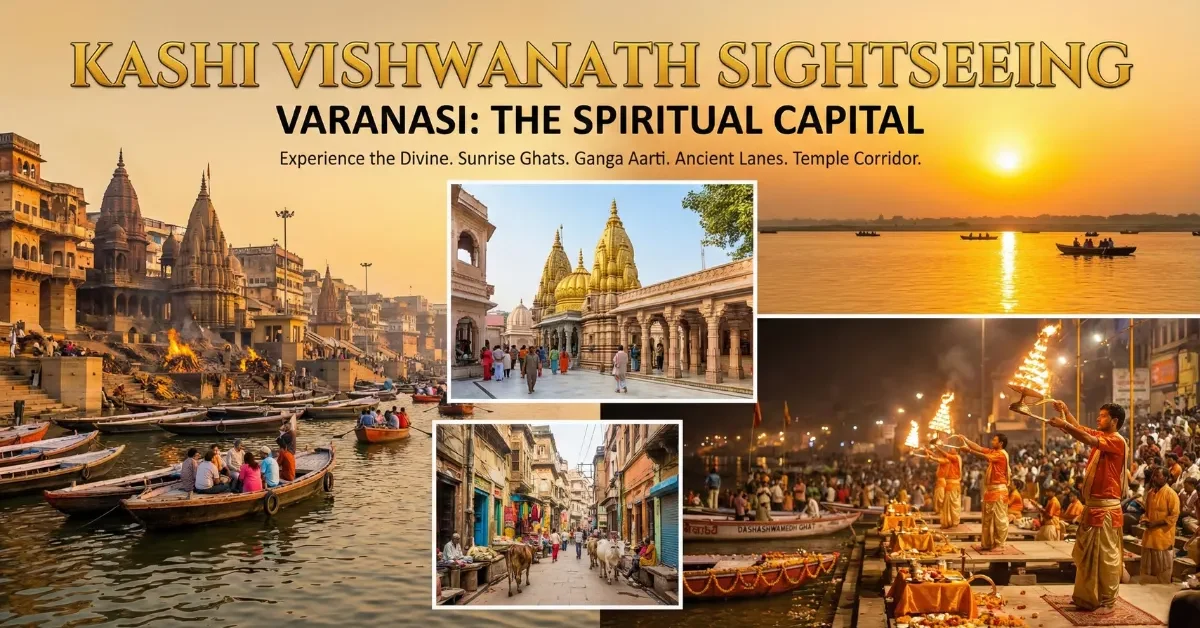
There’s a moment most people encounter near the Kashi Vishwanath Temple that no itinerary prepares them for. You’re standing in line, surrounded by motion, instructions, security checks, and the press of bodies. And yet, somewhere in that constant movement, a strange stillness settles in. That’s usually when people realise that Kashi Vishwanath sightseeing is not about places around a temple. It’s about how you move through one of the most emotionally dense spaces in India.
I’ve seen travellers arrive determined to “finish” Kashi in a few hours. Most leave tired. The ones who leave quietly changed are the ones who slow down early, accept waiting as part of the experience, and stop treating this area like a sightseeing zone. Kashi doesn’t respond well to urgency.
This guide is written the way I would explain this part of Varanasi to someone sitting next to me on a ghat step. Calmly. Honestly. Without pretending that devotion fits neatly into a schedule.
Table of Contents
ToggleAbout Kashi Vishwanath Sightseeing
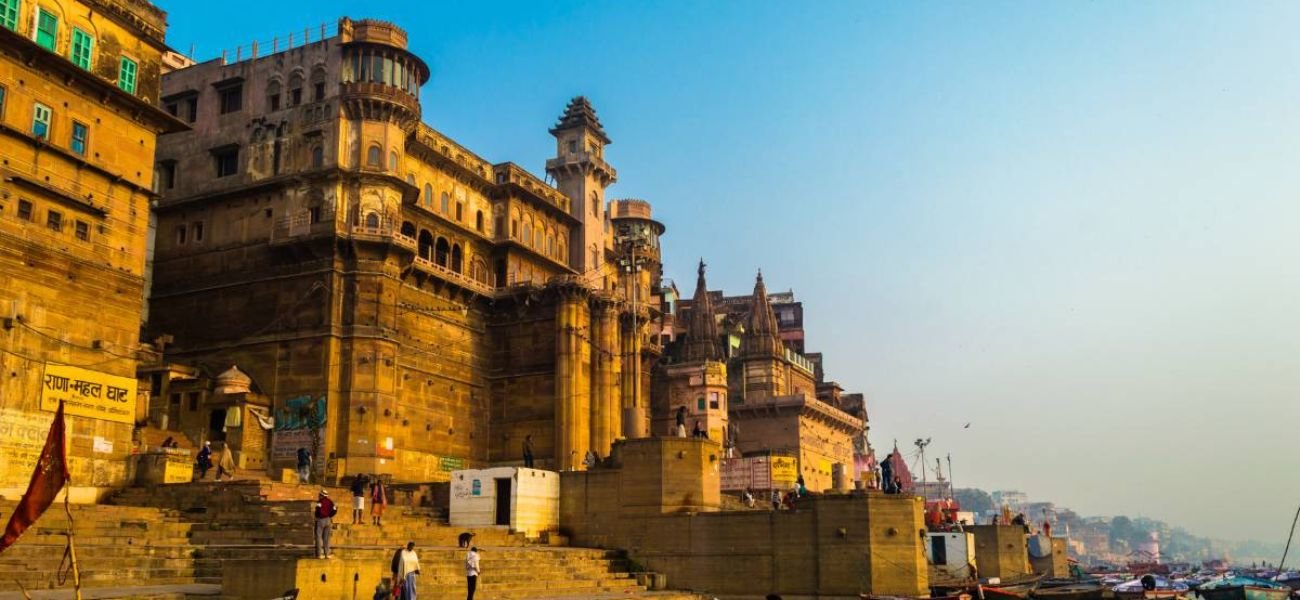
The Kashi Vishwanath area is not a single site. It’s a living pocket of the city where worship, trade, daily routine, and ritual overlap without boundaries. Temples sit beside tea stalls. Flower sellers move through security zones. Pilgrims pause wherever space allows.
Many people assume Kashi Vishwanath sightseeing begins and ends with temple darshan. In reality, the darshan is only one moment. The lanes you walk afterward, the ghat you sit at later, and the time of day you choose all shape how the visit stays with you.
This part of Varanasi doesn’t reward speed. It responds to patience.
Before You Enter the Temple Area
It helps to adjust expectations early.
The Kashi Vishwanath corridor has improved movement and security, but crowds are constant. Entry is regulated. Phones and bags are restricted. Lines move, but slowly. Outside the temple, lanes remain narrow and busy, especially mid-morning onward.
Once you stop fighting the wait, the experience softens. Most frustration here comes from resistance, not delay.
Kashi Vishwanath Sightseeing, as It Actually Feels
Kashi Vishwanath Temple Darshan
This is the spiritual centre of the entire area.
Crowd reality
- Heavy crowds throughout the day
- The calmest window is early morning, before 7:00 AM
- Evenings carry strong emotional energy but physical fatigue
Darshan inside the temple is brief. That often surprises first-time visitors. But the impact comes from presence, not duration. A few still seconds here often linger longer than expected.
Local Guide Tip
Carry as little as possible. Fewer belongings mean less stress and smoother movement.
Annapurna Devi Temple
Located close by, this visit fits naturally into the flow after Kashi Vishwanath.
Crowds are usually manageable, and the atmosphere feels grounding. Many people pause here longer than planned, without realising why. It’s a good place to let the body settle after the intensity of the main temple.
Vishwanath Gali and Inner Kashi Lanes
This is where Kashi Vishwanath sightseeing stops being structured and starts becoming personal.
These lanes aren’t meant to be crossed quickly. People stop without warning. Vendors move slowly. Conversations happen in fragments. If you rush, it feels chaotic. If you slow down, the rhythm reveals itself.
Local Guide Tip
Don’t plan to stop here. Walk without a destination. That’s how these lanes make sense.
Ghats That Shape the Experience
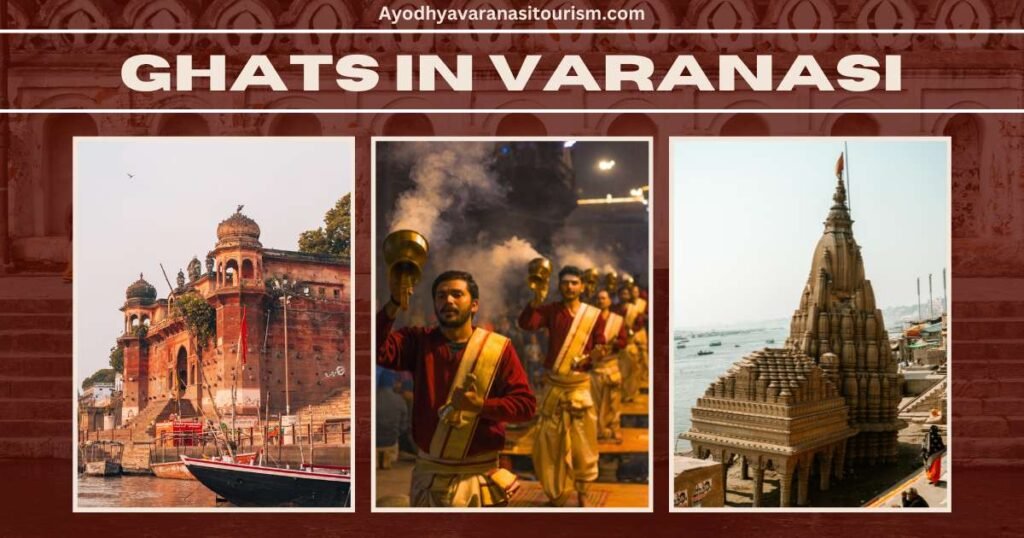
Dashashwamedh Ghat
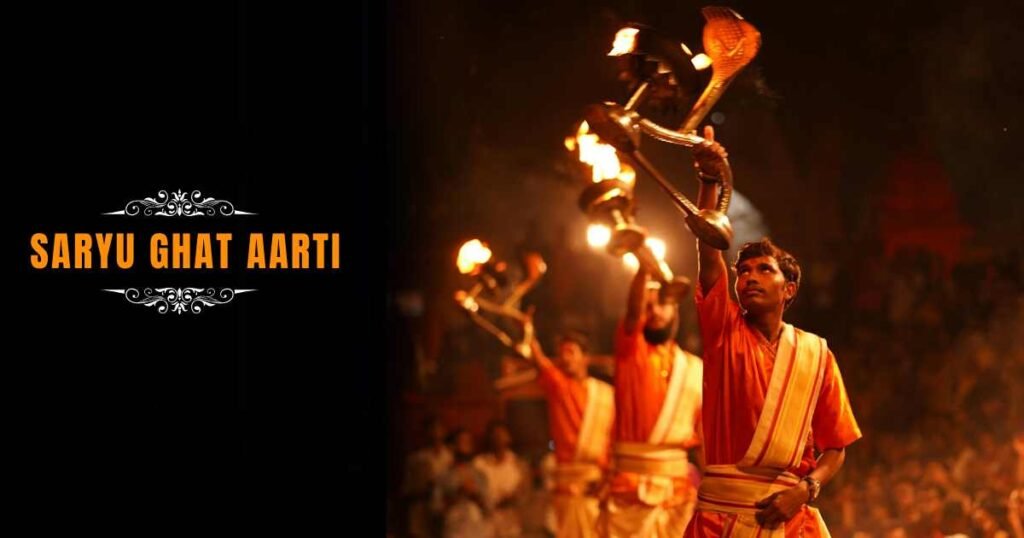
Most people visit in the evening for Ganga Aarti.
Crowd reality
- Dense and emotionally charged
- Loud, overwhelming for some
Standing slightly away from the centre allows observation without exhaustion. You don’t need to be in the middle to feel the moment.
Manikarnika Ghat
This is not a sightseeing stop in the usual sense.
It’s a place of endings, and it asks for restraint. Observing quietly, without photography or commentary, keeps the experience grounded. Many travellers find this ghat emotionally heavy. That reaction is normal.
Best Time for Kashi Vishwanath Sightseeing
Timing shapes everything here.
Early mornings offer clarity and space. Late mornings grow crowded quickly. Afternoons are best used for rest. Evenings are powerful but physically demanding.
A balanced day usually means darshan early, rest midday, and gentle movement later.
Festival Periods and What Changes
During festivals, the entire area shifts.
Mahashivratri brings extended queues and heightened energy. Dev Deepawali fills the ghats with light and density. The Shravan month increases daily footfall significantly.
Festival visits carry meaning, but they also demand flexibility. Fixed plans rarely survive crowd movement.
Local Guide Tip
During festivals, let go of exact timings. Expect delays. Plan rest intentionally.
Practical Ground-Level Awareness
- Keep identification accessible
- Dress simply and modestly
- Avoid valuables
- Stay hydrated
- Follow instructions without argument
Varanasi is generally safe, but crowded lanes require attention.
Reaching the Kashi Vishwanath Area
Early morning train arrivals align best with darshan timings. Airport transfers are straightforward but traffic near the temple zone can slow things down. Vehicles stop at designated points. Walking is unavoidable.
Comfortable footwear matters more than most people realise.
Planning Support Partner
Kashi Vishwanath sightseeing becomes overwhelming when pacing is ignored. Darshan queues, lane confusion, sudden crowd surges, and walking fatigue can quietly overtake the spiritual intent.As a planning support partner, Ayodhya Varanasi Tourism focuses less on coverage and more on timing. Knowing when to visit, when to wait, and when to step back often makes the difference between exhaustion and reflection. That kind of quiet planning allows devotion to remain central, especially for first-time visitors.
Why Ayodhya Varanasi Tourism Fits This Journey
A rushed Holi trip rarely feels fulfilling. Temple timings don’t bend. Festival traffic doesn’t care about plans. Ayodhya Varanasi Tourism focuses on realistic buffers, calm pacing, and darshan-first planning. As a Planning Support Partner, the emphasis stays on flow, not force, which is exactly what this route needs.
Contact Ayodhya Varanasi Tourism Today:
Call Us: +91 7300620809
WhatsApp Us: +91 7300620809
Visit Our Website: Ayodhya Varanasi Tourism
Email: ayodhyavaranasitourism@gmail.com
FAQs – Kashi Vishwanath Sightseeing
Yes, if you allow time to pause. Rushing compresses the experience and increases fatigue.
It helps. Early hours reduce pressure and allow calmer movement.
Yes, with early starts and rest breaks. Peak hours are best avoided.
No. Phones and bags must be deposited outside.
Restrictions apply. Always follow posted rules and local guidance.
Yes, but rest in between is important.
Not essential, but planning support helps with timing and flow.
Rushing, pushing, and arguing.
It improves movement, not footfall.
Patience. Kashi responds to those who slow down.
Conclusion
Kashi Vishwanath sightseeing isn’t about seeing everything near the temple. It’s about staying long enough for the place to work on you quietly. Through waiting. Through walking. Through moments where nothing seems to be happening.
When you stop trying to control time, Kashi begins to reveal itself. And when you leave with calm instead of completion, the visit has done what it was meant to do.