
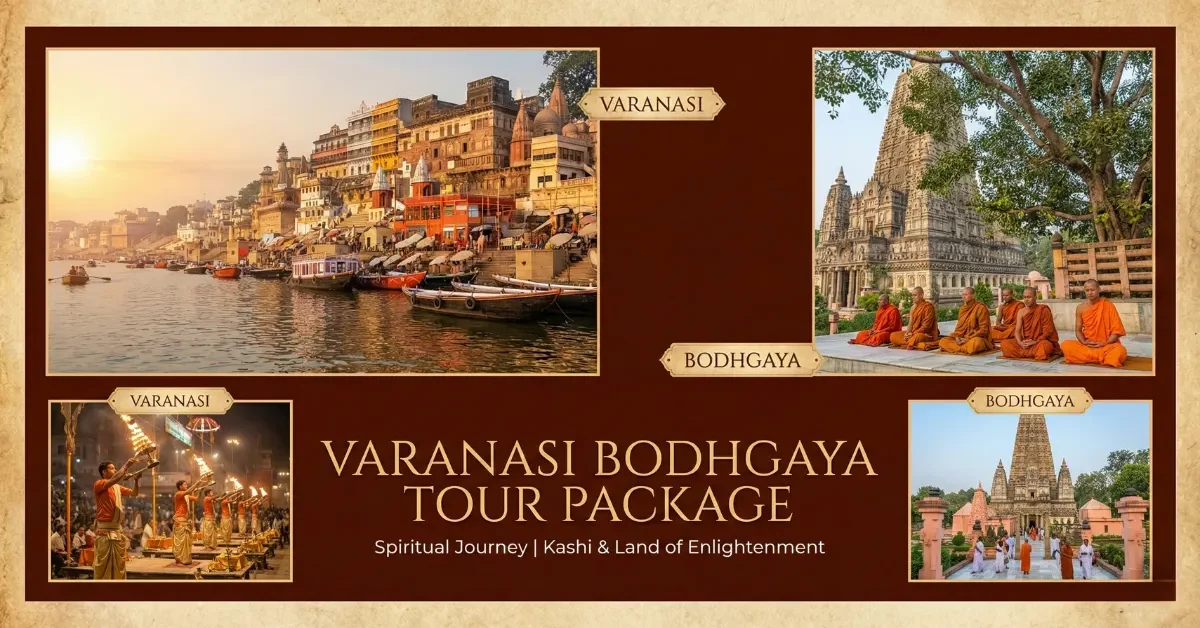
Some journeys do not begin when you arrive. They begin much earlier, often with a restlessness you cannot name. The Varanasi Bodhgaya Tour Package tends to attract travelers who already feel that pull. Not urgency, not excitement, but a quiet sense that there is something they need to walk through slowly.
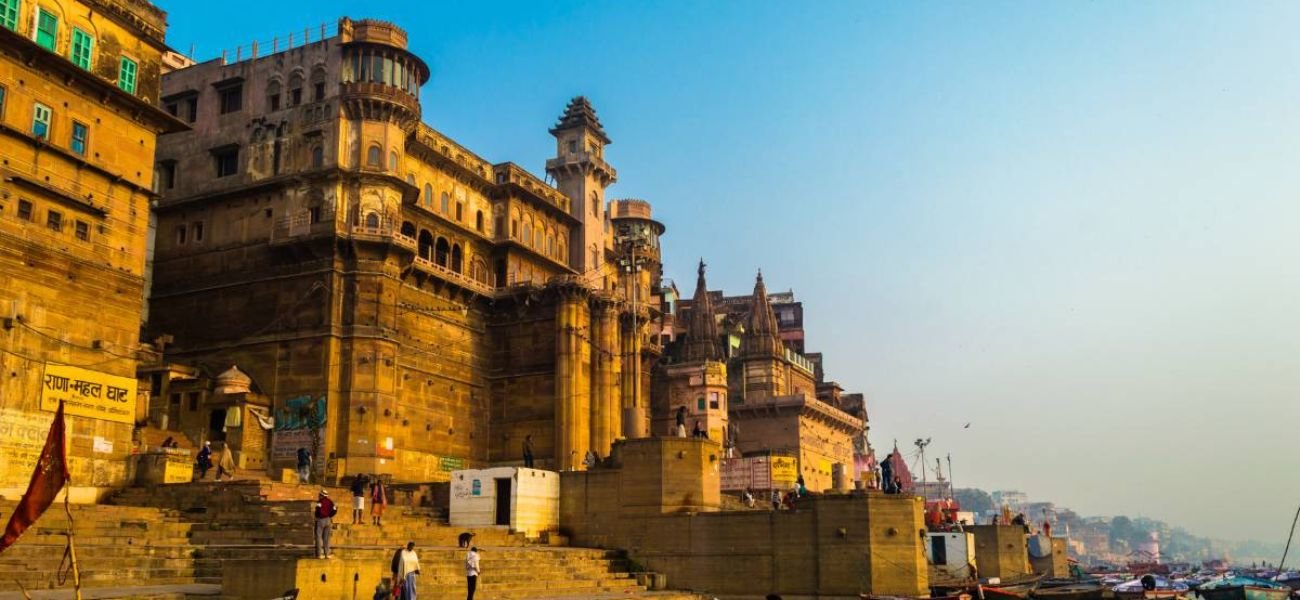
Varanasi does not ease you in. It meets you exactly as it is. Loud, intimate, chaotic, deeply human. Life and death share the same narrow lanes. Ritual is not performed for visitors. It simply continues. Bodhgaya, on the other hand, does not demand anything from you. It waits. It offers space. Silence. Time.
Placing these two places in one journey is not accidental. Together, they form a complete arc of experience, from engagement to stillness, from questioning to acceptance.
Table of Contents
ToggleVaranasi to Bodhgaya Tour
The road from Varanasi to Bodhgaya is not dramatic. Fields, small towns, long stretches of ordinary life. And yet, this stretch often becomes one of the most important parts of the journey. The Varanasi to Bodhgaya Tour creates a natural slowing down.
Varanasi stays with you even after you leave it. The sound of bells, the smoke from incense, the early morning chants. As the distance grows, those impressions settle. By the time you approach Bodhgaya, the mind is quieter without effort. This transition is why many experienced travelers prefer road travel over quick transfers. The change feels earned.
Bodhgaya Varanasi Travel Package
Some people reverse the route. A Bodhgaya Varanasi Travel Package works well for travelers arriving with a strong Buddhist focus. Beginning in Bodhgaya allows time to sit, observe, and understand before stepping into the intensity of Kashi.
Days in Bodhgaya tend to follow a gentle rhythm. Morning walks near the temple complex. Long hours sitting under the Bodhi Tree. Simple meals. Conversations that feel unhurried. When the journey moves toward Varanasi, the contrast becomes sharp but meaningful. The rituals on the ghats feel different after silence. Louder, yes, but also more grounded.
Buddhist Pilgrimage Tour from Varanasi
For many, this route is deeply personal as a Buddhist Pilgrimage Tour from Varanasi. Sarnath marks the beginning of the Buddha’s teaching journey. Bodhgaya represents awakening. Walking this path connects ideas with place.
Sarnath offers structure. Museums, stupas, carved narratives. It gives historical grounding before the inward experience of Bodhgaya. Travelers who spend time here often arrive in Bodhgaya better prepared, not intellectually alone, but emotionally. The teachings feel less abstract when the geography tells the story alongside them.
Mahabodhi Temple Tour Package
The Mahabodhi Temple Tour Package is not about seeing the temple once and moving on. It is about returning. Morning, afternoon, evening. Each visit carries a different energy.
Early mornings are quiet. Monks chant softly. The air feels still, almost held. During the day, pilgrims from across the world sit together without conversation. No one explains what to do. You simply follow the rhythm. Evenings glow with lamps and shared silence.
What surprises many travelers is how ordinary it feels to sit here for hours. There is no pressure to meditate well or understand deeply. The place does not perform. It allows.
Kashi to Bodhgaya Spiritual Tour
A Kashi to Bodhgaya Spiritual Tour brings together two approaches to faith that often seem opposite. In Kashi, devotion is visible. Loud. Continuous. In Bodhgaya, practice turns inward.
Experiencing both in one journey helps dissolve the idea that spirituality must look a certain way. Some travelers realize they are more comfortable in ritual. Others find silence more natural. Many discover they need both. This tour does not force conclusions. It simply provides the setting.
Varanasi Bodhgaya Itinerary
A thoughtful Varanasi Bodhgaya Itinerary respects fatigue. Five to seven days is usually enough when paced correctly. Varanasi days are fuller. Temple visits, ghats, Sarnath, early mornings and late evenings. Bodhgaya days slow down naturally.
Time is intentionally left open. Not everything is scheduled. Sitting quietly becomes part of the plan. Nearby places like Dungeshwari Caves or Sujata Village add context without overwhelming the experience. The itinerary feels less like a checklist and more like a loose framework that supports presence.
Bodhgaya Buddhist Circuit Tour
Some travelers extend their journey into a Bodhgaya Buddhist Circuit Tour, adding Rajgir and Nalanda. These places deepen understanding rather than add spectacle.
Rajgir’s hills invite walking. Vulture Peak feels exposed and quiet. Nalanda’s ruins speak softly of learning, discipline, and loss. Including these places stretches the journey into something more reflective, especially for travelers interested in quiet history rather than dramatic storytelling.
Varanasi Bodhgaya Sightseeing
Varanasi Bodhgaya Sightseeing is often misunderstood as monument-based. In reality, the most lasting impressions come from ordinary moments. A boatman explaining the river. A monk smiling without conversation. A shared meal eaten slowly.
In Varanasi, wandering the lanes teaches more than guided tours. In Bodhgaya, observing how pilgrims coexist in silence becomes its own lesson. Sightseeing here is about watching how belief shapes daily life, not about photographing symbols.
Planning Support Partner
Journeys like this need sensitive planning. Not over-structuring. Not leaving things vague either. Ayodhya Varanasi Tourism works best when treated as a quiet planning support rather than a loud presence. The focus stays on smooth travel, realistic pacing, and allowing travelers to experience the route without pressure.
Used lightly, this kind of support removes logistical friction so attention can remain on the journey itself. That matters on a route where emotional energy is as important as physical comfort.
Conclusion
The Varanasi Bodhgaya Tour Package does not promise transformation. It offers space. What happens within that space depends on the traveler.
Some leave with clarity. Some with questions. Some simply with a sense of calm they did not expect. The journey does not explain itself while you are on it. Its meaning often arrives later, quietly, in memory.
This is not a tour that ends when you return home. It settles slowly, revisited in moments of stillness, long after the road between Kashi and Bodhgaya is behind you.
FAQs – Varanasi Gaya Tour Package
1. How many days are ideal for a Varanasi Bodhgaya Tour Package?
Most travelers find five to seven days comfortable. Varanasi needs time for early mornings and late evenings, while Bodhgaya asks for slower, quieter days. Anything shorter often feels rushed, especially if you want space to sit and absorb rather than just visit.
2. What is the best way to travel from Varanasi to Bodhgaya?
Road travel works best for most people. It allows a gradual mental shift from the intensity of Varanasi to the calm of Bodhgaya. Trains are also available, but many travelers prefer the flexibility and pacing of a road journey.
3. Is this tour suitable for elderly travelers or slow-paced pilgrims?
Yes, if planned properly. The route itself is manageable, and both destinations can be experienced without excessive walking. The key is not overloading daily plans and allowing rest time, especially in Varanasi where days can feel long.
4. Do I need prior knowledge of Buddhism or Hindu rituals to enjoy this tour?
Not at all. This journey does not require study or preparation. Both Varanasi and Bodhgaya meet travelers where they are. Many people arrive curious rather than informed and still find the experience meaningful.
5. How crowded are Varanasi and Bodhgaya throughout the year?
Varanasi remains busy year-round, especially around festivals and weekends. Bodhgaya feels calmer, though peak Buddhist pilgrimage seasons bring more visitors. Early mornings and off-season months offer the quietest experiences in both places.
6. Can Sarnath be included in the Varanasi Bodhgaya itinerary?
Yes, and it often should be. Sarnath adds important context, especially for those interested in Buddhist history. It fits naturally into the Varanasi portion of the journey and does not require an extra travel day.
7. Is the Mahabodhi Temple suitable for meditation beginners?
Very much so. There is no expectation or instruction imposed on visitors. People sit in their own way and for their own reasons. Beginners often find it easier here because there is no pressure to perform or understand anything deeply.
8. What kind of accommodation works best for this route?
Simple, comfortable stays work better than luxury-focused hotels. In Bodhgaya especially, quiet surroundings matter more than amenities. In Varanasi, staying closer to the ghats helps reduce daily travel fatigue.
9. Is this tour more religious or more experiential in nature?
It depends on the traveler. The route supports both. Some come for pilgrimage, others for reflection, and many for a mix of both. The places do not force belief. They allow personal interpretation.
10. Who usually chooses the Varanasi Bodhgaya Tour Package?
This tour attracts thoughtful travelers. Solo seekers, older pilgrims, couples looking for meaningful travel, and international visitors interested in spiritual history. It is less popular with fast-paced sightseers and more suited to those comfortable with slowing down.