
People usually ask about Ganga Aarti in a very practical way.
What time does it start.
Which ghat is best.
How early should we reach.
Those are fair questions. Important ones, actually. But they only tell half the story.
Because the real experience of Ganga Aarti in Varanasi begins before the lamps are lit. It begins when you slow down near the river and realise that everyone around you, locals and visitors alike, is quietly waiting for the same moment.
This guide is written to help you understand not just the Varanasi Ganga Aarti timings, but how to approach the experience without rushing it.
About Varanasi – A City That Moves at Its Own Pace
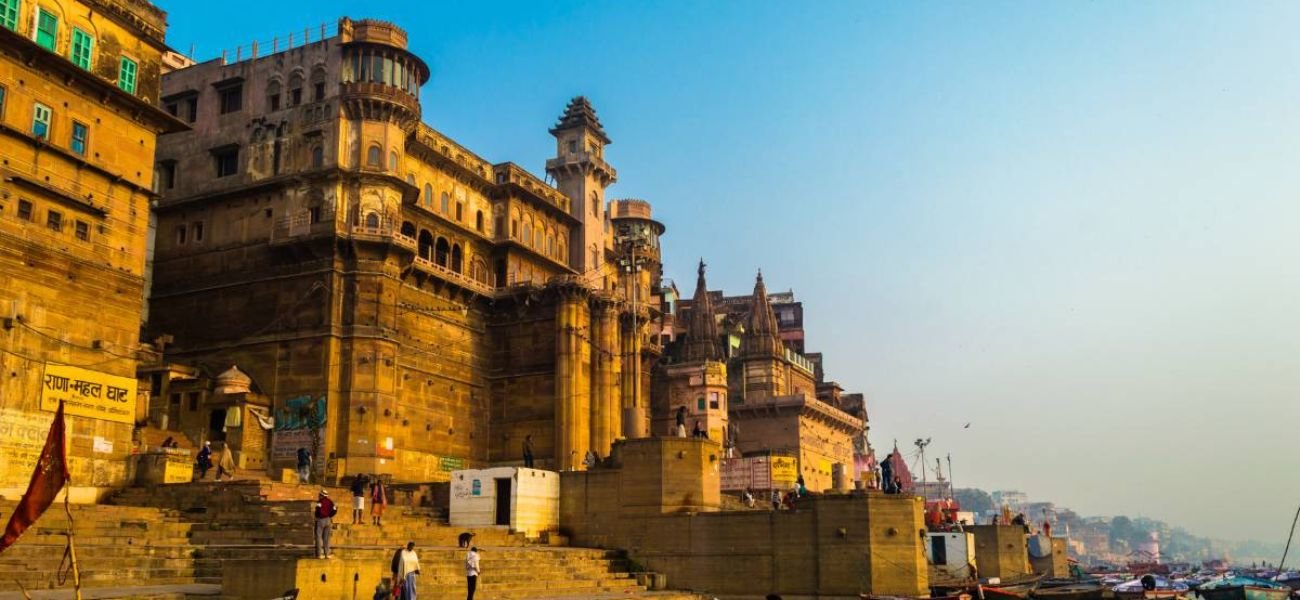
Varanasi is not a city that adjusts itself for visitors. It does not try to impress. It simply continues being what it has always been.
Life here is practical. Shops open early. Boats leave on time. Temple bells ring whether anyone is watching or not. Devotion is not scheduled around tourism. Tourism adjusts around devotion.
This matters when planning around Varanasi Ganga Aarti timings. The aarti is not an attraction added to the city. It is part of the city’s daily rhythm.
Once you understand that, everything feels easier.
What Ganga Aarti Actually Means
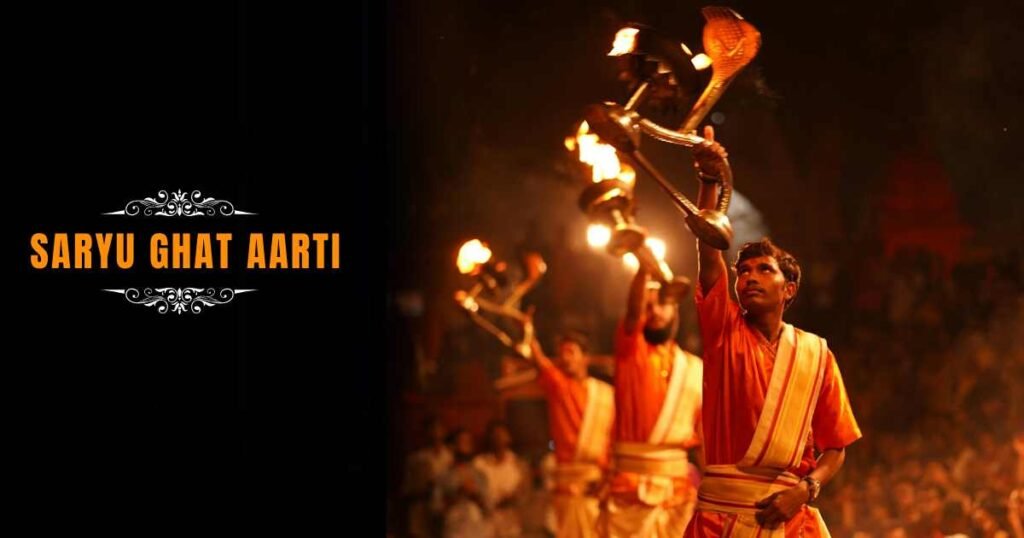
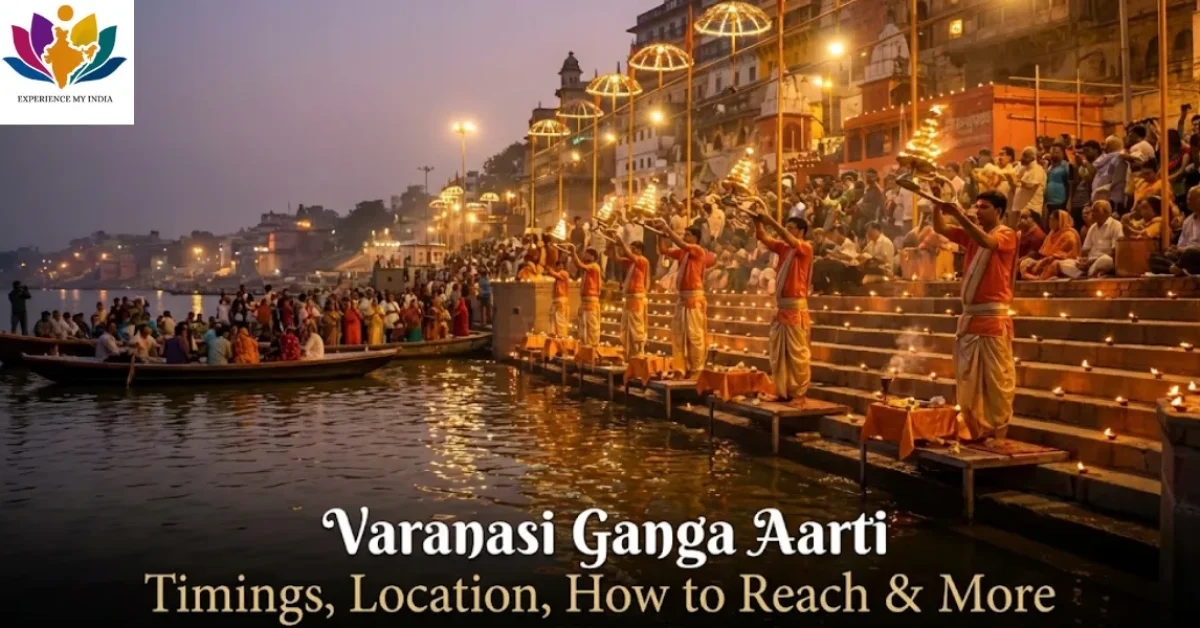
Ganga Aarti is a daily ritual offered to the river. Not as a show. Not as a festival-only event. Just as a regular act of respect.
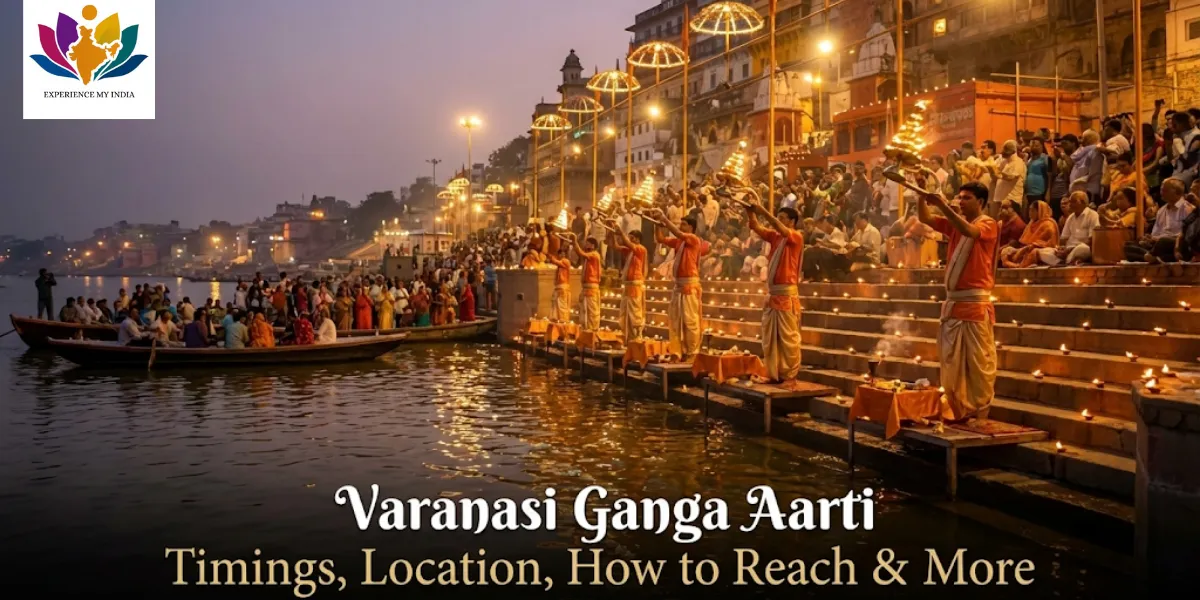
The priests move with focus, not urgency. Lamps are lifted carefully. Chants rise and fall in a rhythm that feels practiced, not performed.
Many first-time visitors expect noise and drama. What they usually find instead is stillness. Even in a crowd, there is a moment when talking stops on its own.
That is why reaching on time matters. Missing the beginning changes the feeling completely.
Dashashwamedh Ghat – The Main Evening Aarti
Dashashwamedh Ghat is where most people witness Ganga Aarti for the first time.
This is the main aarti of Varanasi. It is larger, more structured, and draws a significant crowd every evening. Boats begin lining up in the river well before the aarti starts. The steps fill faster than most people expect.
Dashashwamedh Ghat Ganga Aarti Timings (Approximate)
Summer:
Evening Aarti starts 7:00 PM
Winter:
Evening Aarti starts 6:00 PM
The aarti usually lasts about 45 minutes.
Reaching at least one hour early is strongly recommended. Not for photography, but simply to stand without stress.
People often search for the Varanasi Ganga Aarti schedule today, but the truth is that the timing follows the season, not the calendar. It rarely changes unexpectedly.
Assi Ghat – A Softer Experience
Assi Ghat offers a very different mood.
Where Dashashwamedh feels collective and intense, Assi Ghat feels personal and grounded. Locals attend regularly. Visitors sit on the steps. There is more space to breathe.
This ghat hosts both morning and evening aarti.
Assi Ghat Aarti Timings
Morning Aarti:
Summer: Morning 5:00 AM
Winter: Morning 5:30 AM
Evening Aarti:
Summer: Evening 6:30 PM
Winter: Evening 6:00 PM
The morning aarti at Assi Ghat is especially meaningful. The river is calm. The city is still waking up. Many people say this is when Varanasi feels most honest.
Dashashwamedh or Assi – Which One Should You Choose?
If you want to see the scale of devotion, Dashashwamedh Ghat makes sense.
If you want to feel the rhythm without pressure, Assi Ghat is a better choice.
Some visitors attend Dashashwamedh one evening and Assi Ghat another morning. That balance helps you understand both sides of the experience.
Planning around Evening Ganga Aarti time in Varanasi becomes easier once you know what kind of atmosphere you are comfortable with.
Nearby Temples and Their Importance
Varanasi is not organised neatly. Temples appear suddenly, often in the middle of everyday activity.
The most important temple for many visitors is the Kashi Vishwanath Temple. Darshan begins very early in the morning and continues till late evening with breaks in between.
Security procedures are strict, and waiting times vary. If you are planning temple visits and Ganga Aarti on the same day, time management becomes important.
Trying to do everything quickly usually leads to exhaustion.
Best Time to Visit Varanasi for Ganga Aarti
The most comfortable months are October to March.
Summers can be very hot, especially while waiting on the ghats. Monsoon adds beauty to the river, but humidity can be tiring.
Winter evenings are ideal. The temperature is pleasant, and the glow of the lamps feels sharper against the dark river.
Regardless of season, punctuality matters more than weather.
Rituals, Festivals, and Special Days
Dev Deepawali
This is when the ghats are lit with thousands of lamps. Ganga Aarti on this day feels extended and visually powerful. Crowds are heavy, and planning is essential.
Kartik Purnima
Early morning rituals and evening aartis both carry special importance. Many pilgrims visit specifically during this time.
Mahashivratri
The city becomes busier. Temple visits and aarti attendance require patience and realistic expectations.
On festival days, Varanasi Ganga Aarti timings may shift slightly, but the ritual itself remains the same.
Nearest Places to See Around the Ghats
Manikarnika Ghat carries deep spiritual significance and should be approached with sensitivity.
Tulsi Ghat feels quieter and more residential.
Sarnath offers a calm contrast to the intensity of the riverfront and is often visited on a separate day.
These places are best explored slowly, not squeezed into a single evening.
How to Reach Varanasi
By Car
Varanasi is connected by road to major cities in North India. Traffic inside the city can be slow, especially near the ghats.
By Train
Varanasi is a major railway hub with frequent trains. From the station, autos and taxis can take you close to the river areas.
Walking becomes unavoidable near the ghats.
By Air
The airport is located outside the city. Taxis are available, and travel time depends on traffic conditions.
Once you reach the river area, vehicles stop at a distance. Accepting this early makes the experience smoother.
Many travellers quietly rely on planning support from Ayodhya Varanasi Tourism to manage timings and movement so temple visits and Ganga Aarti do not overlap or feel rushed.
Practical Things to Keep in Mind
Arrive early.
Stand patiently.
Avoid loud conversations.
Do not expect seating unless arranged in advance.
Respect the space, even when it feels crowded.
These small choices change how the aarti feels more than anything else.
FAQs – Varanasi Ganga Aarti Timings
Q1. What are the Varanasi Ganga Aarti timings today?
They depend on the season. At Dashashwamedh Ghat, it starts around 7:00 PM in summer and 6:00 PM in winter.
Q2. How long does the Ganga Aarti last?
Around 45 minutes.
Q3. Is there a morning Ganga Aarti in Varanasi?
Yes, at Assi Ghat early in the morning.
Q4. Which ghat is better for first-time visitors?
Dashashwamedh for scale, Assi for calm.
Q5. Do the timings change every day?
No. They follow sunrise and sunset patterns.
Q6. Is seating available at the ghats?
Limited seating may be available if arranged early.
Q7. Can children attend the aarti?
Yes, but evening crowds can be heavy.
Q8. Is photography allowed during aarti?
Generally allowed, but discretion is expected.
Q9. Does rain stop the Ganga Aarti?
Rarely. It usually continues unless weather is extreme.
Q10. Is guided planning useful?
Yes, especially during festivals or short trips.
People often leave the ghats talking about the lamps, the chants, the sound of the bells.
What stays longer is quieter than all of that.
It is the moment when the river holds the light, and you realise you were not just watching a ritual.
You were standing inside a pause that the city takes every single evening.