
Some places invite company.
Ayodhya invites stillness.
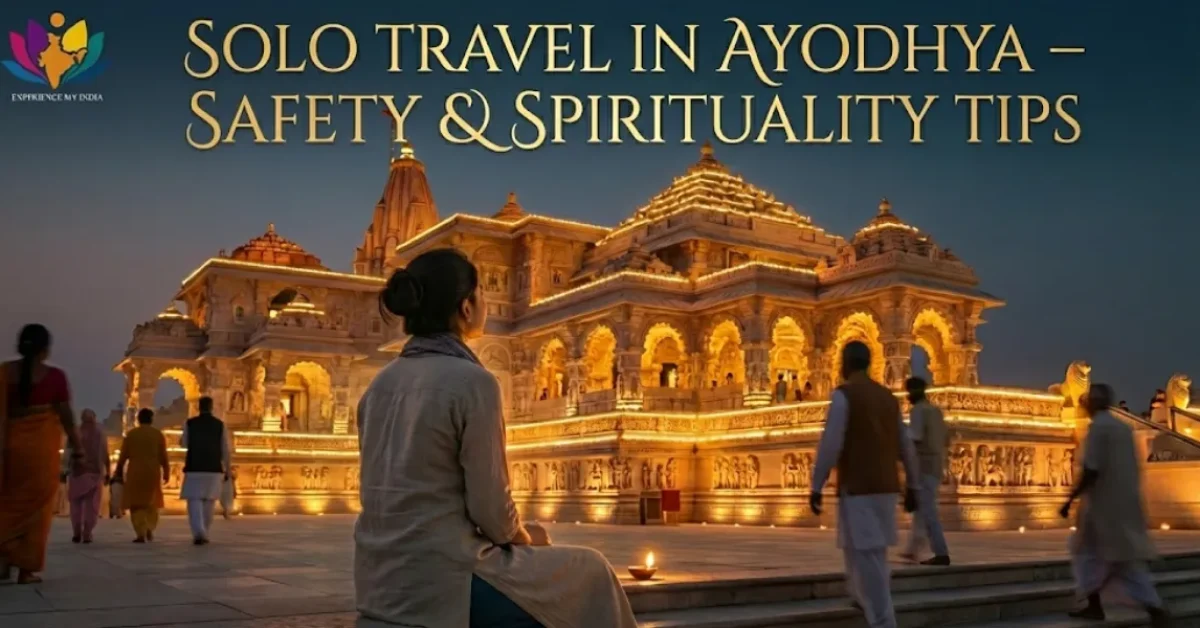
People rarely come here looking for entertainment. They come because something inside asks for quiet. A pause. A few days without explanation. That is why Solo Travel in Ayodhya feels different from traveling alone anywhere else. You don’t feel watched. You don’t feel rushed. And you don’t feel like you need to fill the silence.
This blog is written for those who plan to walk Ayodhya alone—not bravely, not dramatically, just honestly. With enough safety to relax, and enough understanding to let the spiritual side of the city speak on its own terms.
Understanding Ayodhya Before You Arrive Alone
Ayodhya is not a destination that performs.
Located in Ayodhya, it is one of the oldest continuously lived-in spiritual cities in the world. Life here does not pause for visitors. Temples open because it is time to open. Aartis happen because evening has arrived. Pilgrims come and go quietly.
For a solo traveler, this creates an unusual feeling. You are alone, but you are not isolated. The city does not ask who you are or why you came.
That is why Solo trip to Ayodhya often feels safer emotionally than louder, faster cities.
A Short History That Shapes the Solo Experience
Ayodhya is traditionally believed to be the birthplace of Lord Rama. Its presence in the Ramayana and other ancient texts gives the city a continuity that is felt even by those who are not deeply religious.
This is not history kept in museums.
It is history lived daily.
For solo travelers, that matters. You are not moving through a curated space. You are moving through a living one. And when you walk alone here, you are simply another pilgrim—nothing more, nothing less.
Is Ayodhya Safe for Solo Travelers?
This question deserves a calm, honest answer.
Yes—Ayodhya is generally safe for solo travelers, including women and senior visitors. The city is accustomed to pilgrims traveling alone. People mind their own rituals. Police presence around major temples and ghats is steady, not aggressive.
Still, Safe solo travel in Ayodhya comes from awareness, not assumptions.
Simple habits help:
- Stay near temple zones or river ghats
- Avoid wandering into empty areas late at night
- Dress modestly and comfortably
- Use daylight hours for exploration
Ayodhya feels protective rather than permissive. Respecting that balance keeps solo travel smooth.
Best Time to Visit Ayodhya for Solo Travelers
Timing changes the tone of your experience.
October to March
This is the gentlest season. Cool mornings, soft evenings, longer darshan hours. Ideal for walking and sitting quietly.
April to June
Summer is intense. Solo travelers should plan temple visits at sunrise and rest during afternoons.
July to September
Monsoon brings greenery and fewer tourists. Humidity increases, but the city feels slower and more reflective.
Festival Periods
Ram Navami and Diwali transform Ayodhya completely. Devotion fills every corner. For some solo travelers, this is powerful. For others, overwhelming.
If this is your first Spiritual solo journey in Ayodhya, quieter months allow the city to unfold naturally.
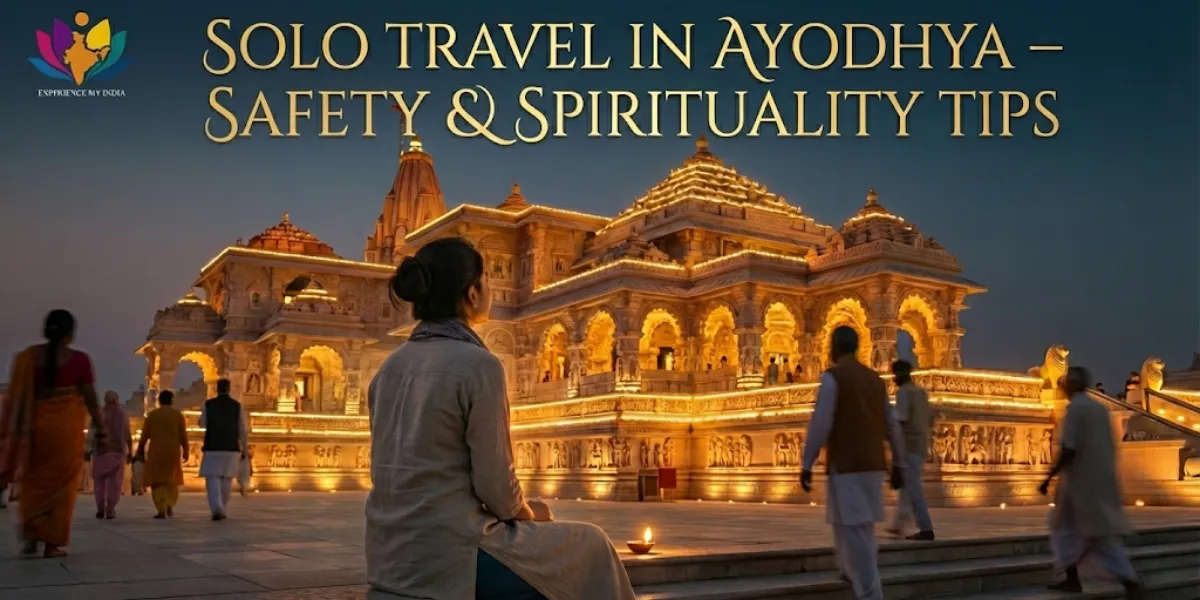
Temples That Feel Right When You Are Alone
Shri Ram Janmabhoomi
This is the spiritual heart of the city. Darshan is structured and security-managed. Early morning visits feel calmer and more focused.
Hanuman Garhi
Climbing the steps alone often feels symbolic. Many solo travelers pause longer here, without knowing why.
Kanak Bhawan
Quiet, intimate, and welcoming. Ideal for sitting without agenda.
Saryu Ghat
Evening aarti by the river is grounding. Sitting alone here feels natural, never awkward.
Temple timings change with rituals and seasons. Asking locals is part of the experience.
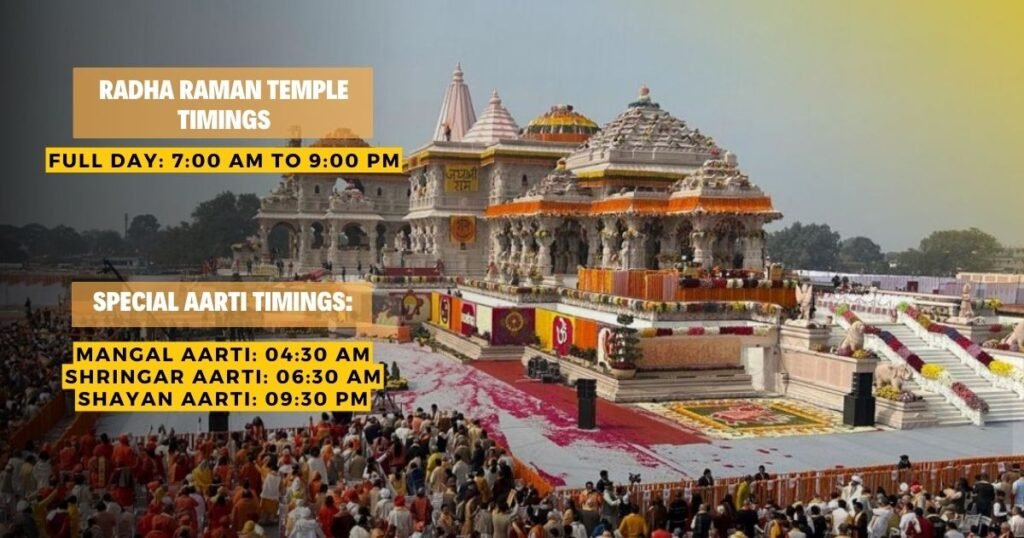
Rituals, Aarti, and Daily Spiritual Rhythm
Ayodhya does not separate ritual from routine.
Morning bells mark the beginning of the day.
Afternoons slow naturally.
Evenings gather near the river.
For solo travelers, participation does not require instruction. Lighting a lamp, sitting quietly, listening to chants—these moments don’t demand belief. They invite presence.
This is where Solo Travel in Ayodhya becomes inward rather than observational.
Nearest Places You Can Visit Alone
Guptar Ghat
Believed to be where Lord Rama took jal samadhi. Quiet, reflective, and best visited alone.
Faizabad
Historically connected to Ayodhya. Less crowded, slower streets, gentle pace.
Distances are short, and solo day trips feel manageable without exhaustion.
How to Reach Ayodhya When Traveling Alone
By Air
Ayodhya airport has limited flights. Many solo travelers prefer flying to Lucknow.
Lucknow to Ayodhya distance: approx. 135 km.
By Train
Ayodhya is well-connected by rail. Trains are reliable and commonly used by solo pilgrims.
By Road
Buses and taxis run frequently from Lucknow and nearby cities. Daytime travel feels most comfortable.
Choosing simple routes reduces decision fatigue.
Where Solo Travelers Usually Stay
- Small hotels near temple areas
- Ashrams offering basic, clean rooms
- Guest houses close to ghats
Staying close to spiritual centers reduces travel stress and feels safer.
Many solo visitors appreciate quiet guidance from Ayodhya Varanasi Tourism when choosing areas that feel calm rather than crowded.
Cultural Awareness That Helps Solo Travelers
Ayodhya responds well to humility.
Dress modestly.
Avoid loud phone conversations near temples.
Be discreet with photography.
When you blend in, the city opens gently.
The Role of Ayodhya Varanasi Tourism for Solo Travelers
Solo does not mean unsupported.
Having a local point of contact helps with:
- Temple timing updates
- Festival crowd awareness
- Transport clarity
Ayodhya Varanasi Tourism supports solo travelers quietly, without turning the journey into a managed tour. The solitude remains intact.
A Natural Solo Day in Ayodhya
- Sunrise temple visit
- Simple breakfast
- Midday rest or journaling
- Evening Saryu aarti
- Slow walk back
Days don’t need filling here. They need space.
FAQs: Solo Travel in Ayodhya
1. Is Solo Travel in Ayodhya safe
Yes, especially near temples and ghats.
2. Is Ayodhya suitable for solo women travelers
Yes, with basic awareness.
3. What is the best season for solo travel
October to March.
4. Are temples open every day
Yes, with variable timings.
5. Can I attend rituals alone
Yes, it is very common.
6. Is English understood in Ayodhya
Basic English is understood near major temples.
7. How many days are enough for solo travel
2–3 days feel complete.
8. Are festivals good for solo visitors
Only if you are comfortable with crowds.
9. Is public transport safe during the day
Yes, generally safe and reliable.
10. Who can help if I need guidance
Local experts like Ayodhya Varanasi Tourism.