

There are cities that sleep and cities that wake, but Banaras never does either — it simply exists, eternal and awake like a flame that refuses to fade.
It is a city that does not speak loudly; it hums.
The ringing of temple bells merges with the sound of splashing rivers, and the smell of ghee lamps wafts through the air like memories.
Banaras is not a city that you visit — it is a city you submit to.
Every pilgrim, every tourist, every being that walks on these ghats feels the same gentle magnetic force – the call to halt, to listen, to recall.
And in the halt, the city reveals itself – one story at a time, one candle at a time.
Ayodhya Varanasi Tourism welcomes you to experience this city through its soul – to see, yes but also to feel.
Here are the top 10 places for Sightseeing in Banaras that every heart should visit at least once.
1. Kashi Vishwanath Temple – The City’s Beating Heart
If Banaras were a body, then Kashi Vishwanath would surely be the heart. Dedicated to Lord Shiva, it stands out golden and glowing amidst narrow lanes that look as if they twist towards God. People walk barefoot, with flowers and faith.
The air hums with mantras, and when the bells ring, the sound feels alive — like the earth itself is praying.
The temple, rebuilt through centuries of devotion and courage, holds one of the twelve Jyotirlingas.
When you stand there — folded hands, eyes closed — you do not feel small. You feel timeless.
No Sightseeing in Banaras is complete without bowing your head here, even once.
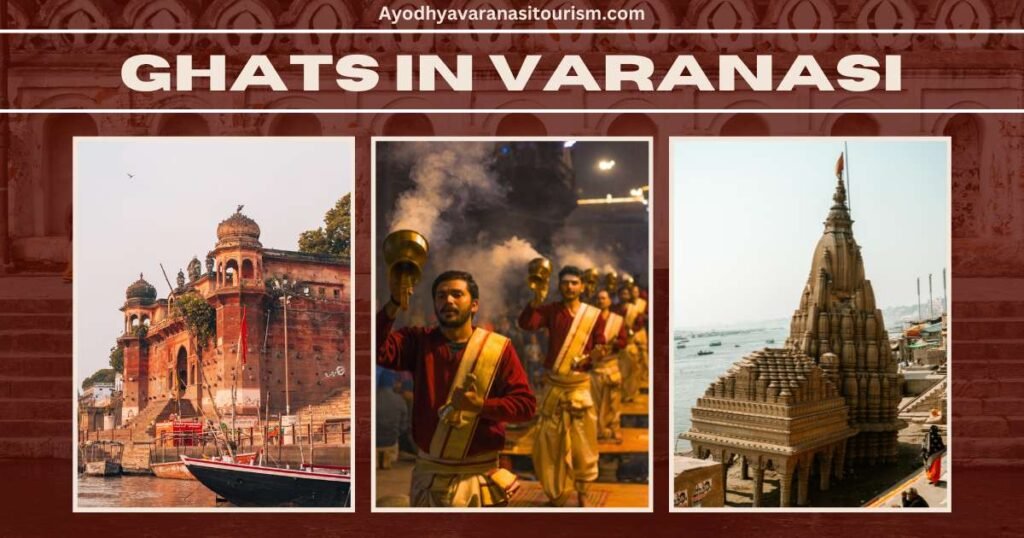
2. Dashashwamedh Ghat – The Ganga’s Golden Theatre
Each night, when the sun slips behind the western banks and disappears, the Dashashwamedh Ghat becomes a spectacle of light. Priests dressed in saffron robes gather, lamps in hand, and conch shells blow as mantras chant in unison. It feels as if the sky is listening.
This is the beloved Ganga Aarti; when you see it, you are seeing devotion turned to visible form.
Thousands of people gather — tourists, pilgrims, wanderers, etc. — but the experience is so personal. When you let go of a little diya, floating away in flame, it feels like you are sending away a prayer into the river.
This is not just another one of the world famous places to visit in Varanasi — it is the pulse of the city, the merging of faith and an expression of beauty.
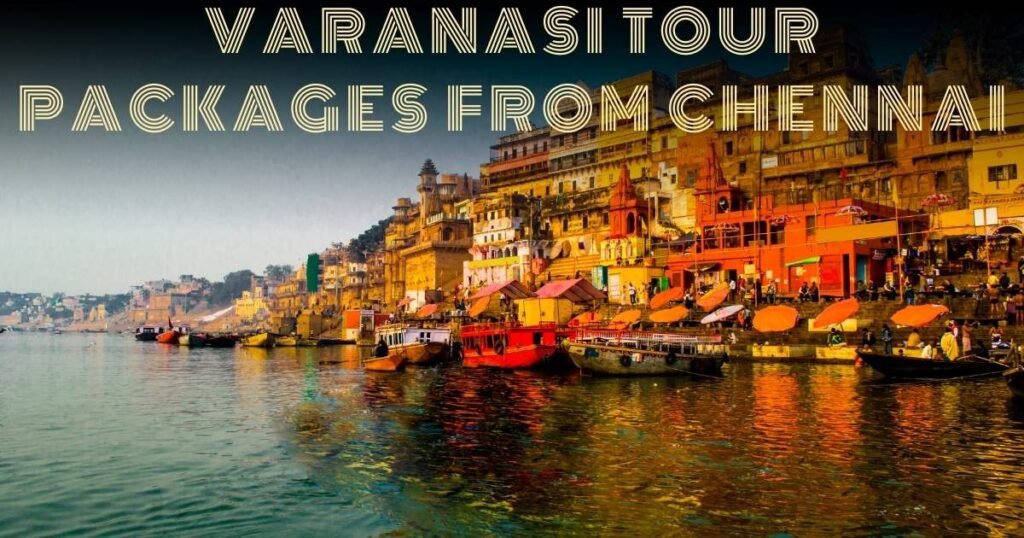
3. Assi Ghat – Where the City Breathes First
At dawn, when the fog still lingers and the world has not yet begun to speak, go to Assi Ghat.
Here, the Ganga shines like liquid gold.
Pilgrims stand in rows, dipping into the water as the sun rises, while sadhus sit cross-legged in silence.
Tea sellers call softly; children chase pigeons through the mist.
Assi Ghat is where Banaras wakes up — not in noise, but in song.
It is where the traveler becomes part of the city’s morning prayer.
And when you sit there with a cup of chai in your hand, watching boats sway gently in the light, you understand why this city has been worshipped, not just visited.
4. Sarnath – The City’s Quiet Mind
About ten kilometers from Banaras lies Sarnath, the land where Lord Buddha first turned the Wheel of Dharma.
It is hard to describe what peace feels like, but here, you will know.
The air carries no noise, only stillness.
Ancient stupas rise silently, broken yet powerful, surrounded by green gardens and meditation paths.
Visit the Dhamek Stupa, walk through the ruins of monasteries, and spend time in the Sarnath Museum, which holds the famous Lion Capital — now India’s national emblem.
Among all the top attractions and heritage sites in Banaras, Sarnath stands as a reminder that silence, too, can teach.
5. Manikarnika Ghat – The Fire That Never Sleeps
Banaras does not hide death; it accepts it, embraces it, gives it dignity.
At Manikarnika Ghat, the sacred fire burns day and night, never extinguished for centuries.
Here, life and death meet face to face — without fear, without disguise.
People come not to mourn but to release.
The smoke rises like prayer, and you realise — the end here is not an end, but a beginning.
To stand here is to understand why this city is called Mahasmashan, the Great Cremation Ground — not of bodies, but of illusions.
It is not an easy sight, but it is a true one.
And Banaras has always been honest with those who seek truth.

6. Banaras Hindu University – A Temple of Knowledge
Banaras Hindu University (BHU) is situated on a sprawling 1000-acre campus and represents one of India’s pre-eminent educational institutions.
Nestled among the trees and quiet roadways on campus is the New Vishwanath Temple, which is modeled after the original.
Its pristine white marble reflects sunlight, while the chanting heard within possesses an air of ageless vitality.
Students ride bicycles on paths, birds nest in banyan trees, and one senses the energetic balance that often exists between intellect and devotion.
This is the breath of contemporary Banaras, remaining spiritual, yet exhibiting an awareness of the world.
7. Tulsi Manas Temple – Where Words Became Worship
Time stands still at Tulsi Manas Temple.
This is where the poet-saint Goswami Tulsidas created the Ramcharitmanas, transforming the story of Rama into poetry.
The walls are inscribed with verses, and the courtyard is filled with quiet reading and reflection.
When the wind rushes through the carved arches, it’s as if the words are alive.
Every devotee who visits finds refuge here—not because of extraordinary beauty, but because of the grace.
8. Bharat Kala Bhavan – The Museum of Memory
Located inside BHU, Bharat Kala Bhavan holds the art and history of centuries.
Sculptures, paintings, manuscripts, jewelry, and textiles — each telling a piece of India’s long, unfolding story.
Here you see the faces of gods carved in stone, the tenderness of ancient miniatures, and the rhythm of tradition preserved in craft.
It is a museum, yes, but it feels like a temple of heritage — quiet, luminous, and deeply Indian.
For lovers of culture, this is among the most meaningful stops in any Banaras temple and ghat sightseeing tour.
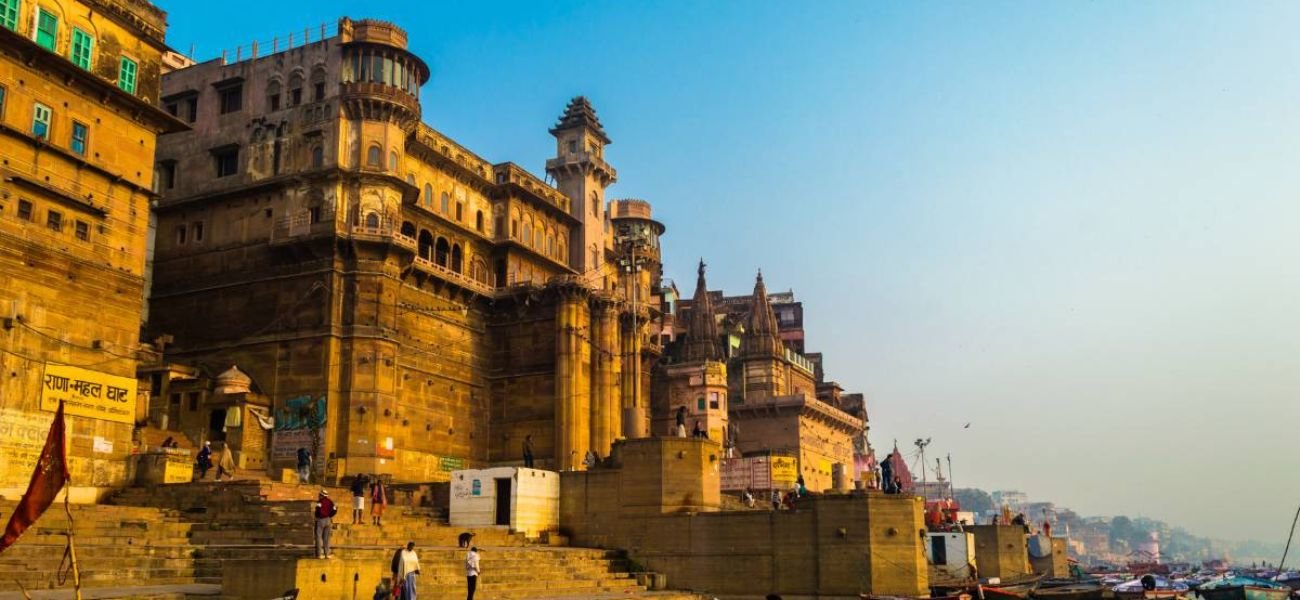
9. Ramnagar Fort – Where Time Sleeps by the River
On the opposite side of the Ganga, on the eastern side, is Ramnagar Fort, standing vigilant over the city it has been watching over for its lifetime.
The fort was constructed in the 18th century and once served as the residence of the kings of Banaras.
Its courtyards resonate with the echoes of the past — vintage cars, royal portraits, and clocks that remain still in their slow passage of time.
From its walls, the river flows endlessly towards the city, neatly summarizing what Banaras embodies: antiquity, beauty, and continuity.
In evening, the fort shines gently, almost as if the past does not want to slip away.
10. Sankat Mochan Hanuman Temple – The Temple of Trust
Every city has one place that listens — truly listens.
In Banaras, that place is Sankat Mochan Hanuman Temple.
People come here for all kinds of reasons — to pray for health, courage, or simply to say thank you.
The air smells of sweets and flowers, the sound of Hanuman Chalisa fills the hall, and faith feels real here — warm, humble, human.
It is said that any trouble shared here becomes lighter.
And when you walk out, you do feel lighter — as if someone has quietly understood you.
Why Banaras Feels Different
Banaras is not a city you see; it is a city you meet.
It looks at you, it tests you, and finally, it accepts you.
The temples, the ghats, the people — all speak the same language: surrender.
Every Sightseeing in Banaras journey eventually becomes a journey inward.
With Ayodhya Varanasi Tourism, we help you experience this truth — not through haste, but through patience.
Each tour is crafted not to cover places, but to uncover moments.
FAQs – Sightseeing in Banaras
1. What is the best time to visit Banaras?
October to March — cool weather, clear skies, and perfect for temple visits and ghats.
2. Which are the must-visit temples in Banaras?
Kashi Vishwanath, Sankat Mochan Hanuman, Tulsi Manas, and New Vishwanath Temple at BHU.
3. What are the best ghats for sightseeing?
Dashashwamedh, Assi, and Manikarnika Ghats are the most iconic.
4. Can I visit Sarnath in one day?
Yes, Sarnath is only a short drive from Banaras and perfect for half-day trips.
5. Are boat rides available on the Ganga?
Yes, sunrise and sunset rides offer unforgettable views of the ghats.
6. What are the top attractions and heritage sites in Banaras?
Ramnagar Fort, Bharat Kala Bhavan, Sarnath, and BHU.
7. Is Banaras safe for solo travelers?
Yes, it’s safe and welcoming, especially with guided local tours.
8. Can older travelers visit easily?
Yes, we provide comfortable transport and assistance for senior visitors.
9. How long should I stay in Banaras?
At least 2–3 days to truly experience the ghats, temples, and culture.
10. Why choose Ayodhya Varanasi Tourism?
Because we do not just plan itineraries — we shape experiences with care and faith.
In the End
You don’t return from Banaras as the same person.
Something within you quiets down.
The river keeps flowing, but a part of its calm stays behind in your heart.
And in moments of noise and rush, you remember — there exists a city where eternity still breathes beside the water.
That is the gift of Sightseeing in Banaras — it doesn’t show you the divine; it lets you feel divine.
And Ayodhya Varanasi Tourism is only your companion in that journey — guiding you, gently, through a city that has never forgotten the meaning of peace.