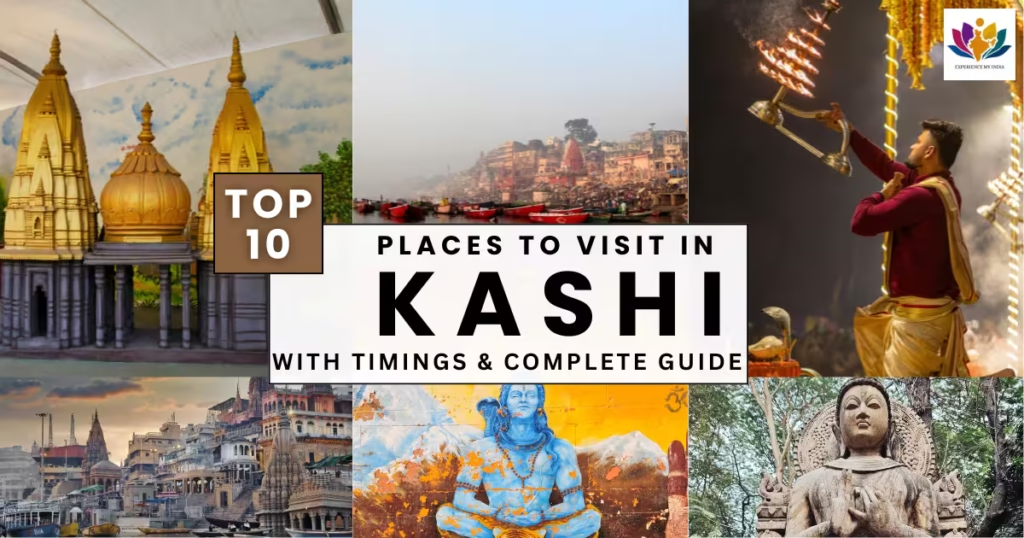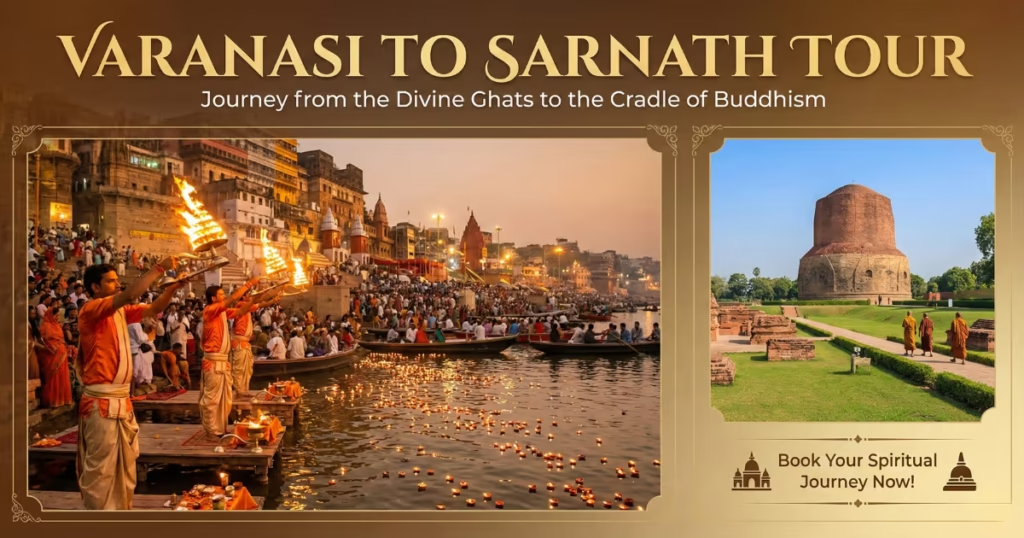

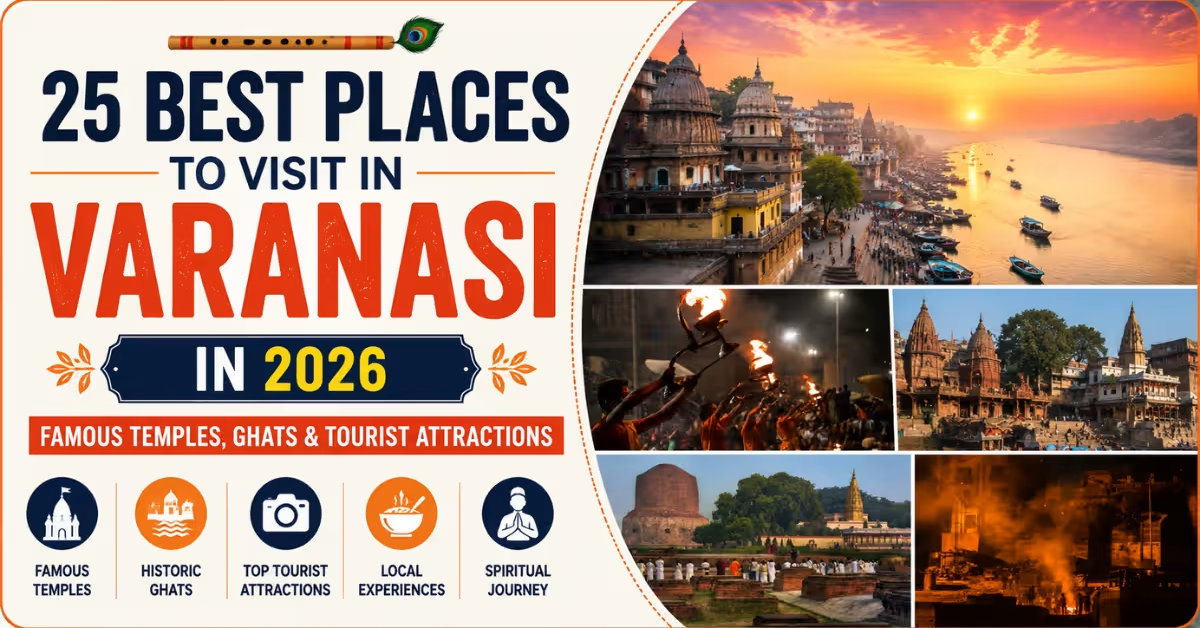
The 25 best places to visit in Varanasi span iconic ghats, ancient temples and nearby Sarnath. The absolute must-visit are Kashi Vishwanath Temple (one of the 12 Jyotirlingas), Dashashwamedh Ghat (evening Ganga Aarti at 6:30 PM), Manikarnika Ghat (eternal cremation fires), Assi Ghat (sunrise Subah-e-Banaras) and Sarnath (10 km, Buddha’s first sermon site). Varanasi takes 2-3 days to cover well. Experience My India tours from ₹2,999 per person. WhatsApp +91-7302265809.
One of the World’s Oldest Cities – and One of Its Most Overwhelming
Varanasi (also known as Kashi and Banaras) is one of the oldest continuously inhabited cities in recorded history. It sits on the banks of the Ganga in Uttar Pradesh and has been a centre of Hindu pilgrimage, learning and commerce for well over 3,000 years. The city is mentioned in the Rigveda and its temples, ghats and sacred geography are embedded in virtually every major tradition within Hinduism.
The challenge for any visitor is not finding things to do – Varanasi is dense with significant sites. The challenge is sequencing them correctly, understanding what each place is best experienced for and avoiding the planning errors that turn a profound pilgrimage into an exhausting dash between locked temple gates and crowded ghat lanes.
I am Gurudutt, born and raised in Braj Bhoomi and founder of Experience My India. Since 2018, our team has guided over 50,000 pilgrims through Varanasi across all seasons and festivals. This guide covers all 25 best places to visit in Varanasi, organised by category, with specific timings, entry details and sequencing advice built in.
All 25 Places at a Glance
| # | Place | Category | Entry | Best Time |
| 1 | Dashashwamedh Ghat | Ghat | Free | 5:45 PM (for 6:30 PM Aarti) |
| 2 | Assi Ghat | Ghat | Free | 5:00 AM (Subah-e-Banaras) |
| 3 | Manikarnika Ghat | Ghat | Free | 5:30-7:30 AM |
| 4 | Namo Ghat | Ghat | Free | Daytime |
| 5 | Harishchandra Ghat | Ghat | Free | Morning |
| 6 | Chet Singh Ghat | Ghat | Free | Morning |
| 7 | Kedar Ghat | Ghat | Free | Morning |
| 8 | Man Mandir Ghat | Ghat | Free | Daytime |
| 9 | Scindia Ghat | Ghat | Free | Morning (boat view) |
| 10 | Panchganga Ghat | Ghat | Free | Sunset (winter) |
| 11 | Kashi Vishwanath Temple | Temple | Free | Weekday before 7 AM |
| 12 | New Vishwanath Temple (BHU) | Temple | Free | Daytime |
| 13 | Sankat Mochan Hanuman Temple | Temple | Free | Morning |
| 14 | Kaal Bhairav Temple | Temple | Free | Morning |
| 15 | Durga Kund Temple | Temple | Free | Morning |
| 16 | Tulsi Manas Temple | Temple | Free | Daytime |
| 17 | Nepali Temple (Lalita Ghat) | Temple | Free | Morning |
| 18 | Bharat Mata Mandir | Museum-Temple | Free | 7 AM-5:30 PM |
| 19 | Sarnath (Dhamek Stupa) | Buddhist Heritage | ₹25-₹50 | Morning |
| 20 | Sarnath Archaeological Museum | Museum | ₹25-₹300 | 9 AM-5 PM |
| 21 | Ramnagar Fort | Fort / Museum | ₹15 | 10 AM-5 PM |
| 22 | Banaras Hindu University (BHU) | Campus / Culture | Free | Daytime |
| 23 | Bharat Kala Bhavan | Museum | ₹15-₹150 | 10 AM-5 PM |
| 24 | Vishwanath Gali | Market | Free | Morning / Evening |
| 25 | Godowlia Chowk & Surrounding Markets | Market | Free | Evening |
Experience My India sequences these into 1, 2 and 3-day Varanasi itineraries. Call +91-7302265809 to book.
Book Your Ayodhya Varanasi Tour Package
Iconic Ghats Along the Ganga (1-10)
1. Dashashwamedh Ghat
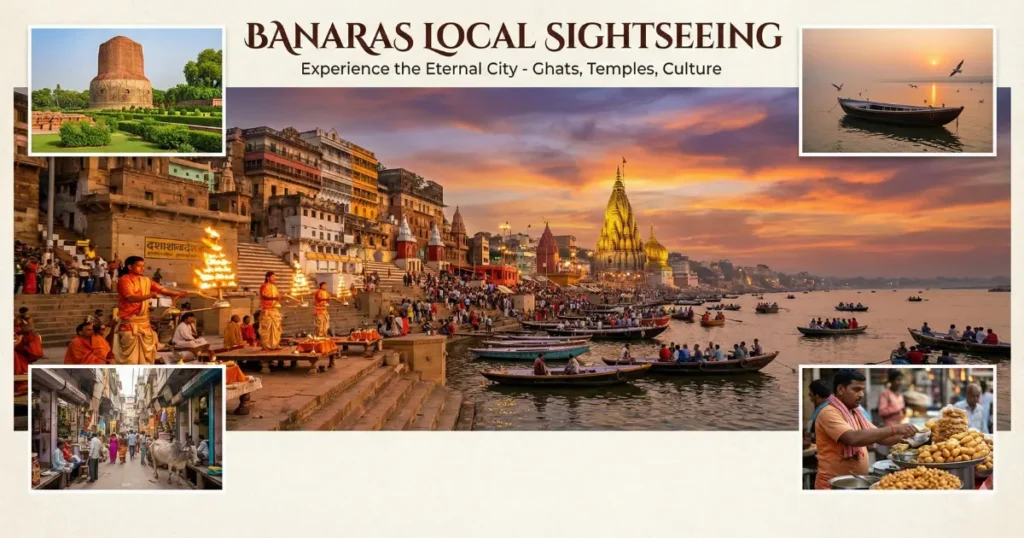
Varanasi’s most famous ghat and the site of the world’s most photographed fire ceremony – the evening Ganga Aarti. Seven priests perform the synchronised fire ritual simultaneously, with bells, conch shells and brass lamps, before a crowd that fills the ghat steps and anchored boats. Arrive by 5:45 PM in summer or 6:15 PM in winter for a front-row ghat position.
Ganga Aarti timing: Approximately 6:30 PM (summer) / 7:00 PM (winter). Duration: 45 minutes.
2. Assi Ghat
The southernmost major ghat and the most culturally active in the morning. The Subah-e-Banaras programme (5:00-7:00 AM) combines yoga, Vedic chanting and classical music as the sun rises over the Ganga. A sunrise boat departing from Assi at 5:30 AM is the most-recommended Varanasi morning experience. Evening aarti is smaller and more intimate than Dashashwamedh.
3. Manikarnika Ghat
The primary Hindu cremation ghat where fires burn continuously, 24 hours a day, 365 days a year. Between 100 and 300 cremations occur daily. Photography is strictly prohibited at all times. Approaching with a guide who provides the theological context (moksha, Dom caste eternal flame) converts a potentially overwhelming encounter into a genuinely illuminating one. Best visited on foot from Dashashwamedh (1 km north, 15-20 min walk) or from a boat at a respectful river distance.
4. Namo Ghat (Khidkiya Ghat)
A newly renovated, modern and accessible ghat best known for its large metallic Namaste sculpture at the riverfront. Significantly less crowded than the central ghats, with wide, clean stone steps and good river views. A good morning walking stop between Assi Ghat and the older central ghats.
5. Harishchandra Ghat
The second major cremation ghat – older in some historical accounts than Manikarnika – named after King Harishchandra who is said to have worked here as a cremation ground attendant during his ordeal of truth and righteousness. Quieter than Manikarnika and carries a more solitary atmosphere. Photography prohibited at active pyre areas.
6. Chet Singh Ghat
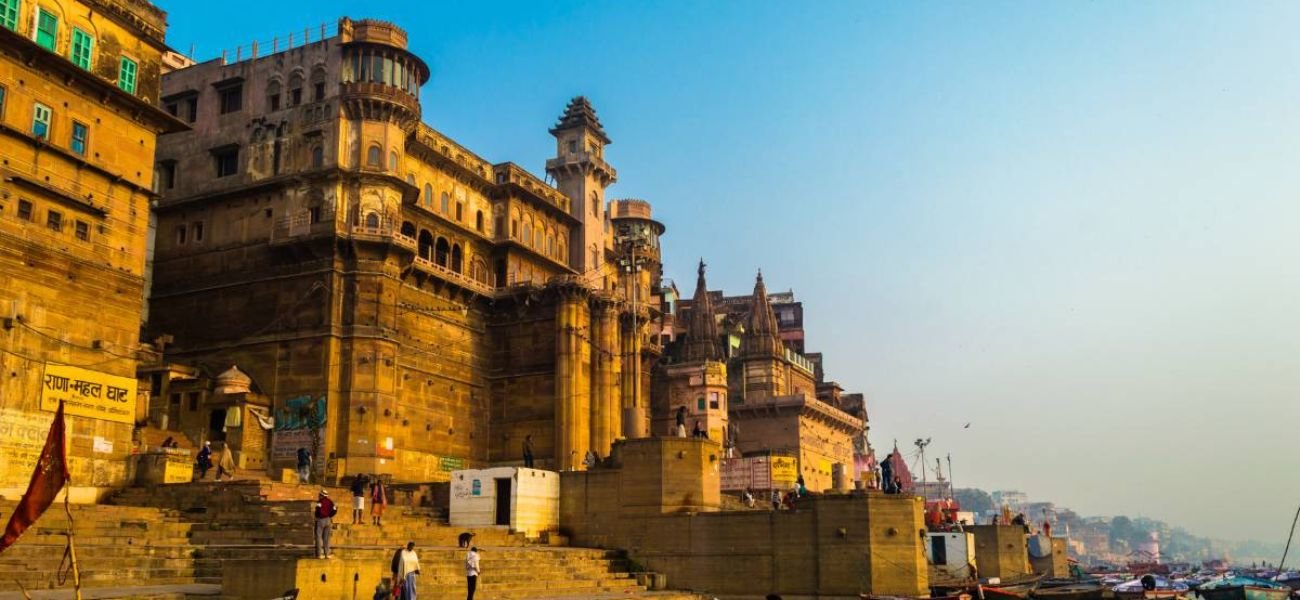
A ghat with striking fort-like palace architecture directly at the water’s edge. Historically significant as the site where Chait Singh, the Raja of Banaras, resisted the British East India Company in 1781. The building’s dramatic profile is particularly photogenic in morning light.
7. Kedar Ghat
A ghat characterised by its distinctive striped paintwork (white and red/orange) and its deep significance for South Indian pilgrims – the Kedareshwar Shiva temple here has strong connections to the South Indian devotional tradition. Morning puja at Kedar Ghat attracts a consistent early-morning congregation.
8. Man Mandir Ghat
A ghat notable for what sits above it rather than on it – the 18th-century Jantar Mantar astronomical observatory built by Maharaja Jai Singh II of Jaipur, one of five Jantar Mantars in India. Most visitors walking the lower ghat steps never look up to the observatory above. The ghat itself features excellent Rajput architectural detail.
9. Scindia Ghat
One of the most visually striking ghats – the Shiva temple here has partially sunk into the river over the centuries and now leans at a dramatic angle directly above the Ganga. The combination of the tilted temple, old stone steps and river reflections makes this one of the most photographed architectural details on the entire ghat circuit. Best viewed from a boat.
10. Panchganga Ghat
The theological confluence point of five sacred rivers (Ganga, Yamuna, Saraswati, Kirana and Dhutpapa). This is not a visible physical confluence but a site of concentrated Puranic significance. A distinctive winter evening tradition involves lighting lamps on tall bamboo poles – a practice unique to this ghat among Varanasi’s 84. The prominent riverside Alamgir Mosque (built by Aurangzeb) stands directly above this ghat.
Book Your Sugam Darshan and Rudrabhishek at Kashi Vishwanath
Famous Temples & Shrines (11-18)
11. Shri Kashi Vishwanath Temple
The most important Shiva temple in Varanasi – and one of the 12 Jyotirlingas (the most sacred Shiva shrines in Hinduism, where Shiva is believed to be present in the form of a column of light). The Kashi Vishwanath Temple was rebuilt in 1780 by Ahilyabai Holkar after the original was destroyed by Aurangzeb.
The Kashi Vishwanath Corridor (opened 2021) has significantly upgraded access – a new multi-level complex connects the temple directly to the Mana Ganga ghat front, improving crowd flow.
Timings: Open daily from 3:00 AM to 11:00 PM (with specific aarti windows at 3 AM, 12 PM, 7 PM, 9 PM). Entry: Free. Note: No cameras, phones or non-Hindu religious items allowed inside the main sanctum.
12. New Vishwanath Temple (Birla Temple – BHU)
Located inside the Banaras Hindu University campus, this white marble temple was built by the Birla family and is one of the tallest temple towers in India. It serves as a second Kashi Vishwanath for visitors who find the main temple too crowded. The BHU campus setting – spacious, tree-lined, away from the old city lanes – makes this a genuinely different Varanasi experience.
Timings: 6:00 AM-12:00 PM and 1:00 PM-9:00 PM. Entry: Free.
13. Sankat Mochan Hanuman Temple
Founded by the poet-saint Tulsidas, the Sankat Mochan Hanuman Temple is among the most actively visited temples in Varanasi – “Sankat Mochan” means “remover of difficulties.” The temple sees continuous devotional activity throughout the day. Located near BHU, approximately 4 km from Dashashwamedh Ghat.
Timings: 5:00 AM-10:00 PM. Entry: Free. Note: Shoes removed outside.
14. Kaal Bhairav Temple
The “Kotwal” (guardian/police chief) of Kashi – Kaal Bhairav is the fierce guardian deity of Varanasi. The tradition holds that no one can stay in Varanasi without Kaal Bhairav’s permission, which is why pilgrims visit this temple to seek that permission. The temple is distinct from most Shiva temples in its specific fierce form of worship and the unique offering of alcohol as prasad.
Timings: 5:00 AM-10:00 PM. Entry: Free.
15. Durga Kund Temple
Immediately recognisable by its multi-tiered red exterior – distinctive among Varanasi’s generally white or sandstone temples. Adjacent to the temple is the Durga Kund (sacred pond), which gives the area its name. Located near Sankat Mochan, 4 km from Dashashwamedh.
Timings: 5:30 AM-12:00 PM and 2:00 PM-9:00 PM. Entry: Free.
16. Tulsi Manas Temple
A peaceful white marble temple built in 1964 at the site where the poet-saint Tulsidas is believed to have composed the Ramcharitmanas – the Hindi version of the Ramayana that is the most widely read devotional text in North India. The temple walls are inscribed with verses from the Ramcharitmanas. Relatively calm compared to the busier pilgrimage temples.
Timings: 5:30 AM-12:00 PM and 3:30 PM-9:00 PM. Entry: Free.
17. Nepali Temple (Kathwala Mandir – Lalita Ghat)
A 19th-century pagoda-style temple at Lalita Ghat, built by the Nepalese royal family (King Rana Bahadur Shah, completed by his son Vikram Shah). The only pagoda-style temple on the Varanasi ghat circuit, built using sacred wood imported from Nepal with intricate erotic carvings – earning it the informal name “Mini Khajuraho.” Houses a replica of Kathmandu’s Pashupatinath lingam.
Timings: 4:00 AM-12:00 PM and 1:00 PM-9:00 PM. Entry: Free.
18. Bharat Mata Mandir (Mother India Temple)
A completely unique institution – the Bharat Mata Temple does not house any deity. Instead, its centrepiece is a massive, precisely carved marble relief map of undivided India (as it existed before the 1947 Partition), showing mountains, plains, rivers and seas in three-dimensional marble relief. The temple was inaugurated by Mahatma Gandhi in 1936. One of the most architecturally and historically unusual temples in India.
Timings: 7:00 AM-5:30 PM. Entry: Free. Distance: 1.5 km from Varanasi Junction.
View Our 2 Days Varanasi Tour Package
Heritage, Museums & Cultural Sites (19-25)
19. Sarnath – Dhamek Stupa
Located 10 km north of Varanasi, Sarnath is where Lord Buddha gave his first sermon (the Dhammacakkappavattana Sutta) after attaining enlightenment at Bodh Gaya. The Dhamek Stupa – a 43-metre cylindrical stone monument built in 500 CE on the site of the sermon – is one of the most significant Buddhist monuments in the world.
Timings: 6:00 AM-5:00 PM. Entry: ₹25 (Indian), ₹300 (foreign). Distance: 10 km from Varanasi; 30-45 min by auto/cab (₹200-₹400).
20. Sarnath Archaeological Museum
Within the Sarnath complex – the museum houses the Lion Capital of Ashoka (3rd century BC), which is India’s national emblem. The museum also contains significant Buddhist sculptures, Gupta-period artworks and artefacts from the site’s excavations.
Timings: 9:00 AM-5:00 PM (closed Friday). Entry: ₹25 (Indian), ₹300 (foreign).
21. Ramnagar Fort
An 18th-century sandstone fort on the eastern Ganga bank, the royal residence of the Maharaja of Banaras. The Ramnagar Fort Museum contains vintage cars, weaponry, ivory items, palanquins and astronomical clocks. Accessible by boat from Dashashwamedh Ghat (10 min) or by road via the Malviya Bridge.
Timings: 10:00 AM-5:00 PM (closed Friday). Entry: ₹15 (Indian), ₹150 (foreign).
22. Banaras Hindu University (BHU)
One of the largest residential university campuses in Asia – a world unto itself. The BHU campus has wide, tree-lined avenues that feel remarkably different from the dense old city lanes. Within the campus: New Vishwanath Temple, Bharat Kala Bhavan museum and extensive gardens. A good afternoon stop for visitors who want space and calm after a morning in the old city.
Timings: Campus always open; individual attractions have their own hours.
23. Bharat Kala Bhavan
The art and archaeological museum within BHU – one of the most significant museum collections in Varanasi, with over 1,00,000 artefacts including miniature paintings, Mughal-era artworks, local Banaras textiles and archaeological finds.
Timings: 10:00 AM-5:00 PM (closed Sunday). Entry: ₹15 (Indian), ₹150 (foreign).
24. Vishwanath Gali
The narrow, dense market lane surrounding Kashi Vishwanath Temple – the most active commercial stretch in the old city. Local street food (Tamatar Chaat, Kachori, Banarasi Paan), authentic Banarasi silk shops and devotional items. Best visited in the morning (before 10:00 AM) or evening (after 5:00 PM).
25. Godowlia Chowk & Surrounding Markets
The main intersection of old Varanasi – from Godowlia, all the major temple access lanes and the Dashashwamedh Ghat approach fan out. The surrounding market is best for Banarasi sarees, silk, street food and the authentic commercial energy of the old city. Evening (5:00-8:00 PM) is the most active time. Note: This is also the auto/e-rickshaw terminal for the old city – all vehicles stop here and the final approach to the ghats and temples is on foot.
1-Day Varanasi Itinerary
For visitors with a single full day in Varanasi.
| Time | Place | Notes |
| 5:00-5:30 AM | Assi Ghat | Subah-e-Banaras programme + sunrise |
| 6:00-7:00 AM | Sunrise boat ride | Assi to Dashashwamedh and back; pass Manikarnika and Scindia |
| 7:30 AM | Kashi Vishwanath Temple | Morning darshan window – shortest queues |
| 9:00 AM | Vishwanath Gali | Local breakfast – Kachori Sabzi |
| 10:00 AM | Manikarnika Ghat | On-foot approach; no photography |
| 11:00 AM | Kaal Bhairav Temple | Seek the Kotwal’s permission |
| 12:00-2:00 PM | Lunch + rest | Temple mid-day closures |
| 3:00 PM | Sarnath | Dhamek Stupa + Museum (10 km, 30-40 min) |
| 5:30 PM | Return to Dashashwamedh | Walk the ghat; find position |
| 6:30 PM | Ganga Aarti | 45-minute ceremony |
View Our Same Day Varanasi Tour Package
3-Day Varanasi Itinerary
Day 1 – The Ghats and Old City
Follow the 1-day itinerary above.
Day 2 – Temples and Heritage
| Time | Place |
| 6:00 AM | Sankat Mochan Hanuman Temple (morning) |
| 7:30 AM | Durga Kund Temple |
| 9:00 AM | Tulsi Manas Temple |
| 10:00 AM | BHU Campus – New Vishwanath Temple |
| 11:30 AM | Bharat Kala Bhavan (inside BHU) |
| 2:30 PM | Bharat Mata Mandir |
| 4:00 PM | Ramnagar Fort (via boat from Dashashwamedh or road) |
| 6:30 PM | Dashashwamedh Ganga Aarti (again – this is daily and consistent) |
Day 3 – Sarnath, Markets & Departure
| Time | Place |
| 7:00 AM | Panchganga Ghat + Nepali Temple (Lalita Ghat) |
| 9:00 AM | Sarnath – full complex (Dhamek Stupa, Chaukhandi Stupa, Museum) |
| 1:00 PM | Godowlia Chowk – Banarasi shopping |
| 3:00 PM | Namo Ghat – modern ghat walk |
| 5:30 PM | Assi Ghat – last evening aarti |
Experience My India’s 3-day Varanasi package follows this exact sequence. Call +91-7302265809.
Timings & Entry Fees – Top Places in Varanasi
| Place | Timings | Entry (Indian) | Closed On |
| Kashi Vishwanath Temple | 3 AM-11 PM | Free | Never |
| Dashashwamedh Ghat Aarti | Daily, 6:30 PM | Free | Never |
| Manikarnika Ghat | 24 hours | Free | Never |
| Assi Ghat | 24 hours | Free | Never |
| Sankat Mochan | 5 AM-10 PM | Free | Never |
| Kaal Bhairav | 5 AM-10 PM | Free | Never |
| Durga Kund Temple | 5:30 AM-9 PM | Free | Never |
| Tulsi Manas Temple | 5:30 AM-9 PM | Free | Never |
| New Vishwanath (BHU) | 6 AM-9 PM | Free | Never |
| Bharat Mata Mandir | 7 AM-5:30 PM | Free | Never |
| Nepali Temple | 4 AM-9 PM | Free | Never |
| Ramnagar Fort | 10 AM-5 PM | ₹15 | Friday |
| Sarnath Complex | 6 AM-5 PM | ₹25 | Never |
| Sarnath Museum | 9 AM-5 PM | ₹25 | Friday |
| Bharat Kala Bhavan | 10 AM-5 PM | ₹15 | Sunday |
Key planning note: Ramnagar Fort and Sarnath Museum are both closed on Friday. Bharat Kala Bhavan is closed Sunday. If one of these dates is your only Varanasi day, adjust accordingly. Experience My India plans around all closure days. WhatsApp +91-7302265809.
Ground Truth – What Nobody Tells You About Varanasi’s Best Places
After guiding 50,000+ pilgrims through Varanasi since 2018, here is what Experience My India knows about planning these 25 places that most guides will not say:
Kashi Vishwanath’s “extended hours” do not mean consistent public access throughout. The temple’s aarti sessions (3 AM, 12 PM, 7 PM, 9 PM) create access windows within the broader operating hours. In practice, public access is most reliable and comfortable between 6:00 AM and 11:00 AM and 4:00 PM and 6:30 PM. The Sugam Darshan priority entry pass significantly improves the morning experience.
Man Mandir Ghat’s Jantar Mantar is genuinely overlooked by most Varanasi visitors. The majority of the ghat walk focuses on the riverfront level – the observatory above is a 5-minute climb and is almost always empty. Experience My India includes it in every morning ghat walk for pilgrims interested in the historical and scientific heritage of the city alongside its spiritual landscape.
Visiting all 25 places in 2 days is physically possible but creates a very rushed experience. Experience My India recommends 3 days for the complete list – Day 1 for ghats and old city, Day 2 for temples and heritage, Day 3 for Sarnath and markets. Two focused days that are properly timed will be more meaningful than three rushed ones.
Vishwanath Gali’s authentic Banarasi silk shops are not the ones immediately outside the temple entrance. The nearest shops to the temple gate are primarily tourist-facing. Walking 200-300 metres deeper into the gali leads to the older, less-tourist-oriented silk merchants. Experience My India’s guides take every group to the correct section.
Know Before You Visit – Places in Varanasi
- Kashi Vishwanath: No cameras, phones or non-Hindu items inside the sanctum
- Manikarnika Ghat: No photography at any proximity – phones and cameras both
- Sarnath Museum and Ramnagar Fort: Both closed Friday – plan alternative days
- Bharat Kala Bhavan: Closed Sunday – visit Saturday or weekday
- Temple mid-day closures (12-2 PM): Use this window for Sarnath, BHU campus or markets
- Kaal Bhairav “kotwal” tradition: Visiting here is traditionally done by everyone who stays in Varanasi – do not skip this one
- Boat departures: Arrange the previous evening – walk-up dawn boat availability is not guaranteed
- All ghats: Free; no compulsory donation at any ghat entrance despite what some individuals may claim
- Experience My India sequences all 25 places correctly for every guided visit. WhatsApp +91-7302265809.
Frequently Asked Questions – Places to Visit in Varanasi
The 10 essential places to visit in Varanasi are: Kashi Vishwanath Temple (one of the 12 Jyotirlingas), Dashashwamedh Ghat (evening Ganga Aarti at 6:30 PM), Assi Ghat (sunrise Subah-e-Banaras programme at 5 AM), Manikarnika Ghat (eternal cremation fires – no photography), Sarnath (10 km, Dhamek Stupa – Buddha’s first sermon), Kaal Bhairav Temple (guardian/kotwal of Kashi), Scindia Ghat (leaning Shiva temple), Ramnagar Fort (vintage museum), Bharat Mata Mandir (marble relief map of India) and Tulsi Manas Temple. Experience My India covers all 10 in guided tours. Call +91-7302265809.
The top 5 ghats in Varanasi are Dashashwamedh Ghat (evening Ganga Aarti – the most famous ghat in the world), Assi Ghat (sunrise Subah-e-Banaras programme and the southern anchor of the ghat circuit), Manikarnika Ghat (the primary cremation ghat, where fires burn 24/7), Scindia Ghat (distinctive leaning Shiva temple, best viewed from a boat) and Panchganga Ghat (five-river confluence with the winter bamboo lamp tradition). Experience My India sequences all five into the standard Varanasi ghat walk. WhatsApp +91-7302265809.
Yes – 2 days covers the essential Varanasi experience well. Day 1: sunrise boat from Assi, morning ghat walk to Manikarnika, Kashi Vishwanath darshan, Kaal Bhairav Temple and the Dashashwamedh Ganga Aarti. Day 2: Sankat Mochan, BHU temples, Sarnath and Ramnagar Fort. Three days gives a more relaxed pace and adds the heritage sites (Bharat Kala Bhavan, Bharat Mata Mandir) and the fuller market circuit. Experience My India’s 2-day package starts from ₹2,999. Call +91-7302265809.
Day 1: Sunrise boat from Assi (5:30 AM) → morning ghat walk → Kashi Vishwanath → Manikarnika → Dashashwamedh Aarti. Day 2: Sankat Mochan → Durga Kund → Tulsi Manas → BHU New Vishwanath + Bharat Kala Bhavan → Bharat Mata Mandir → Ramnagar Fort → Aarti. Day 3: Panchganga Ghat → Nepali Temple → Sarnath (full morning) → Godowlia markets. Experience My India’s 3-day Varanasi package follows this exact sequence from ₹3,999 per person. WhatsApp +91-7302265809.
Kaal Bhairav is considered the “Kotwal” (guardian deity / police chief) of Varanasi – the city’s divine authority. The tradition in Varanasi holds that every pilgrim who stays in the city must seek Kaal Bhairav’s permission to remain. This makes the temple a mandatory stop for serious pilgrims. The temple is distinct for its unique prasad – alcohol (whisky or liquor) is offered to the deity and returned as prasad, an unusual practice that reflects Bhairav’s tantric tradition. Experience My India includes Kaal Bhairav in every Varanasi tour. Call +91-7302265809.
Bharat Mata Mandir (Mother India Temple) is the only temple in Varanasi – and one of very few in India – that contains no deity. Its centrepiece is a large, precisely carved marble relief map of undivided India (as it existed before the 1947 Partition), showing the entire subcontinent with its rivers, mountains, plains and seas in three-dimensional marble. The temple was inaugurated by Mahatma Gandhi in 1936. It is located approximately 1.5 km from Varanasi Junction. Experience My India includes it in 3-day heritage tours. WhatsApp +91-7302265809.
Sarnath is approximately 10 km north of Varanasi city and 8 km from Varanasi Junction station. The most common modes are auto-rickshaw (₹100-₹150 one way, 30-40 minutes), pre-booked cab (₹200-₹400 return) and e-rickshaw from Godowlia (₹50-₹80 per person). The Sarnath complex includes the Dhamek Stupa, Chaukhandi Stupa, Mulagandha Kuti Vihara and the Archaeological Museum. Experience My India includes Sarnath in all 2-day and 3-day Varanasi packages. Call +91-7302265809.
The most underrated places to visit in Varanasi are Man Mandir Ghat’s Jantar Mantar observatory (directly above the ghat steps, almost never visited), Bharat Mata Mandir (the marble map temple near Varanasi Junction – very few tourists go), Panchganga Ghat (theological significance far exceeds its visitor numbers) and the interior of Vishwanath Gali 300 metres beyond the temple gate (authentic Banarasi silk at half the tourist-facing price). Experience My India highlights all four in guided heritage tours. WhatsApp +91-7302265809.
Recommended products
-
1 Night 2 Days Varanasi Tour Package
Original price was: ₹7,000.00.₹6,000.00Current price is: ₹6,000.00. -
2 Night 3 Days Ayodhya Varanasi Tour Package
Original price was: ₹9,000.00.₹8,000.00Current price is: ₹8,000.00. -
2 Nights 3 Days Varanasi Tour Package
Original price was: ₹11,000.00.₹9,500.00Current price is: ₹9,500.00. -
5 Days Ayodhya Varanasi Tour Package


Ready to Visit All 25 Best Places in Varanasi with Experience My India?
WhatsApp us and receive your personalised Varanasi itinerary within 30 minutes – all 25 places sequenced across your available days, temple timings confirmed, Ganga Aarti positioned and all logistics managed.
Varanasi Packages from ₹2,999 per person · All inclusive
WhatsApp +91-7302265809 – Book Now
Jai Shri Ram 🙏