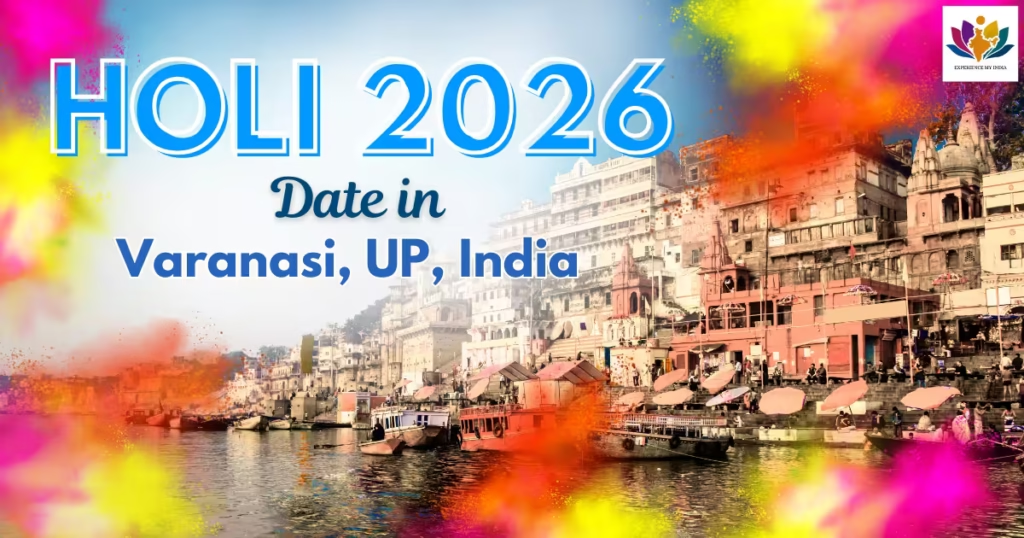

Holi in Varanasi does not behave the way people expect it to.
If you arrive here thinking only of colours, laughter, and music, Masan Holi will stop you mid-thought. It doesn’t announce itself loudly. It doesn’t invite everyone equally. And it waits for night, for fire, for silence, and for people who are ready to face something deeper than celebration.
If you are searching for Masan Holi 2026 in Varanasi, you are probably already curious about why this version of Holi exists at all. This guide is written to explain that curiosity gently, without turning it into spectacle or fear.
Varanasi – A City That Never Separates Life from Death
Varanasi does not treat death as an ending.
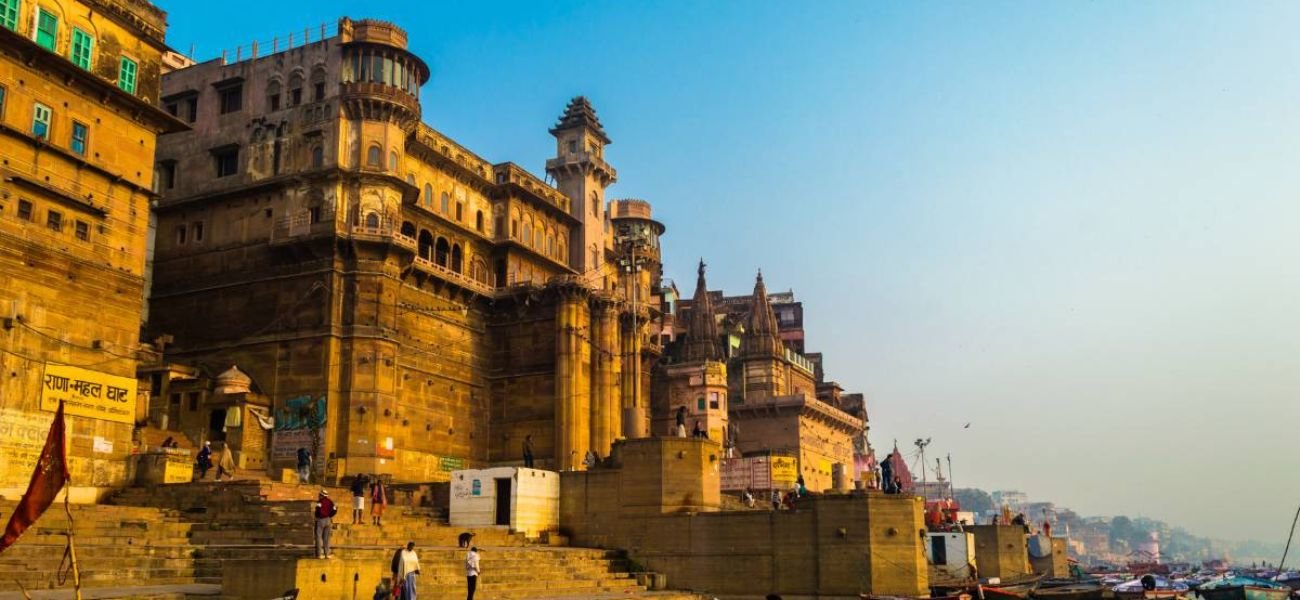
Here, death is public, visible, and woven into daily life. Cremation fires burn day and night. Priests chant beside them. Children play nearby. Tea stalls operate as usual. Nothing pauses.
This is important to understand before Masan Holi.
Because Masan Holi is not an interruption of Varanasi’s rhythm. It is a continuation of it.
What Is Masan Holi – And Why It Exists
Masan Holi, sometimes called Shamshan Holi, is celebrated on the night of Holika Dahan, but in a way that feels almost opposite to mainstream Holi.
- Instead of colours, there is ash.
- Instead of laughter, there is chanting.
- Instead of joy, there is acceptance.
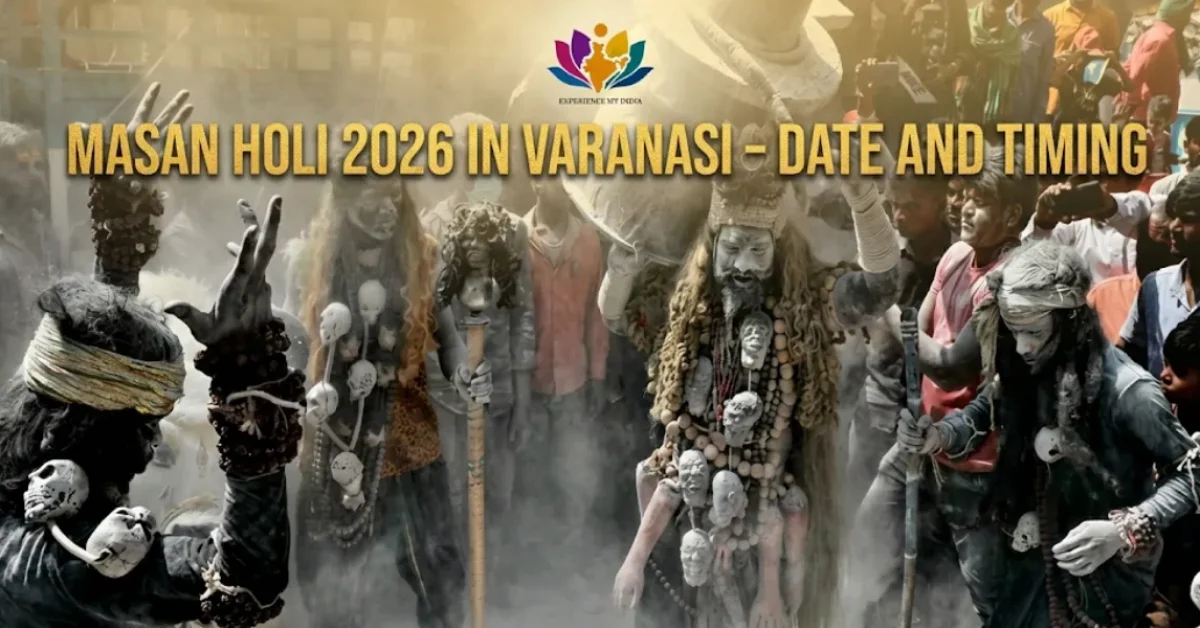
Ash is not symbolic here. It is real ash, collected from funeral pyres. It represents impermanence. And it reminds everyone that everything returns to dust.
This is not morbid. In Varanasi, it is grounding.
Masan Holi 2026 Date and Core Timings
Before understanding the experience, it helps to be clear about the timing.
Key Holi Dates for 2026
- Holika Dahan: Evening of March 3, 2026
Auspicious Time: Approximately 6:22 PM to 8:50 PM - Rangwali Holi: March 4, 2026
When Masan Holi Happens
Masan Holi takes place on the night of Holika Dahan, usually starting late evening and often extending into the early hours of Rangwali Holi.
There is no fixed start time. It begins when rituals begin, when fires are already burning, and when those who belong to this tradition arrive.
Where Masan Holi Is Celebrated
Masan Holi is not celebrated across the city. It belongs to specific places.
- Manikarnika Ghat
- Harishchandra Ghat
These are active cremation grounds. Fires do not stop for festivals. That fact alone shapes the atmosphere.
Visitors must understand this clearly before coming.
What Actually Happens During Masan Holi
This is what people usually don’t tell you.
There is no performance. No stage. No programme.
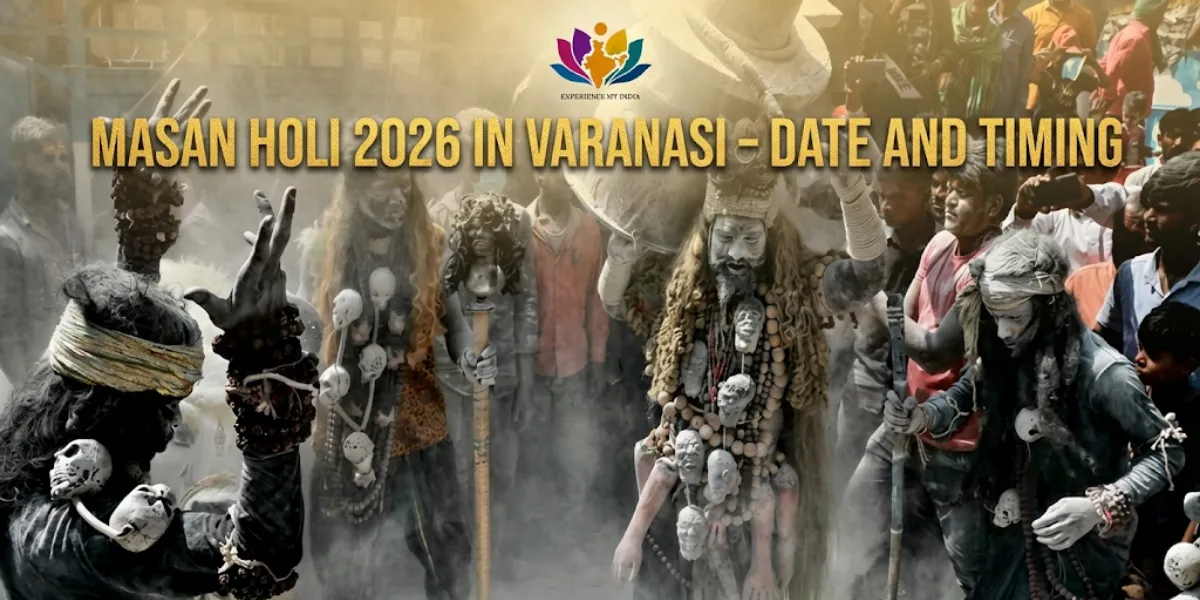
Participants—often Naga Sadhus, Aghoris, priests, and local devotees—apply ash to each other’s bodies. They chant hymns dedicated to Lord Shiva. Drums may sound briefly, then fall silent.
The mood is intense but controlled.
You don’t feel like cheering. You feel like standing still.
Ash here is not used playfully. It is used respectfully. It is a reminder that even celebration ends in stillness.
Spiritual Meaning – Why Ash, Why Shiva
Varanasi is a city deeply devoted to Shiva.
In Shaivite belief, ash symbolises detachment. Shiva himself is often depicted covered in ash, seated beyond desire, beyond fear.
Masan Holi reflects this philosophy directly.
It celebrates the truth that life and death are not opposites. They are connected. Holi, which usually celebrates life’s colour, here celebrates life’s impermanence.
For many participants, this night is more spiritually intense than any temple visit.
Is Masan Holi Safe for Visitors
This is a question that deserves an honest answer.
Masan Holi is not a tourist attraction.
It is a religious and spiritual ritual.
Visitors are allowed, but observation is more appropriate than participation.
You should:
- Stand at a respectful distance
- Avoid cameras and flash
- Follow local guidance
- Leave quietly if asked
Those who come seeking thrill often feel uncomfortable. Those who come seeking understanding usually leave changed.
Best Time to Visit Varanasi for Masan Holi
If Masan Holi is your focus, plan carefully.
- Arrival: March 2, 2026
- Masan Holi Night: March 3, 2026
- Departure: March 5, 2026
This allows you to experience Masan Holi and then see Rangwali Holi in a more conventional form the next day, if you wish.
Things to Do Around Masan Holi (Before and After)
Masan Holi should not be rushed.
Before the night:
- Visit ghats during daylight
- Sit quietly near the river
- Attend an evening Ganga Aarti elsewhere
After the night:
- Walk along Assi Ghat early morning
- Observe Rangwali Holi from a distance
- Rest, reflect, avoid overcrowding
This balance matters.
Nearest Places to See (Explained in Points)
If you are in Varanasi during Holi, these places help you understand the city beyond Masan Holi.
- Assi Ghat: Calm mornings, reflective walks
- Dashashwamedh Ghat: Evening rituals and Ganga Aarti
- Kashi Vishwanath Corridor: Spiritual centre of the city
- Sarnath: Quiet contrast to Varanasi’s intensity
- Local Alleys: Where daily life continues unchanged
Visit slowly. Varanasi does not reward speed.
How to Reach Varanasi
By Air:
Lal Bahadur Shastri International Airport connects Varanasi to major cities.
By Train:
Varanasi Junction and Banaras Railway Station are well connected.
And By Road:
Taxis and buses operate regularly, but movement near ghats is restricted during festivals.
Local Transport:
Walking is often the best option near ghats. Autos stop at a distance.
Visitors often realise that quiet, experience-based planning support from Ayodhya Varanasi Tourism helps them navigate sensitive timings and locations without disturbing the spiritual flow of the city.
What Masan Holi Leaves You With
Masan Holi does not entertain you.
It confronts you.
It asks uncomfortable questions without speaking. And it removes colour so you can see form. It removes noise so you can hear thought.
Many people say they don’t “enjoy” Masan Holi.
Most say they never forget it.
FAQs – Masan Holi 2026 in Varanasi
Q1. What is the date of Masan Holi in 2026?
It takes place on the night of March 3, 2026.
Q2. Is Masan Holi the same as Rangwali Holi?
No, it is spiritually different and happens before colour Holi.
Q3. Where does Masan Holi happen?
Mainly at Manikarnika Ghat and Harishchandra Ghat.
Q4. Can tourists participate?
Observation is recommended over participation.
Q5. Is photography allowed?
Generally discouraged, especially near cremation rituals.
Q6. Is Masan Holi safe?
Yes, if approached respectfully and calmly.
Q7. Why ash instead of colour?
Ash symbolises impermanence and detachment.
Q8. Is Masan Holi linked to Shiva?
Yes, it is deeply rooted in Shaivite belief.
Q9. Can I attend Ganga Aarti on the same day?
Yes, but timings may vary.
Q10. Should first-time visitors attend Masan Holi?
Only if they are emotionally prepared and respectful.
Masan Holi does not try to impress you.
It lets the fire burn,
lets the ash settle,
and waits to see if you are still standing there when celebration fades.
And if you are,
Varanasi quietly teaches you something most festivals never do—
that letting go can also be a form of joy.