
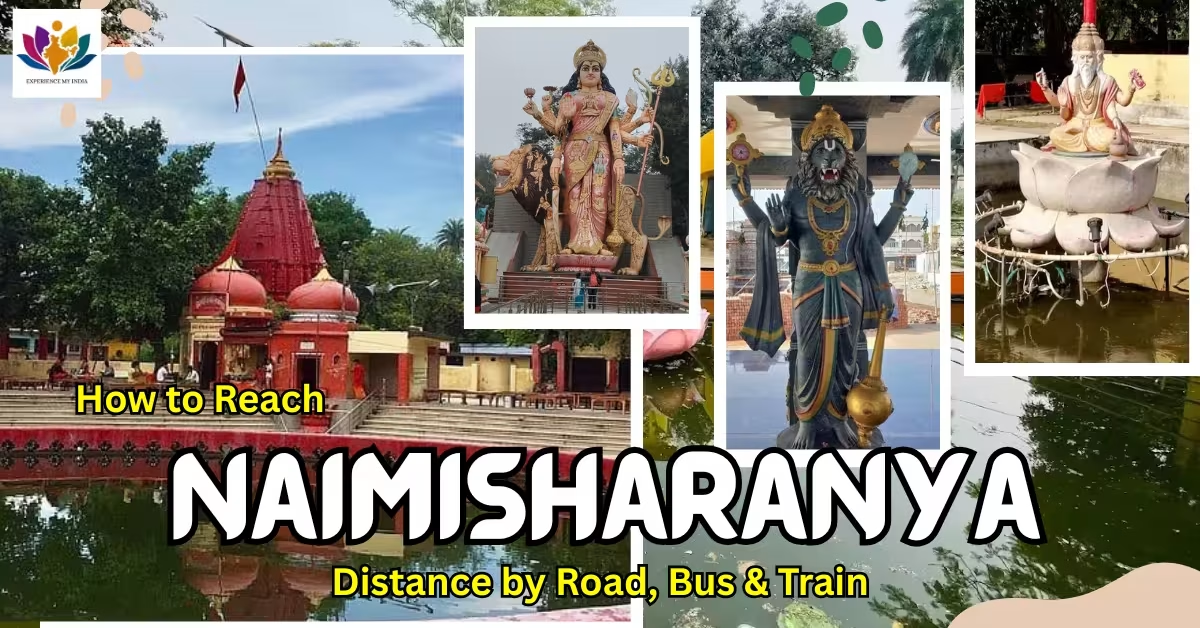
If you’ve ever searched for Naimisharanya online, you probably noticed something odd. Everyone talks about its spiritual importance, but very few explain how it actually feels to get there. Distances are mentioned. Routes are listed. But the journey itself? That part is usually missing.
And that’s where most travellers get confused.
Naimisharanya isn’t difficult to reach. It’s just… quiet. No big signboards shouting directions. No tourist chaos. You leave the noise of the city, and somewhere along the way, things slow down. Roads narrow. Traffic thins. Villages appear. And suddenly, the journey starts to feel intentional.
This guide focuses on naimisharanya distance, routes, and real travel decisions. Not rushed. Not idealised. Just the way people actually go.
About Naimisharanya and Why Distance Matters
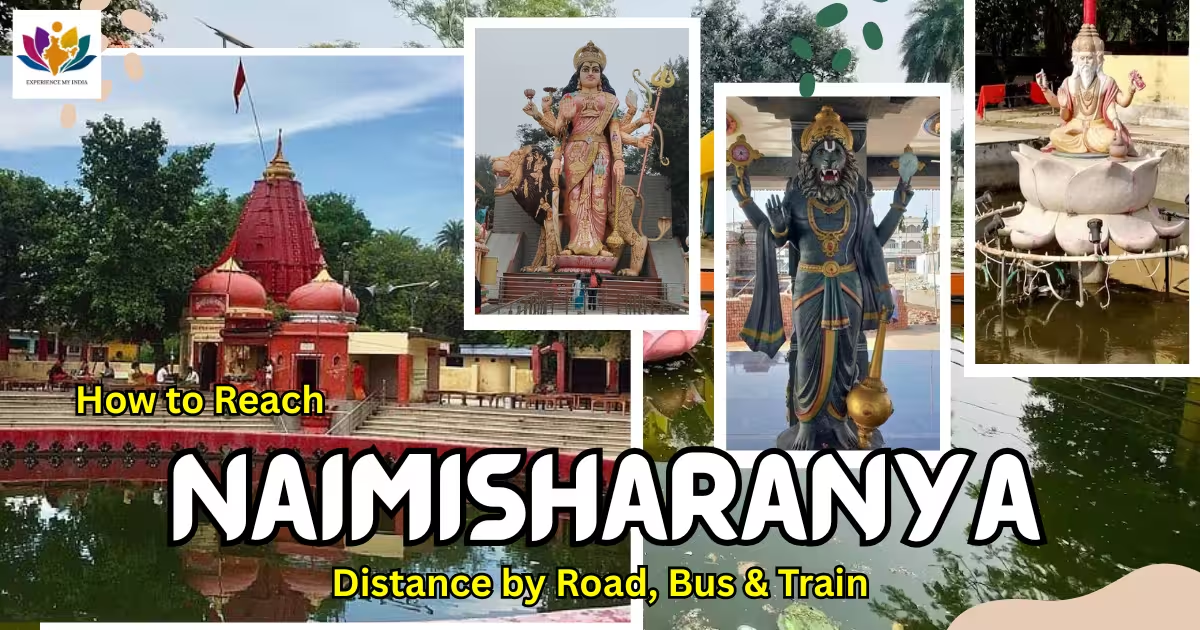
Naimisharanya sits in Uttar Pradesh, surrounded by fields, small towns, and a kind of stillness you don’t find easily anymore. According to tradition, sages gathered here to perform long yagnas, believing it to be the spiritual centre of the universe.
Now here’s the thing. The distance to Naimisharanya isn’t long in kilometres, but it feels longer because the environment changes gradually. That’s not a bad thing. It prepares you.
In my experience, people who treat this journey like a checklist miss its calm. People who accept the pace usually arrive more settled.
Naimisharanya Distance from Lucknow – Route Comparison
Most travellers begin from Lucknow. It’s the closest major city and the most practical starting point.
Distance Overview Table
| Route | Approx. Time | Distance | Route Details | Notes |
| Route 1 | 2 hr 11 min | 91.4 km | NH 30 → Baddupur–Mohabbatpur Rd → Sidhauli–Misrikh Rd | Fastest, toll road |
| Route 2 | 2 hr 34 min | 94.6 km | Tondan Marg → MDR 27C | Slightly longer, fewer tolls |
Both routes work. Route 1 is smoother and faster. Route 2 feels quieter and more rural.
Local Guide Tip:
If you’re travelling early morning, Route 1 saves time. If you prefer a relaxed drive without toll stops, Route 2 often feels easier.
Understanding Distance to Naimisharanya from Other Cities
While Lucknow is the main hub, people also travel from nearby spiritual centres.
- From Sitapur: Short drive, under an hour
- From Ayodhya: Longer, but spiritually meaningful route
- From Varanasi: Usually combined with multi-day pilgrimage
The key thing is not distance, but daylight. Reaching Naimisharanya before sunset feels calmer and safer.
How to Reach Naimisharanya by Car
Driving is the most flexible option.
By Car – What to Expect
- Roads are mostly single or two-lane after Sidhauli
- Traffic is light, but village crossings slow you down
- Fuel stations reduce after leaving Lucknow
I’ve found that driving allows you to stop, stretch, and adjust pace. That matters, especially for families or senior travellers.
Local Guide Tip:
Fill fuel in Lucknow itself. Don’t wait for later stretches where pumps are spaced far apart.
How to Reach Naimisharanya by Bus
Buses are available, but they require patience.
By Bus – Practical Reality
- Direct buses are limited
- Most buses run till Sitapur or Misrikh
- From there, shared autos or taxis are used
This option works for solo travellers who are comfortable with local transport. For first-time visitors, it can feel uncertain.
How to Reach Naimisharanya by Train
There’s no direct railway station at Naimisharanya.
By Train – How People Actually Do It
- Nearest major station: Sitapur Junction
- From Sitapur, road travel of about 45–60 minutes
- Taxis and autos are available outside the station
Train travel reduces fatigue, especially for long-distance travellers coming from outside Uttar Pradesh.
Places to See Around Naimisharanya
Naimisharanya isn’t about sightseeing in the usual sense. It’s about stillness. That said, certain places are central to the experience.
- Chakra Tirtha: Associated with Vishnu’s discus
- Lalita Devi Temple: Quiet, devotional atmosphere
- Gomati Ghat: Best visited early morning
- Vyas Gaddi: Simple, reflective space
Don’t rush these places. They’re meant to be felt, not finished.
Best Time to Travel Based on Distance and Conditions
Timing affects the journey more than distance.
- October to March: Comfortable, best overall
- Summers: Hot afternoons, early travel recommended
- Monsoon: Green but slower roads
Local Guide Tip:
Start journeys by 6:00 AM. Even short distances feel long when heat or traffic builds up.
Safety Tips for the Journey
Naimisharanya is safe, but rural travel has its own rhythm.
- Avoid night driving on unfamiliar roads
- Keep phone battery charged
- Carry basic medicines and water
- Don’t rely completely on digital maps
Surprisingly, asking locals for directions often works better than GPS in village stretches.
Why Ayodhya Varanasi Tourism Fits This Journey Well
The challenge with planning Naimisharanya travel isn’t booking. It’s timing and route sense.
Ayodhya Varanasi Tourism focuses on realistic movement. Not rushing darshan. Not squeezing destinations. Just helping travellers reach calmly, on time, and with clarity.
That approach suits a place like Naimisharanya, where the journey matters as much as the arrival.
FAQs – How to Reach Naimisharanya & Distance Details
The distance from Lucknow to Naimisharanya is around 90–95 km, depending on the route you choose. By road, it usually takes 2 to 2.5 hours under normal traffic conditions.
The fastest route is via NH 30 and Sidhauli–Misrikh Road, covering about 91 km in roughly 2 hours 10 minutes. This route includes tolls but offers smoother road conditions.
Yes, you can travel via Tondan Marg and MDR 27C, which is about 94–95 km and takes around 2 hours 30 minutes. It is slightly longer but avoids major toll points.
Early morning travel between 6:00 AM and 9:00 AM is ideal. Roads are quieter, the weather is cooler, and reaching before noon allows relaxed darshan and sightseeing.
Yes, Naimisharanya can easily be covered as a same-day trip from Lucknow. Many travellers start early morning and return by evening after completing temple visits.
No, there is no direct railway station at Naimisharanya. The nearest major station is Sitapur Junction, from where you need to travel 45–60 minutes by road.
Bus travel is possible but less direct. Most buses run till Sitapur or Misrikh, after which local taxis or shared autos are used. This option suits budget travellers with flexible timing.
Night travel is generally safe but not recommended for first-time visitors. Rural roads have limited lighting, so it’s better to start your return journey before 7:00 PM.
The best months are October to March, when weather is pleasant and roads are in good condition. Summers are hot, and monsoon months may slow travel due to waterlogged stretches.
You should plan at least 3–4 hours for darshan and temple visits. If you prefer a slow, peaceful experience, half a day is ideal before starting the return journey.
Conclusion
The naimisharanya distance isn’t intimidating. It’s just understated.
Once you understand the routes, accept the slower pace, and travel during daylight, the journey becomes part of the spiritual experience. Roads thin out. Noise fades. And by the time you arrive, you’re already quieter inside.
Contact Ayodhya Varanasi Tourism Today:
Call Us: +91 7300620809
WhatsApp Us: +91 7300620809
Visit Our Website: Ayodhya Varanasi Tourism
Email: ayodhyavaranasitourism@gmail.com
Ayodhya Varanasi Tourism is a Unit of Experience My India
Experience My India Trip Advisor Review
That’s what Naimisharanya does. Not suddenly. Gradually.