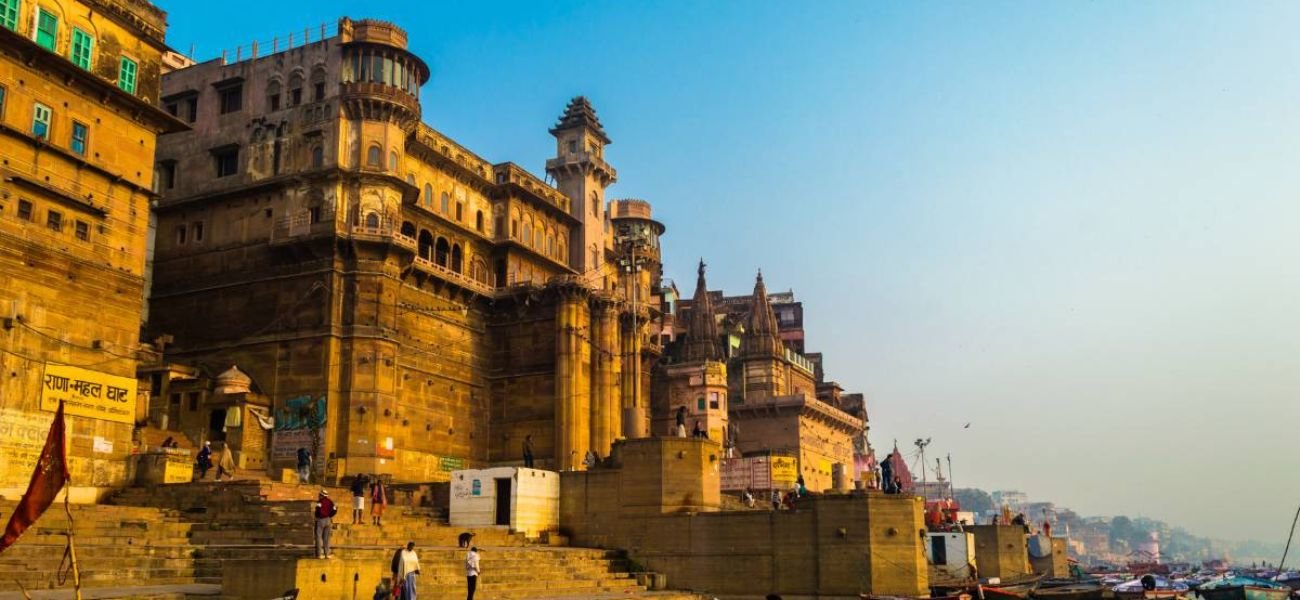


Morning in Delhi. A pale sun rising over old walls and newer glass towers. The city wakes slowly, but the roads are already awake. Tea stalls breathing steam. Vendors arranging flowers. Somewhere a temple bell, somewhere a car horn. This is where the journey of Golden Triangle with Ayodhya begins — not just with monuments, but with movement.
People often speak of the Golden Triangle — Delhi, Agra, Jaipur. Grand forts. White marble. Pink sandstone. History standing tall. But when Ayodhya is added, the journey changes in character. It becomes quieter in places. More reflective. A little deeper.
That is what makes the Golden Triangle with Ayodhya different. It moves from empire to devotion. From Mughal domes to temple spires. From royal courts to sacred ghats.
And somewhere along the way, the traveler changes too.
Table of Contents
ToggleGolden Triangle with Ayodhya Tour Itinerary
Every journey has its own rhythm. The Golden Triangle with Ayodhya tour itinerary usually unfolds over 6 to 8 days. Not rushed. Not dragged. Just steady.
Delhi
Delhi is layered. Old Delhi breathes in narrow lanes. New Delhi stands broad and planned.
• Red Fort — silent red walls that have seen emperors and independence speeches.
• Qutub Minar — rising skyward, carved with patience.
• India Gate — names etched in stone, children running around it in the evening.
• Humayun’s Tomb — symmetry resting under open sky.
In Delhi, history feels official. Documented. Preserved.
Agra
Agra holds one of the world’s most photographed monuments.
• Taj Mahal — white marble changing colour with light. Soft at sunrise. Gentle at sunset.
• Agra Fort — where power once moved through corridors.
• Mehtab Bagh — quiet across the river.
Agra is about love, yes. But also about patience. The Taj is not loud. It waits.
Jaipur
Jaipur glows in pink tones.
• Amber Fort — walls climbing hills.
• Hawa Mahal — windows upon windows, watching the streets.
• City Palace — courtyards where kings once walked.
• Jal Mahal — floating quietly in the lake.
Jaipur feels royal, yet warm. The markets are alive. The colours linger.
Ayodhya
And then comes Ayodhya.
The air changes here. Softer. Slower.
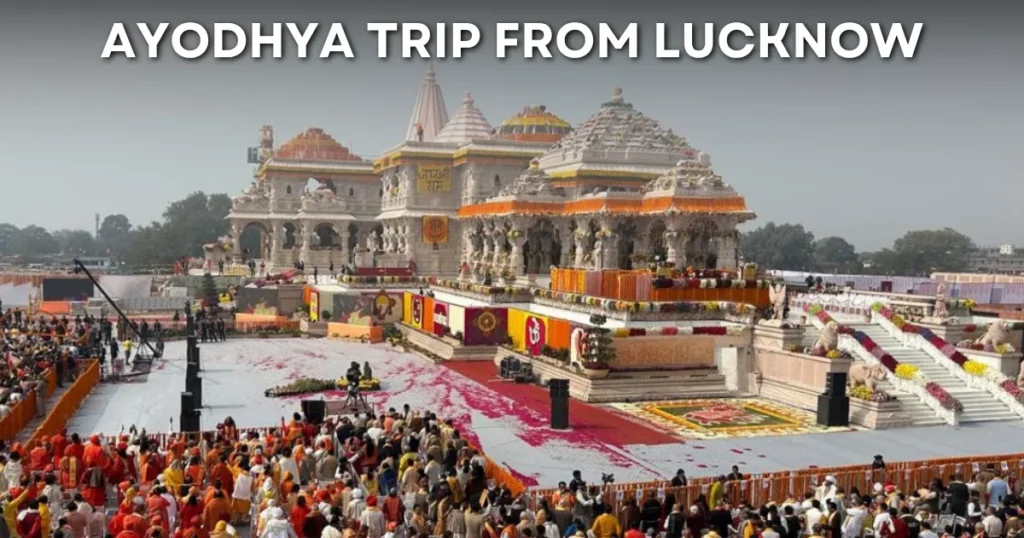
• Ram Mandir — rising with devotion and faith.
• Hanuman Garhi — steps leading upward, bells ringing gently.
• Ram Ki Paidi — where the Sarayu reflects lamps in the evening.
• Sarayu Aarti — flames moving together in silence.
In Ayodhya, people do not rush through monuments. They pause. They fold hands. They sit by the river longer than planned.
This is where the Golden Triangle with Ayodhya journey deepens.
Best Time for Golden Triangle with Ayodhya
The months between October and March are kind. Cool mornings. Clear skies. Comfortable travel between cities.
Summer is warmer, especially in Jaipur and Agra. Afternoons can be tiring. Yet sunrise visits remain pleasant.
Monsoon brings green landscapes, but occasional delays.
The best time for Golden Triangle with Ayodhya depends on your pace. If you enjoy walking and exploring calmly, winter suits you best.
Why Add Ayodhya to the Golden Triangle?
Many travelers ask — why extend the traditional circuit?
Because Ayodhya adds some monuments alone cannot.
- Delhi speaks of power.
- Agra speaks of love.
- Jaipur speaks of royalty.
- Ayodhya speaks of faith.
In the Golden Triangle with Ayodhya, the journey moves from stone to spirit.
You may stand in front of the Taj and admire its perfection. But sitting by the Sarayu at dusk, watching diyas float away — that is a different kind of memory.
Golden Triangle with Ayodhya Package Cost
The cost varies depending on hotel category, transport, and number of days.
• Standard hotels with private car — moderate pricing.
• Luxury heritage stays in Jaipur — higher range.
• Flight inclusion to Ayodhya — added convenience.
The Golden Triangle with Ayodhya package cost is usually planned per person on twin sharing basis. Transparent pricing matters. No hidden surprises. A well-planned journey feels lighter.
Travel Distance and Duration
| Route | Approx Distance | Travel Time |
| Delhi to Agra | 232 km | 3–4 hrs |
| Agra to Jaipur | 239 km | 4–5 hrs |
| Jaipur to Ayodhya (via flight/train option) | Varies | 1.5–10 hrs |
| Ayodhya to Delhi | 714km approx | 1.5 hr flight |
Travel days are not just transfers. Highways show rural life. Fields stretching quietly. Small dhabas serving hot tea.
Crowd and Experience Reality
Peak season sees heavy footfall at Taj Mahal and Ram Mandir. Early morning visits are calmer.
In Ayodhya, evenings during aarti draw larger gatherings. Still, the mood remains composed.
The Golden Triangle with Ayodhya works best when not rushed. Two nights in Delhi. One in Agra. Two in Jaipur. One or two in Ayodhya.
Travel is not about ticking sites. It is about breathing between them.
Golden Triangle with Ayodhya Travel Guide Tips
• Start Taj Mahal visit at sunrise for softer light and fewer crowds.
• Keep modest clothing ready for temple visits in Ayodhya.
• Carry light woollens in winter mornings.
• Allow buffer time for darshan in Ayodhya during festive periods.
• Keep one evening free in Jaipur markets — not for shopping alone, but for atmosphere.
A journey becomes memorable in small pauses.
About Ayodhya Varanasi Tourism
At Ayodhya Varanasi Tourism, journeys are planned with attention to comfort and quiet detail. Vehicles are arranged clean and punctual. Hotels are selected thoughtfully. Darshan timings are considered carefully. The Golden Triangle with Ayodhya is not treated as a checklist, but as a flowing route — from capital to court to temple.
Support remains available throughout. Because travel feels easier when someone is quietly managing it in the background.
Conclusion
The Golden Triangle with Ayodhya is more than a circuit on the map. It is a gradual shift — from power to devotion, from marble to river light. You begin in crowded avenues and end by the Sarayu at dusk. And somewhere between Delhi and Ayodhya, history becomes personal.
Planning Support Partner
Many travellers underestimate how emotionally tiring this circuit can be. Managing temple timings, crowd surges, and intercity transfers on your own often distracts from the spiritual purpose.
As a planning support partner, Ayodhya Varanasi Tourism helps travellers move through this yatra calmly. Not by overloading schedules, but by understanding when to pause, when to move, and when to simply wait. That quiet planning makes the journey feel complete rather than exhausting.
Contact Ayodhya Varanasi Tourism Today:
Call Us: +91 7300620809
WhatsApp Us: +91 7300620809
Visit Our Website: Ayodhya Varanasi Tourism
Email: ayodhyavaranasitourism@gmail.com
FAQs – Golden Triangle with Ayodhya
It generally includes Delhi, Agra, Jaipur sightseeing along with Ram Mandir and key Ayodhya temples, hotel stay, transport, and guided visits.
Ideally 6 to 8 days for a comfortable pace without rushing.
Yes, with proper planning, slower pacing, and vehicle support near major monuments.
October to March offers pleasant weather for sightseeing and temple visits.
Yes, flight options to and from Ayodhya can be added for convenience.
Yes, assistance with darshan timing and local coordination can be arranged.
Options range from standard 3-star to luxury heritage stays depending on preference.
Professional guides are usually included at major monuments and temples.
The addition of Ayodhya adds a spiritual dimension to the historical journey.
You can contact Ayodhya Varanasi Tourism directly for customized planning, pricing details, and availability.