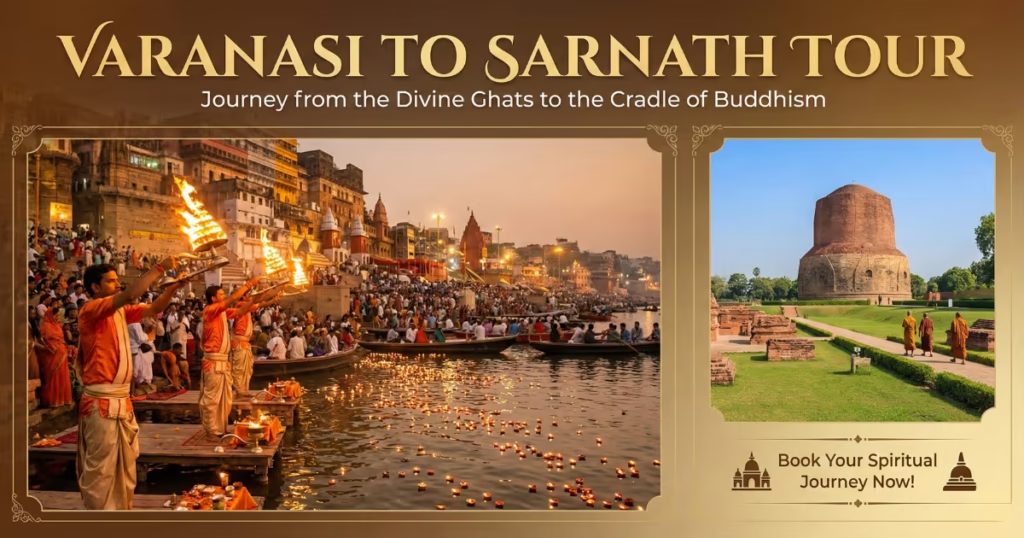


If you’re planning your first evening in Varanasi, chances are you’re worried about one thing—getting the Ganga Aarti timing right. Miss it, and the day feels incomplete. Reach too late, and the ghats are already overflowing. This guide walks you through Ganga Aarti timing at Varanasi, where to watch it from, how boat viewing works, and how locals actually experience this ritual—without confusion or rush.
Main Location for Evening Ganga Aarti in Varanasi
Most travellers ask one question first—where exactly does the main Aarti happen?
Dashashwamedh Ghat (Evening Aarti)
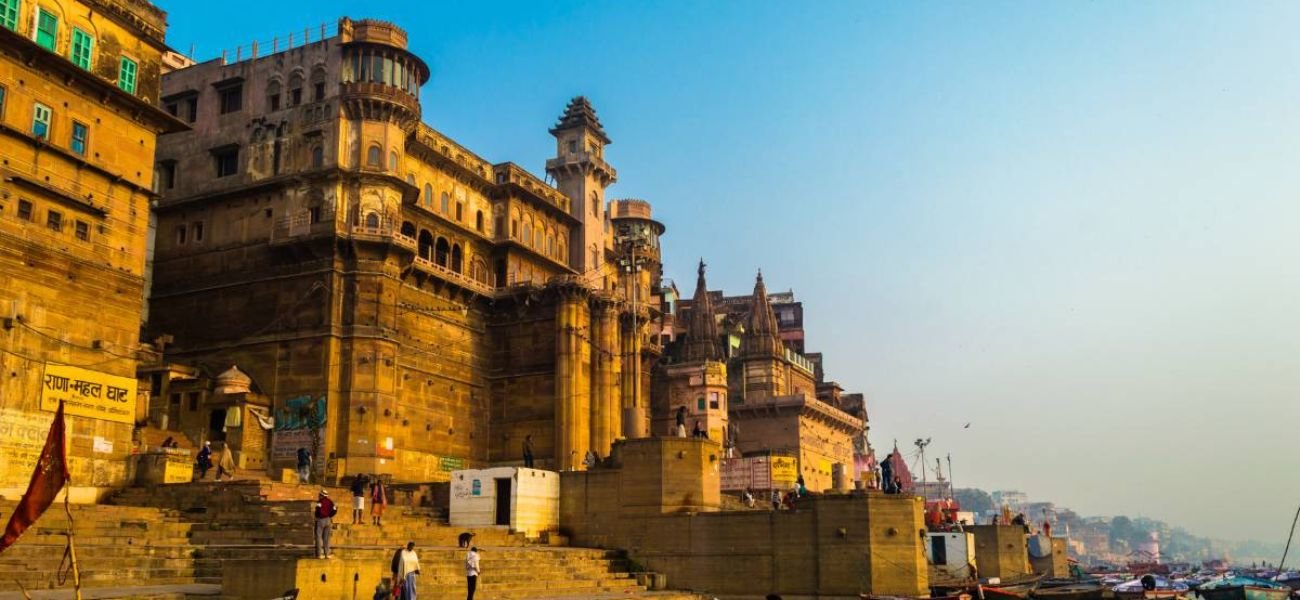
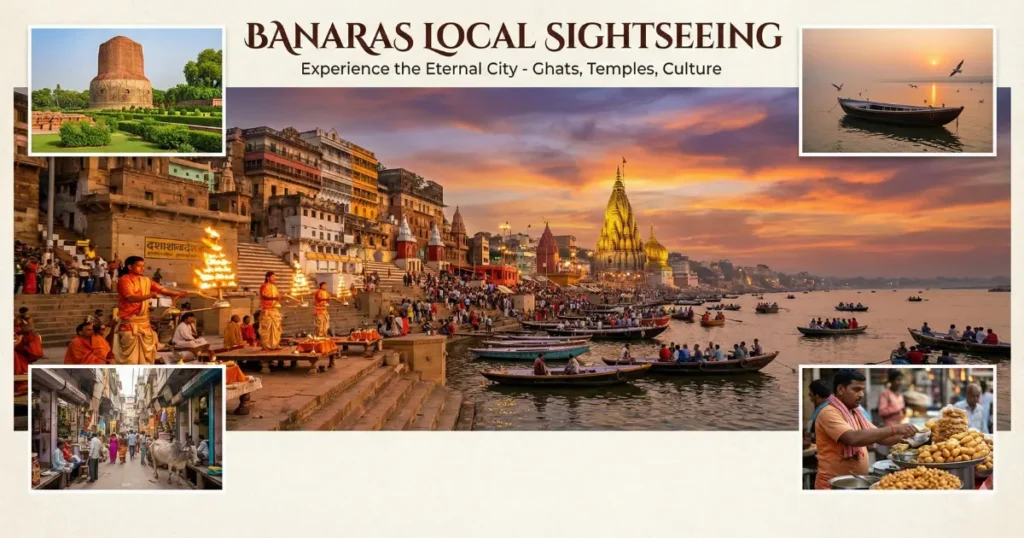
Dashashwamedh Ghat hosts the grand evening Ganga Aarti that people across the world come to see. This ghat sits close to the heart of the old city, and honestly, that’s both a blessing and a challenge.
- It’s centrally located, so reaching it is easy
- At the same time, narrow lanes mean crowds build up fast
- By sunset, every step, railing, and rooftop nearby fills up
In my experience, first-time visitors underestimate how early the ghat starts filling. The ritual might begin later, but the positioning starts much earlier.
Ganga Aarti Timing at Varanasi (Season-Wise Schedule)
Timing is not random here. It follows daylight, seasons, and river conditions.
Ganga Aarti Schedule in Varanasi
Evening Aarti – Dashashwamedh Ghat
| Season | Aarti Start Time | Duration |
| Winter (Nov–Feb) | Around 6:00 PM | 45–60 minutes |
| Summer (Mar–Oct) | Around 7:00 PM | 45–60 minutes |
| Monsoon (Jul–Sep) | Around 6:45 PM | May vary slightly |
Morning Aarti – Assi Ghat
| Time | Details |
| 5:00 AM – 5:30 AM | Soft chants, yoga, sunrise rituals |
Surprisingly, many travellers skip the morning Aarti. Personally, I think it’s the most grounding experience in the city. No rush. No noise. Just the river waking up.

Watching Ganga Aarti by Boat – What to Expect
This is where opinions split.
Some people love watching from the steps. Others swear by the boat view. Both are valid.
Boat View Experience
- Boats anchor mid-river, directly facing Dashashwamedh Ghat
- You see the symmetry of the lamps, priests, and river together
- Crowd pressure disappears, which matters if you dislike tight spaces
However, here’s the nuance. Boats don’t get closer once the Aarti begins. That means if your boat arrives late, you’re stuck at the back. Timing matters even more on water.
Local Guide Tip
Book your boat at least 60 minutes before Aarti time, not 10 minutes before. Early boats get better positioning. Late ones float farther back, and the experience feels distant.
Boat prices usually range between ₹30–₹100 per person, depending on crowd density and season. Bargaining is normal. Aggressive bargaining isn’t appreciated.
Why Ganga Aarti in Varanasi Feels Different from Everywhere Else
Here’s the thing. Ganga Aarti isn’t just a ceremony in Varanasi. It’s the city’s heartbeat slowing down for an hour.
I’ve found that people often imagine it as a quiet prayer by the river. In reality, it’s layered. Bells echo. Lamps rise in rhythm. The river reflects fire. And thousands of people fall silent together. That collective pause is what makes the Ganga Aarti timing at Varanasi so important. It’s not flexible. The river decides the mood, not the crowd.
Unlike temple aartis that happen indoors, this one belongs to the open sky. Wind matters. Sunset matters. Even the season shifts the timing slightly, which is why relying on guesswork doesn’t work here.
What Actually Happens During the Ganga Aarti Ritual
Many guides explain this like a checklist. That misses the point.
Here’s how it unfolds in real time.
- Priests arrive quietly, already dressed in silk
- Large brass lamps are lit in sequence, not all at once
- Bells ring in waves, not continuously
- Incense smoke drifts over the river, mixing with lamp light
For about an hour, the ghat becomes a single moving rhythm. Phones lower. Talking stops. Even kids fall silent. That’s when you understand why the Evening Ganga Aarti Varanasi isn’t something you rush through.
Things to Do Before and After Ganga Aarti
Timing your evening around the Aarti makes the experience smoother.
Before Aarti
- Walk slowly along nearby ghats as sunset approaches
- Sit for a few minutes at the steps to let your eyes adjust
- Avoid heavy snacks right before—standing is easier when light
After Aarti
- Visit nearby temples once crowds thin slightly
- Take a slow walk through the ghats when lamps are still glowing
- Sit by the river instead of rushing back immediately
By the way, many people leave instantly. Staying back for ten minutes often feels more meaningful than the ceremony itself.
How to Reach Dashashwamedh Ghat for Ganga Aarti
Reaching the ghat is simple on paper, tricky on ground.
By Car
- Cars can reach only up to designated drop points
- Final stretch requires walking through narrow lanes
- Evening traffic slows movement significantly
By Train
- Varanasi Junction is well connected
- From station, auto or cycle-rickshaw to ghat area
- Allow extra time during festival days
And By Air
- Lal Bahadur Shastri International Airport
- Approx. 45–60 minutes by road
- Evening arrivals should plan carefully to avoid missing Aarti
Local drivers usually know Aarti timings. Tell them your plan clearly. Vague instructions waste time.
Crowd Reality and Safety Notes
Let’s be honest. The crowd is intense.
- Pickpocketing can happen in packed areas
- Open footwear works better than shoes
- Keep phones secured, especially near steps
Families with elders often prefer the morning Aarti for comfort. It’s calmer, cooler, and easier to manage.
Local Guide Tip
If you’re travelling with older or kids, skip peak winter weekends. Weekdays offer a far better balance between atmosphere and space.
Why Many Travellers Prefer Guided Support Here
Managing lanes, timing, and boat access together isn’t always easy.
As a Planning Support Partner, Ayodhya Varanasi Tourism helps travellers align arrival time, walking routes, and boat options realistically. Not to rush the ritual, but to protect the experience itself—especially when crowds swell or timings shift slightly due to river conditions.
Contact Ayodhya Varanasi Tourism Today:
Call Us: +91 7300620809
WhatsApp Us: +91 7300620809
Visit Our Website: Ayodhya Varanasi Tourism
Email: ayodhyavaranasitourism@ayodhyavaranasitourismgmail-com
Ayodhya Varanasi Tourism is a Unit of Experience My India
Experience My India Trip Advisor Review
FAQs – Ganga Aarti Timing at Varanasi
The evening Ganga Aarti at Dashashwamedh Ghat usually starts around 6:00 PM in winter and 7:00 PM in summer. The timing depends on sunset and may shift slightly during monsoon months. It’s best to reach the ghat at least 45–60 minutes earlier to find a comfortable spot.
The main and most famous Ganga Aarti is held at Dashashwamedh Ghat, located near the old city area of Varanasi. This ghat is close to Kashi Vishwanath Temple and is easily accessible on foot from nearby lanes. It gets extremely crowded in the evening, especially on weekends.
Yes, a peaceful morning Ganga Aarti takes place at Assi Ghat, known as Subah-e-Banaras. It usually starts around 5:00 AM to 5:30 AM, depending on the season. This Aarti is calmer and ideal for travellers who prefer less crowd and a spiritual start to the day.
The evening Ganga Aarti at Dashashwamedh Ghat lasts for about 45 to 60 minutes. The ritual includes synchronized lamp movements, chanting, conch sounds, and incense offerings. Staying till the end gives a fuller sense of the ceremony’s rhythm and meaning.
In my experience, reaching the ghat at least one hour before the scheduled Aarti time works best. This allows you to settle on the steps, avoid pushing crowds, and soak in the atmosphere before the ritual begins. Late arrivals often struggle to find space.
Yes, Ganga Aarti can be viewed from boats anchored in the river facing Dashashwamedh Ghat. Boats usually start filling 60–90 minutes before Aarti time, so early booking matters. Once the Aarti begins, boats don’t change position, so late bookings mean distant views.
In winter (November to February), the evening Aarti starts around 6:00 PM due to early sunset. In summer (March to October), it usually begins around 7:00 PM. Monsoon months may see slight adjustments depending on river and weather conditions.
Yes, Ganga Aarti at Dashashwamedh Ghat is performed daily throughout the year, without exception. However, during major festivals or special occasions, the scale and crowd size increase significantly. Timings remain similar but crowds become much heavier.
Dashashwamedh Ghat is roughly a 5–7 minute walk from Kashi Vishwanath Temple through narrow lanes. Many visitors combine temple darshan with the evening Aarti on the same day. Plan buffer time, as crowd movement can slow walking speed.
It depends on what you’re looking for. The evening Aarti at Dashashwamedh Ghat is grand, visual, and energetic, while the morning Aarti at Assi Ghat is quiet and reflective. First-time visitors often attend the evening Aarti, but many later prefer the morning one for peace.
Conclusion
Ganga Aarti at Varanasi isn’t something you simply “watch.” You enter it. Timing shapes everything—your view, your comfort, and your connection to the ritual. Whether you stand on the steps or sit quietly on a boat, reaching early and understanding the flow makes all the difference. When done right, the river doesn’t feel distant. It feels like it’s speaking directly to you.