

The best time to visit Ayodhya and Varanasi is October to March, when temperatures stay between 8°C and 25°C — comfortable for temple visits, ghat walks, and evening aartis. Avoid May and June when temperatures regularly exceed 42°C. For Deepotsav in Ayodhya or Dev Deepawali in Varanasi, book 60–90 days in advance. Guided Ayodhya and Varanasi tours with Experience My India start from ₹3,999 per person. Call +91-7302265809. Jai Shri Ram 🙏
Why Timing Matters for Ayodhya and Varanasi Travel
Ayodhya and Varanasi are among the most visited pilgrimage cities in India — Ayodhya as the birthplace of Lord Ram, and Varanasi as the eternal city of Lord Shiva on the banks of the Ganga. Between them, they receive over 50 million pilgrims and tourists annually. The difference between a peaceful, meaningful yatra and an exhausting, overcrowded one comes down almost entirely to when you visit and how well you plan around the seasonal and festival calendar.
I am Gurudutt, founder of Experience My India, born and raised in Braj Bhoomi and guiding pilgrims since 2018. I have personally coordinated over 50,000 pilgrimages through Ayodhya, Varanasi, Mathura, Vrindavan, and Prayagraj. I know which months give you Varanasi’s ghats without the monsoon suspension of boat services, and which Ayodhya festival weekends require hotel bookings 90 days in advance. This guide covers everything you need to plan your visit in 2026.
In this guide you will find: a month-by-month season breakdown for both cities, the complete 2026 festival calendar, the best and worst months for each city, famous places not to miss, things to do, nearby destinations, and the ground-level travel truths that general guides skip. Call Experience My India at +91-7302265809 to start planning.
Season-by-Season Guide — Ayodhya and Varanasi 2026
| Season | Months | Temperature | Crowd Level | What to Expect | Verdict |
| Winter — Peak Ideal | October – March | 8°C – 25°C | Moderate (high on festivals) | Best for ghats, temples, boat rides, Ganga Aarti, Sarayu Aarti | Best season — visit now |
| Summer | April – June | 36°C – 47°C | Low–Moderate | Intense heat; outdoor ghats exhausting midday; significant hotel rate drops | Budget travel only — strict morning/evening visits |
| Monsoon | July – September | 28°C – 38°C | Moderate | Heavy rainfall; Ganga and Sarayu swell; boat services limited or suspended | Not ideal for ghats — temples remain accessible |
| Festival Peaks | Oct–Nov (Diwali/Deepotsav) and Aug (Janmashtami) | Variable | Very High | Massive crowds, 2x–4x hotel rates; spiritual atmosphere at its most intense | Book 60–90 days ahead |
Month-by-Month Breakdown
| Month | Ayodhya | Varanasi | Recommended? |
| January | 8°C–20°C, pleasant | 9°C–20°C, pleasant | Excellent |
| February | 12°C–25°C, comfortable | 12°C–24°C, comfortable | Excellent |
| March | 18°C–32°C, warming | 17°C–32°C, warming | Good — Holi season |
| April | 28°C–40°C, hot | 26°C–40°C, hot | Morning/evening only |
| May | 32°C–44°C, very hot | 30°C–44°C, very hot | Avoid for comfort |
| June | 30°C–45°C, very hot | 28°C–44°C, monsoon begins | Avoid |
| July | 28°C–38°C, heavy rain | 26°C–36°C, heavy rain | Boats suspended |
| August | 28°C–36°C, rain | 26°C–34°C, rain | Janmashtami only |
| September | 28°C–36°C, rain easing | 26°C–34°C, rain easing | Improving late month |
| October | 20°C–32°C, cooling | 18°C–32°C, cooling | Very good — Diwali |
| November | 12°C–26°C, pleasant | 14°C–26°C, pleasant | Excellent — Dev Deepawali |
| December | 8°C–22°C, cool | 9°C–22°C, cool | Excellent |
Best Time to Visit Ayodhya
October to March is the best time to visit Ayodhya — all 10 major sites (Ram Janmabhoomi, Hanuman Garhi, Kanak Bhawan, Ram Ki Paidi, Guptar Ghat and others) are comfortable to explore on foot, the Sarayu River Aarti is at its most atmospheric, and Sugam Darshan e-pass slots are more available on weekday mornings.
| Period | Why Visit | Best Experience |
| October – November | Diwali and Deepotsav — Ayodhya lights 25 lakh earthen lamps (Guinness record) | Sarayu Ghat illuminated — book hotel 60 days ahead |
| November – February | Coolest and most comfortable — 8°C to 22°C | Ram Janmabhoomi morning darshan, Guptar Ghat at dawn |
| March – early April | Ram Navami — Lord Ram’s birthday, the grandest Ayodhya festival | 2–3 million pilgrims over 3 days — book 90 days ahead |
| April – June | Very hot 36°C–44°C — limit visits to before 9:00 AM and after 5:30 PM | Sugam darshan available with less competition for slots |
| July – September | Monsoon; Sarayu levels rise; ghats can flood | Temples remain open; avoid ghat walks in heavy rain |
When NOT to visit Ayodhya: May and June, unless you are a budget traveller who can manage heat and restrict outdoor movement to the 6:00 AM – 8:30 AM and 5:30 PM – 8:00 PM windows. Hotel rates drop 40–50% in summer but the heat at Ram Ki Paidi and outdoor sites between 10:00 AM and 5:00 PM is genuinely punishing.
For Ram Navami or Deepotsav, Experience My India secures festival hotel accommodation and Sugam Darshan coordination 90 days in advance. Call +91-7302265809 to check availability.
Best Time to Visit Varanasi
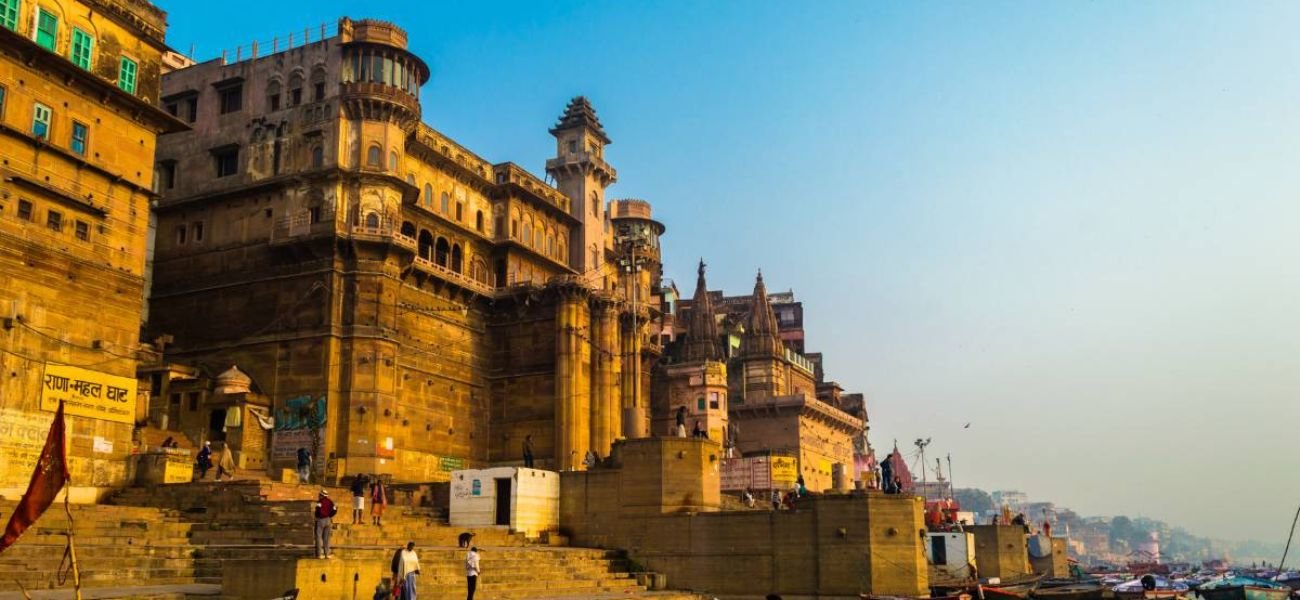
October to March is also the best time to visit Varanasi — the Ganga Aarti at Dashashwamedh Ghat is at its most atmospheric with clear skies, boat rides on the Ganga are fully operational, and the narrow lanes of the old city are navigable without monsoon flooding.
| Period | Why Visit | What to Expect |
| October – November | Dev Deepawali (November 5, 2026) — 10 lakh lamps lit on 84 ghats | Most spectacular single-night event in Varanasi — book 60 days ahead |
| November – February | Best weather; all ghats and temples fully accessible | Ganga Aarti, sunrise boat rides, Kashi Vishwanath darshan all at peak |
| March | Holi celebrations on the ghats | Colourful, energetic; moderate crowds |
| April – June | 36°C–44°C; very humid — Varanasi’s narrow lanes trap heat | Manageable before 8:30 AM and after 5:30 PM; significant hotel discounts |
| July – September | Heavy monsoon; Ganga floods some ghats; boat services partially suspended | Some ghats inaccessible; all major temples remain open |
In which month is Varanasi not crowded? June, July, and August are the least crowded months in Varanasi — the monsoon heat and flood risk keep casual tourist numbers low. For pilgrims specifically seeking uncrowded Kashi Vishwanath darshan, Tuesday mornings in June and July between 5:00 AM and 7:00 AM offer some of the shortest queues of the year.
When NOT to visit Varanasi: July and August (unless for Janmashtami) when Ganga flooding regularly suspends boat services for 4–6 weeks and some ghats become inaccessible. Also avoid major festival weekends without advance hotel booking — Dev Deepawali hotel prices within 500 metres of the main ghats increase 3x–4x.
Experience My India plans Varanasi visits around Ganga Aarti timing, Kashi Vishwanath darshan windows, and boat service availability. Call +91-7302265809 to plan.
Festival Season — When Both Cities Come Alive
Ayodhya and Varanasi follow two of the richest festival calendars in India. Timing your visit around these events transforms a standard pilgrimage into a once-in-a-lifetime experience — but each festival requires specific advance planning for accommodation, transport, and darshan access.
| Festival | City | 2026 Date | What Happens | Book Ahead |
| Ram Navami | Ayodhya | April 6, 2026 | Lord Ram’s birthday — 2–3 million pilgrims over 3 days, midnight celebration at Ram Janmabhoomi | 90 days minimum |
| Deepotsav (Diwali) | Ayodhya | October 20, 2026 | 25 lakh earthen lamps on Sarayu ghats — Guinness World Record event annually | 60 days minimum |
| Dev Deepawali | Varanasi | November 5, 2026 | 10 lakh lamps lit on all 84 Varanasi ghats — the most photographed evening in Varanasi | 60 days minimum |
| Mahashivratri | Varanasi | February 26, 2026 | Lord Shiva’s night — Kashi Vishwanath Temple receives 5,00,000+ devotees in 24 hours | 45 days minimum |
| Holi | Both cities | March 3–4, 2026 | Colourful celebrations on Ram Ki Paidi (Ayodhya) and Varanasi ghats | 30 days minimum |
| Janmashtami | Varanasi + Mathura | August 16, 2026 | Lord Krishna’s birthday — celebrated at Varanasi’s Krishna temples | 45 days minimum |
| Kartik Purnima | Varanasi | November 5, 2026 | Same night as Dev Deepawali — Ganga snan (sacred bath) at dawn | 60 days minimum |
| Ganga Mahotsav | Varanasi | November 1–5, 2026 | 5-day cultural festival of classical music, dance, and boat processions on the Ganga | 30 days minimum |
| Makar Sankranti | Both cities | January 14, 2026 | Sacred kite festival and Ganga/Sarayu snan | 15 days minimum |
| Basant Panchami | Ayodhya | January 23, 2026 | Yellow-themed celebrations; ISKCON and Ram Mandir special programming | 2 weeks minimum |
Key festival planning rule: For Deepotsav in Ayodhya and Dev Deepawali in Varanasi — both fall within the same fortnight in October–November — Experience My India offers a combined Ayodhya–Varanasi festival tour that covers both events in a single 5-day circuit. Hotel rooms within 500 metres of Ram Ki Paidi (Ayodhya) and Dashashwamedh Ghat (Varanasi) fill completely 60 days before both festivals. Call +91-7302265809 immediately if your travel dates overlap with these.
Famous Places in Ayodhya You Should Not Miss
| Place | Why Visit | Best Timing | Entry Fee |
| Ram Janmabhoomi Temple | Birthplace of Lord Ram — the most sacred site in Ayodhya | 6:00 AM – 7:00 AM (Sugam e-pass) | Free |
| Hanuman Garhi | Fortress-temple on 65-foot hill — 76 steps to panoramic city view | 5:30 AM Mangala Aarti | Free |
| Kanak Bhawan | Most ornate temple — golden-crowned Ram-Sita idols | 8:00–11:00 AM or 5:00–8:00 PM | Free |
| Ram Ki Paidi — Sarayu Ghat | 750-metre ghat with 11-priest Aarti and 7:30 PM laser show | Arrive 5:30 PM for Aarti | Free |
| Guptar Ghat | Most spiritually solemn site — where Ram took Jal Samadhi | 6:00 AM or 5:00–6:30 PM | Free |
| Treta Ke Thakur | Rare — every idol carved from a single black stone | 6:00–10:00 AM | Free |
| Mani Parbat | Best panoramic Ayodhya city view — Ashoka stupa remnants | Sunrise — 6:00–7:00 AM | Free |
| Tulsi Smarak Bhawan | 1,00,000-volume library; site of Ramcharitmanas composition | 9:00 AM–5:00 PM | Free |
| Nageshwarnath Temple | Ayodhya’s most significant Shiva temple — founded by Kush, son of Ram | Evening Aarti — combine with Ram Ki Paidi | Free |
| Gulab Bari | Nawab-era tomb garden — Mughal and Indo-European blend | 6:00 AM–6:00 PM | ₹25 |
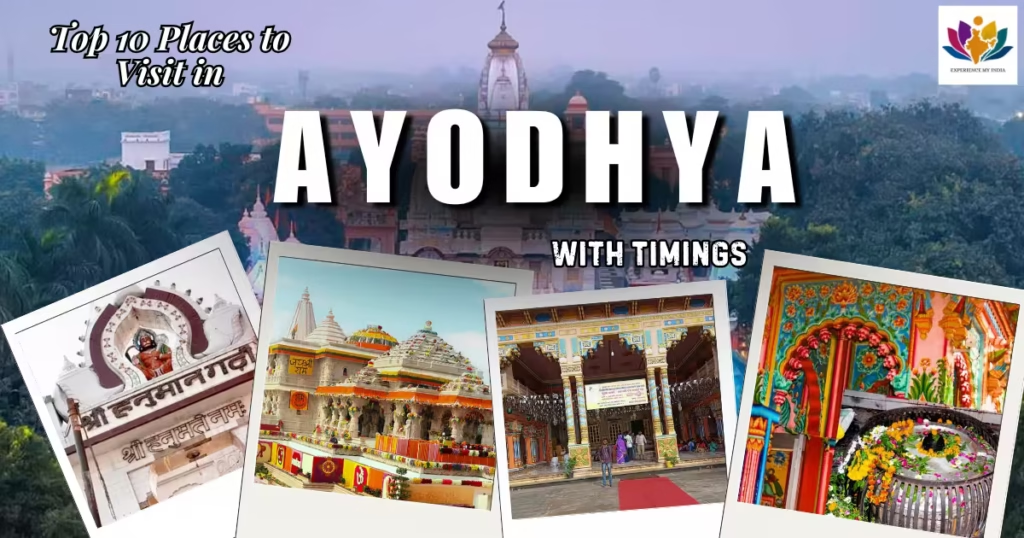
Experience My India covers all 10 Ayodhya sites in our 2-day Ayodhya Pilgrimage Tour starting from ₹3,999 per person.
Famous Places in Varanasi You Should Not Miss
| Place | Why Visit | Best Timing | Entry Fee |
| Kashi Vishwanath Temple | One of 12 Jyotirlingas — the most sacred Shiva temple in India | 3:00 AM – 4:00 AM Mangala Aarti or 7:00 AM morning | Free (e-pass required) |
| Dashashwamedh Ghat | The most famous ghat — site of the grand daily Ganga Aarti | Aarti: 7:00 PM (summer) / 6:30 PM (winter) | Free |
| Manikarnika Ghat | The most sacred cremation ghat in Hinduism — Shiva’s city never sleeps | Any time — respectful observation only | Free |
| Assi Ghat | Southernmost major ghat — sunrise boat rides and Subah-e-Banaras programme | Sunrise — 5:30–7:00 AM | Free |
| Sarnath | 8 km from Varanasi — where Buddha gave his first sermon; Dhamek Stupa | 9:00 AM–5:00 PM | ₹40 (Indians) |
| Sankat Mochan Temple | Ancient Hanuman temple — deeply revered by Varanasi locals | 5:00 AM–12:00 PM and 4:00–9:00 PM | Free |
| Durga Temple (Durga Kund) | 18th-century temple with sacred kund — one of Varanasi’s most visited | 5:00 AM–12:00 PM and 4:00–9:00 PM | Free |
| Tulsi Manas Temple | Marble temple built 1964 at site where Tulsidas wrote Ramcharitmanas | 5:30 AM–12:00 PM and 3:30–9:00 PM | Free |
| Ramnagar Fort | 18th-century Maharaja of Varanasi’s residence across the Ganga | 10:00 AM–5:00 PM | ₹25 (Indians) |
| Banaras Hindu University (BHU) | Asia’s largest residential university — New Vishwanath Temple inside campus | 8:00 AM–8:00 PM | Free |
Things to Do in Ayodhya and Varanasi for a Complete Experience
In Ayodhya
Attend the Sarayu River Aarti at Ram Ki Paidi. The evening Aarti — conducted by 11 priests simultaneously at 7:00 PM in summer and 6:00 PM in winter — is the spiritual centrepiece of any Ayodhya visit. The 20-minute Ramayana laser show begins immediately after at 7:30 PM. Arrive by 5:30 PM to secure a position on the upper ghat terrace.
Walk the Vrindavan Parikrama — the Ayodhya Parikrama circuit. Ayodhya’s 5-km parikrama circuit connects Ram Janmabhoomi, Hanuman Garhi, Kanak Bhawan, and the major ghats in a single devotional loop. Best walked between 5:30 AM and 8:00 AM when the lanes are cool and clean.
Take a Sarayu boat ride. Available from Ram Ki Paidi for ₹100–₹200 per person for a 30-minute Sarayu River ride. The best time is 6:00 AM – 7:30 AM for the cleanest water and quietest atmosphere.
Explore the markets. Ayodhya’s market lanes near Ram Janmabhoomi and the Hanumangarhi bazaar sell Ram Bhakti items, prasad, wooden toys, and the famous Goshala ghee. Best visited between 9:00 AM and 12:00 PM or 4:00 PM and 8:00 PM.
In Varanasi
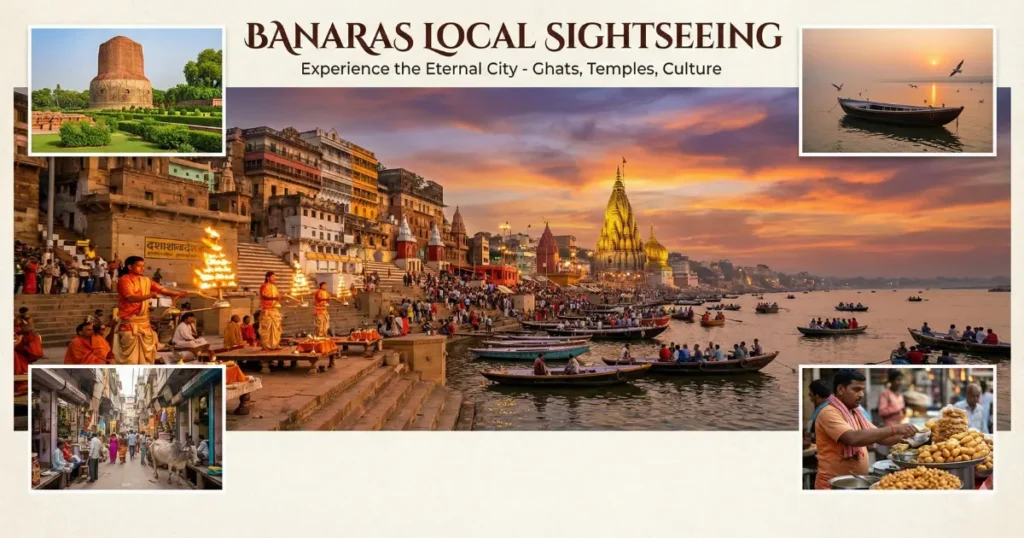
Witness the Ganga Aarti at Dashashwamedh Ghat. Conducted every evening by 7 priests simultaneously with 5-foot brass oil lamps, incense, flowers, conch shells, and bells — the 45-minute ceremony draws 10,000+ people on regular evenings. Arrive 40 minutes early for a seated position. Experience My India reserves boat seats for the Aarti on all Varanasi tour packages.
Take a sunrise boat ride on the Ganga. The 1-hour sunrise boat ride from Assi Ghat to Manikarnika Ghat and back covers all 84 Varanasi ghats while the city wakes. Cost: ₹150–₹500 per person depending on boat type. Best between 5:30 AM and 7:30 AM.
Attend the Subah-e-Banaras programme at Assi Ghat. Every morning from 5:00 AM, this open-air programme features classical Indian music, yoga, and a collective Ganga aarti on the steps of Assi Ghat. Free to attend — one of the most quietly profound experiences available in Varanasi.
Explore the lanes of Old Varanasi (Vishwanath Gali). The 2-km network of lanes between Dashashwamedh Ghat and Kashi Vishwanath Temple is Varanasi’s oldest urban fabric — silk sari shops, brass workshops, lassi stalls, and a hundred small shrines. Best walked with a local guide who knows the entry and exit points.
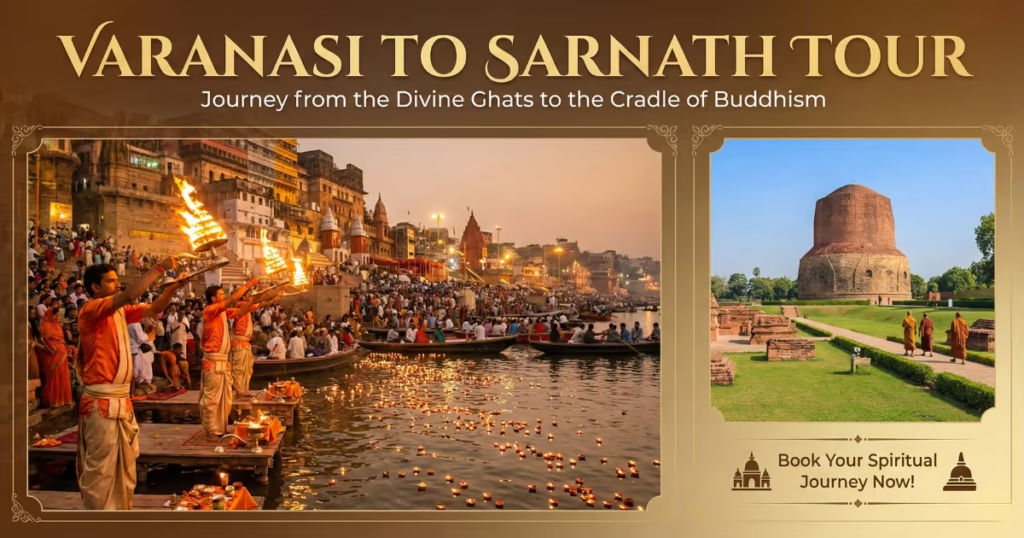
Visit Sarnath (8 km from Varanasi city centre). Where Buddha gave his first sermon after attaining enlightenment — the Dhamek Stupa (3rd century BCE) and Ashoka Pillar base are among the most significant archaeological sites in Asia. Allow half a day. Entry ₹40 for Indians.
Tourist Places Near Ayodhya and Varanasi
Near Ayodhya
| Destination | Distance | Travel Time | Why Visit | EMI Package |
| Varanasi (Kashi) | 200 km | 3.5–4 hours by road | Kashi Vishwanath, Ganga Aarti, Sarnath | Ayodhya–Varanasi 4-Day from ₹8,500 |
| Prayagraj | 164 km | 3 hours by road | Triveni Sangam, Kumbh Mela site | Ayodhya–Prayagraj extension available |
| Lucknow | 135 km | 2 hours by road | Gateway city — Bara Imambara, Hazratganj | Transfer hub for Ayodhya |
| Naimisharanya | 90 km | 2 hours | Sacred forest of 88,000 rishis — deeply peaceful, under-visited | Add-on day trip |
| Chitrakoot | 270 km | 5 hours | Where Ram spent 11 of 14 years of exile | Chitrakoot tour from ₹5,500 |
Near Varanasi
| Destination | Distance | Travel Time | Why Visit | EMI Package |
| Ayodhya | 200 km | 3.5–4 hours | Ram Janmabhoomi, Sarayu Aarti | Ayodhya–Varanasi 4-Day from ₹8,500 |
| Sarnath | 8 km | 20 minutes | Buddha’s first sermon site — Dhamek Stupa | Add-on to any Varanasi tour |
| Prayagraj | 125 km | 2.5 hours | Triveni Sangam — sacred meeting of 3 rivers | Varanasi–Prayagraj day trip |
| Vindhyachal | 65 km | 1.5 hours | Vindhyavasini Devi — one of 51 Shakti Peethas | Half-day addition |
| Chunar Fort | 40 km | 1 hour | 16th-century Mughal fort on the Ganga | Day trip add-on |
Experience My India operates the full Uttar Pradesh pilgrimage circuit — Ayodhya, Varanasi, Prayagraj, and Mathura Vrindavan — as a 7-day package. Call +91-7302265809 for a customised circuit itinerary.
Ayodhya and Varanasi Experience Summary — Quick Reference
| Experience | City | Best Timing | Time Needed | Cost |
| Ram Janmabhoomi darshan (Sugam) | Ayodhya | 6:00–7:30 AM | 45–75 mins | Free |
| Hanuman Garhi Aarti | Ayodhya | 5:30 AM Mangala | 45 mins | Free |
| Sarayu Aarti at Ram Ki Paidi | Ayodhya | 6:00 PM (W) / 7:00 PM (S) | 45 mins | Free |
| Sarayu laser show | Ayodhya | 7:30 PM daily | 20 mins | Free |
| Sarayu boat ride | Ayodhya | 6:00–7:30 AM | 30 mins | ₹100–₹200 |
| Kanak Bhawan darshan | Ayodhya | 8:00–11:00 AM | 30 mins | Free |
| Guptar Ghat | Ayodhya | 6:00 AM or 5–6:30 PM | 1 hour | Free |
| Kashi Vishwanath darshan | Varanasi | 3:00–4:00 AM (Mangala) or 7:00 AM | 45–90 mins | Free |
| Ganga Aarti — Dashashwamedh | Varanasi | 6:30 PM (W) / 7:00 PM (S) | 45 mins | Free |
| Sunrise Ganga boat ride | Varanasi | 5:30–7:30 AM | 1 hour | ₹150–₹500 |
| Subah-e-Banaras — Assi Ghat | Varanasi | 5:00–7:00 AM | 1.5 hours | Free |
| Sarnath — Dhamek Stupa | Near Varanasi | 9:00 AM–5:00 PM | 2–3 hours | ₹40 (Indians) |
| Old Varanasi lanes walk | Varanasi | 6:00–9:00 AM | 1.5–2 hours | Free (guide recommended) |
| Dev Deepawali — ghat lamp festival | Varanasi | November 5, 2026 | Full evening | Free (boat ₹800–₹2,000) |
| Deepotsav — Sarayu lamp festival | Ayodhya | October 20, 2026 | Full evening | Free |
What Nobody Tells You About Visiting Ayodhya and Varanasi
After planning over 50,000 pilgrimages through these cities since 2018, here is what I — Gurudutt, founder of Experience My India — share privately with every visitor before departure:
The Sarayu Aarti and the Ganga Aarti shift timing by one full hour between summer and winter — and most travel sites give only one timing. Sarayu Aarti at Ram Ki Paidi: 7:00 PM in summer, 6:00 PM in winter. Ganga Aarti at Dashashwamedh Ghat: 7:00 PM in summer, 6:30 PM in winter. Arriving at the wrong time means missing the ceremony entirely. Experience My India confirms exact current timings on the morning of every visit.
Dev Deepawali and Deepotsav fall within 15 days of each other. Dev Deepawali (Varanasi) falls on the Kartik Purnima, 15 days after Diwali — in 2026, that is November 5. Deepotsav (Ayodhya) falls on the Diwali day — October 20, 2026. A 7-day Ayodhya–Varanasi circuit can catch both events. Hotels for both festivals within the main ghat areas fill completely 60–90 days before the date.
Kashi Vishwanath Temple e-pass is free but requires advance booking. Since the Kashi Vishwanath Corridor opened in 2022, a free online e-pass system manages entry. Without a pass, the queue on weekends and festival mornings exceeds 3–4 hours. With a pass, the same darshan takes 30–60 minutes. Book on the official Kashi Vishwanath portal 2–7 days before your visit.
Varanasi’s sunrise boat ride prices are negotiated at the ghat — and tourists typically pay 3x the local rate. The standard rate for a shared sunrise boat from Assi to Manikarnika and back: ₹150–₹200 per person. What boatmen typically quote to first-time visitors: ₹500–₹800. Experience My India pre-arranges boat rides at confirmed rates for all tour groups — no ghat negotiation on arrival.
Ayodhya’s Ram Ki Paidi laser show is cancelled on heavy rain evenings without advance notice. No official notification system exists — only local knowledge provides real-time updates. Experience My India guides carry live updates every evening and adjust the itinerary if the show is cancelled.
Manikarnika Ghat in Varanasi operates 24 hours — visiting before 7:00 AM gives you a completely different, quieter experience than midday. The cremation fires burn day and night, but the 5:30 AM – 7:00 AM window has fewer vendors, quieter surroundings, and a more contemplative atmosphere than the busy midday ghat. Maintain respectful silence and do not photograph the funeral pyres.
Experience My India plans all Ayodhya and Varanasi travel around these seasonal and operational realities. WhatsApp +91-7302265809 to book a tour planned around how these cities actually work.
Know Before You Plan Your Ayodhya and Varanasi Visit
- The best time to visit both cities is October to March — comfortable temperatures, all ghats and boat services operational, all sites accessible
- Book your Ram Janmabhoomi Sugam Darshan e-pass exactly 15 days in advance — slots open at midnight and fill by morning on weekends
- Book your Kashi Vishwanath e-pass 2–7 days in advance on the official portal — weekend queues without a pass exceed 3 hours
- For Deepotsav (Ayodhya, October 20) and Dev Deepawali (Varanasi, November 5) — both in 2026 — book hotels 60–90 days ahead, prices increase 2x–4x
- The Sarayu Aarti and Ganga Aarti each shift by one hour between summer and winter — always confirm the current timing before planning your arrival
- Varanasi boat rides should be pre-arranged at confirmed rates — ghat-side negotiation results in tourists paying 3x the standard fare
- Both cities are deeply sacred — cover shoulders and knees at all temples; remove footwear before entering all shrines
- Most major temples in both cities are free — anyone charging entry at the temple gate is unofficial
- Avoid May and June for outdoor activities in both cities — temperatures regularly exceed 42°C and ghat walks become exhausting after 9:00 AM
- During Ram Navami (April 6, 2026) in Ayodhya, road closures affect the entire temple belt — arrive 2 days before or plan for 3–4 hour transit delays within the city
- Varanasi’s narrow old-city lanes are disorienting without a local guide — getting lost for 45–60 minutes is common for first-time visitors
- Experience My India plans both cities together as a single guided circuit — hotel, timing windows, e-passes, confirmed boat rates, and festival logistics handled completely. WhatsApp +91-7302265809.
Frequently Asked Questions — Best Time to Visit Ayodhya and Varanasi
October to February is the best period to visit Ayodhya. Temperatures range from 8°C to 25°C, all 10 major sites are comfortable to walk, and the Sarayu Aarti at Ram Ki Paidi is at its most atmospheric. November and December are the most pleasant months. For the grandest festival experience — Deepotsav in October or Ram Navami in April — book 60–90 days in advance through Experience My India at +91-7302265809.
Ayodhya in May 2026 will be very hot — average temperatures of 32°C to 44°C with peak heat between 11:00 AM and 5:00 PM. Outdoor sites like Ram Ki Paidi, Guptar Ghat, and Mani Parbat become exhausting in this window. If visiting in May, restrict temple and ghat visits to before 8:30 AM and after 5:30 PM. Hotel rates drop 40–50% compared to winter. Experience My India adjusts all May itineraries around early-morning and evening windows — call +91-7302265809.
Avoid visiting Ayodhya in May and June if outdoor sightseeing is your priority — temperatures regularly reach 44°C and the stone lanes and ghats become genuinely exhausting by mid-morning. Also avoid arriving without a pre-booked Sugam Darshan e-pass on festival weekends (Ram Navami in April, Deepotsav in October) — the queue without a pass can run 4–6 hours. Experience My India coordinates Sugam booking and seasonal itinerary adjustments — call +91-7302265809.
June, July, and August are the least crowded months in Varanasi — monsoon heat and limited boat operations keep casual tourist volumes low. For pilgrims wanting minimal queues at Kashi Vishwanath Temple, Tuesday and Wednesday mornings in June between 5:00 AM and 7:00 AM offer the shortest darshan queues of the year. However, Ganga boat rides may be suspended July–August due to flooding. Experience My India advises on current river conditions before every booking — call +91-7302265809.
No — Ayodhya and Varanasi are 200 km apart (3.5–4 hours by road) and each city requires at least 2 full days for a meaningful experience. A combined visit requires a minimum of 4 days: 2 days in Ayodhya (Ram Janmabhoomi, Sarayu Aarti, Guptar Ghat, Kanak Bhawan) and 2 days in Varanasi (Kashi Vishwanath, Ganga Aarti, Sarnath, sunrise boat ride). Experience My India’s Ayodhya–Varanasi 4-Day Tour covers both cities from ₹8,500 per person — call +91-7302265809.
The Ganga Aarti at Dashashwamedh Ghat runs at 7:00 PM in summer (April–October) and 6:30 PM in winter (November–March). Arrive 40 minutes before start time to secure a seated position on the ghat steps or upper platform. On festival evenings (Dev Deepawali, Mahashivratri), arrive 90 minutes ahead — attendance exceeds 50,000 people. Experience My India reserves front-row boat positions for the Aarti on all Varanasi tour packages — call +91-7302265809.
Four days minimum covers both cities properly — 2 days in Ayodhya and 2 days in Varanasi. Five days adds Sarnath (half day) and Prayagraj (Triveni Sangam). Seven days covers the complete Uttar Pradesh circuit including Mathura Vrindavan. Experience My India designs custom 4-day, 5-day, and 7-day packages for all combinations — call +91-7302265809 for a tailored itinerary.
Pack light, breathable cotton clothing that covers shoulders and knees — both cities are sacred pilgrimage sites with strict dress codes at major temples. Easy slip-on footwear (you remove shoes at every temple). A small backpack for water, prasad, and a dupatta or scarf for women. Leave DSLR cameras and laptops at the hotel when visiting Kashi Vishwanath — electronics are prohibited. For monsoon visits, a compact waterproof bag is essential. Experience My India provides a full packing checklist with every booking — call +91-7302265809.
Yes. Experience My India offers fully customised Ayodhya and Varanasi tours for couples, families, spiritual groups, senior citizens, and NRI pilgrims. Every itinerary is planned around your temple priorities, pace, mobility needs, festival timing, and budget. We send a personalised itinerary within 30 minutes of your WhatsApp enquiry. Tours start from ₹3,999 per person for Ayodhya only, and ₹8,999 for the combined Ayodhya–Varanasi circuit. WhatsApp +91-7302265809.
Yes — with proper planning. Experience My India provides AC cab throughout both cities, hotels within 500 metres of primary temples and ghats, guides who walk at your group’s pace, and morning-heavy itineraries that avoid afternoon heat and weekend crowds. Ram Janmabhoomi has a wheelchair-accessible entry lane. Prem Mandir–equivalent open spaces in Varanasi (BHU campus, Assi Ghat) are accessible and crowd-free in the morning. WhatsApp +91-7302265809 with mobility requirements before booking.
Dev Deepawali is Varanasi’s most spectacular annual event — all 84 ghats of Varanasi are lit with 10 lakh earthen lamps on the Kartik Purnima, 15 days after Diwali. In 2026, Dev Deepawali falls on November 5. The lamps are lit at sunset (approximately 5:30 PM) and the ghats glow until midnight. Boat rides on the Ganga during this evening cost ₹800–₹2,000 per person and must be booked 4–6 weeks in advance. Experience My India secures festival boats — call +91-7302265809 immediately for 2026 bookings.
Deepotsav is Ayodhya’s annual Diwali celebration on the Sarayu River ghats — 25 lakh earthen lamps are lit simultaneously, setting a Guinness World Record each year. In 2026, Deepotsav falls on October 20 (Diwali day). The lamps are lit at sunset along all Ram Ki Paidi ghats, accompanied by fireworks, cultural performances, and a laser show. Hotels in Ayodhya within 1 km of Ram Ki Paidi fill completely 60 days before. Experience My India secures festival hotels and reserved ghat seating — call +91-7302265809 now for October bookings.
Recommended products
-
2 Night 3 Days Ayodhya Varanasi Tour Package
Original price was: ₹9,000.00.₹8,000.00Current price is: ₹8,000.00. -
3 Nights 4 Days Ayodhya Varanasi Tour Package
Original price was: ₹11,000.00.₹10,000.00Current price is: ₹10,000.00. -
5 Days Ayodhya Varanasi Tour Package
-
10 Days Complete Uttar Pradesh Spiritual Tour


Ready to Plan Your Ayodhya and Varanasi Yatra with Experience My India?
WhatsApp us and receive your personalised Ayodhya–Varanasi itinerary within 30 minutes — temple timings, Sugam Darshan booking, festival hotel, AC cab, and all experiences across both cities planned and confirmed. Tours from ₹3,999 per person.
💬 WhatsApp +91-7302265809 — Book Now