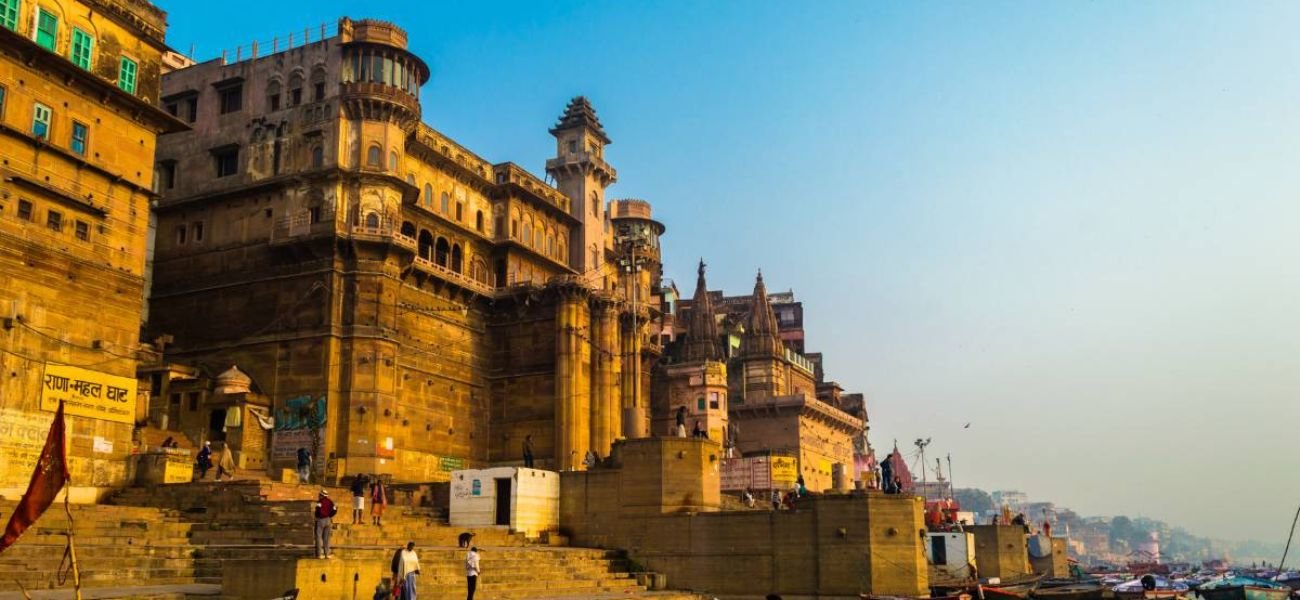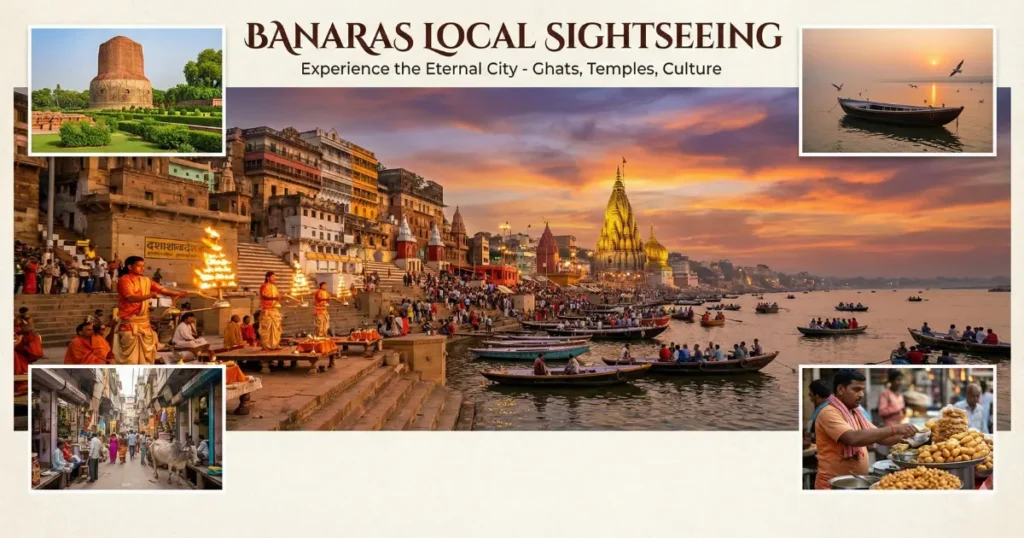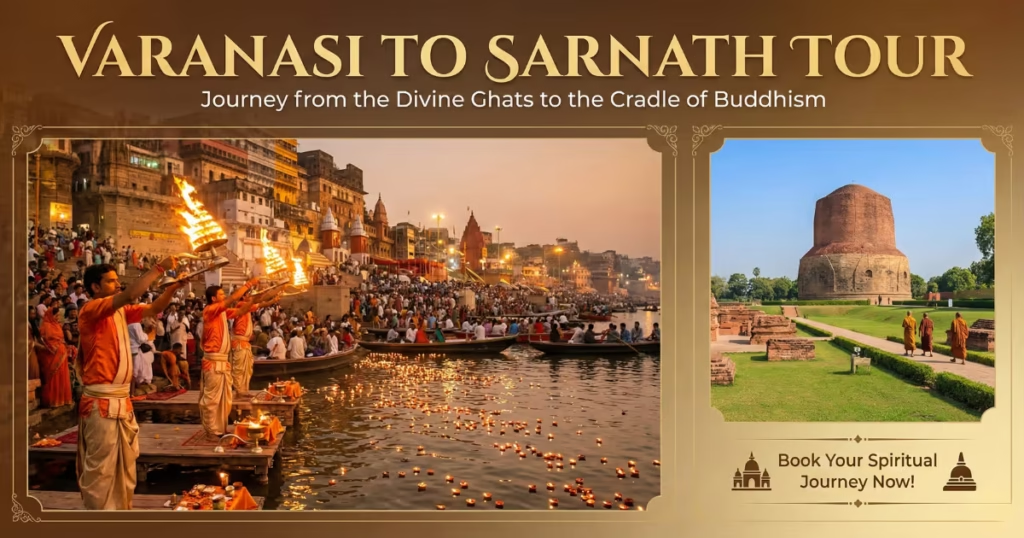


Yes – Banaras and Varanasi are exactly the same city, along with Kashi. All three are names for the same ancient city in Uttar Pradesh, reflecting different eras and contexts: Kashi is the oldest spiritual name meaning “City of Light,” Varanasi is the official name derived from the Varuna and Assi rivers and Banaras is the colloquial cultural name. Experience My India runs guided Varanasi tours from ₹3,999 per person. WhatsApp +91-7302265809.
Are Banaras and Varanasi the Same City? The Direct Answer
Yes. Banaras and Varanasi are exactly the same city and Kashi is also the same city. There is no geographical, administrative or historical sense in which these are three different places – they are three different names for one ancient settlement on the banks of the Ganga in Uttar Pradesh and the existence of three names is one of the most common sources of confusion for first-time visitors planning a pilgrimage here.
This confusion is genuinely understandable. A pilgrim researching their trip might read a 19th-century travel account that refers to “Benares,” see “Varanasi” on every modern map and flight ticket and then hear local residents and priests refer to “Kashi” throughout their visit – and reasonably wonder whether these are three distinct locations, three different districts within a larger area, or simply different names with no real difference at all. The honest and complete answer is the last one: same city, same Ganga ghats, same Kashi Vishwanath Temple, same Dashashwamedh Ghat. The names differ. The place does not.
I am Gurudutt, born and raised in Braj Bhoomi and founder of Experience My India. Since 2018, my team has guided 10,000+ pilgrims through Varanasi and one of the questions we are asked most often – usually by first-time visitors in the days before their trip – is some version of “is Banaras the same place as Varanasi and which one should I be telling people I’m visiting?” This guide answers that question completely, with the history, etymology and cultural context behind each of the three names, so that by the time you arrive in this city, you understand not just that the names are interchangeable but why each one exists and what it represents.
Kashi – The Spiritual Soul of the City
Origin and Meaning
Kashi is the oldest of the three names and its origin lies in the Sanskrit word “kash,” meaning “to shine” or “to illuminate.” Kashi is most commonly translated as the “City of Light” – a name that carries deep theological significance in Hindu tradition. According to Hindu belief, Kashi is the eternal abode of Lord Shiva and the name reflects the idea that this city is a place of divine illumination – both literally, in the sense of the countless oil lamps that light the ghats during the evening Ganga Aarti and spiritually, in the sense of the illumination of the soul that pilgrims seek through darshan, the Ganga and the city’s countless temples.
How Kashi Is Used Today
Kashi is the name most commonly used in religious scriptures, ancient Hindu texts and by devout pilgrims when they want to emphasise the city’s divine status rather than its geographical or administrative identity. When a priest at Kashi Vishwanath Temple refers to the city, or when a pilgrim says they are going “to Kashi for darshan,” the word carries a specific devotional weight that “Varanasi” – the administrative name – does not convey in the same way. You will hear “Kashi” used constantly in temple announcements, in the names of religious organisations, in the titles of ancient texts describing the city’s glory and in everyday conversation among devout visitors and residents.
The renaming of Kashi Vishwanath Temple’s surrounding corridor – the Kashi Vishwanath Dham project completed in 2021 – deliberately used the name “Kashi” rather than “Varanasi,” a choice that reflects exactly this distinction. The corridor’s purpose is explicitly spiritual and devotional, connecting the temple directly to the Ganga and the name “Kashi Vishwanath Dham” signals that spiritual identity clearly. Experience My India’s guides use “Kashi” specifically when discussing the spiritual and devotional aspects of a pilgrim’s visit – the Ganga Aarti, the temple darshan, the significance of moksha – because this is the context in which the name carries its full meaning. WhatsApp +91-7302265809.
Book Your Ayodhya Varanasi Tour Package
Varanasi – The Official Modern Name
Origin and Meaning
Varanasi is the formal, administrative name of the city and its origin is geographical rather than spiritual. The name is a combination of two rivers that bound the city – the Varuna river to the north and the Assi river to the south. The ancient city was situated on the strip of land between these two waterways and the combination of their names – Varuna and Assi – gives “Varanasi.” This etymology is one of the clearest examples in Indian geography of a place name derived directly from its physical location between two rivers.
How Varanasi Is Used Today
Varanasi is the name you will find on every map, on flight and train tickets, on government records, on official tourism websites and in international news coverage. If you book a flight, the destination code and city name on your ticket will say Varanasi. If you search for the city’s district administration, its official government portals, its postal addresses – all of these use Varanasi. This is the name that exists in the formal, administrative and geographical sense and it is the name that any official documentation, booking system or government interaction will use.
For practical travel purposes, Varanasi is the name that matters when you are booking transport, looking up official information, or communicating with anyone outside the immediate cultural and religious context of the city itself. Experience My India uses “Varanasi” in all official package names, booking confirmations and travel documentation – because this is the name that connects correctly to flights, trains, hotels and every other practical element of trip planning. WhatsApp +91-7302265809.
Banaras – The Cultural Heart
Origin and Meaning
Banaras is a phonetic variation of Varanasi and its evolution reflects centuries of local dialect change combined with the effects of British colonial administration. Over time, the formal Sanskrit-derived “Varanasi” was softened in everyday spoken usage into forms that eventually became “Banaras,” and during the period of British rule in India, this was further anglicised into “Benares” – the spelling that appears throughout 18th, 19th and early 20th century British accounts, maps and administrative documents of the period.
How Banaras Is Used Today
Banaras is, without question, the most popular cultural and poetic name for the city among people who live here, who have grown up here, or who engage with the city’s artistic and cultural traditions. The city’s world-famous silk weaving tradition is universally known as Banarasi silk – not “Varanasi silk.” The classical music tradition associated with this city, the literary works written about it, the everyday conversation of residents describing their hometown, the food culture, the ghats as experienced by people who live their daily lives along them – all of this carries the name Banaras.
This is the name with the deepest emotional and cultural resonance. When someone who has lived in this city their whole life describes their relationship to the place – the lanes they grew up in, the ghat where their family has performed rituals for generations, the specific qualities of the city’s character that distinguish it from anywhere else in India – they are far more likely to say “Banaras” than “Varanasi.” Experience My India’s local guides – many of whom have generational roots in this region – naturally use “Banaras” when speaking about the city’s culture, its food, its music and its everyday life, reserving “Varanasi” for the practical and administrative context. WhatsApp +91-7302265809.
Book Sugam Darshan and Rudrabhishek at Kashi Vishwanath
Why Did the Name Change from Banaras to Varanasi?
The Official Renaming
The question “why did the name change from Banaras to Varanasi” assumes a single renaming event, but the reality is more layered. Varanasi has, in a sense, always been the underlying name – the Varuna-Assi etymology long predates any colonial-era spelling. What changed was which name was treated as official in formal administration.
During British colonial rule, the anglicised spelling “Benares” became the standard form used in official documents, on maps and in administrative communication – this was the colonial-era English rendering of the local pronunciation, which itself had evolved from “Varanasi” over centuries. After India’s independence, there was a broader movement across the country to restore the original Sanskrit-derived names of cities that had been altered under colonial administration – similar processes renamed Bombay to Mumbai, Calcutta to Kolkata and Madras to Chennai in later decades. For this city, the restoration meant a return to “Varanasi” as the official name, moving away from the colonial-era “Benares” spelling, though the spoken form “Banaras” had never actually disappeared from everyday local usage – it had simply continued alongside the official “Benares” spelling throughout the colonial period.
What This Means in Practice
So in practical terms, “Varanasi” was restored as the official administrative name, while “Banaras” continued – as it always had – as the everyday spoken and cultural name used by residents and in cultural contexts and “Kashi” continued – as it always had – as the spiritual and religious name used in temples, scriptures and devotional contexts. None of the three names ever truly disappeared; what changed was which name carried official, administrative weight at different points in history. Today, all three names coexist, each carrying its own context and a visitor who understands this coexistence will find the city’s naming far less confusing. Experience My India explains this history to pilgrims who ask, because understanding it adds genuine depth to the experience of visiting a city whose very name carries layers of history. WhatsApp +91-7302265809.
Which Name Should You Use – and When?
A Practical Guide for Travellers
For a first-time visitor, the question of which name to use can feel like a minor source of anxiety – will using the “wrong” name seem disrespectful or uninformed? The honest answer is that all three names are widely understood by everyone in the city and no one will be confused or offended by any of them. That said, understanding the natural context for each name will help you sound more like someone who has done their homework and more importantly, will help you understand the tone and context of what locals, priests and guides are telling you.
When you are booking flights, trains, hotels or any official travel arrangement, “Varanasi” is the name that will appear on all documentation and the name you should use in any formal or administrative communication. When you are discussing the spiritual significance of your visit – the Ganga Aarti, temple darshan, the concept of moksha, the religious history of the city – “Kashi” is the name that carries this meaning most naturally and you will hear priests, religious literature and devotional contexts use this name consistently. When you are talking about the city’s culture, food, silk, music, daily life or simply referring to the place the way someone who lives there would – “Banaras” is the natural choice and using it in conversation with local residents often creates an immediate sense of familiarity and warmth.
A Practical Example
If you tell a Varanasi hotel “I’m flying into Varanasi on the 15th,” that’s the correct, expected usage. If a priest at Kashi Vishwanath Temple tells you “Kashi grants moksha to all who die within its boundaries,” that’s the religious context where “Kashi” is natural. If a local shopkeeper selling silk sarees says “this is genuine Banarasi silk, made right here in Banaras,” that’s the cultural context. All three sentences refer to exactly the same city – and a visitor who recognises this moves through these different contexts with ease rather than confusion. Experience My India’s guides naturally shift between these names depending on context and explain this shift to first-time visitors so the experience feels coherent rather than puzzling. WhatsApp +91-7302265809.
🙏 Planning Your Varanasi (or Banaras, or Kashi) Pilgrimage? Experience My India covers the Ganga Aarti, Kashi Vishwanath Temple, Sarnath and all major ghats in every Varanasi package – with a guide who explains the city’s history, culture and spiritual significance throughout your visit. Packages from ₹3,999 per person · AC cab, hotel, guide included. View Our 2 Days Varanasi Tour Package WhatsApp +91-7302265809
How These Names Connect to Your Pilgrimage Experience
Kashi Vishwanath Temple – A Name That Carries Both
The single most important temple in this city is named Kashi Vishwanath Temple – and the name itself is a perfect illustration of how these naming layers work in practice. “Kashi” identifies the city in its spiritual sense and “Vishwanath” – meaning “Lord of the Universe,” a name for Lord Shiva – identifies the deity. The temple’s name has never been “Varanasi Vishwanath Temple,” because the spiritual context calls for the spiritual name of the city. This is true across religious sites throughout the city – temple names, ghat names connected to specific religious narratives and the language used in aarti and puja consistently favour “Kashi.”
The Ganga Aarti and the “City of Light”
The daily Ganga Aarti at Dashashwamedh Ghat – one of the most visually striking rituals in all of India, performed every evening with large brass lamps, chanting and the participation of thousands of devotees and visitors – connects directly back to the meaning of “Kashi” as the City of Light. The lamps used in this aarti are a living expression of the etymology itself – “kash,” to shine. When Experience My India’s guides explain the Ganga Aarti to first-time visitors, this connection between the ritual itself and the ancient meaning of the city’s oldest name adds a layer of understanding that transforms the experience from “watching a beautiful ceremony” to “witnessing a ritual that embodies the literal meaning of this city’s most ancient name.”
Banarasi Silk and the Cultural Economy
For visitors who want to bring something tangible home from their visit, Banarasi silk sarees represent one of the most significant cultural products associated with this city – and the name itself, “Banarasi,” ties directly to the cultural identity discussed earlier. These sarees are hand-woven by artisans whose families have practised this craft for generations, predominantly in the lanes around the old city. A genuine hand-woven Banarasi silk saree costs ₹3,000 to ₹25,000 or more depending on the complexity of the work, the quality of the silk and the intricacy of the zari (gold or silver thread) work. Experience My India guides take visitors to verified weaver cooperatives where pricing is fair and the silk is genuinely hand-woven – distinguishing this from machine-made imitations sold at inflated prices in tourist-facing shops. WhatsApp +91-7302265809.
Ground Truth – What Nobody Tells You
The confusion about these three names is almost universal among first-time visitors and it is not a sign of poor research – it reflects a genuinely unusual situation where a major Indian city has three actively used names rather than one name with a historical footnote. Most cities that underwent post-independence renaming – Mumbai, Kolkata, Chennai – have largely settled into using the new name in everyday speech, with the older name surviving mainly in historical references. Varanasi is different: all three names remain in active daily use by different groups for different purposes, simultaneously, in the same city, today. This is not an outdated naming confusion that will eventually resolve – it is the permanent, living character of how this city refers to itself.
The spelling “Benares” still appears more often than most visitors expect, particularly in older guidebooks, in the names of some long-established businesses and hotels and in historical references to the city’s past. A pilgrim researching their trip using older sources – including some classic travel writing about India – will encounter “Benares” frequently and should understand this is simply the colonial-era spelling of “Banaras,” not a fourth name or a different place.
GPS and map applications consistently use “Varanasi” – this is worth knowing because if you ask a rickshaw driver or local resident for directions using only “Varanasi” in a very local, neighbourhood context, you may occasionally get a slightly puzzled response, simply because in hyper-local daily conversation “Banaras” is so dominant that “Varanasi” can sound oddly formal – similar to how a Mumbai resident giving directions in their own neighbourhood would rarely refer to “Mumbai” by name at all, simply because the city name isn’t needed in a hyper-local context. This is a minor point but explains why some visitors feel a brief disconnect between the name on their map app and the name used in conversation around them.
The Kashi Vishwanath Dham corridor project, completed in 2021, significantly transformed the area immediately surrounding Kashi Vishwanath Temple – creating a direct, wide pedestrian corridor connecting the temple to the Ganga at Lalita Ghat. This project’s name deliberately uses “Kashi” rather than “Varanasi,” and visitors who have read about “Varanasi” extensively before their trip sometimes do not immediately connect this major, heavily-publicised infrastructure project to “their” city until they realise Kashi Vishwanath Dham and Varanasi’s main temple corridor are the same thing.
Experience My India’s guides are asked some version of “is this the same place as [the other name]” by nearly every first-time visitor at some point during a Varanasi tour – usually triggered by hearing a priest say “Kashi” after the visitor has spent weeks researching “Varanasi,” or by seeing “Banarasi” on a silk shop sign. This is one of the most consistently asked questions across thousands of tours, which is part of why this guide exists – to answer it completely before you even arrive, so the moment of realisation happens before your trip rather than during it.
Know Before You Plan Your Visit
Banaras, Varanasi and Kashi are the same city – there is no geographical difference, no separate district and no distinction in terms of what you will see and visit. Use “Varanasi” for all bookings, official documentation, flights, trains and hotel reservations, since this is the name that connects correctly to every formal travel system. Expect to hear “Kashi” used constantly in religious and devotional contexts – at temples, in the names of religious sites like Kashi Vishwanath Dham and in conversations about the spiritual significance of the city.
Expect to hear “Banaras” used constantly in everyday conversation, in the names of cultural products like Banarasi silk and by local residents describing their city and its way of life. If you encounter the spelling “Benares” in older books, hotel names or historical references, this is simply the colonial-era spelling of “Banaras” – not a different place. None of these names will confuse anyone in the city if you use them – all three are universally understood and shifting between them naturally based on context is simply part of how this city talks about itself. Experience My India’s guides explain this naturally throughout every tour, connecting the names to the specific sites and experiences where each one is most meaningful. WhatsApp +91-7302265809.
Frequently Asked Questions – Banaras and Varanasi Same?
Yes – Varanasi, Kashi and Banaras are exactly the same city. There is no geographical difference, no separate area and nothing distinct about what each name refers to. Varanasi is the official administrative name derived from the Varuna and Assi rivers. Kashi is the ancient spiritual name meaning “City of Light,” used in religious and devotional contexts. Banaras is the colloquial cultural name, used in everyday conversation and tied to traditions like Banarasi silk. Experience My India covers all major sites in this city under any of these names. WhatsApp +91-7302265809.
No – Kashi is not a separate part, district or area within Varanasi. Kashi is simply another name for the entire city of Varanasi, used specifically in spiritual and religious contexts. When religious texts, priests or devotional literature refer to “Kashi,” they are referring to the same complete city that appears as “Varanasi” on maps and official documents. The Kashi Vishwanath Dham – the temple corridor project completed in 2021 – is located within Varanasi, not as a separate area but as a specific religious complex within the city.
“Banaras” is the modern, commonly used spelling that reflects the actual pronunciation used by residents and in cultural contexts today. “Benares” is the older, anglicised colonial-era spelling that was standard in British administrative documents, maps and English-language writing during the colonial period. Both spellings refer to the same name and the same city – “Benares” is simply how “Banaras” was spelled in English during an earlier historical period. You may still encounter “Benares” in older books, hotel names and historical references. Experience My India uses “Banaras” as the modern spelling in cultural contexts.
The change was not a renaming of “Banaras” specifically, but the restoration of “Varanasi” – derived from the Varuna and Assi rivers – as the official administrative name after India’s independence, replacing the colonial-era anglicised spelling “Benares” that had been used in official documents during British rule. This mirrored similar restorations across India, such as Bombay becoming Mumbai. Importantly, “Banaras” as a spoken, cultural name never disappeared – it continued in everyday use throughout and after this official change, alongside “Kashi” in religious contexts. Experience My India explains this layered history to pilgrims who ask. WhatsApp +91-7302265809.
Kashi is derived from the Sanskrit word “kash,” meaning “to shine” or “to illuminate,” and the name is most commonly translated as the “City of Light.” This meaning connects directly to the city’s spiritual identity in Hindu tradition – Kashi is considered the eternal abode of Lord Shiva and the name reflects both the literal light of the countless lamps used in rituals like the Ganga Aarti and the spiritual illumination that pilgrims seek through visiting this city. Experience My India’s guides explain this connection during the Ganga Aarti experience, included in all Varanasi packages from ₹3,999 per person.
The city is called Varanasi because of its geographical location between two rivers – the Varuna river to the north and the Assi river to the south. The name “Varanasi” is a combination of these two river names, reflecting the ancient settlement’s position on the strip of land between them. This is the official, administrative name used on maps, flight and train tickets, government records and all formal documentation. Experience My India uses “Varanasi” in all official package names and travel documentation for clarity and consistency. WhatsApp +91-7302265809.
Banarasi silk – the famous hand-woven silk sarees produced in this city – takes its name directly from “Banaras,” the cultural and colloquial name of the city, reflecting how deeply this craft tradition is tied to local cultural identity rather than the city’s administrative identity as “Varanasi.” Genuine hand-woven Banarasi silk sarees cost ₹3,000 to ₹25,000 or more depending on quality and craftsmanship and are produced by artisan families in the old city’s lanes. Experience My India guides visit verified weaver cooperatives as part of Varanasi tour packages, ensuring fair pricing and genuine hand-woven quality. WhatsApp +91-7302265809.
Either name will be understood without any confusion – residents of this city use both names interchangeably depending on context and neither is considered more correct or more respectful than the other in everyday conversation. “Varanasi” is the natural choice for travel, booking and administrative contexts. “Banaras” is the natural choice when discussing food, culture, daily life or simply referring to the city the way a long-time resident would. “Kashi” is the natural choice in religious and spiritual conversations. Experience My India’s guides shift between these names naturally based on context throughout every tour.
Recommended products
-
1 Night 2 Days Varanasi Tour Package
Original price was: ₹7,000.00.₹6,000.00Current price is: ₹6,000.00. -
10 Days Complete Uttar Pradesh Spiritual Tour
-
2 Nights 3 Days Varanasi Tour Package
Original price was: ₹11,000.00.₹9,500.00Current price is: ₹9,500.00. -

5 Days Ayodhya Varanasi Tour Package

🙏 Ready to Experience Varanasi – Kashi, Banaras – with Experience My India?
WhatsApp us and receive your personalised itinerary within 30 minutes – Ganga Aarti, Kashi Vishwanath Temple, Banarasi silk lanes, Sarnath, hotel and a guide who brings the full layered history of this city to life throughout your visit.
Packages from ₹3,999 per person · All inclusive.
WhatsApp +91-7302265809 – Book Now
Jai Shri Ram 🙏