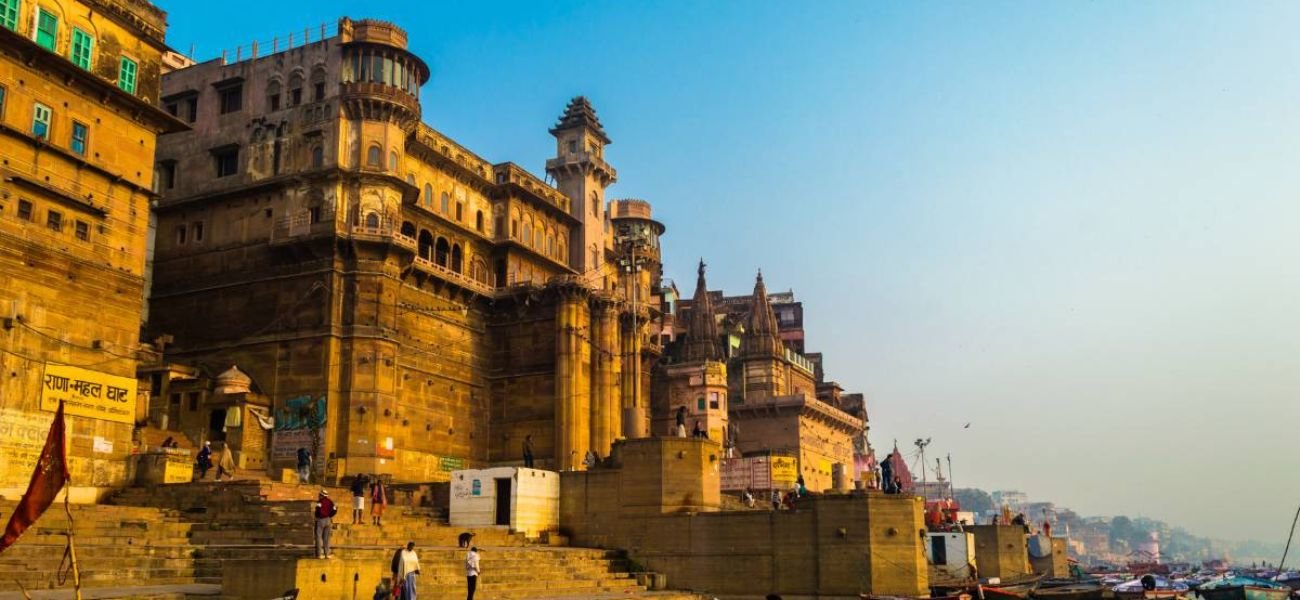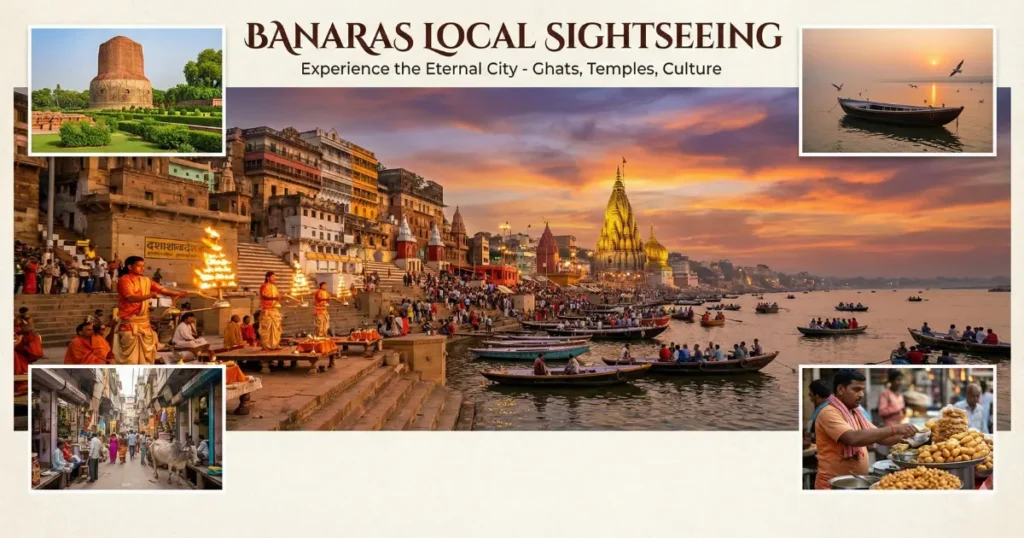

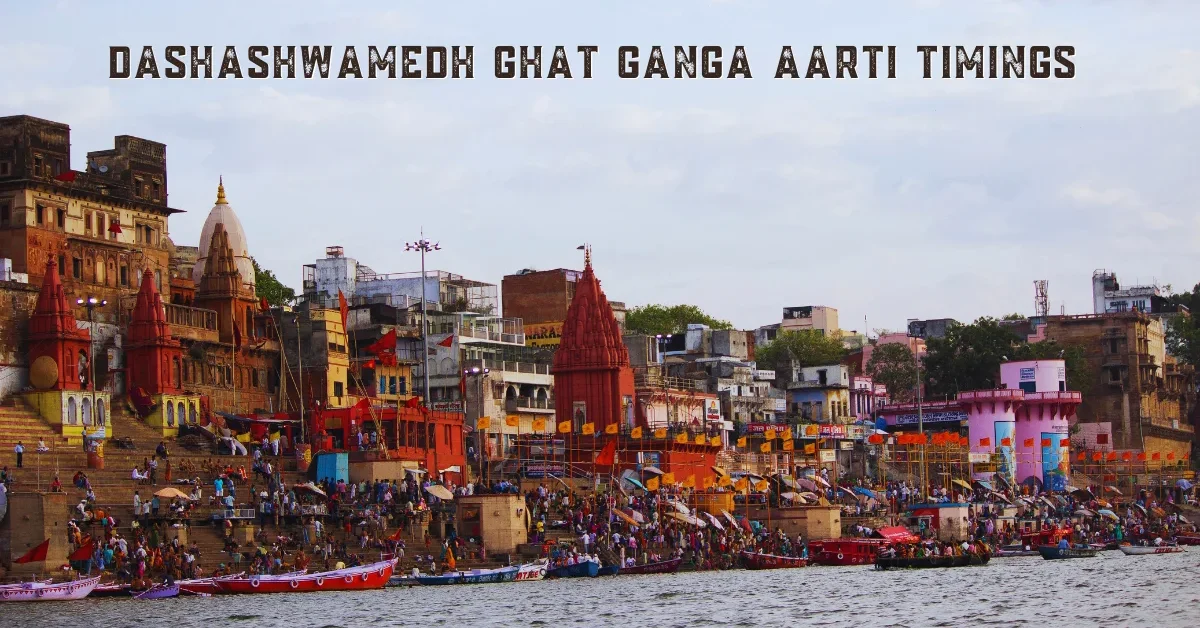
If you have ever stood near the banks of the Ganga in Varanasi around sunset, you probably noticed something unusual. The ghats slowly begin to fill with people even before the evening lamps appear. Pilgrims sit quietly on the stone steps, boatmen adjust their boats along the river, and priests start arranging brass lamps and incense stands.
Many first-time visitors arrive with one simple question in mind — what exactly is the Dashashwamedh Ghat Aarti timing?
Because the truth is, the Ganga Aarti here is not just a ritual you watch. It feels more like an atmosphere you step into. The chanting, the rhythm of bells, the smell of incense drifting through the air — everything slowly builds toward a moment that thousands of people wait for every evening.
However, pilgrims often realize that understanding the Dashashwamedh Ghat Aarti timing properly makes a big difference. If you arrive late, the entire ghat may already be crowded. If you arrive early, you experience the calm moments before the ceremony begins.
So before planning your visit, it helps to understand the actual Dashashwamedh Ghat Ganga Aarti timing, seasonal schedule, and a few practical details that most visitors only learn after reaching Varanasi.
Table of Contents
ToggleWhy Dashashwamedh Ghat Aarti Feels Different from Other Rituals
Varanasi has many ghats and temples where rituals take place throughout the day. However, the evening ceremony at Dashashwamedh Ghat has become one of the most recognizable spiritual events in India.
The reason is simple.
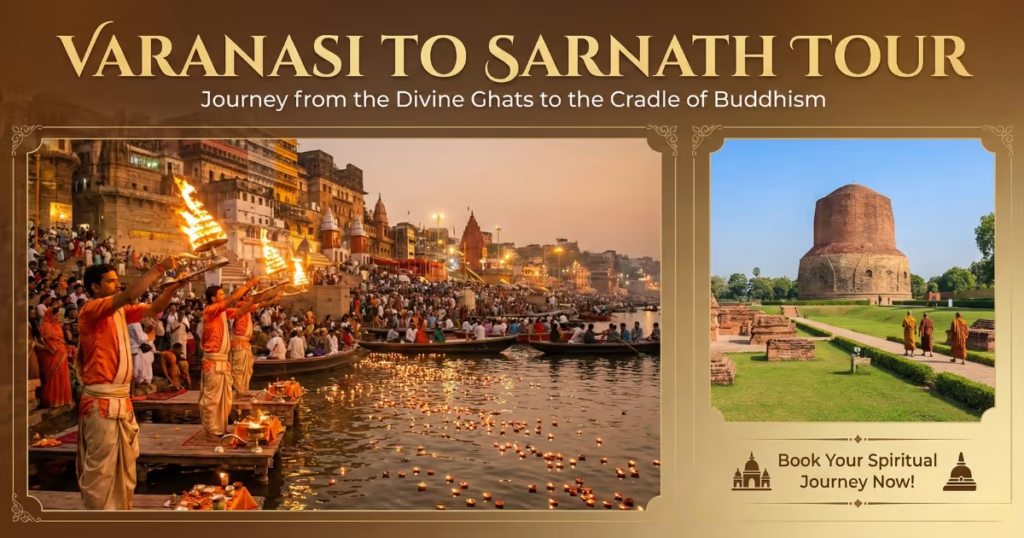
Unlike small temple rituals, this aarti is performed as a synchronized ceremony by several priests standing in a row facing the Ganga. Each priest performs the ritual using large brass lamps, incense burners, and conch shells.
The steps are almost choreographed.
First comes the blowing of conch shells. Then incense offerings begin. After that, the priests lift large lamps and move them in circular patterns toward the river.
Many visitors describe the experience as mesmerizing. Even people who are not particularly religious often say they feel a quiet sense of stillness while watching the ceremony.
Because of this, knowing the correct Dashashwamedh Ghat Aarti timing becomes important if you want to witness the full ritual.
Dashashwamedh Ghat Daily Aarti Schedule
The Dashashwamedh Ghat evening Aarti schedule changes slightly depending on the season.
However, the structure of the ceremony remains mostly the same throughout the year.
Here is the general daily timing pilgrims should know.
- Summer (April – September): Aarti usually begins around 7:00 PM
- Winter (October – March): Aarti usually begins between 6:00 PM and 6:30 PM
- Duration: The ceremony lasts approximately 45 minutes
Because sunset times change across seasons, the Varanasi Ganga Aarti time Dashashwamedh Ghat is adjusted slightly.
Most locals suggest arriving at least 45 to 60 minutes early. This gives you enough time to find a comfortable place to sit on the ghat steps or arrange a boat view from the river.
Interestingly, the period before the ceremony often feels just as meaningful as the aarti itself.
The sky slowly darkens, temple bells begin ringing in nearby shrines, and the entire ghat becomes quiet in anticipation.
What Actually Happens During the Ganga Aarti
Many visitors imagine the ceremony as a short ritual. But once the aarti begins, the sequence unfolds gradually.
The ritual usually includes the following steps.
- Priests gather on elevated platforms facing the Ganga
- Conch shells are blown to mark the beginning of the ceremony
- Incense offerings are made while Sanskrit chants echo across the river
- Multi-tiered brass lamps are lifted and rotated in circular motions
- Devotees release small diyas into the river as offerings
From the river, the scene looks even more striking. Dozens of boats float near the ghat, each carrying visitors who watch the glowing lamps reflecting across the water.
That reflection, combined with chanting and temple bells, creates a moment many pilgrims remember long after leaving Varanasi.
This is why the Dashashwamedh Ghat Aarti timing matters so much. Missing even the first few minutes changes the experience.
Best Places to Watch the Dashashwamedh Ghat Ganga Aarti
Visitors usually choose one of three places to watch the ceremony.
Each option offers a slightly different perspective.
Sitting on the Ghat Steps
Many pilgrims prefer sitting directly on the stone steps facing the priests.
This allows you to hear the chanting clearly and observe the ritual up close. However, the steps fill quickly, especially during tourist season.
Arriving early becomes important.
Watching from a Boat
Some travellers choose to watch the Varanasi Ganga Aarti time Dashashwamedh Ghat from a boat on the river.
From this viewpoint, the entire ghat appears illuminated while the lamps reflect on the Ganga. The experience feels peaceful, although the distance from the ritual is slightly greater.
Viewing from Nearby Rooftop Cafes
There are a few rooftop spots near Dashashwamedh Ghat where visitors watch the ceremony from above.
This view offers a wider perspective of the ghat and the gathered crowd.
However, many pilgrims still prefer sitting directly at the ghat because the spiritual atmosphere feels more intense there.
Local Guide Tip
If you want a peaceful viewing spot, arrive at Dashashwamedh Ghat at least one hour before the ceremony. During weekends and festival seasons the ghat fills quickly, and late arrivals often struggle to find a clear place to sit.
Crowd Reality Most Visitors Don’t Expect
When people search for the Dashashwamedh Ghat Aarti timing, they often imagine a quiet religious ceremony.
The reality can be quite different.
Hundreds — sometimes thousands — of visitors gather every evening.
During peak tourist months and festivals, the crowd can become extremely dense. Walking through the narrow lanes leading to the ghat may take longer than expected.
However, the crowd itself becomes part of the experience. You see pilgrims from across India, foreign travellers, monks, families, and students — all waiting together for the same ceremony.
And strangely, once the aarti begins, the entire crowd becomes silent.
Why Many Pilgrims Combine This Experience with a Spiritual Tour
Varanasi has hundreds of temples and sacred sites beyond Dashashwamedh Ghat. Because of this, many pilgrims combine the Ganga Aarti with visits to Kashi Vishwanath Temple, Assi Ghat, and nearby spiritual locations.
However, navigating temple queues and ghat routes can feel confusing for first-time visitors.
This is why some travellers prefer guidance from local planners familiar with Varanasi’s temple schedules and routes.
Travel planners like Ayodhya Varanasi Tourism often assist pilgrims by organizing temple visits and guiding them through the ghat areas so that visitors can experience the evening Dashashwamedh Ghat Aarti timing without unnecessary confusion.
For many pilgrims, having someone who understands the local flow of the city makes the journey smoother.
Planning Support Partner
Many pilgrims visiting Varanasi prefer guidance from local travel planners familiar with temple schedules and ghat routes. Ayodhya Varanasi Tourism helps visitors organize temple visits and evening Ganga Aarti experiences so that the spiritual journey feels comfortable and well-planned.
How to Reach Dashashwamedh Ghat
Car
- Varanasi city is well connected by road to nearby cities.
- Visitors usually drive to the Godowlia area.
- From Godowlia, Dashashwamedh Ghat is about a 10-minute walk through narrow lanes.
- Private vehicles cannot reach the ghat directly because the streets become very crowded.
Train
- The nearest railway station is Varanasi Junction.
- The distance from the station to Dashashwamedh Ghat is around 4 kilometers.
- Taxis and auto-rickshaws are easily available from the station.
Air
- The nearest airport is Lal Bahadur Shastri International Airport in Varanasi.
- The airport is about 25 kilometers from Dashashwamedh Ghat.
- From the airport, visitors can hire taxis to reach the Godowlia area and then walk to the ghat.
FAQ – About Dashashwamedh Ghat Aarti Timing
The Dashashwamedh Ghat Aarti timing usually depends on the season. During summer months (April to September), the Ganga Aarti typically begins around 7:00 PM. In winter (October to March), the ceremony generally starts between 6:00 PM and 6:30 PM.
The evening Ganga Aarti usually lasts around 40 to 45 minutes. During this time, priests perform a sequence of rituals with incense, lamps, and chanting facing the sacred Ganga River.
In winter months, the Dashashwamedh Ghat Ganga Aarti timing usually begins earlier because sunset happens sooner. Most days the ceremony starts around 6:00 PM to 6:30 PM.
It is recommended to reach the ghat at least 45 minutes to 1 hour before the Varanasi Ganga Aarti time Dashashwamedh Ghat. Arriving early helps visitors find a good viewing spot before the crowd gathers.
Yes, a smaller morning aarti is also performed at the ghat. However, the evening ceremony is much more elaborate and attracts the largest number of pilgrims and visitors.
Visitors can watch the ceremony from the ghat steps, from boats on the Ganga, or from nearby rooftop viewpoints. Many pilgrims prefer sitting on the ghat itself to experience the ritual closely.
No, attending the Ganga Aarti at Dashashwamedh Ghat is free. Visitors can sit on the ghat steps and watch the ceremony without any entry ticket.
Yes, sometimes the timing may change slightly during special festivals, religious events, or seasonal variations in sunset time.
The ghat can become very crowded, especially during weekends, holidays, and festival seasons. Therefore arriving early helps secure a comfortable viewing place.
Many travelers prefer assistance from Ayodhya Varanasi Tourism because local guides understand temple routes, crowd patterns, and the exact Dashashwamedh Ghat Aarti timing, which helps pilgrims experience the ceremony smoothly.
Conclusion
People often travel to Varanasi expecting temples, rituals, and sacred traditions.
But sometimes the city offers something quieter.
You stand near the river waiting for the Dashashwamedh Ghat Aarti timing, surrounded by strangers who are also watching the sky slowly darken above the Ganga.
Then the lamps are lifted, the bells begin to ring, and the entire riverbank glows with light.
For a few moments, it feels as if time pauses.
And when the ceremony ends and the crowd slowly begins to disperse, many visitors realize something simple — the memory of that evening stays with them long after the journey back home begins.
Contact Ayodhya Varanasi Tourism Today:
Call Us: +91 7300620809
WhatsApp Us: +91 7300620809
Visit Our Website: Ayodhya Varanasi Tourism
Email: ayodhyavaranasitourism@ayodhyavaranasitourismgmail-com
Ayodhya Varanasi Tourism is a Unit of Experience My India
Experience My India Trip Advisor Review