

There’s a common mistake people make when they hear the phrase Banaras local sightseeing. They imagine a list. Temples, ghats, lanes, aarti, done. But Banaras doesn’t respond well to being broken into bullet points. It responds to time. To be patient. To the willingness to slow your body down even when your mind wants to keep moving.
The first thing I tell anyone planning Banaras local sightseeing is this: you don’t need to see everything. You need to see enough, and then allow the city to show you the rest quietly. Banaras is not a place you conquer in a day. It’s a place you keep returning to, even when you’ve already left.
This guide is written the way I would explain the city to someone who has arrived with genuine intent but limited days. It’s not about rushing between landmarks. It’s about understanding how local sightseeing in Banaras actually works on the ground, how crowds behave, when the city opens itself, and when it asks you to pause.
Table of Contents
ToggleUnderstanding Banaras Before You Begin Local Sightseeing
Banaras is not organised like other cities. Streets don’t run straight. Timings don’t always follow logic. Sacred and ordinary life share the same narrow lanes. A flower seller may block your path. A funeral procession may pass silently beside you. None of this is unusual here.
Local sightseeing in Banaras works best when you divide the day by energy, not by distance.
- Mornings belong to temples and ghats
- Afternoons belong to rest and recovery
- Evenings belong to the river and reflection
If you fight this rhythm, the city feels exhausting. If you follow it, even short sightseeing days feel full.
Morning Hours – Where Banaras Local Sightseeing Should Begin
Early mornings are non-negotiable in Banaras. This is when the city is most honest.
Kashi Vishwanath Temple and Inner Lanes
Most Banaras local sightseeing begins here, and for good reason. The temple area sets the tone for the entire day.
- Best time: 4:30 AM to 7:00 AM
- Crowd reality: Heavy, but more regulated early
- Experience: Brief darshan, strong atmosphere
The lanes around the temple matter as much as the temple itself. Walking slowly through Vishwanath Gali, noticing small shrines, paan shops opening, and priests preparing for the day gives context that no guideboard can.
Local Guide Tip
Carry only essentials. Phones and bags slow you down more than people expect.
Annapurna Temple and Nearby Shrines
Annapurna Temple fits naturally into the same morning window.
- Crowd level: Moderate
- Waiting time: Usually manageable
- Mood: Quietly grounding
This stop balances the intensity of Kashi Vishwanath and is often overlooked by travellers trying to move too fast.
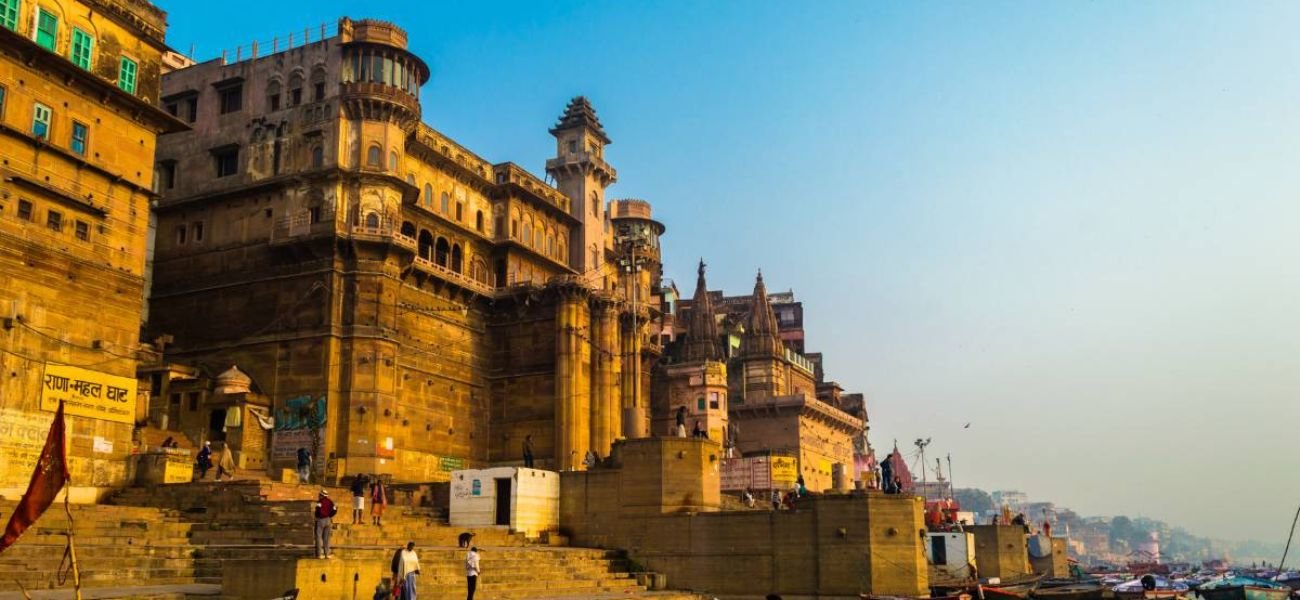
Ghats – The Heart of Banaras Local Sightseeing
You cannot understand Banaras without spending time on the ghats. Not just passing through. Sitting.
Sunrise at Assi Ghat
If there’s one ghat that explains Banaras gently, it’s Assi.
- Best time: Sunrise to 7:00 AM
- Crowd reality: Walkers, yogis, locals bathing
- Ideal for: First-time visitors, seniors, solo travellers
This is not a place to rush photography. It’s a place to watch the city wake up without noise.
Boat Ride Along the Ghats
A slow boat ride from Assi toward Dashashwamedh or Manikarnika offers perspective.
- Choose rowboats over motorboats
- Keep conversation minimal
- Observe rituals from a respectful distance
Local Guide Tip
Silence on the boat changes the experience completely. Choose it deliberately.
Manikarnika Ghat – Observation, Not Interruption
Manikarnika is part of Banaras local sightseeing, whether people admit it or not. But it’s not a sightseeing stop in the usual sense.
- Visit briefly
- Do not photograph
- Stand aside and observe
This ghat teaches something quietly. Many travellers feel heavy afterward. That’s normal.
Afternoon – The Most Ignored Part of Local Sightseeing
Afternoons in Banaras are not for activity. They are for recovery.
Too many people try to “fit in” more temples between 12 PM and 3 PM. That’s when fatigue builds and irritation begins.
The smartest Banaras local sightseeing plans include:
- Hotel rest
- Light meals
- Short walks near accommodation
This pause allows the evening to feel meaningful rather than tiring.
Local Guide Tip
If you skip rest, Banaras doesn’t punish you immediately. It does it the next morning.
Evening Hours – When the City Turns Inward Again
Dashashwamedh Ghat Ganga Aarti
Evening aarti is part of most Banaras local sightseeing routes, but expectations matter.
- Reach by 5:30 PM
- Stand slightly away from the centre
- Avoid peak boat congestion
The experience is intense. Bells, chants, crowds. It’s okay to step back and watch instead of pushing forward.
Quiet Evening Walks
After aarti, avoid rushing back.
- Walk along a single ghat
- Sit where the crowd thins
- Let the noise fade
This is when Banaras settles into you.
Day Two Additions – Expanding Local Sightseeing Without Overload
If you have more than one day, Banaras local sightseeing can expand gently.
Sankat Mochan Hanuman Temple
- Best time: Morning
- Crowd level: Manageable
- Atmosphere: Familiar, devotional
This temple feels more local than monumental, which many travellers appreciate.
Kaal Bhairav Temple
Often misunderstood, but important.
- Visit early
- Expect structured movement
- Darshan is quick
Local Guide Tip
Later in the day, the area feels rushed. Morning visits are calmer.
Sarnath – The Necessary Contrast
Any thoughtful Banaras local sightseeing plan should include Sarnath.
- Distance: Short drive
- Mood: Open, quiet
- Effect: Emotional balance
After the density of Kashi, Sarnath allows space. Many people don’t realise how much they need this until they arrive.
Festival Days and Local Sightseeing Reality
Festivals change everything.
- Mahashivratri: Long queues, altered temple timings
- Dev Deepawali: Beautiful but extremely crowded
- Shravan month: Heavy pilgrim flow
Local sightseeing during festivals requires patience and local understanding. Independent planning often leads to missed darshans or unnecessary stress.
Who Enjoys Banaras Local Sightseeing the Most
Best suited for:
- Spiritually inclined travellers
- Seniors with assisted pacing
- Solo travellers comfortable with silence
Less suitable for:
- Fast-paced tourists
- People uncomfortable with crowds
- Those expecting structured sightseeing
Banaras does not adjust itself. Visitors must adjust to it.
Safety and Practical Awareness
- Keep identity proof accessible
- Avoid isolated ghats late at night
- Wear simple footwear
- Respect photography rules
- Stay hydrated even in winter
Banaras is safe, but awareness matters more than assumptions.
How to Reach Banaras
By Train
Varanasi Junction and Manduadih connect well with most cities. Early morning arrivals work best for temple schedules.
By Air
Lal Bahadur Shastri International Airport offers smooth access. Flights reduce fatigue if days are limited.
By Road
Suitable for nearby regions only. City entry traffic can be slow.
Planning Support Partner
Banaras local sightseeing looks simple on paper and complex on foot. Temple queues shift. Lanes are confusing. Crowd pressure rises unexpectedly. Many travellers realise midway that timing matters more than distance.
As a Planning Support Partner, Ayodhya Varanasi Tourism helps structure local sightseeing realistically. Not by filling hours, but by understanding when to move, when to rest, and when to wait. That quiet planning keeps the experience calm instead of overwhelming.
Planning Support Partner
Many travellers underestimate how emotionally tiring this circuit can be. Managing temple timings, crowd surges, and intercity transfers on your own often distracts from the spiritual purpose.
As a planning support partner, Ayodhya Varanasi Tourism helps travellers move through this yatra calmly. Not by overloading schedules, but by understanding when to pause, when to move, and when to simply wait. That quiet planning makes the journey feel complete rather than exhausting.Contact Ayodhya Varanasi Tourism Today:
Call Us: +91 7300620809
WhatsApp Us: +91 7300620809
Visit Our Website: Ayodhya Varanasi Tourism
Email: ayodhyavaranasitourism@gmail.com
FAQs – Banaras Local Sightseeing
One day allows a glimpse, not depth. Two to three days feel more settled, especially for first-time visitors.
Early morning. Before 7 AM, the city feels organised and calmer, especially near temples and ghats.
Yes, with early starts, afternoon rest, and minimal walking during peak heat hours.
Yes, during daylight and early evening. Avoid isolated areas late at night.
Yes. It balances the intensity of Banaras and helps many travellers feel emotionally lighter.
Crowds are constant, but early mornings are more manageable and structured.
For sunrise rides, yes. Evening rides during aarti need prior planning to avoid congestion.
Light cotton, modest wear, and comfortable footwear are ideal for long walking days.
For first-time visitors, yes. It reduces confusion and prevents fatigue from poor timing.
Trying to cover too much. Banaras rewards attention, not speed.
Conclusion
Banaras local sightseeing is not about ticking places off a list. It’s about learning how the city breathes and adjusting yourself to that rhythm. Walk slowly. Start early. Rest when the body asks. And don’t worry if something is left unseen.
In Banaras, what stays with you is rarely what you planned to see. It’s what you noticed when you finally stopped trying to move on.