
Home » 10 Days Ayodhya Varanasi Gaya Prayagraj Tour Package with Chitrakoot
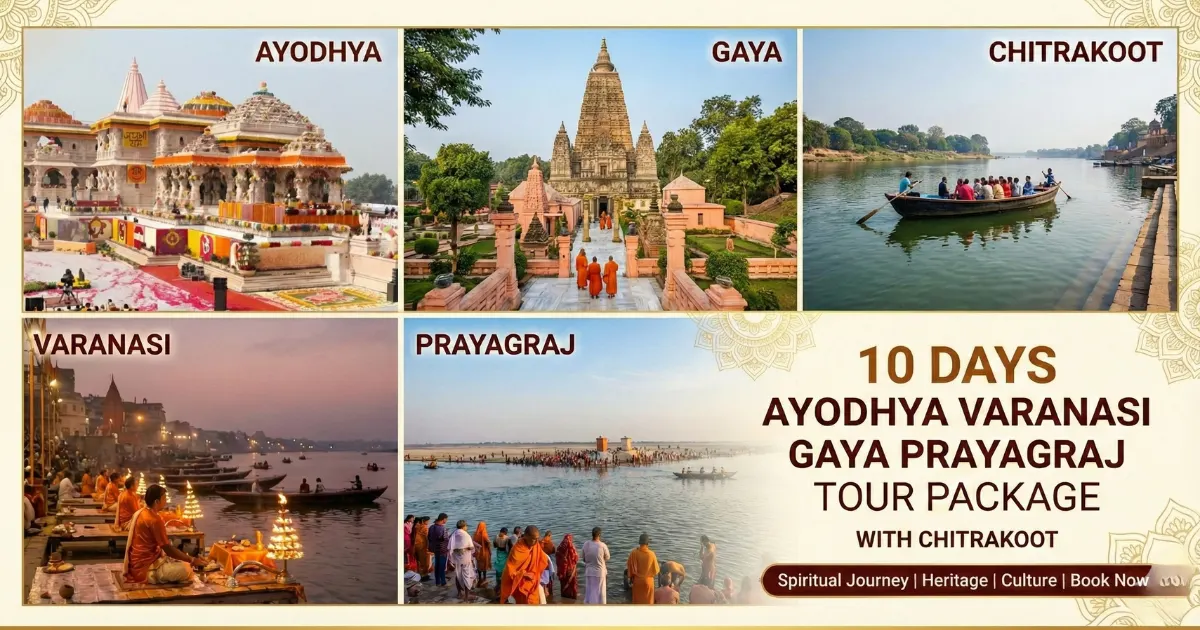
10 Days Ayodhya Varanasi Gaya Prayagraj Tour Package with Chitrakoot
- Duration : 9 Nights 10 Days
- Places Covered : Ayodhya Varanasi Gaya Prayagraj
Special Discount on
10 Days Ayodhya Varanasi Gaya Prayagraj Tour Package with Chitrakoot
Upto 35% Off
Ten Days Ayodhya Varanasi Gaya Prayagraj Tour Package with Chitrakoot Overview
This ten-day yatra moves the way real journeys usually do, not the way they look on paper. It begins gently in Ayodhya, without forcing meaning too early, allowing the body and mind to arrive before the temples do. From Ram Janmabhoomi to the quiet pull of the Sarayu, the days unfold with enough space to breathe. Prayagraj comes in as a pause between rivers, not a stopover, and Varanasi follows with its own weight, demanding early mornings and slow evenings. Gaya is treated with the seriousness it deserves, without distractions or added movement, and Chitrakoot arrives at the end like a soft lowering of the pace, where walking matters more than covering ground.
What holds the journey together is not distance but rhythm. Darshans are planned early, rests are not treated as optional, and silence is allowed where rituals leave people inward. There are no packed afternoons, no unnecessary hopping between places, and no pressure to “cover” anything. By the time the yatra ends, it does not feel like ten days spent moving from city to city. It feels like time spent staying in places long enough for them to leave a mark.
10 Days Ayodhya Varanasi Gaya Prayagraj Tour Package with Chitrakoot – A Calm, Ritual-Focused Pilgrimage Itinerary
A 10 days Ayodhya Varanasi Gaya Prayagraj tour package with Chitrakoot is not about covering distances. It is about giving each place the time it quietly asks for. This route works because it follows the natural rhythm of a yatra. Ayodhya opens the journey gently, Varanasi deepens it, Gaya demands stillness, Prayagraj brings balance, and Chitrakoot slows everything down before the return.
Planned well, this journey never feels hurried. Planned poorly, it can feel exhausting. The difference lies in pacing, temple timings, and knowing when to stop moving.
Ayodhya and Prayagraj: Beginning Without Pressure
The journey usually begins in Ayodhya, with arrival kept closer to midday. This allows rest before stepping out toward the Sarayu in the evening. Ram Janmabhoomi darshan is best done early the next morning, when the air is quieter and the queues are manageable. This part of the Ayodhya Varanasi Gaya Prayagraj Chitrakoot 10 days itinerary is intentionally light. Ayodhya works best when you do not push it.
From here, the route moves toward Prayagraj. Sangam darshan is kept for the evening, allowing travelers to absorb the place without rushing rituals. It acts as a pause between beginnings and what comes next.
Varanasi and Gaya: The Core of the Yatra
Varanasi is the most demanding part of the journey, physically and emotionally. Early morning darshan at Kashi Vishwanath sets the day’s tone. Afternoons are kept free for rest because without that break, the evening Ganga Aarti becomes tiring instead of meaningful. This balance is what makes the 10 days Ram Janmabhoomi Kashi Vishwanath Gaya Pind Daan tour workable for families and senior travelers alike.
Gaya is treated differently. Pind Daan is not combined with sightseeing. Vishnupad darshan, Phalgu rituals, and then stillness. That space matters.
Chitrakoot: Where the Journey Softens
Chitrakoot arrives toward the end for a reason. After temples, rituals, and crowds, walking slowly around Kamadgiri or sitting quietly at Ram Ghat allows the journey to settle. In a well-planned Ayodhya Gaya Prayagraj Varanasi Chitrakoot pilgrimage tour package, this is where fatigue eases instead of building.
Planning Support Partner
This journey requires local understanding more than tight scheduling. Ayodhya Varanasi Tourism plans routes based on temple realities, crowd patterns, and ritual requirements, not fixed-hour assumptions. The focus stays on timing darshans correctly, allowing recovery, and keeping the yatra respectful rather than rushed.
Conclusion
A 10 days Ayodhya Varanasi Gaya Prayagraj tour package with Chitrakoot works when it is allowed to breathe. When rest is treated as part of the plan. When rituals are not hurried. And when the journey is shaped around people, not just places. Done this way, it does not feel like ten days of travel. It feels like time spent where it mattered.
10 Days Ayodhya Varanasi Gaya Prayagraj Tour Package with Chitrakoot Itinerary
Day 1 – Reaching Ayodhya, not rushing anything yet
Most people reach Ayodhya sometime around late morning or early afternoon. That window works well. There is no need to arrive too early here. After check-in, the first few hours are best kept simple. A little rest. A little quiet. Ayodhya settles slowly, and it helps if you let it do that.
By around 4:30 in the evening, we usually step out toward the Sarayu side. Not with a plan, just with direction. As the sky softens, the Saryu Aarti, usually between 6:30 and 7:00 PM, becomes the first real moment of the yatra. It feels less like an event and more like a welcome. Dinner stays early. By 8:30 PM, the day naturally comes to a close.
Day 2 – Ram Janmabhoomi and the rest of Ayodhya, one by one
The morning begins early, around 5:30 AM. This is one place where timing matters. Reaching Ram Janmabhoomi by 6:00 AM avoids the heavier rush later in the day. Security checks take time, and darshan usually finishes by 8:30 AM if entered early.
After breakfast, the rest of Ayodhya unfolds without hurry. Hanuman Garhi, Kanak Bhawan, Dashrath Mahal — not treated as a checklist, but as places you pass through and pause at. By around 1:30 PM, the temple visits are done. The afternoon is intentionally open. Some people return to the ghats. Some just sit. Ayodhya allows that. Dinner by 8:00 PM keeps the body rested.
Day 3 – Ayodhya to Prayagraj, following the river’s direction
Departure from Ayodhya around 7:00 AM keeps the drive comfortable. The road toward Prayagraj is steady, and arrival usually happens by early afternoon, around 2:00 or 2:30 PM. After check-in and lunch, the focus slowly shifts toward the Sangam.
By about 5:00 PM, we move toward Triveni Sangam. Those who wish can take a holy dip, depending on water conditions and comfort. There is no pressure here. The evening aarti around 7:00 PM brings a natural stillness. Dinner follows. The night stays quiet.
Day 4 – A short morning in Prayagraj, Varanasi by evening
The day starts around 6:30 AM with visits to Hanuman Mandir, Bade Hanuman Ji, and Anand Bhawan. These are done without stretching the morning too long. By late morning, we are back.
After lunch, the drive toward Varanasi begins around 1:30 PM. Reaching by early evening, usually between 6:30 and 7:00 PM, feels right. This evening is kept light. No rushing into ghats. Just rest. Kashi needs energy, and that is saved for the next day.
Day 5 – Kashi Vishwanath and a long, full day
This is an early start. Around 4:30 AM. Reaching Kashi Vishwanath Temple by 5:00 AM makes a real difference. Darshan generally completes by 7:30 AM. After breakfast, nearby temples like Annapurna Devi, Vishalakshi, and Kal Bhairav are visited before noon.
The afternoon is left untouched. Rest is not optional here; it is necessary. By 5:00 PM, movement toward Dashashwamedh Ghat begins. The Ganga Aarti, between 6:30 and 7:15 PM, closes the day in a way words don’t really cover. Dinner follows. The night ends early.
Day 6 – Leaving Varanasi, reaching Gaya
Departure from Varanasi around 7:00 AM keeps the drive manageable. Gaya is reached by mid-afternoon. After check-in, the evening is kept focused, not busy.
Between 5:00 and 6:00 PM, families usually sit with the priest to understand the next day’s Pind Daan process. This conversation matters more than people expect. It clears doubts. It sets the mind. Dinner is early. Rest comes easily.
Day 7 – Pind Daan in Gaya, nothing else added
The day begins early, around 5:00 AM. Vishnupad Temple darshan happens first, followed by the rituals at the Phalgu River. Pind Daan usually completes by around 12:30 or 1:00 PM, depending on family traditions.
After that, the day is left empty. No sightseeing is added here. This space is deliberate. The body and mind both need it. Evening remains quiet.
Day 8 – Gaya to Chitrakoot, the pace changes
Departure from Gaya happens around 6:30 AM. It is a long drive, but steady. Reaching Chitrakoot by early evening, around 5:30 or 6:00 PM, feels like entering a different rhythm altogether.
After check-in, most people prefer rest. Maybe a short walk. Dinner by 8:00 PM. The air here feels slower, and that is allowed.
Day 9 – Chitrakoot, on foot and in silence
The morning starts around 6:00 AM with Ram Ghat Snan. From there, Kamadgiri Parikrama, Bharat Milap, and Hanuman Dhara are covered gradually, finishing by early afternoon.
After lunch, those who wish visit Sati Anusuya Ashram and nearby forest shrines between 3:30 and 6:00 PM. Nothing here needs speed. The evening aarti at Ram Ghat quietly closes the day.
Day 10 – Leaving Chitrakoot, carrying the journey back
After breakfast, departure around 8:00 AM is comfortable. The return drive toward Prayagraj or Varanasi completes by late afternoon, depending on onward plans.
By this point, the journey does not feel like a list of places covered. It feels like time spent in them.
Book Your Tour
Get Special Discount Book Now
Highlights of the 10 Days Ayodhya Varanasi Gaya Prayagraj Tour Package with Chitrakoot
- Ram Janmabhoomi Darshan in the Early Hours
Reaching the temple before the city fully wakes up changes the experience. The queues are lighter, the air feels steady, and darshan happens without the strain that comes later in the day. It sets the tone quietly, without forcing emotion. - Evening by the Sarayu in Ayodhya
The first aarti by the river does not ask for attention. It simply happens, and you find yourself part of it. This is where the journey starts to slow you down, almost without asking. - Sangam Time in Prayagraj
Standing at the meeting point of the rivers carries its own weight. There is no rush to dip or perform rituals. Even watching the water move is enough for many people. - Kashi Vishwanath at Dawn
Early morning darshan in Varanasi feels different from the rest of the day. The lanes are quieter, movements are deliberate, and the temple visit finishes before the city begins to press in. - Ganga Aarti Without Hurrying Back
Staying through the full aarti, not leaving halfway to beat traffic, changes how it settles in you. The sound, the fire, and the crowd all fall into place when you allow time. - Pind Daan in Gaya Done Without Distraction
This day is kept clean of extra movement for a reason. The ritual needs attention, and the rest of the day gives space for that weight to sit properly. - Vishnupad Darshan Before the Rituals
Beginning the day at the temple grounds the entire process. It brings a sense of order before moving toward the river and the longer ceremonies. - Chitrakoot’s Slower Footsteps
Walking here matters more than reaching. The parikrama, the ghats, the forest paths all work best when taken without watching the clock. - Ram Ghat Aarti in the Quiet Light
This aarti feels different from the larger ones. Smaller, calmer, and less performative, it brings the journey closer to its end without announcing it. - Ending the Yatra Without a Rush Back
The final day is not packed. Leaving Chitrakoot with time in hand allows the journey to close naturally, instead of stopping abruptly the moment travel resumes.
Inclusions – What’s Covered in the Package
Exclusions – What’s Not Covered
- Comfortable hotel stay with breakfast and dinner.
- Pick-up and drop facility.
- All travel by private cab or tempo traveler (for groups).
- Guidance and local support from Ayodhya varanasi Tourism.
- Airfare, train tickets, or bus tickets to starting point.
- Lunch, snacks, or drinks other than meals mentioned.
- Entry fees to monuments, temples, or activities.
- Anything not clearly listed in the inclusions.
Get Best Offers On 10 Days Ayodhya Varanasi Gaya Prayagraj Tour Package with Chitrakoot
FAQs For 10 Days Ayodhya Varanasi Gaya Prayagraj Tour Package with Chitrakoot
This tour covers Ayodhya, Varanasi, Gaya, Prayagraj, and Chitrakoot. The route is planned to balance temple visits, rituals, and travel time without rushing through any place.
Yes, this itinerary works well for senior citizens and family groups. Travel days are kept manageable, hotels are usually close to temple areas, and enough rest time is included between darshan and road journeys.
Ayodhya is usually covered over 2 days. The plan includes Ram Janmabhoomi, Hanuman Garhi, Kanak Bhawan, and evening time near the Sarayu river, without packing too much into a single day.
Yes, time is specifically kept in Gaya for Pind Daan rituals. Local priests are arranged if needed, and travelers are guided through Vishnupad Temple procedures so the process stays clear and unhurried.
The itinerary includes Sangam Snan in Prayagraj, usually early in the morning to avoid crowds. Boat arrangements can be added depending on season and river conditions at the time of travel.
There are a few long drives, especially between Varanasi–Gaya and Prayagraj–Chitrakoot. These routes are broken with rest stops, and travel is planned during daylight hours wherever possible.
Chitrakoot includes Kamadgiri Parikrama, Ram Ghat, Hanuman Dhara, and quiet time along the Mandakini river. The stay here is slower-paced and usually feels less crowded than the larger cities.
Hotels are generally clean, comfortable, and chosen for location rather than luxury. Options can range from standard to premium categories based on preference, with temple accessibility kept in mind.
October to March is considered the most comfortable period due to milder weather. Summers can be tiring due to heat, while monsoon months may involve delays during road travel.
Yes, Ayodhya Varanasi Tourism allows route and hotel customization based on travel dates, group size, and ritual requirements. Extra nights or specific darshan priorities can be adjusted before final confirmation.